

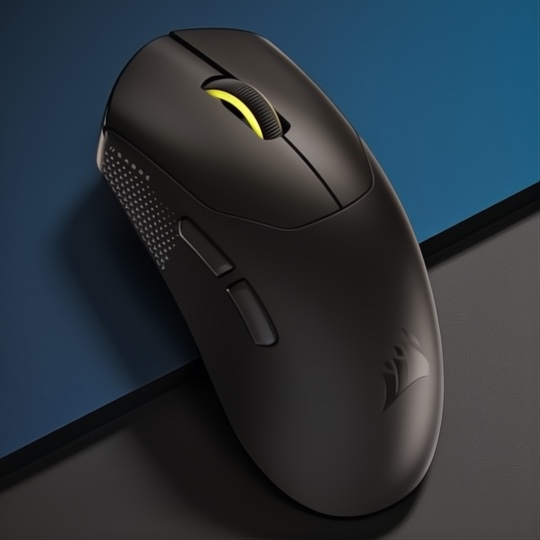
TL;DR: The Corsair Sabre V2 Pro Ultralight Wireless is ridiculously light, shockingly sturdy, and laser-focused on competitive gaming performance. Great sensor, zero bloat, web-based software, and a clean design make it a new top pick for FPS players — even if the skates and single profile limit are nitpicks. It’s now my main mouse for CS2 and Overwatch 2, and it absolutely slaps.
Corsair Sabre V2 Pro Ultralight Wireless
I have this running joke with a few friends in my Discord group where we refer to ultralight gaming mice as “the forbidden feathers.” Because no matter how much hardware companies swear they’ve discovered profound engineering magic, a mouse that weighs less than a small bag of Skittles will always feel like it’s breaking some unwritten law of physics. I’ve tried my fair share over the years — the hole-punched lab-rat experiments, the ghosts of plastic past, the ones that feel like they’re made out of thrift-store patio furniture — but every once in a while, something drops onto my desk that doesn’t just feel light. It feels wrong in a way that eventually becomes right.
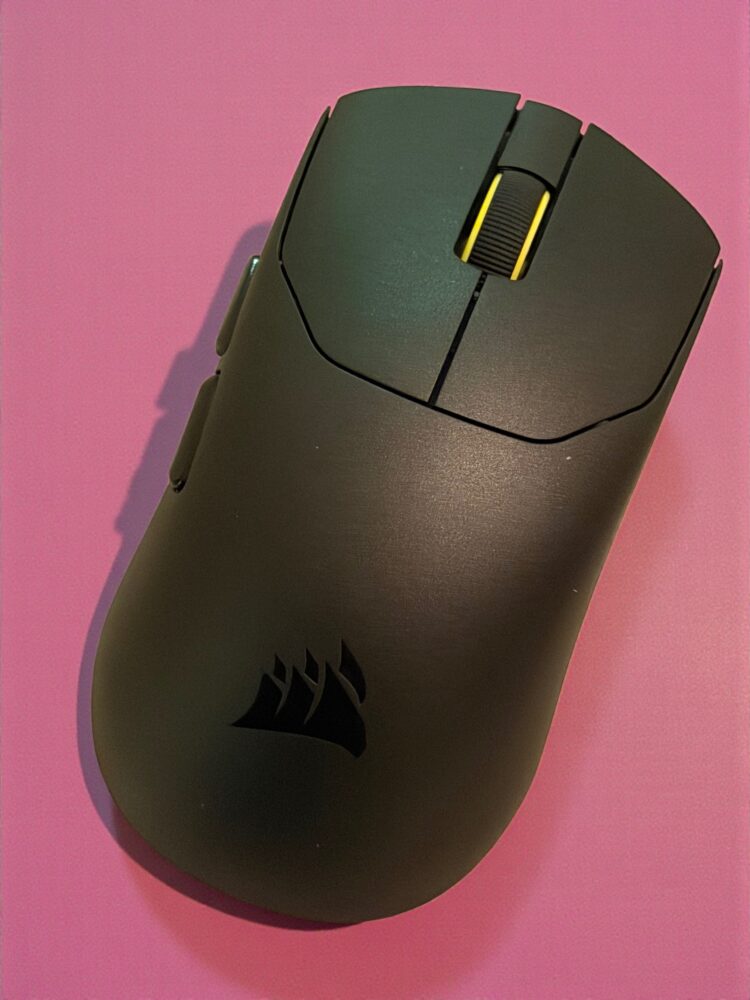
That is exactly the arc I went through with the Corsair Sabre V2 Pro Ultralight Wireless, a mouse that saunters onto the scene with a 36-gram body, no cheese-grater holes, and the general energy of a hummingbird that has seen God. When I unboxed it, I actually laughed out loud—because the moment you pick it up, your brain does that thing where it starts looking around the room for hidden cameras. Something this sturdy shouldn’t be this light. Something this light shouldn’t feel this sturdy. Yet here I was, holding a mouse that felt like a contradiction made manifest, as if Corsair had dared the world to prove that lightweight gaming gear has to feel flimsy.
I’ve spent years using heavier mice under the assumption that mass equals premium feel. Blame my keyboard habits: I use metal-top, gasket-mounted bricks that could double as medieval blunt weapons. So when I first wrapped my hand around the Sabre V2 Pro, I didn’t feel like I was holding a premium tool. I felt like I was holding the decoy prop version of a mouse someone would hand an actor in a low-budget sci-fi pilot. But here’s the part I didn’t expect: after about two days of Counter-Strike 2, a bit of Overwatch 2, and a tragic but enlightening attempt at regaining my lost Apex Legends muscle memory, something shifted. My hand stopped treating the mouse like it was fake. My brain recalibrated. And the physical sensation of weight evaporated from my decision-making process.
This wasn’t a toy. This was an instrument — a near-weightless, deceptively sturdy little companion that felt like it was wired directly into my nervous system.
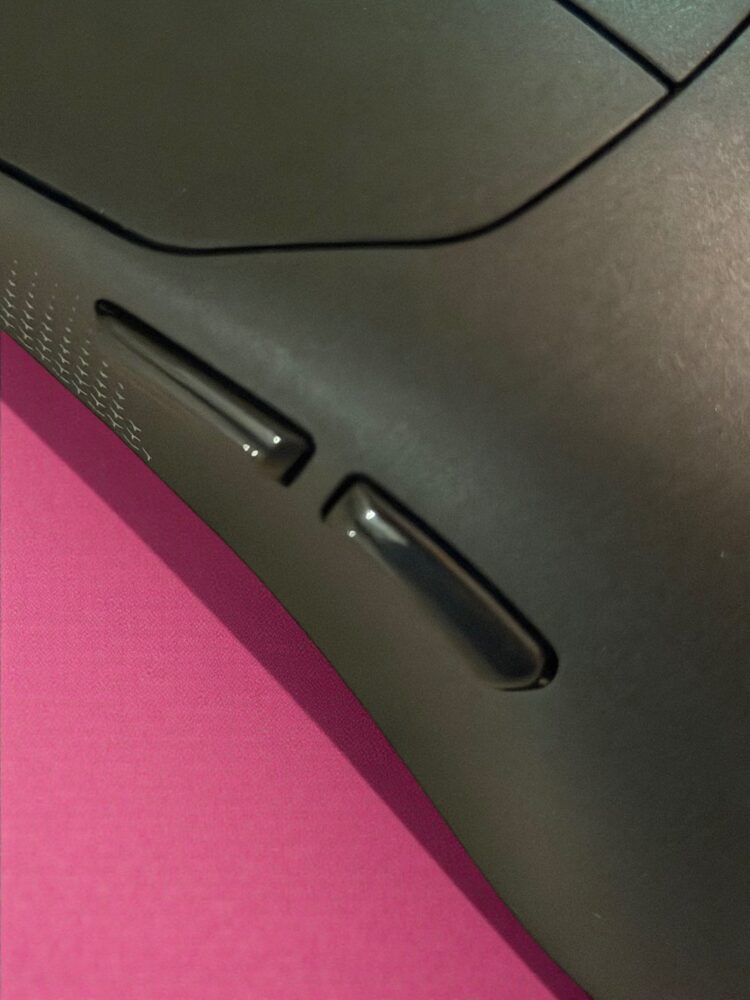
I’ve felt this once before, years ago, when the first Logitech G Pro X Superlight arrived like a message from the future, promising that lightweight didn’t have to mean breakable. That mouse sat at 63 grams — a number that felt electric at the time. But Corsair’s 36-gram approach turns the old metric into a punchline. This thing is the mirror-universe version of the Superlight: digits flipped, physics mocked, expectations vaporized.
The real surprise is that Corsair managed this without falling back on the honeycomb-shell design trend that dominated lightweight mice for far too long. My hands never made friends with those perforated shells. They always felt like I was holding a futuristic colander. The Sabre V2 Pro, by contrast, is a solid-bodied mouse, smooth and symmetrical, with no RGB distractions screaming for attention. There’s a tiny under-wheel light that blinks when you change DPI presets and then immediately retires like a shy stagehand who hates the spotlight. This is a mouse that quietly refuses to perform for an audience. It exists to do a job, not to glow at you like a low-poly rave prop.
And that job, friends, is competitive gaming.
When it comes to FPS titles, every gamer eventually hits the point where they stop thinking about mouse specs and start thinking about their own limits. Am I missing that shot because of my hardware, or because I’m a washed old gremlin who peaked during the Golden Age of Counter-Strike 1.6? I’ve been wrestling with that existential gaming crisis for years. So imagine my surprise when I realized the Sabre V2 Pro wasn’t simply helping me aim better—it was removing the sense that I was dragging a physical object across my desk.
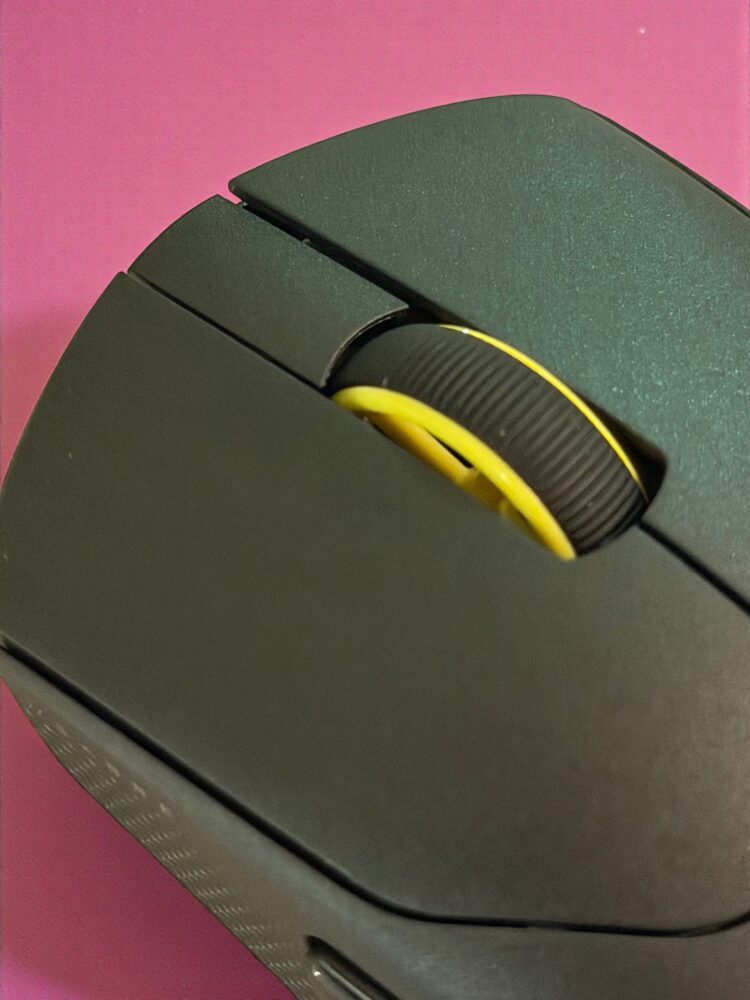
In CS2, this shows up in the micro-movements: the barely-there wrist adjustments, the soft corrections, the way your crosshair creeps along the edge of a doorway when you’re clearing angles. With heavier mice, I always felt like I was negotiating with my own equipment. With the Sabre V2 Pro, my crosshair just floated. No drama. No effort. No subconscious compensation for momentum.
There’s a phrase competitive players like to use—“getting out of your own way.” This mouse feels like the hardware equivalent of that mantra.
And the best part? Even with its airy 36-gram build, the Sabre V2 Pro doesn’t feel cheap. I’ve used mice that weighed more but somehow managed to feel like they were assembled by bored interns using leftover budget plastic. Corsair’s chassis feels legitimate: sturdy shell, responsive clicks, and switches that land with the kind of tactile assurance that keeps your brain humming. The left and right click do have the slightest hint of pre-click wobble, barely perceptible unless you’re comparing side-by-side with something heavier, but it never impacted gameplay. It’s the kind of thing you only notice when you go looking for flaws to catalog, not something that interrupts the flow of combat.
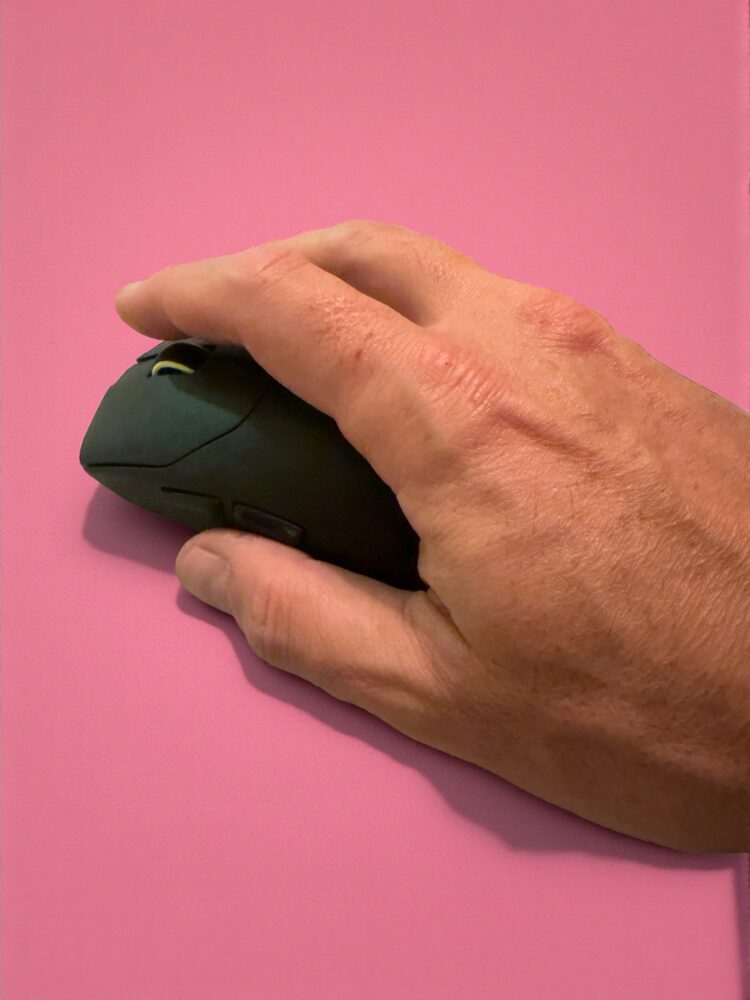
I also have to give Corsair credit where it’s due with the sensor. The Marksman S has been rock-solid in every test I threw at it. Fast flicks? No spinouts. Slow tracking? Smooth as warm butter. High DPI insanity just for the hell of it? Still consistent. You know a sensor’s good when there’s nothing memorable to say about it — because the only time a sensor becomes memorable is when it screws up, and this one simply doesn’t.
Battery life isn’t groundbreaking, but it’s reasonable. Running at a standard polling rate gives you around 70 hours, though cranking it up to the maximum 8,000Hz will burn through the battery like a Twitch chat burns through copypasta during a speedrun fail. But if you’re the kind of person who insists on 8K polling, you already know you’re trading endurance for the bragging rights of theoretical responsiveness. And at least the mouse uses USB-C, which means you won’t be digging through your drawer of cable fossils at 2 a.m.
Now, let’s talk skates — and this is where Corsair made a choice that’s not wrong, but definitely divisive. The Sabre V2 Pro ships with UPE skates instead of the more classic PTFE ones you find on many competitive mice. UPE is durable, and the friction difference isn’t seismic, but if you’re used to hyper-glide PTFE feet, you’re going to notice that UPE has a slightly grippier feel. Think of it as the difference between wearing brand-new socks on hardwood versus socks that have seen their fair share of dangerous midnight kitchen slides. The UPE skates aren’t slow, just slightly less floaty.
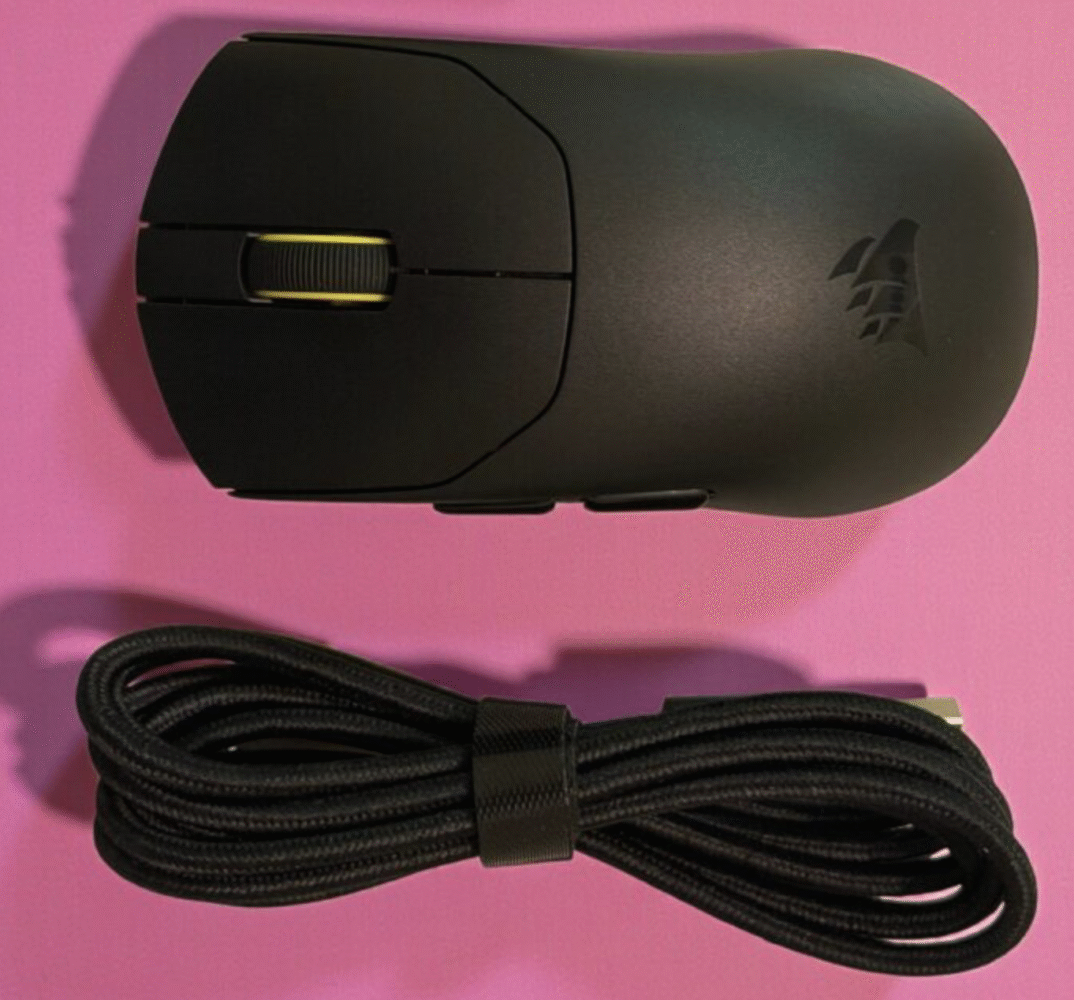
Corsair includes extra larger skates in the box, and I appreciate the gesture, but I’m still going to be one of those people refreshing Corepad listings at midnight, waiting for someone to release third-party PTFE replacements. Lightweight mice live and die by glide, and while Corsair’s UPE choice doesn’t ruin the experience, it’s a bit like buying a sports car and realizing the stock tires are good, not great. You know you’ll replace them eventually.
The rest of the packaging is refreshingly minimal: dongle, USB-C cable, stickers for grip, a wipe so you can pretend you’re doing precision surgery, and that’s it. No unnecessary plastic shrine, no RGB-infused brochure. The mouse itself is understated — symmetrical shape, classic profile, simple buttons. It’s the gaming mouse equivalent of a clean white T-shirt: timeless, neutral, intentionally ordinary, yet secretly perfect for sweaty competitive matches.
The software story is also refreshingly light. No bloated installer. No permanently running background processes desperately trying to sync lighting effects you never asked for. Instead, Corsair shoves everything into a web-based interface that behaves like a polite guest: it shows up when you invite it and leaves when you close the tab. Assign keys, set DPI, adjust the polling rate, update firmware — and you’re done. It doesn’t try to integrate into your operating system like some kind of RGB parasite.
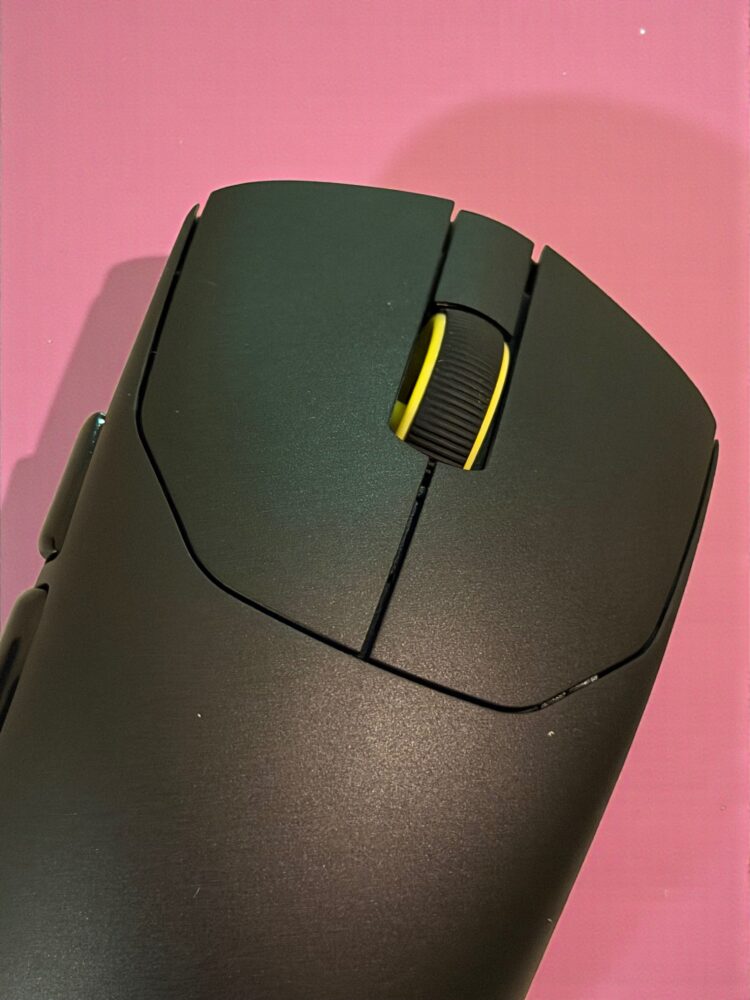
The one limitation that does sting is the single onboard profile. If you’re someone who plays wildly different genres and frequently swaps sensitivity profiles, you’ll need the web hub open or be willing to fiddle with the on-mouse shortcuts. But for me — someone whose entire existential gaming personality is wrapped around competitive shooters — one profile is plenty.
So, after days of real use — grinding Counter-Strike matches, late-night Overwatch pushes, moments where I thought maybe, just maybe, my reflexes weren’t as decrepit as I believed — this mouse has become my new daily driver. It’s the hardware equivalent of finding a pair of shoes that fit so well you forget you’re wearing them. I stopped thinking about the mouse and started thinking only about the game, which is the highest compliment I can give any gaming accessory.
It has, against all my expectations, become the mouse I trust the most.