


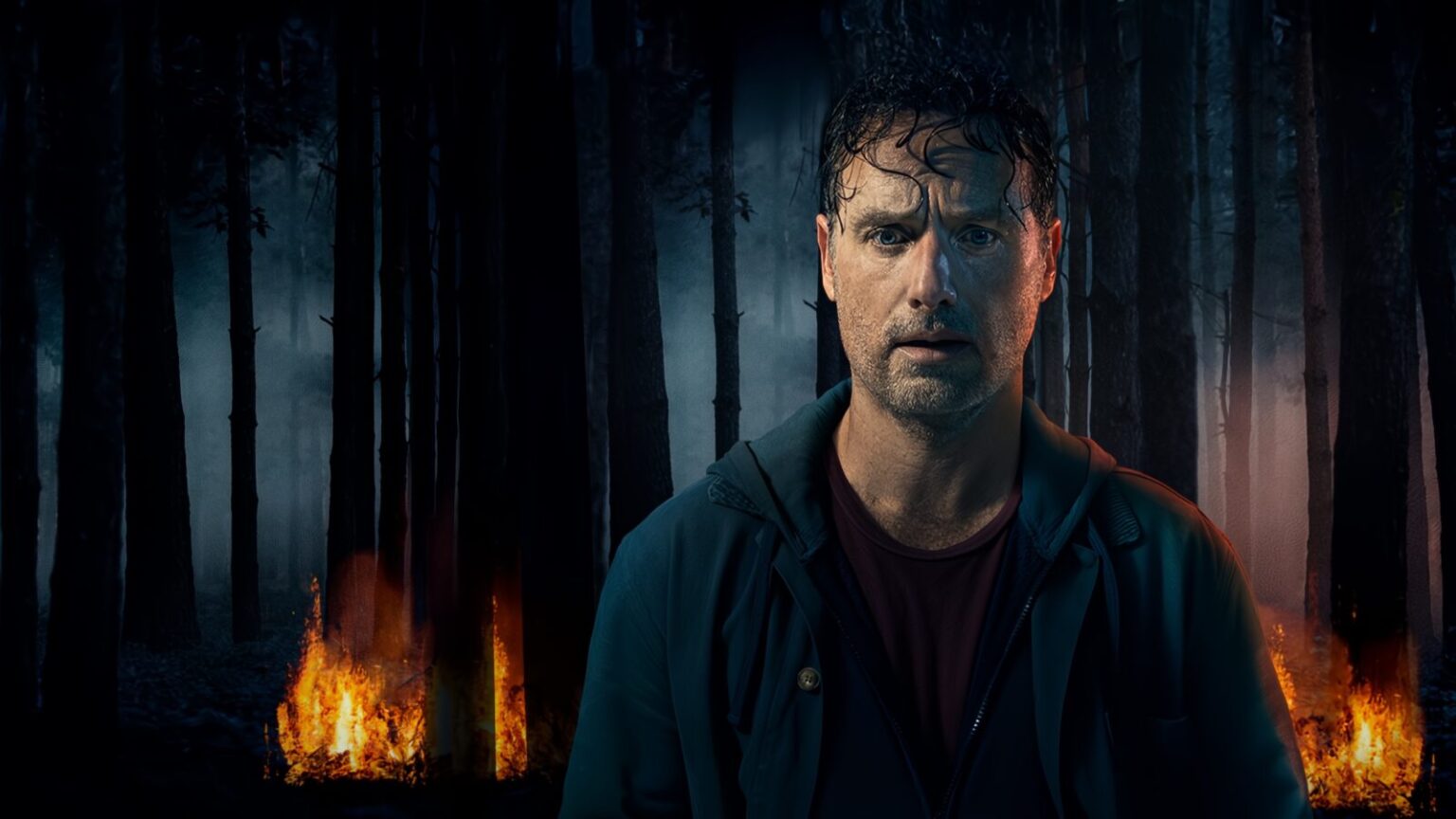
TL;DR: Andrew Lincoln swaps zombies for Scottish murder cults in Coldwater, a messy but wildly entertaining thriller that proves quality nonsense is still quality. Now streaming on OSN+.
Coldwater
I didn’t expect to find myself laughing out loud at a show that features Andrew Lincoln bludgeoning a man to death in the Scottish woods, but here we are. Coldwater, the new thriller streaming on OSN+, is one of those series that feels like it’s been genetically engineered to make critics say the phrase “like Deliverance but in Scotland” — and I am not above walking right into that trap. It’s pulpy, ridiculous, occasionally profound, and very possibly the best kind of nonsense you could curl up with on a rainy Sunday when you’ve already burned through your prestige backlog and just want something wild to chew on.
To get it out of the way: no, it’s not “good” in the conventional sense. If you’re expecting Top of the Lake-style seriousness, or even the gloomy poetics of Broadchurch, you’re going to be very confused. But if you’re in the mood for a series where Andrew Lincoln — freshly rinsed of zombie goo and phlegm after fifteen years of playing Rick Grimes — plays a deeply inept househusband who stumbles into a murder cover-up orchestrated by evangelical psychopaths, well… welcome home.
Andrew Lincoln, Free at Last
For a whole generation of TV watchers, Andrew Lincoln is “Rick.” He’s the sheriff’s hat, the “CORAL!” dad jokes, the sweaty beard, and the endless throat-rattling monologues about survival. I watched The Walking Dead faithfully for about six seasons before tapping out, and by the end, Lincoln looked like he’d aged three presidential terms in the space of a single season. You could practically hear his vocal cords filing HR complaints every time he had to growl another speech about family, loss, or zombie guts.
So when Coldwater opened with him running, blood-soaked, through the Scottish forest, I braced for déjà vu. But then we flash back two months, and suddenly this is a different Andrew Lincoln. He’s John now: a man so neurotic and cowardly that he runs from the sight of a playground fight — leaving one of his children behind in the process. This isn’t Rick Grimes reborn; this is Rick Grimes’ pathetic cousin who can’t even get through school pick-up without an existential crisis.
It’s an oddly brave role for Lincoln, because John is a berk. There’s no better word. He’s bad at parenting, worse at housework, and completely useless in bed. He fails at being a husband, a father, a lover, and eventually a criminal mastermind. But Lincoln leans into it. He plays John with such committed uselessness that you almost admire the choice. After fifteen years of stoic zombie-killing, watching him fumble through domestic chaos and moral collapse is refreshing.
Marriage, Masculinity, and the Petty Stuff That Breaks Us
If you strip away the murder plots, Coldwater is weirdly domestic. John’s wife Fiona, played with weary sharpness by Indira Varma, is the real MVP here. She’s a high-powered professional whose idea of relaxation is probably finishing a spreadsheet without interruption, and she’s constantly saddled with a man-child husband who thinks “househusband” means leaving half the chores undone until she gets home.
The show captures the way marriages often corrode not from big betrayals but from a thousand small irritations. Arguments about dinner with the neighbors sit alongside confessions about feeling “old and shit.” Sexless nights are shrugged off but not forgotten. There’s a moment where a fight about shopping lists turns funnier and darker than any official attempt the show makes to dissect toxic masculinity. It’s all very human, very real — until, of course, the knives come out.
What’s fascinating is how the series clearly wants to make a statement about masculinity. John’s impotence, both sexual and social, becomes a recurring theme. He’s bullied, humiliated, emasculated, and ultimately manipulated by men who cling to power through violence or zealotry. But instead of hammering the point home like a think-piece drama, Coldwater lets it slip into the background while the thriller elements take over. By the time John’s scrubbing blood off his hands in a stranger’s shed, you’re no longer pondering patriarchy — you’re wondering who’s going to end up in the ground next.
Enter the Neighbors From Hell
Every great rural thriller needs eccentric locals, and Coldwater serves them up with relish. On one side, John’s got Angus Gillespie, the village bully played by Lorn Macdonald. Angus is the kind of guy who feels like he was born mid-brawl, all clenched jaw and wild eyes. His menacing of a young shop assistant, Catriona (Lois Chimimba), sets the plot’s gears turning, and his later confrontation with John escalates into the bloody forest scene that launches everything.
But it’s the other neighbors who really steal the show: Rebecca (Eve Myles) and Tommy (Ewen Bremner). Rebecca is a vicar who doesn’t believe in God, and who might also be trying to flirt her way into Fiona’s affections. Tommy, meanwhile, is a true believer in both God and serial killers, and if that combination makes your spine itch, it should. Bremner dials his unblinking stare up to eleven, and every scene with him has the vibe of “this man owns at least three basements.”
When John accidentally kills Angus, it’s Tommy who swoops in to help cover up the crime. This is the turning point where Coldwater fully embraces its pulpy DNA. What began as a family drama suddenly veers into murder conspiracies, Bible study cults, and Deliverance-style woodland terror. If you’re not on board by this point, you’re never going to be. But if you are? Buckle up.
Deliverance in the Highlands
The marketing hook is obvious: Coldwater is “Deliverance, but make it Scottish.” And honestly, it earns the comparison. There’s something uniquely unsettling about the Highlands as a setting. The forests are dense, the villages insular, the landscapes both breathtaking and suffocating. It’s the perfect backdrop for a story about an outsider spiraling out of control.
As John gets deeper into Tommy’s web, the tone shifts from psychological drama to outright folk-horror thriller. Bible study sessions feel like recruitment rallies. Random villagers eye John with suspicion. Even Rebecca’s increasingly flirtatious energy takes on a sinister edge. You start to wonder if the whole village is in on something darker.
Does it make sense? Not really. But does it keep you watching? Absolutely.
Why I Loved It Anyway
Look — Coldwater is messy. It tries to juggle themes of masculinity, marriage, rural isolation, religious extremism, and small-town menace, and it doesn’t always manage to keep them balanced. Sometimes the social commentary gets lost in the carnage. Sometimes the domestic squabbles feel too small next to the looming madness.
But that’s also why I found it so watchable. The show doesn’t settle into one mode; it lurches between them, like a half-broken carnival ride. One minute you’re watching a tense marital drama, the next you’re deep in a gothic cult thriller, and by the third episode you’re not sure if you should laugh, scream, or pour yourself another drink.
And Andrew Lincoln? He’s having fun. He finally looks like an actor unshackled from the apocalypse, allowed to be weird, pathetic, and human. Seeing him stumble through domestic chores is almost as entertaining as watching him crack a man’s skull with a rock. Almost.
Final Verdict:
Coldwater is top-tier nonsense — a pulpy Highlands thriller that mixes marital squabbles, cult weirdness, and Deliverance-style survival horror into a stew that shouldn’t work but mostly does. Andrew Lincoln is finally free of his zombie shackles, and watching him play a total berk is more fun than it has any right to be.