

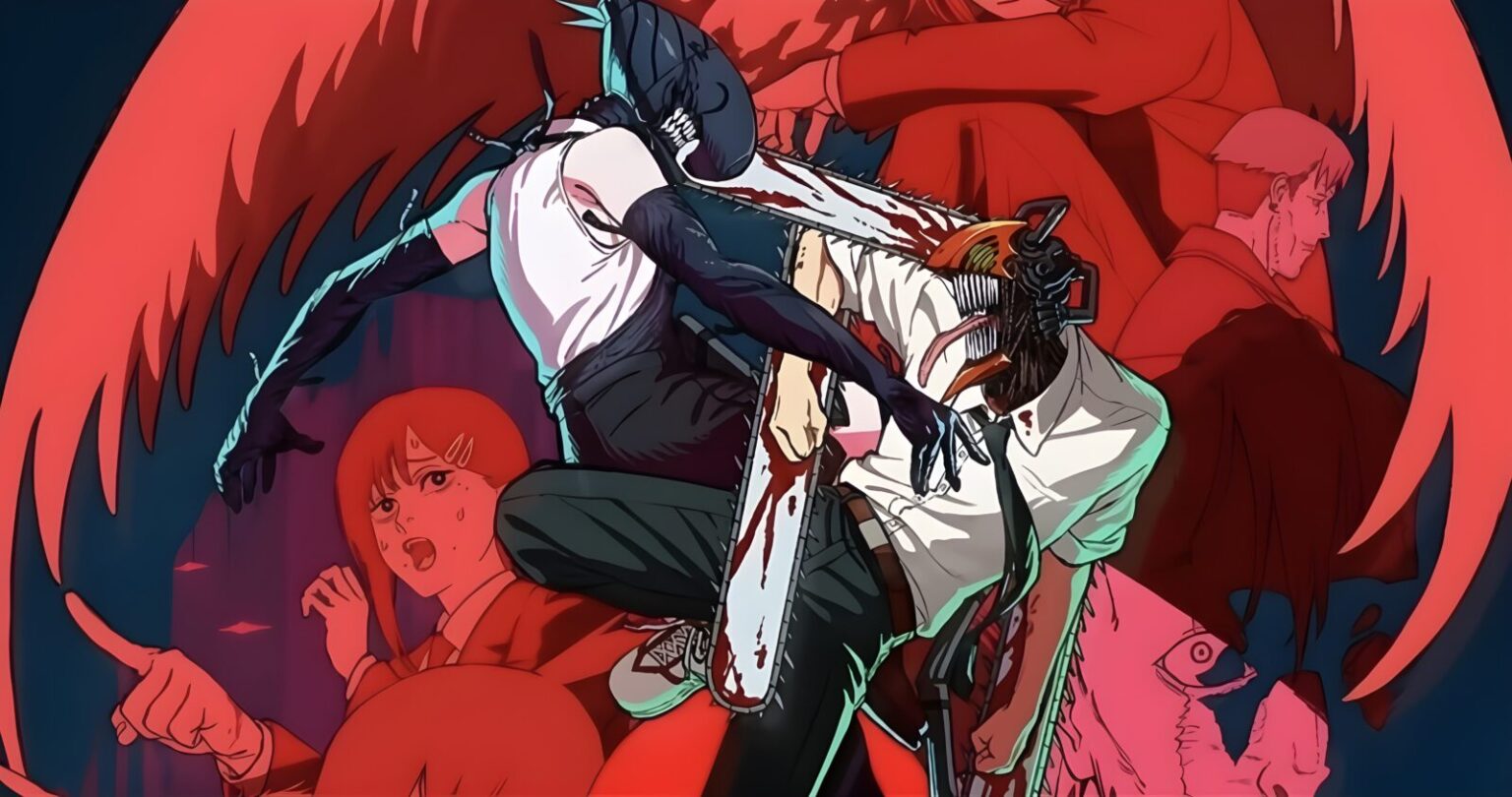
TL;DR: Chainsaw Man – The Movie: Reze Arc is a brutal, beautiful, emotionally unstable masterpiece that turns heartbreak into high art. It’s horny, hilarious, horrifying, and heartfelt — sometimes all in the same frame. MAPPA’s animation is next-level, and Denji remains anime’s most lovable disaster. Just don’t go in expecting a happy ending. Or a clean shirt.
Chainsaw Man – The Movie: Reze Arc
If there’s one thing you learn from Chainsaw Man, it’s that growing up is hell — and hell, in Tatsuki Fujimoto’s world, is loud, horny, and smells vaguely of gasoline and bad decisions. Chainsaw Man – The Movie: Reze Arc slices its way into theaters like a revving V8 through a haunted junkyard, picking up right where the first season’s chainsaw-splattered chaos left off. It’s a gory, melancholic fever dream wrapped in a love story that’s equal parts Romeo and Juliet and Texas Chainsaw Massacre. And yes, it’s every bit as messy, male, and magnificently deranged as you’d expect.
Directed by Tatsuya Yoshihara (Black Clover, Chainsaw Man S1), this feature-length adaptation of Fujimoto’s acclaimed “Reze” arc doesn’t just rehash the manga panels in higher resolution — it weaponizes them. MAPPA’s animation team seems hell-bent on proving that “too much” isn’t in their vocabulary. Every explosion, every arterial spray, every moment Denji stares at a girl like she’s the last slice of pizza on Earth is rendered with almost fetishistic precision. It’s gross, it’s gorgeous, and it’s somehow weirdly poetic.
For the uninitiated: Denji is your typical teenage loser, except for the minor detail that he can turn into a demon-human hybrid with chainsaws jutting from his limbs. His “pet” Pochita — an adorable little chainsaw dog — lives inside his chest, and together they moonlight as professional devil hunters for the Public Safety Bureau. Basically, imagine Spider-Man if Uncle Ben was replaced by a demon with a pull cord and a body count.
Reze Arc kicks off with a quieter, more romantic vibe — or at least, as romantic as Denji’s world allows. He meets Reze, a charming, freckled barista with the energy of a manic pixie dream girl who’s secretly wired with C4. Their chemistry is electric, literally and emotionally. You want to root for Denji — the world’s thirstiest, most well-meaning himbo — as he fumbles through his first real crush. But anyone who’s read the manga knows where this is going: Reze is not who she seems. She’s a walking bombshell, in every sense of the phrase.
It’s impossible to talk about Chainsaw Man – Reze Arc without drooling over MAPPA’s visual flexing. The film’s art direction shifts seamlessly between photorealistic Tokyo skylines and surreal, almost painterly moments of gore and beauty. When Reze pulls the grenade pin from her neck — revealing her true identity as the Bomb Devil hybrid — the explosion feels like a baptism by fire for both her and Denji. Yoshihara’s direction takes Fujimoto’s violent poetry and turns it into something cinematic and mythic. Every frame feels alive, like the film itself is breathing — and sometimes hyperventilating.
The sound design deserves its own standing ovation. The screech of Denji’s chainsaws is practically a character by itself, oscillating between metallic agony and punk rock ecstasy. Kensuke Ushio’s score, alternating between dreamlike synths and guttural industrial noise, perfectly matches the emotional whiplash of a story that swings from tender vulnerability to full-on carnage.
Let’s talk about the elephant in the blood-soaked room: Chainsaw Man’s gender politics. Yes, it’s male-oriented — aggressively so. Denji’s fantasies of romance and validation are often filtered through the lens of a horny teenager who’s seen one too many shonen power fantasies. And Yoshihara doesn’t shy away from that. In fact, he almost revels in it.
But here’s the thing: Chainsaw Man has always been about that juvenile hunger — the raw, unfiltered need to be loved, noticed, and needed, even if it’s by a literal bomb. Denji isn’t an idealized hero; he’s the kind of guy who’d sell a kidney for a date, then accidentally chainsaw himself into the ICU. And that’s why he’s weirdly relatable. The film understands that growing up in this emotionally starved, dopamine-chasing age feels exactly like having a demon revving inside your ribcage.
Still, some moments teeter uncomfortably close to the edge. As Reze’s transformations grow more monstrous, her design gets, well, sexier — a choice that’ll fuel a thousand think pieces. Whether Yoshihara is critiquing or indulging in that male gaze depends on your reading. Personally, I think Fujimoto’s whole point is that love, lust, and violence are hopelessly tangled — and this movie nails that confusion with surgical, gory precision.
What makes Reze Arc special isn’t the gore — it’s the heartbreak. Amid the chaos, there’s a quiet tragedy unfolding. Denji genuinely falls for Reze, and for once, his desire isn’t transactional. She represents the fragile dream of normalcy he’s been chasing since Episode 1: a life without monsters, missions, or manipulative authority figures. Their late-night school break-ins and stolen moments under the rain are some of the most human scenes MAPPA has ever animated.
And then, of course, it all goes up in flames.
Without spoiling too much, the final act delivers a gut punch worthy of Fujimoto’s most devastating panels. Reze’s fate — tragic, inevitable — reminds us that Chainsaw Man isn’t really about killing devils. It’s about losing pieces of yourself to survive.
Chainsaw Man – The Movie: Reze Arc is both a bloodbath and a love story, a grotesque ballet of chainsaws and tears that somehow finds beauty in the carnage. It’s messy, unhinged, and occasionally problematic — but that’s exactly what makes it brilliant. Yoshihara and MAPPA aren’t just adapting Fujimoto’s work; they’re exorcising it, frame by frame.
If Demon Slayer: Infinity Castle is anime’s polished Marvel blockbuster, Chainsaw Man: Reze Arc is its punk rock cousin — raw, self-destructive, and heartbreakingly sincere. And honestly? I wouldn’t have it any other way.