
TL;DR: Cairn turns climbing into a brutally honest conversation with yourself, and it’s absolutely worth the climb.
Cairn
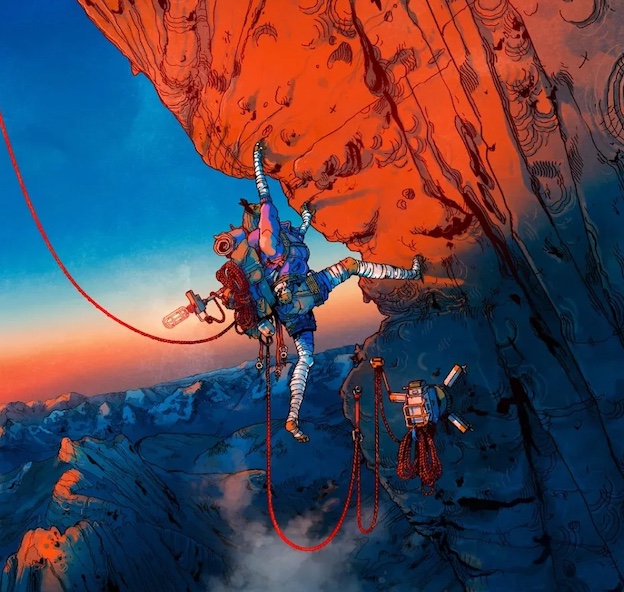
There’s a very specific moment in Cairn when the game stops being a video game and starts feeling like a personal vendetta. For me, it happened deep inside a crystalline cave halfway up Mt. Kami, staring at a wall that might as well have been carved out of spite. No pitons would bite. No obvious route presented itself. Just jagged geometry and the quiet implication that I’d made a series of bad life choices, both digital and otherwise.
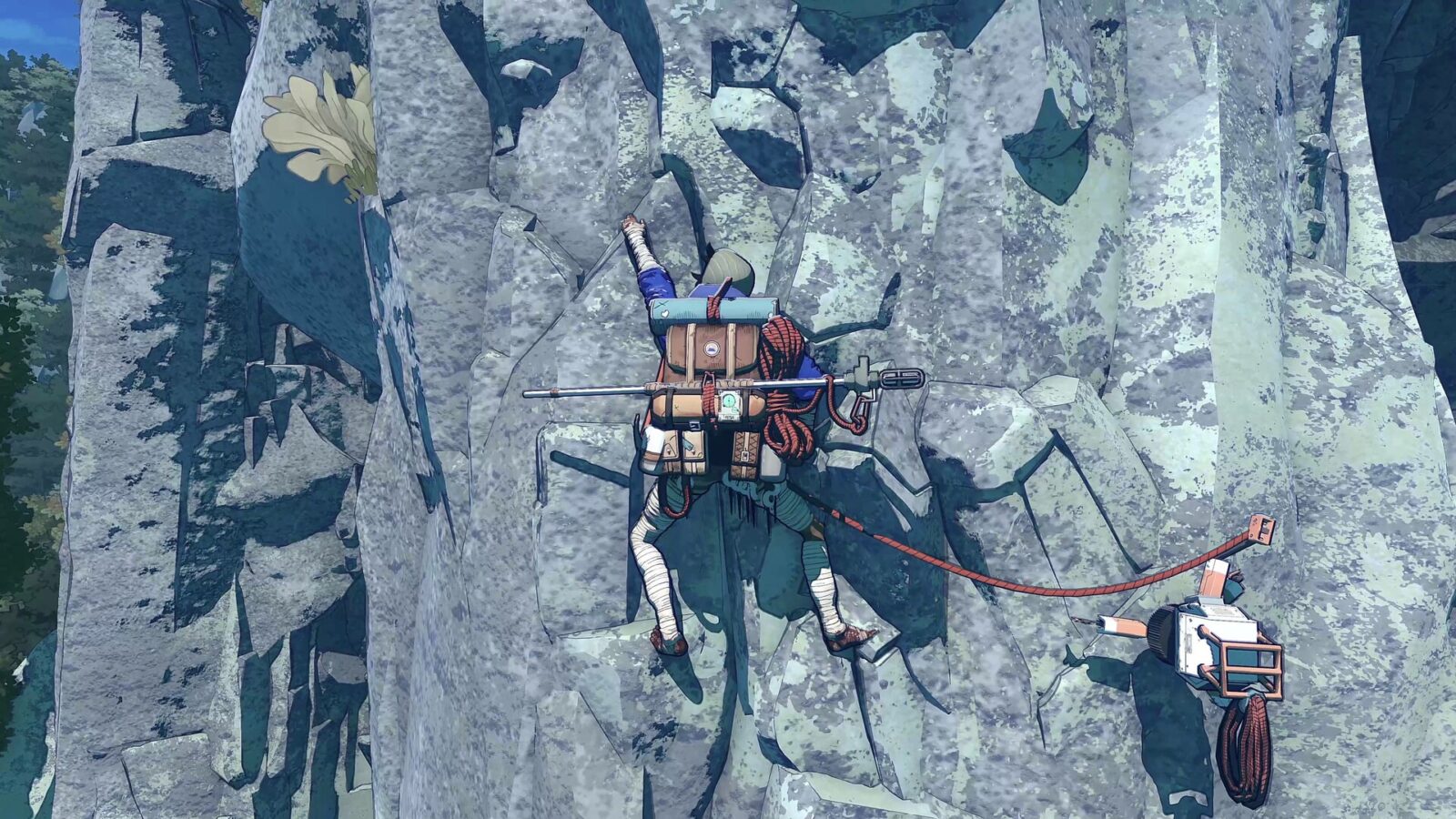
So I did what Cairn quietly encourages you to do: I ignored the sensible option. I refused to backtrack. I brute-forced myself into a miserable free solo climb that punished every impatient instinct I had. I slipped. I fell. I burned stamina like it was a renewable resource. Aava screamed. I swore out loud. And when I finally clawed my way out the other side, bloodied, exhausted, and victorious, Cairn calmly revealed an alternate path five steps away that would have spared me the entire ordeal.
That’s when I understood what kind of game this was.
Cairn isn’t interested in making you feel clever. It’s interested in watching you make choices and then live with them. Developed by The Game Bakers, the team behind Furi and Haven, this is a climbing and survival game that strips the fantasy out of heroism and replaces it with friction, fatigue, and regret. It’s about ascent, yes, but more importantly it’s about the emotional and physical cost of insisting on going straight up when going around would be easier.
Everything in Cairn revolves around the act of climbing, but not in the cinematic, power-fantasy way most games approach verticality. If you’ve played Jusant, you’ll recognize the meditative bones of the idea, but Cairn is its harsher, less forgiving sibling. This mountain doesn’t want to be climbed, and the game never pretends otherwise.
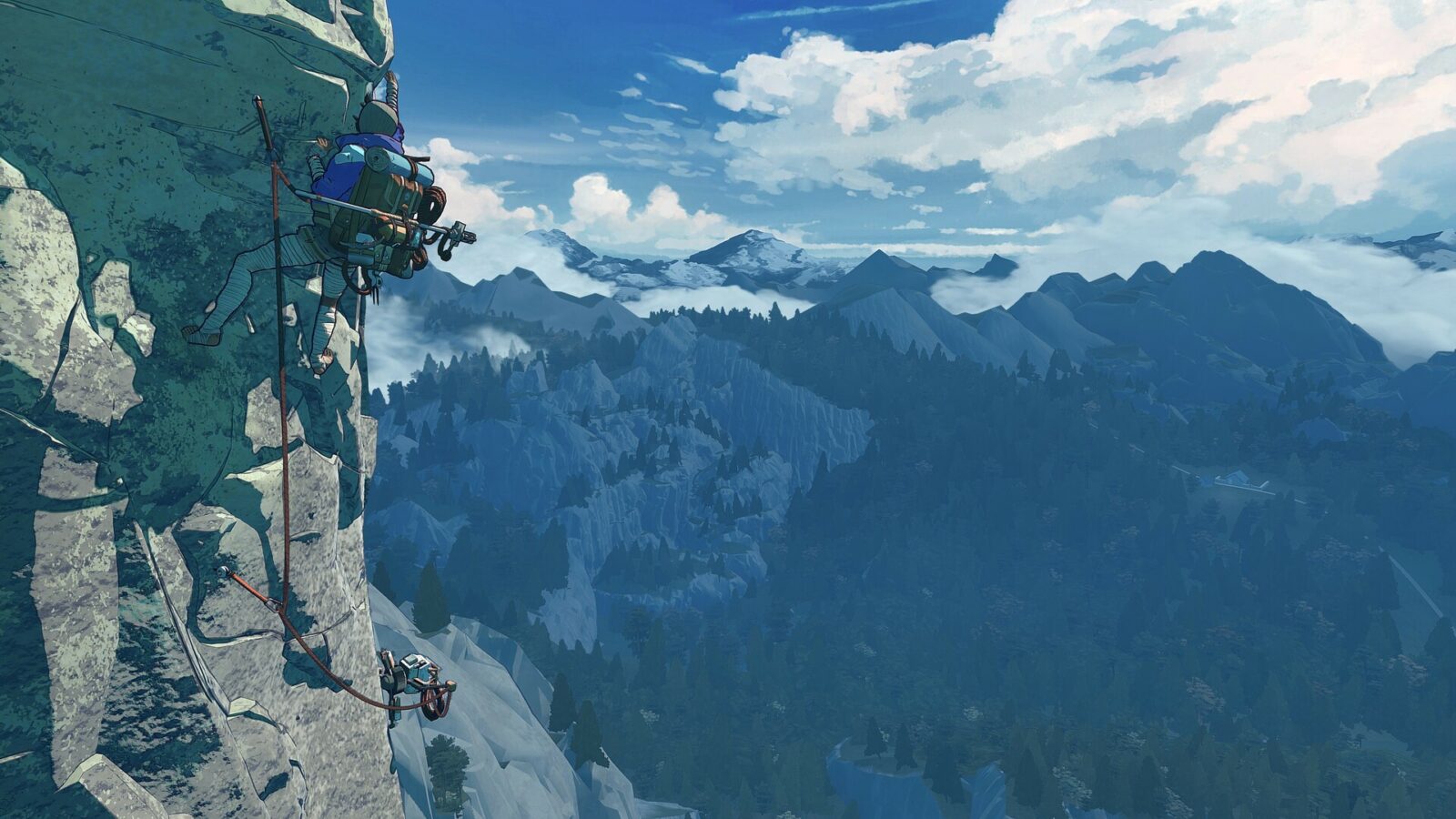
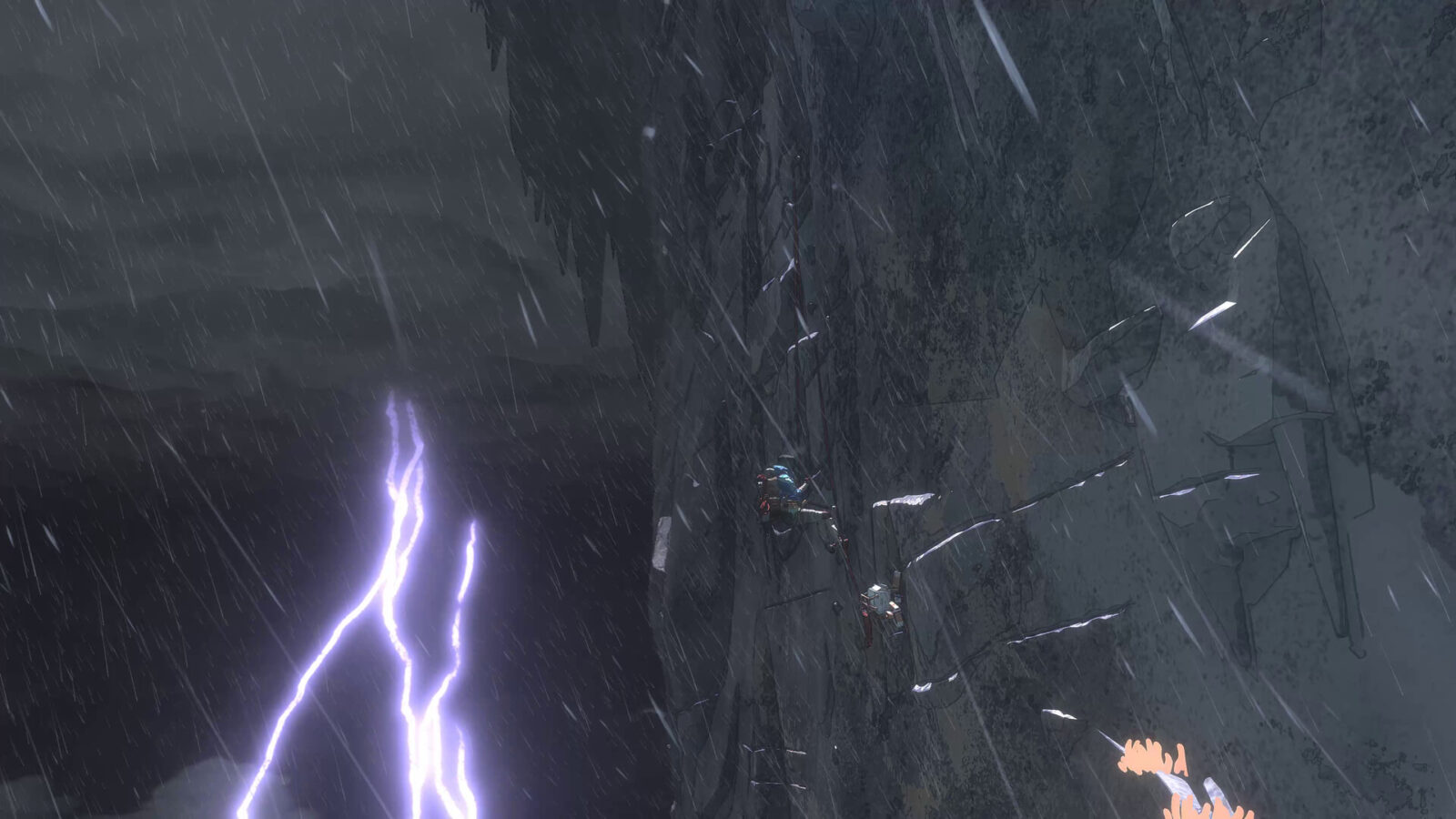
Every movement is deliberate. You don’t “press climb.” You place hands. You adjust feet. You shift weight. You feel the awkwardness of Aava’s body contorting into positions that look unsafe because they are unsafe. The game offers almost no UI guidance here. There are no glowing handholds or stamina bars screaming at you mid-ascent. Instead, you’re forced to read Aava herself: the tension in her arms, the tremor in her legs, the way her breathing changes when a hold is solid versus when it’s lying to you.
I learned, slowly and painfully, that climbing well in Cairn isn’t about speed or confidence. It’s about humility. Early on, I treated stamina like a suggestion and rushed climbs the way years of game design have trained me to. That habit got me humbled fast on longer routes where sloppy form snowballed into total collapse. Watching Aava’s knees buckle because I got greedy with one extra reach felt less like a failure state and more like being called out.
And yet, that’s where Cairn shines. It lets you fail loudly, repeatedly, and meaningfully. Every fall teaches you something if you’re willing to listen. Over time, I began to spot micro-holds that felt invisible before. I learned when not to place a piton because the rock would betray it. I learned that sometimes the bravest move is stopping, chalking up, and breathing instead of pushing forward. Those lessons didn’t unlock upgrades or achievements. They unlocked competence, which is far rarer.
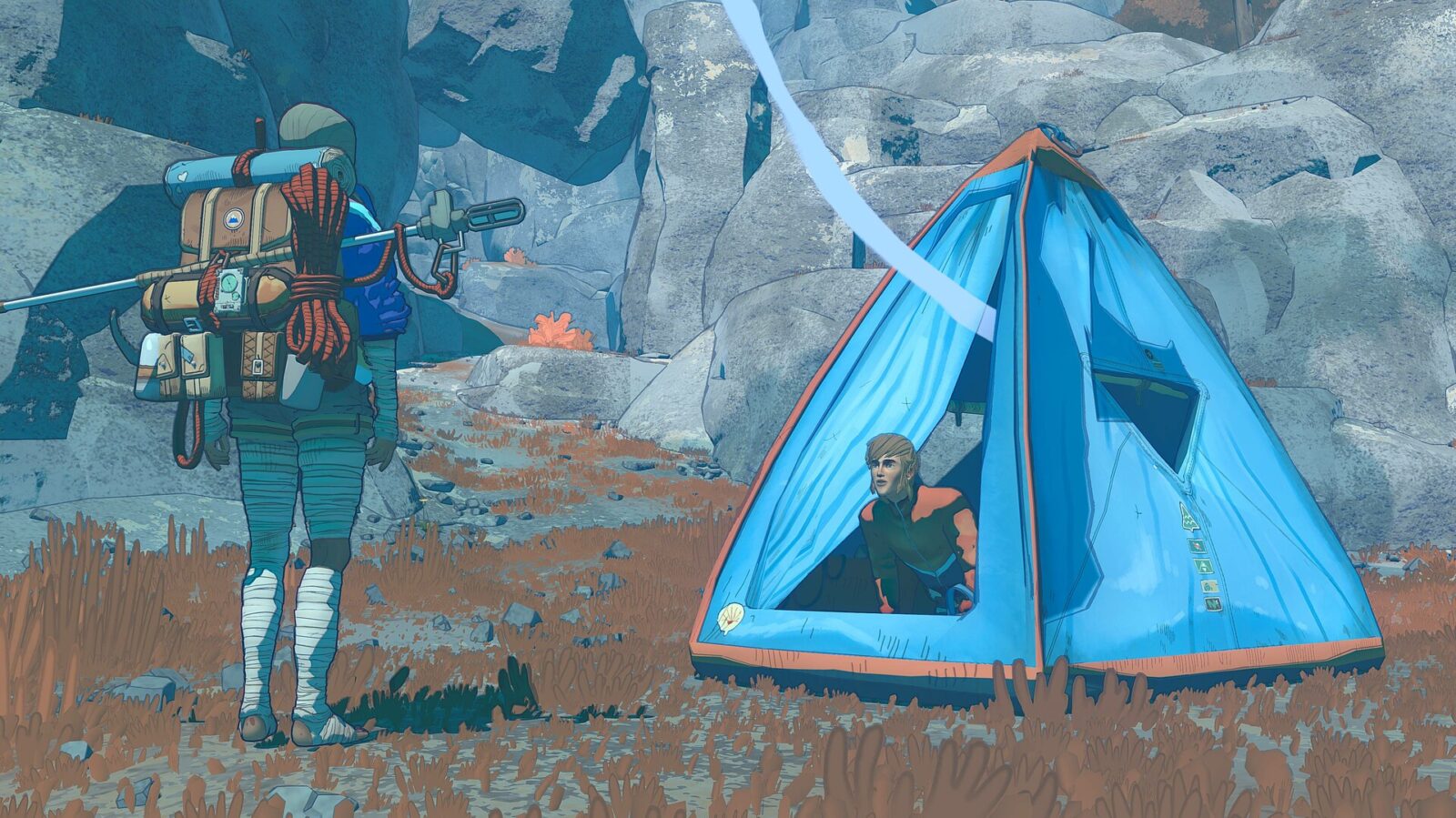
Survival mechanics weave through all of this without ever overshadowing the climb. Hunger, thirst, cold, and exhaustion are constant pressures, but they’re handled with refreshing restraint. You scavenge water from streams and caches. You cook simple meals at bivouacs using whatever you’ve managed to cram into Aava’s limited pack. Better ingredients mean better long-term effects, and some status bonuses can feel like miracles during extended ascents. I grew deeply attached to one effect that froze my meters in place, not because it was flashy, but because it bought me time to think.
Bivouacs themselves are quiet little lifelines. They’re where you sleep, repair gear, recycle scraps into chalk, and take stock of how badly you’ve mismanaged the last stretch. They’re also where Cairn saves your progress, which adds an extra layer of tension to every decision you make above them. Push too far and fail, and the mountain will happily remind you how far back down you belong.
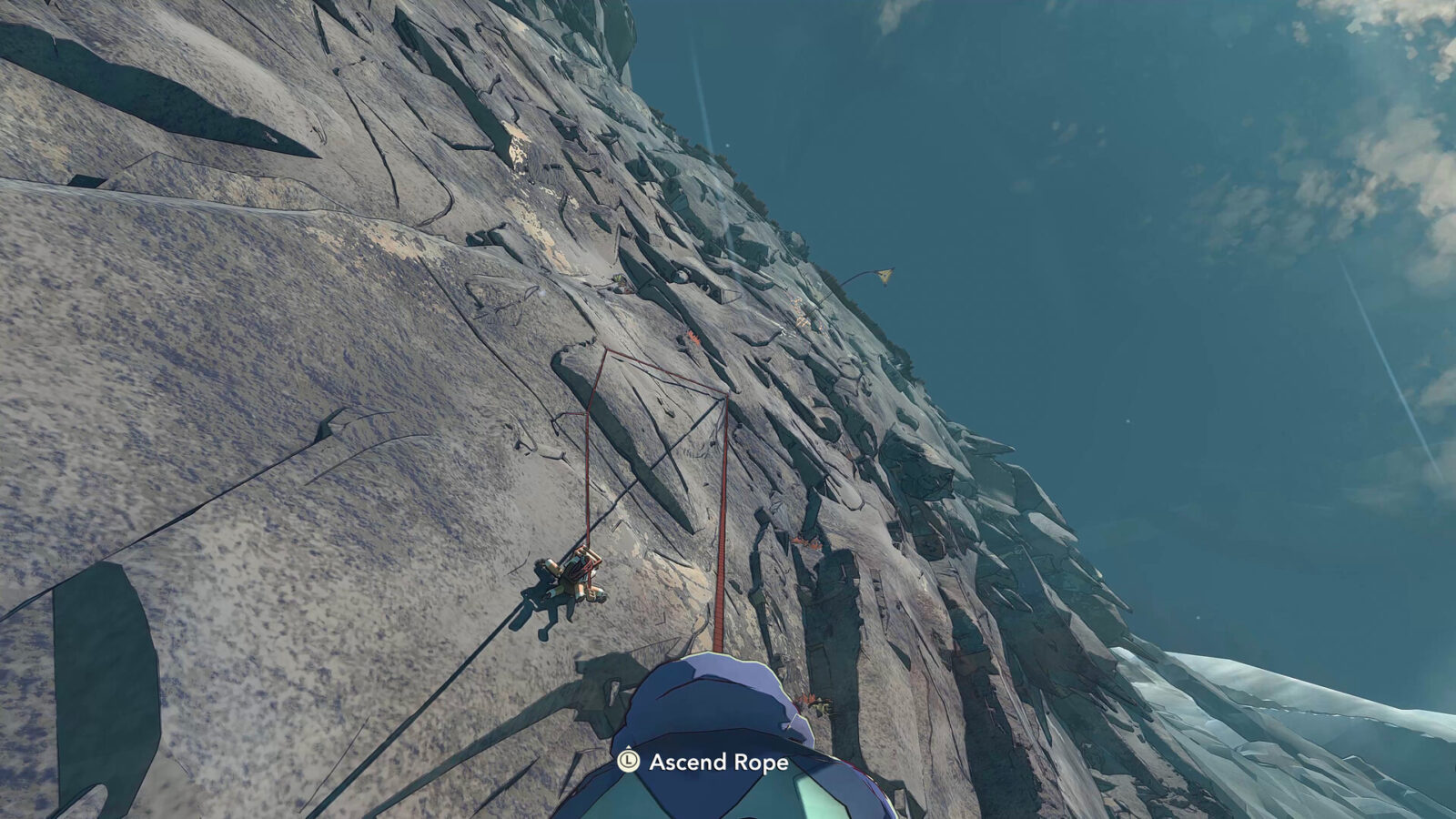
As the climb grows more dangerous, the mountain starts telling stories without ever stopping you to listen. Supplies become harder to find naturally, and more often you’re scavenging from the remains of climbers who didn’t make it. Frozen bodies, abandoned camps, silent warnings etched into the landscape. Mt. Kami, the towering fictional peak that dominates Cairn, is beautiful in the way disasters are beautiful: vast, indifferent, and unconcerned with your survival.
Aava herself is the emotional anchor that keeps all of this from becoming mechanical. She’s an accomplished climber, a public figure, and someone very clearly running from something she can’t articulate. Phone calls from her partner go unanswered. A manager tries to pull her back into a life of contracts and expectations. A wide-eyed novice named Marco treats her like a legend, while she treats herself like a problem that needs distance.
The game never fully explains why she’s here, and that restraint feels intentional. Aava isn’t a puzzle to be solved. She’s a person making a reckless choice because it feels simpler than standing still. Life, she implies, makes more sense when reduced to handholds and gravity. I didn’t need a tidy resolution to empathize with that. I’ve climbed my own metaphorical mountains for far worse reasons.
By the time I reached the summit, Cairn no longer felt like a solo experience. It felt like a partnership forged through shared suffering. I felt every fall as a personal indictment. Every second wind felt earned. The mountain stripped away the distance between player and protagonist until there was nothing left but effort and trust. Without me, Aava wouldn’t have made it. Without her, I wouldn’t have stayed.
Cairn isn’t fun in the conventional sense. It’s slow, punishing, and often uncomfortable. But it’s also one of the most honest games about persistence I’ve played in years. It understands that walls aren’t always meant to be smashed through headfirst. Sometimes they exist to test whether you’ll keep going anyway.
Verdict
Cairn is a grueling, gorgeous climbing and survival game that demands patience, humility, and emotional buy-in. Its uncompromising mechanics and deeply human protagonist turn every ascent into a quiet act of defiance, making Mt. Kami feel less like a level and more like a reckoning. It won’t be for everyone, but for those willing to suffer a little, it’s unforgettable.