
TL;DR: It’s Taken meets The Americans, with a bilingual twist and just enough heart to make the bullets hurt.
Butterfly
Daniel Dae Kim’s Butterfly is the kind of show that starts by lying to you—in the nicest way possible. The first thing you hear is The Killers’ Mr. Brightside, a song so overplayed in the 2000s that it’s now basically karaoke wallpaper. My first thought? “Oh no. This is going to be one of those shows—desperate to be cool, weighed down by ironic needle drops.” But then the camera shifts to a dingy Korean karaoke room, our protagonist drunkenly mangling the chorus, and suddenly I’m not rolling my eyes anymore. I’m grinning. The song isn’t just window dressing—it’s a cultural handshake, a wink that says: Don’t get too comfortable. We’re going to twist your expectations.
And that’s essentially Butterfly in a nutshell.
It’s an espionage drama that insists it’s here to thrill you with double agents, covert missions, and morally grey power players… and it does give you all that. But by the end, you realize it’s not really a spy show at all. It’s a family drama in spy drag, where the explosions and foot chases are just set dressing for a much messier, more intimate war—the kind fought around dinner tables, not just across borders.
The Premise: Taken, but Make It Korean-American and Complicated
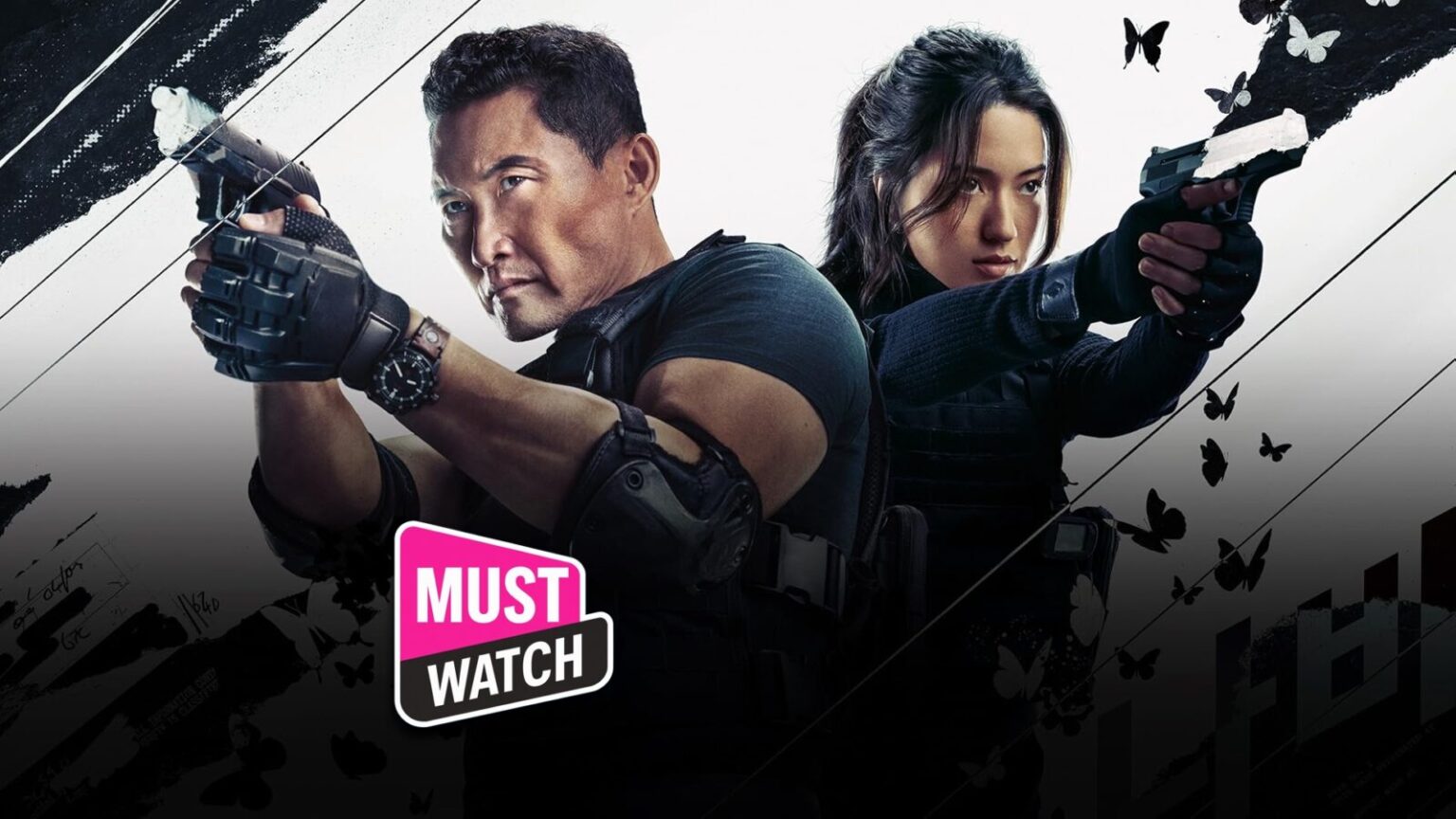
Daniel Dae Kim plays David Jung, a retired intelligence officer reluctantly pulled back into the field. If this sounds like a premise you’ve heard a hundred times, you’re not wrong—except here the missing loved one isn’t an innocent teenager in need of rescue. She’s Rebecca (Reina Hardesty), his estranged daughter… and also a trained assassin. Worse, she’s working for the private espionage agency he founded, Caddis, now under the leadership of his former partner-slash-maybe-enemy Juno (Piper Perabo).
You can see the emotional landmines coming from miles away. Rebecca is torn between the father she hasn’t forgiven for abandoning her and the maternal figure who raised her in a world of violence. David’s mission isn’t just to bring her home—it’s to un-brainwash her, to make her remember that she’s more than the weapon she was turned into.
That’s the kind of hook I live for. Sure, the “retired agent gets pulled back in” trope is older than Casino Royale martinis, but here the stakes are as much about emotional reclamation as they are about toppling shadowy organizations.
The Spy Stuff: Familiar but Flawless in Execution
Let’s be clear—Butterfly isn’t reinventing the espionage wheel. We still have the shadowy corporation, the morally dubious handlers, the big secrets that could change everything. And yes, you’ll probably guess the big twists a couple episodes before they land. But the show doesn’t coast on surprise—it leans into execution.
The action choreography is tight and fluid, never indulgent, always purposeful. Fights are shot from bold angles that make you feel the snap of a kick or the jolt of a bullet without devolving into shaky-cam chaos. The pacing? Relentless. There’s no episode where the plot sits idling; something is always happening. In fact, the show almost dares you to blink, because if you do, you’ll miss a betrayal, a coded message, or a blink-and-you-miss-it gesture that changes everything.
In most spy thrillers, the tension lives in the shadows—the slow burn of surveillance, the long game of lies. Here, the suspense is in the emotional arena. The danger isn’t just “Will they catch the target?” but “Will Rebecca pull the trigger on her own father?”
The Real Heart: A Fractured Family
If Butterfly was only an action series, it would still be good. But what makes it stick is that, at its core, it’s a story about estrangement, reconciliation, and the impossibility of undoing certain choices.
David and Rebecca’s relationship is jagged and raw. He sees the child he abandoned in the assassin’s eyes; she sees the man who left her in the very world he now wants to pull her out of. It’s not about forgiveness in the Hallmark sense—it’s about survival, both literal and emotional.
Juno’s presence turns it into a love triangle of sorts, but one built on loyalty instead of romance. She genuinely loves Rebecca in her own warped, controlling way, and Perabo plays her with the perfect blend of steel and vulnerability. You believe she could order a hit over breakfast and make sure you take your vitamins.
Reina Hardesty: The Wild Card
Let’s talk about Reina Hardesty, because she absolutely steals this series. Rebecca is written as a sociopath with a sliver of tenderness buried deep under years of conditioning. That’s a tough role to pull off without making her either cartoonishly cold or too easily “redeemable,” but Hardesty threads the needle perfectly.
One moment she’s staring at you like she’s figuring out exactly where to stick the knife; the next, she’s a daughter silently remembering her father teaching her to pour makgeolli. Her unpredictability is the engine of the show—you never feel certain where her loyalties will land until the final moments.
Culture as a Character
One of the things I loved most is how Butterfly doesn’t just slap an Asian-American lead into a Western spy template and call it representation. It actually uses its setting—South Korea—not as a postcard backdrop, but as part of the storytelling DNA.
Episodes are named after Korean cities (Seoul, Busan), and the camera lingers on train stations, marketplaces, and neon-soaked streets in ways that feel authentic, not touristy. Bilingual dialogue flows naturally. Cultural rituals, from casual drinking to respectful bows, are woven into the action without feeling like “educational” asides.
For a show about identity, displacement, and the push-pull between two worlds, this lived-in authenticity matters.
Final Thoughts
Butterfly isn’t the most shocking spy thriller you’ll watch this year, but it might be one of the most heartfelt. It delivers wall-to-wall action without losing sight of the emotional shrapnel its characters carry. Daniel Dae Kim is magnetic as always, Perabo gives her best villainy since Covert Affairs, and Reina Hardesty… well, she just might be the reason this show sticks in your head long after the final credits roll.
Butterfly doesn’t try to reinvent the espionage genre—it weaponizes it to tell a sharper, more personal story about loyalty, betrayal, and the limits of family. Come for the spycraft, stay for the messy, beautiful human drama.