
TL;DR: Gorgeous gacha RPG with big ideas, dull combat, and a grind that never pays off. Style everywhere. Substance nowhere.
Arknights: Endfield
I wanted to love Arknights: Endfield. Not in a casual, “yeah I’ll log in sometimes” way, but in the committed, spreadsheet-brained, coffee-cold-because-I-forgot-to-drink-it way that gacha games demand if they’re going to worm their way into your daily routine. On paper, it sounded dangerous to my free time: an action RPG spun out of the Arknights universe, layered with factory simulation, light tower defense DNA, and the promise of an endlessly ticking resource machine. The kind of game that whispers, “Just one more task,” until it’s somehow 3 a.m.
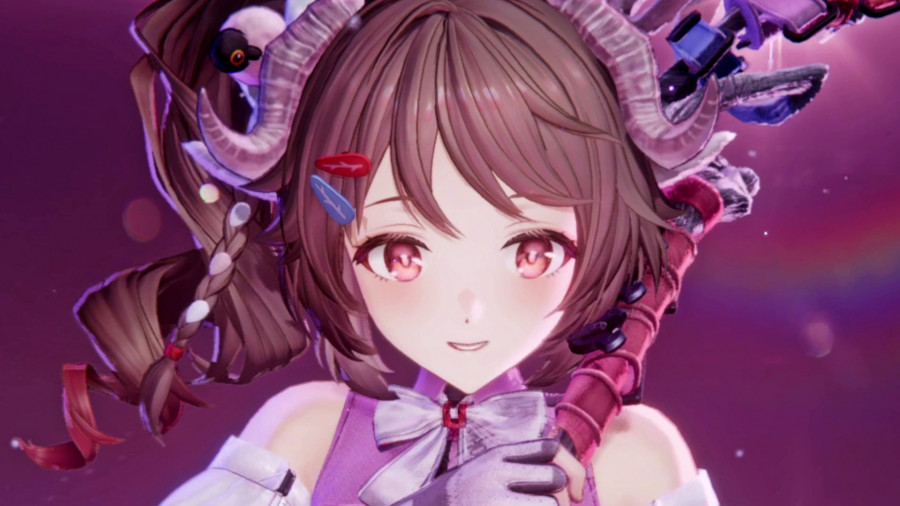
After dozens of hours with Arknights: Endfield, I can say this with absolute clarity: it wants my time far more than it deserves it.
Image: Endministrator standing in a sleek sci-fi landscape on Talos-II. Alt text: Arknights Endfield gameplay showing Endministrator exploring Talos-II.
That’s the core problem. Endfield is dripping with style, confidence, and expensive-looking presentation, but when you actually sit down and play it, the substance just… isn’t there. It’s a game that feels enormous at first glance and shockingly hollow once you start poking at the systems beneath the gloss. Combat drags. Progression suffocates. The factory management, its supposed secret weapon, turns out to be another grind wearing a clever disguise.
You wake up as the catastrophically named Endministrator on the planet Talos-II, shaking off cryosleep to help rebuild a fractured world. Conceptually, I’m in. The world-building is strong, the sci-fi aesthetics are immaculate, and the soundtrack absolutely slaps in that melancholic, premium gacha way. Cutscenes are stylish to the point of indulgence, and character designs are doing a lot of heavy lifting. This is a very good-looking game.
Unfortunately, looking good and feeling good are two very different things.
The first cracks show in combat, which should be the heartbeat of an action gacha. Instead, it became the thing I actively avoided whenever possible.
Image: Endministrator slashing enemies with a glowing sword. Alt text: Arknights Endfield combat gameplay with glowing sword and enemies.
Gacha combat thrives on power fantasy. You grind so that, eventually, you delete enemies in spectacular fashion and feel validated for the hours you poured in. Endfield misses this completely. For the entirety of the first chapter, I fought the same small handful of enemies over and over again. Aggeloi blobs. Landbreakers with tentacles for faces. That one Landbreaker flamethrower guy who haunted my dreams because I swear I fought him at least fifteen times.
The kicker is that these enemies never really get easier. The game scales them alongside your team, so even as your numbers go up, they continue to sponge hits like it’s their full-time job. Fights drag on far longer than they should, and not because they’re challenging or dynamic. They’re just slow.
The combat system clearly wants to be compared to Wuthering Waves. You’ve got a four-character team, dodges, parries, combos, ultimates, and flashy animations meant to sell impact. In practice, most encounters boil down to basic attacks while you wait for cooldowns to come online. Nothing feels punchy. Nothing feels decisive. Even ultimates land with a shrug.
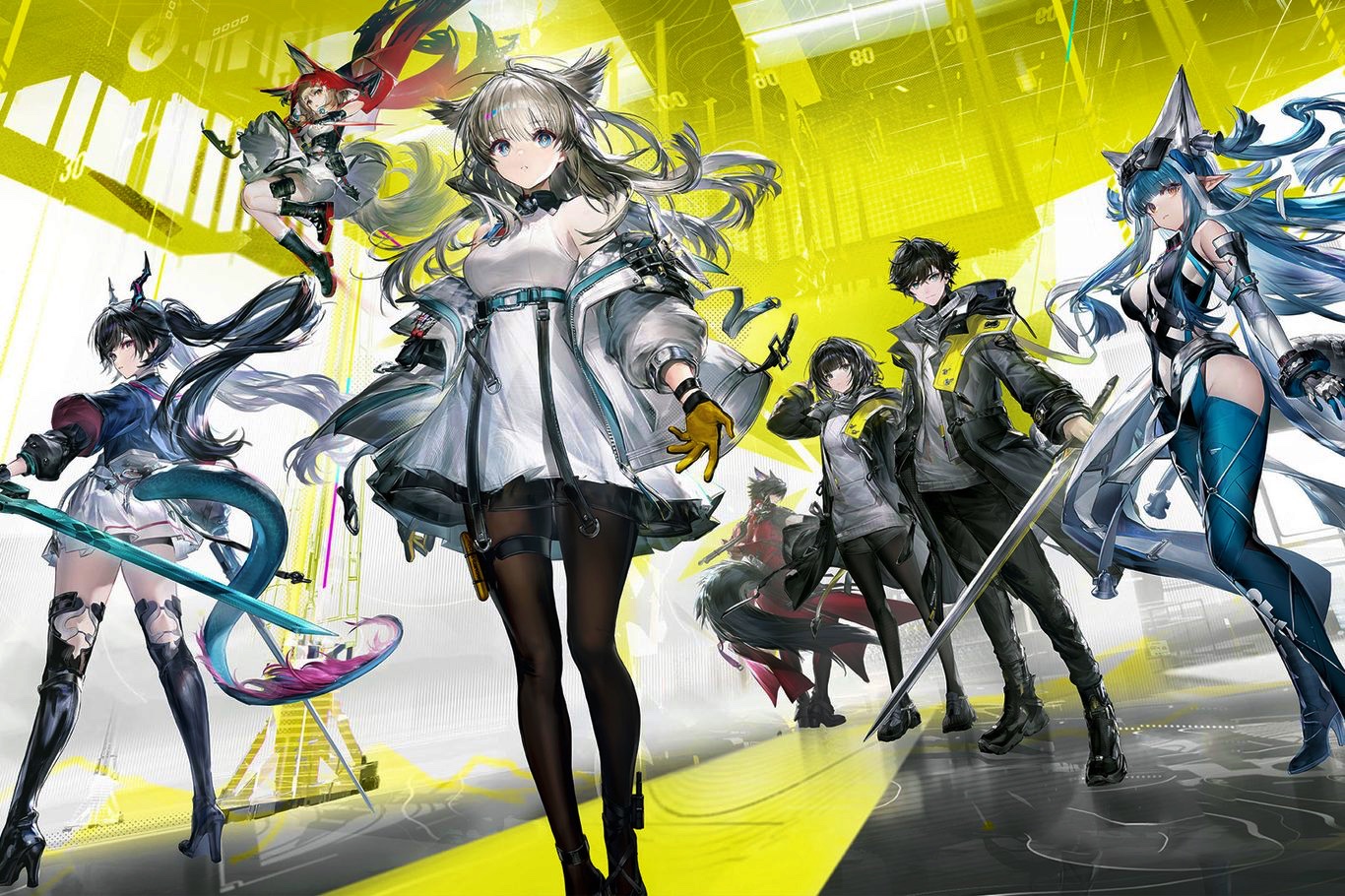
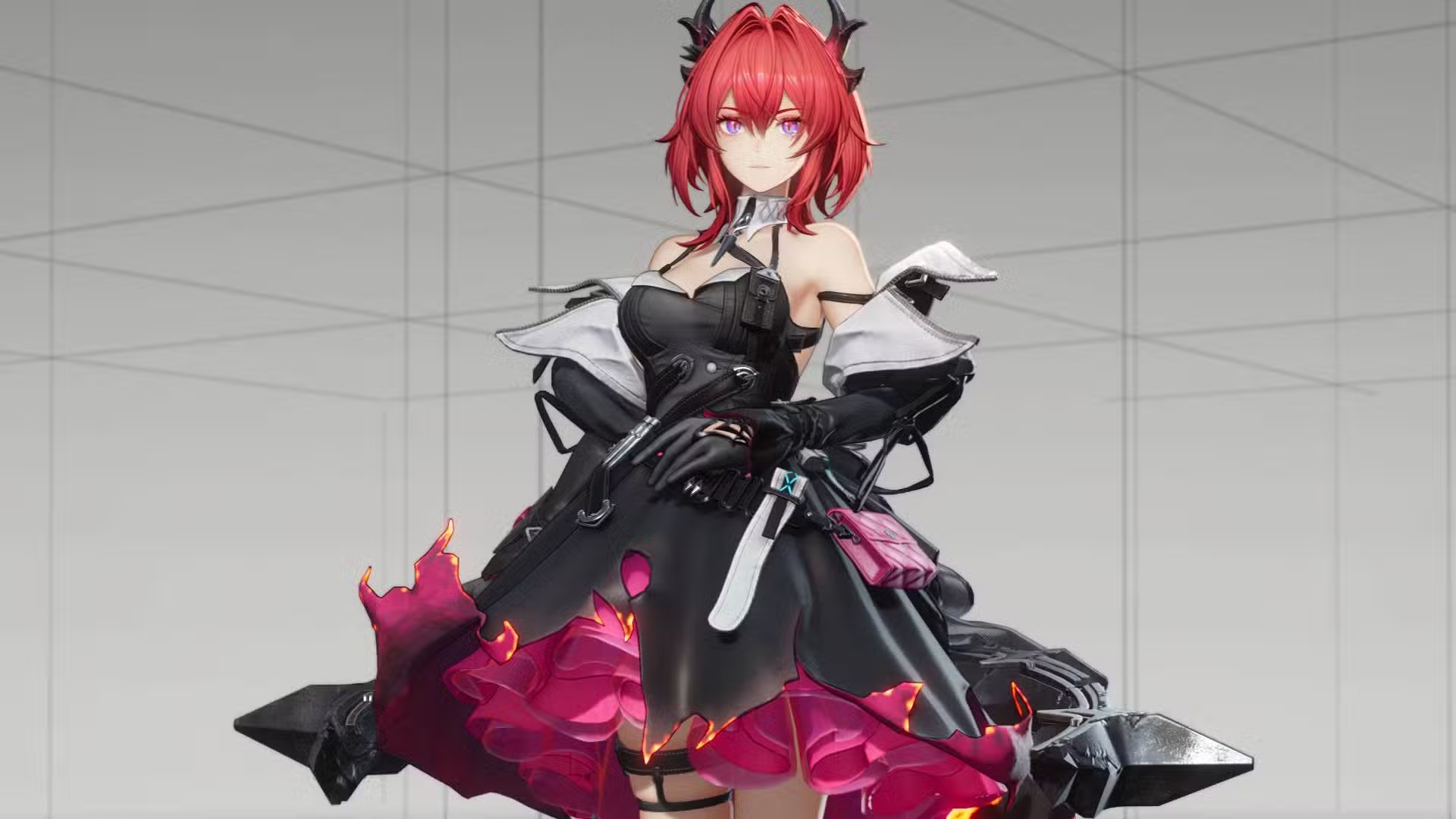
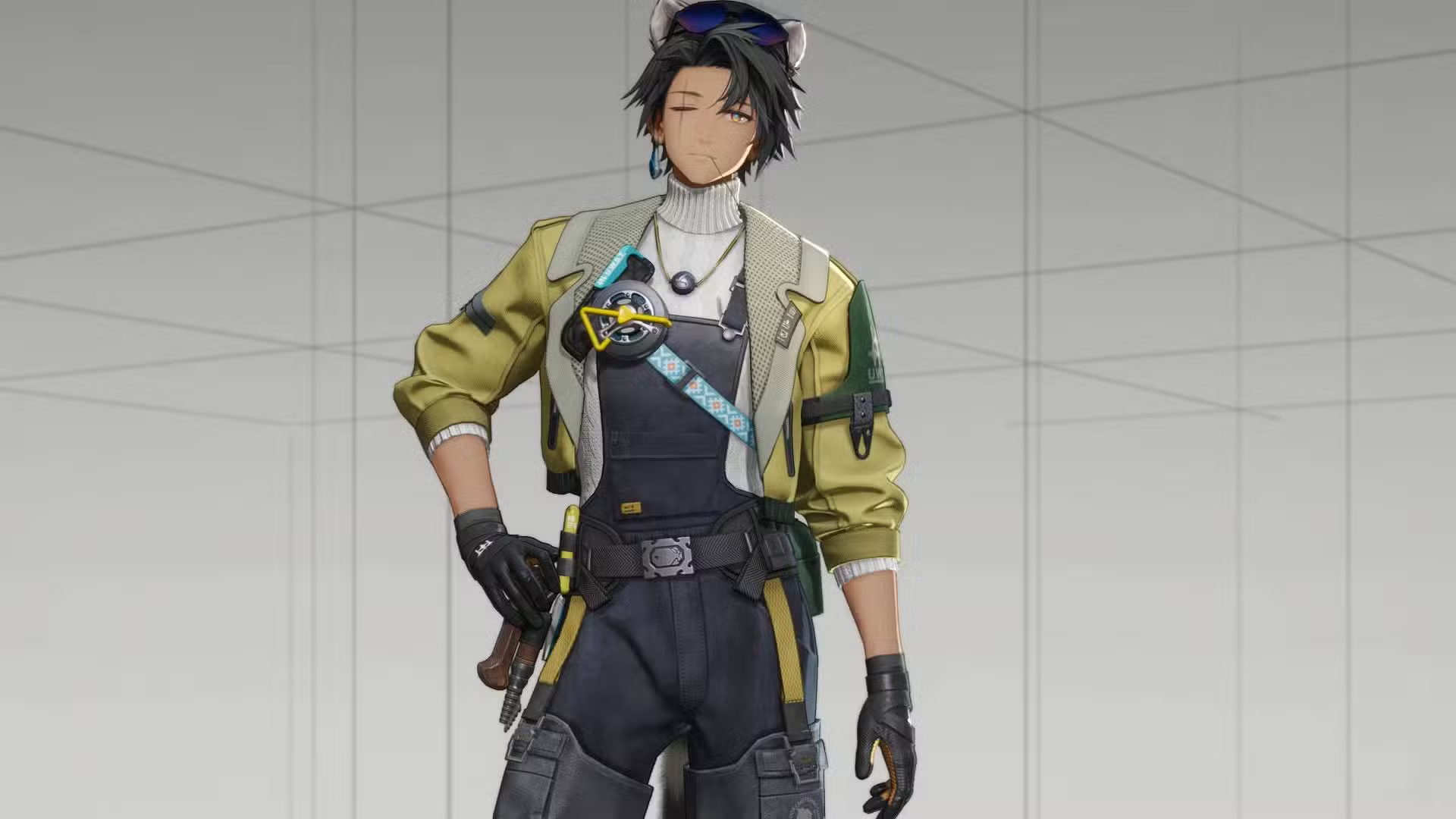
What makes this sting more is that the characters themselves are fantastic on a visual level. Laevatain, Da Pan, Gilberta, Alesh – all of them look like they stepped out of an artbook I’d happily pay for. But in combat, they blur together. Movesets lack identity, animations get lost in visual clutter, and dodging or parrying feels less like skill expression and more like wrestling with the camera.
Image: Multiple Endfield characters posed dramatically. Alt text: Arknights Endfield character designs including Laevatain and Da Pan.
At one point, I jumped onto an account stacked with fully leveled, limited-banner characters, maxed weapons, and best-in-slot gear. This should have been the promised land. The ultimate gacha fantasy. Instead, it felt almost identical to my early-game experience, just with more visual noise. Enemies still soaked damage. Combat still dragged. The fantasy never arrived.
What really broke me was a cutscene where a character effortlessly slices through a group of enemies in a single motion. I actually laughed out loud. Not because it was cool, but because the game itself had spent the last 20 hours training me to believe that was impossible.
Progression, the other pillar of gacha design, fares no better.
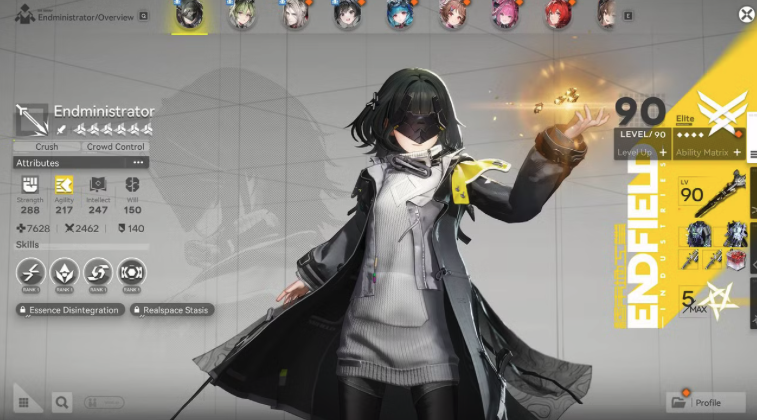
Image: Character progression screen with stats and gear. Alt text: Arknights Endfield character progression and gear interface.
Endfield follows the familiar loop: grind materials, wait for respawns, pull on banners, feel disappointed, consider spending money, repeat. The problem is how aggressively it leans into that loop without offering meaningful payoff. Everything is gated. Resources take hours to respawn. Daily tasks are mandatory if you want to stay efficient, and many of them are insultingly mundane.
There are recycling stations scattered across the map, inconveniently far from fast travel points, that you’re expected to visit daily. No combat. No puzzles. Just jogging through empty space to press a button. Exploration often feels like this. Slow, clunky, and unrewarding. You can’t climb. You can’t glide. Sometimes you can barely jump. Compared to how fluid and expressive movement feels in Wuthering Waves, Endfield’s world feels strangely hostile to traversal.
You can upgrade everything: hubs, depots, ships, cabins, characters, weapons, weapon essences, and a bizarre stock distribution system that feels like a half-baked economic sim. But you very quickly realize you need to pick favorites, because leveling more than one full team without opening your wallet is a fantasy. Endfield does not respect your time, and it barely pretends to.
The factory management system initially felt like the game’s saving grace.
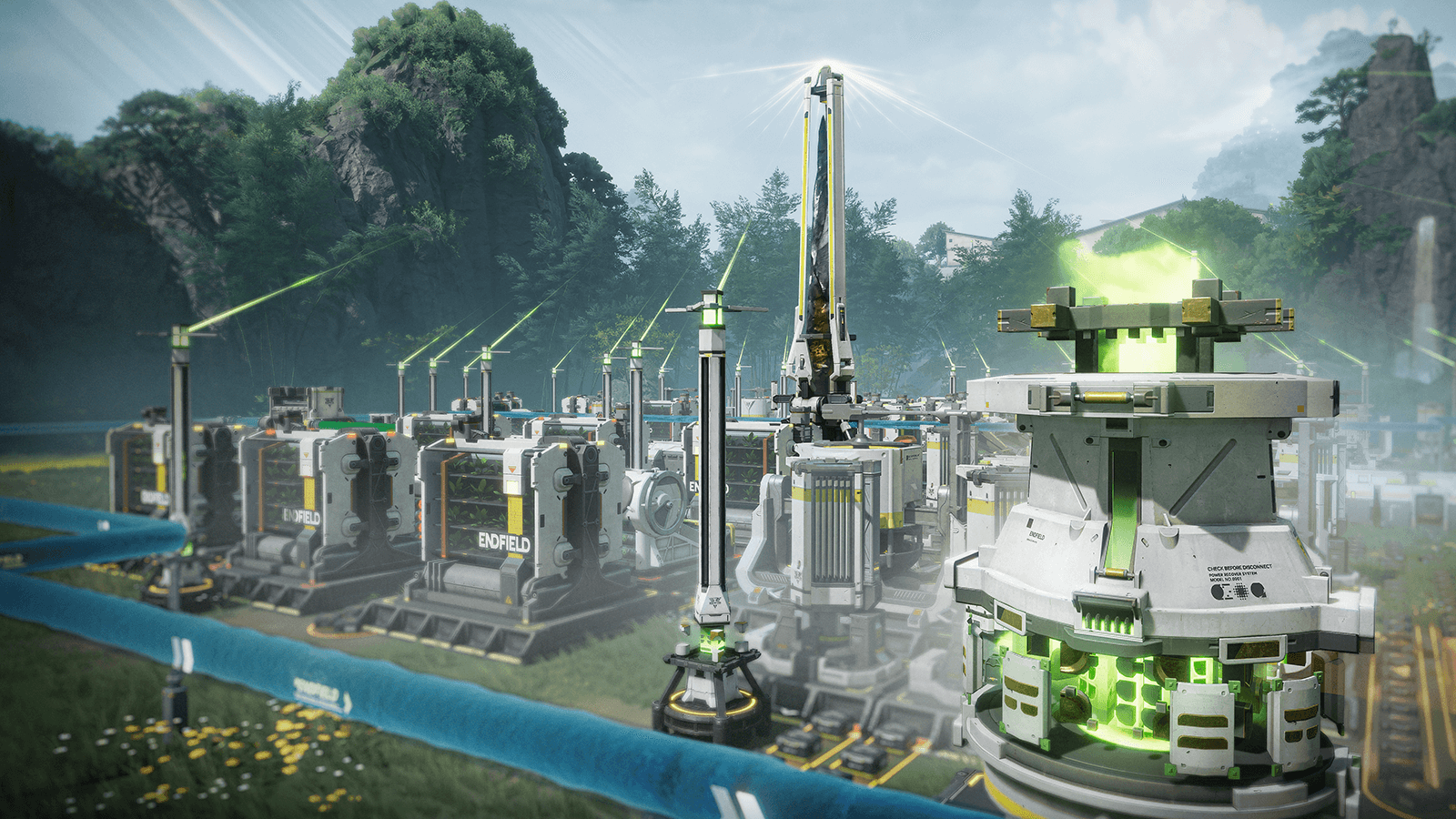
Image: Large factory management interface with conveyors and power lines. Alt text: Arknights Endfield factory management system overview.
Building interconnected outposts, routing resources across regions, and watching materials flow automatically scratches a very specific itch. On the surface, it’s clever. Different regions favor different resource chains, and optimizing them for maximum Stock Bill output gives you a sense of direction.
Then the mask slips.
Character upgrades reveal the factory system’s true nature: repetition masquerading as complexity. Mine ore. Refine it. Process it. Combine it with another material. Use it to level characters. Reach a new region. Do the exact same thing again with a different ore. Repeat until entropy claims the universe. It’s not engaging. It’s not strategic. It’s busywork.
There is also a tower defense mode, a nod to the original Arknights. It’s fine. Potentially interesting. Completely undercooked at this stage and feeling more bolted on than integrated.
The deeper I got, the clearer the pattern became. Menus on top of menus. Tutorials constantly interrupting me to explain systems that never evolved into anything deeper. An illusion of complexity without the satisfaction of mastery.
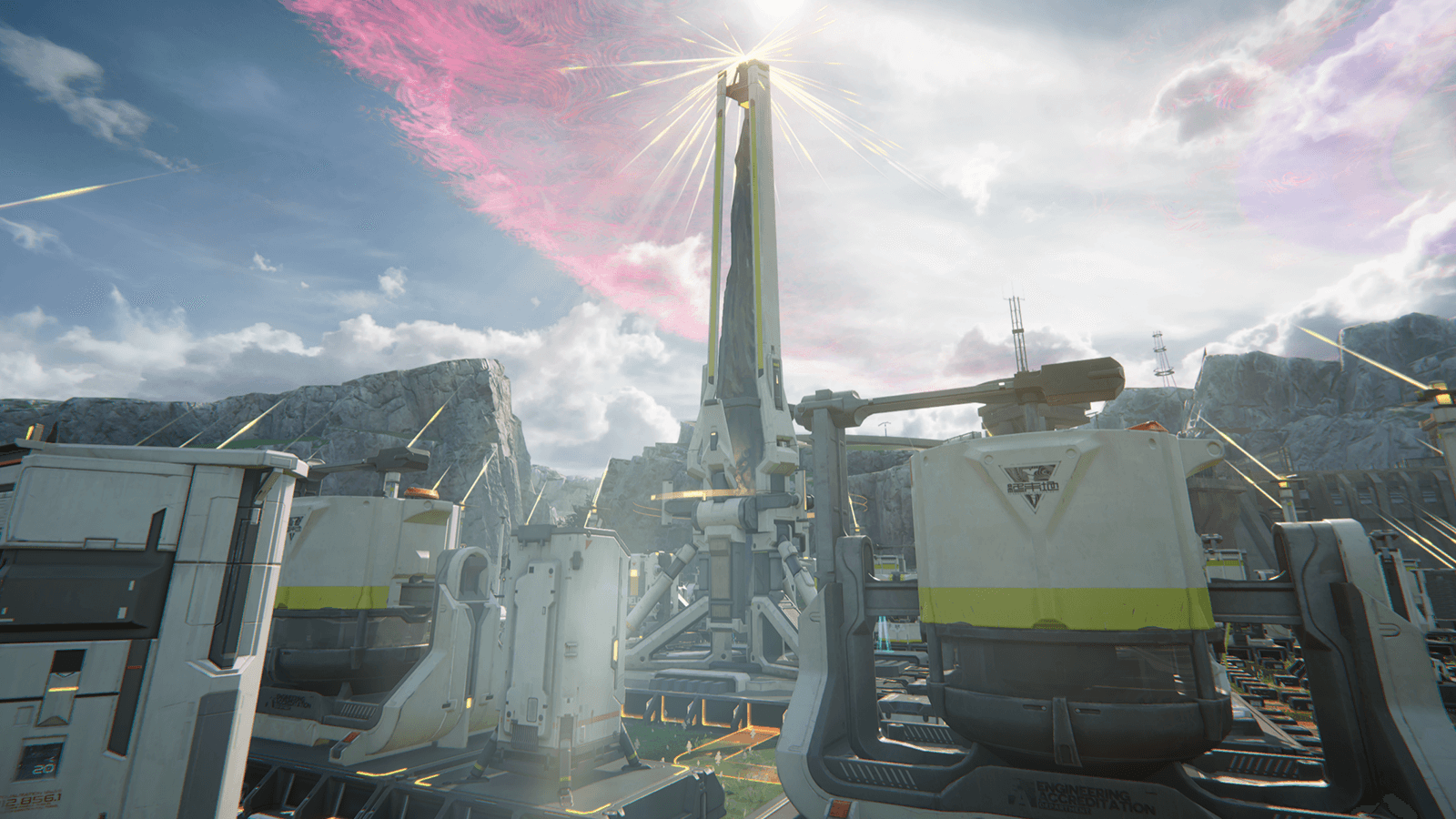
Image: Player character overlooking an industrial zone. Alt text: Arknights Endfield world design showing industrial landscape.
I don’t hate Arknights: Endfield. That almost makes this worse. There’s a version of this game that works. The art direction is phenomenal. The music is excellent. The world of Talos-II is interesting, and the foundation is there. But right now, it’s all surface. A gacha purgatory where you’re encouraged to stay forever without being given a real reason to.
I went in planning to be there on launch day, fully committed. I walked away burned out before the second chapter had a chance to surprise me. And that says everything.
Verdict
Arknights: Endfield is a stylish, expensive-looking gacha game that mistakes scale for depth. Its combat is repetitive, progression is punishing, and its most interesting systems collapse into grind the longer you engage with them. There’s potential here, but right now it feels like a factory that produces busywork instead of joy.