
TL;DR: Anaconda is a self-aware, affectionate satire of Hollywood’s IP addiction that delivers laughs and heart in equal measure, but never digs deep enough to truly sink its fangs in. Jack Black and Steve Zahn shine, the meta-jokes mostly land, but the film’s themes and characters feel undercooked, leaving it entertaining yet ultimately forgettable.
Anaconda
I went into Anaconda with my expectations hovering somewhere between ironic midnight-movie delight and full-blown sequel fatigue. Armed with nostalgia and a snake large enough to qualify as a supporting character, Tom Gormican sets out to wrestle meaning from Hollywood’s favorite survival instinct: doing the same thing again, but louder and with a wink. What I got instead was something oddly sincere, intermittently funny, and ultimately about as filling as a hollowed-out boa constrictor midway through shedding season.
This new Anaconda is not a remake of the 1997 creature feature, and it’s not quite a reboot either. It’s more like a meta-cover band playing the hits while winking at the crowd about how ridiculous the whole thing is. Think Bowfinger by way of YouTube-era sincerity and studio-era cynicism, except without the sharp teeth that made Bowfinger actually draw blood. It wants to bite the hand that feeds Hollywood slop, but mostly ends up gnawing on its own tail.
The timing of this movie is not accidental. We’re in full ouroboros mode as an industry. Hollywood isn’t just recycling IP anymore; it’s narrating the recycling process itself. Movies now come pre-loaded with apologies for existing. They tell us they know this is silly, they know it’s redundant, but hey, at least they’re self-aware. Anaconda 2025 lives entirely inside that mindset, and while that self-awareness generates a few genuine laughs, it also becomes a crutch the film never quite kicks.
Tom Gormican, who previously skewered Hollywood mythmaking with The Unbearable Weight of Massive Talent, clearly has a fascination with how the industry mythologizes itself while simultaneously hollowing itself out. In theory, Anaconda should be his sweet spot. A movie about making a dumb movie, riffing on legacy sequels, AI-slop blockbusters, and the executive logic that turns creativity into spreadsheets. In practice, the satire is toothless, more affectionate than incisive, and far too comfortable with the very thing it pretends to critique.
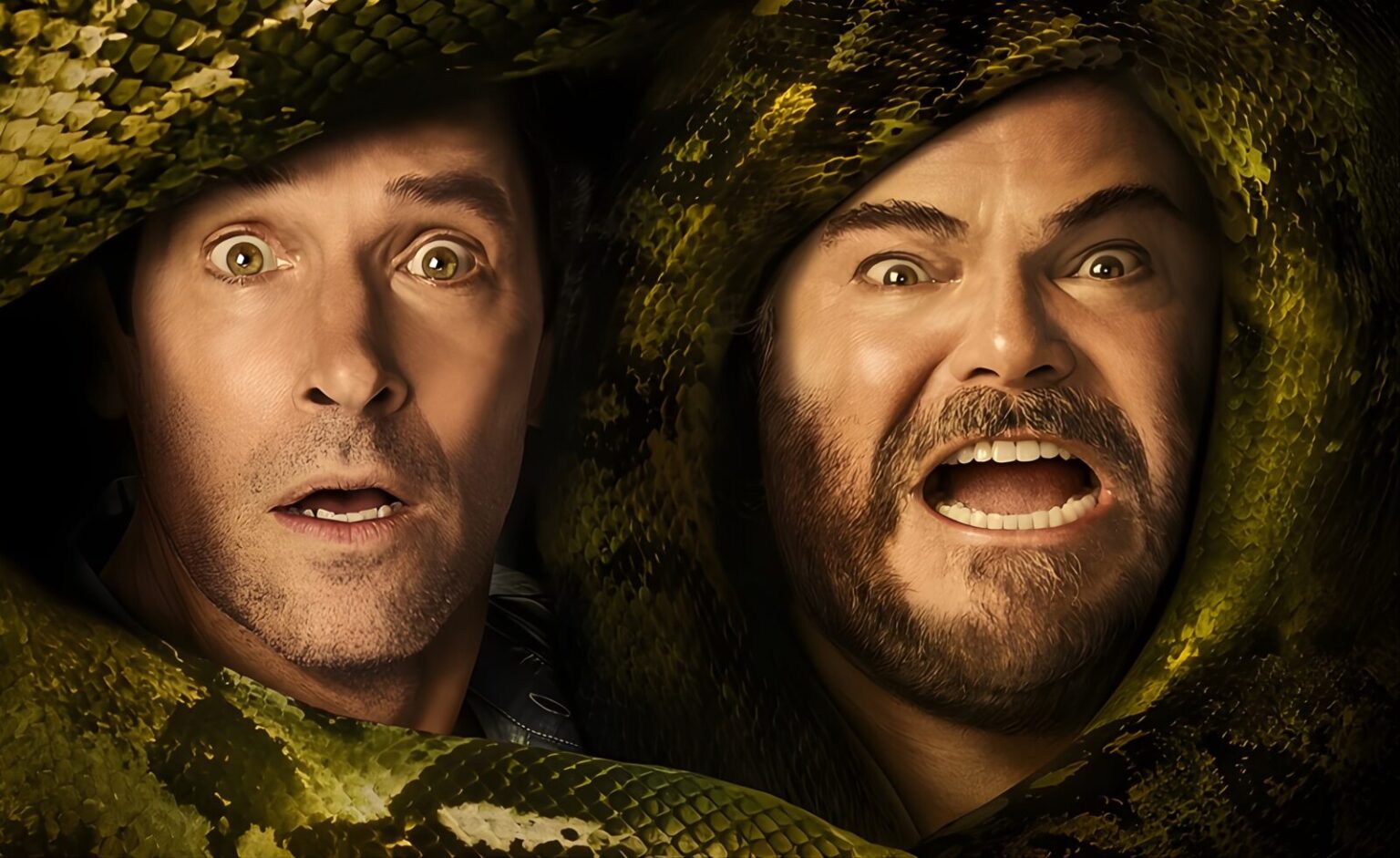
At the center of this chaos is Doug McCallister, played by Jack Black in full lovable-idiot mode, but with the volume knob turned down just enough to keep him grounded. Doug is a wedding videographer, a pure-hearted cinephile, and the kind of guy who genuinely believes movies can change lives. He’s joined by Griff, played by Paul Rudd doing his usual affable, lightly self-deprecating charm routine, as a struggling actor who returns to Buffalo for a surprise birthday party and drops two life-altering gifts: a dusty VHS of a childhood monster movie called The ’Quatch, and the news that he’s somehow secured the rights to Anaconda.
Yes, Anaconda. That Anaconda. The one with Jon Voight, terrible accents, and a snake that looked like it was animated on a lunch break. The fact that these characters latch onto that specific movie as the hill they’re willing to die on is inherently funny, and Gormican wisely leans into how absurd that choice is. It’s the cinematic equivalent of staking your indie credibility on remaking Deep Blue Sea.
Doug and Griff rope in their old friends, including Thandiwe Newton’s Claire and Steve Zahn’s Kenny, a walking bundle of neurotic loyalty and comedic desperation. Kenny, in particular, is the MVP of the ensemble. Zahn plays him like a non-rich cousin of his White Lotus character, all hunched posture, half-smiles, and deeply ingrained insecurity. Every scene he’s in feels just a little more alive, like he wandered in from a sharper movie and decided to stay.
The group’s motivation to head to Brazil and make a barebones reimagining, or spiritual sequel, or whatever-the-hell-they-decide-it-is, is sketched out with the narrative efficiency of a TikTok pitch meeting. Griff’s acquisition of the rights is waved away so quickly it feels like the movie itself doesn’t want to think too hard about how IP ownership actually works, which is ironic for a film pretending to critique that very system. Doug initially resists the idea, despite being set up as the most obsessive cinephile in the room, and only relents after encouragement from his wife Malie, played by Ione Skye, who unfortunately exists more as emotional support DLC than a fully realized character.
Once the crew hits Brazil, the movie shifts gears into adventure-comedy mode, introducing Daniela Melchior as Ana, a Tomb Raider-coded adventurer who steals their rented houseboat and drags them into a third-act plot involving mysterious goons and stolen goods. On paper, Ana should be the wildcard that energizes the film. In execution, she’s frustratingly underwritten, her motivations withheld for so long that when the reveal finally comes, it lands with a shrug instead of a gasp.
This is where Anaconda’s biggest weakness becomes impossible to ignore. For a movie about collaboration, passion, and making art with your friends, it gives its female characters remarkably little agency. Newton, Melchior, and Skye are all talented performers, but they’re mostly sidelined as emotional support, plot devices, or late-game action bursts. When Melchior finally gets to cut loose physically, she’s great, but it feels like the movie suddenly remembered she was there.
Jack Black, to his credit, is used well. Gormican reins in his natural chaos just enough to let Doug feel like a real person rather than a meme generator. There’s a sincerity to Doug’s belief in art that keeps the movie from collapsing into pure snark. Paul Rudd, meanwhile, is… Paul Rudd. Charming, goofy, and oddly underutilized. A recurring gag about his inability to pee in public wears thin fast, feeling like a leftover from a rougher draft that nobody bothered to excise.
Selton Mello shows up as the group’s snake handler, playing devotion to his reptilian co-star with an earnestness that clashes with the film’s lighter tone. The joke seems to be that he loves the snake too much, but loving a pet, even excessively, isn’t inherently funny, and the script never finds a sharper angle on it. Like much of the humor here, it’s content to gesture at a punchline rather than commit.
Visually and structurally, Anaconda does exactly what it needs to do and not much more. Watching a deeply underqualified film crew attempt to recreate big-budget horror chaos on a shoestring is inherently entertaining, and there are stretches where the movie finds a genuinely playful rhythm. The best running gag involves the crew’s desperate attempt to assign “themes” to their movie. Is it about climate change? Grief? Intergenerational trauma? Doug screaming “I LOVE intergenerational trauma” is one of the film’s sharper moments, skewering how modern studio films chase prestige talking points without earning them.
There’s also a great bit where Griff suggests awards potential, comparing himself to Jordan Peele in a moment of spectacular self-delusion. That joke cuts close to the bone, highlighting how often filmmakers confuse self-awareness with depth. Anaconda knows exactly what it wants to say about Hollywood’s obsession with legacy sequels, but it never pushes hard enough to say it with conviction.
In the end, the film’s core theme is almost aggressively wholesome. It’s about remembering why you started making things in the first place. It’s about the joy of collaboration, the magic of shared obsession, and the idea that art doesn’t have to justify its existence with box office projections or awards campaigns. That sentiment is corny, yes, but it’s also sincere, and sincerity is in short supply these days.
The problem is that sincerity alone doesn’t make a great movie. Anaconda 2025 is fun, occasionally inspired, and easy to watch, but it’s also lightweight, uneven, and unwilling to fully interrogate the system it’s parodying. Like the snake at its center, it looks impressive from a distance, but when you get close, there’s not much muscle under the skin.