

TL;DR: Netflix’s Agatha Christie’s Seven Dials is a polished but lifeless miniseries that stretches a minor Christie novel into an underwhelming three-hour slog. Strong actors and period aesthetics can’t compensate for a flat mystery, confused tone, and painfully low stakes. Watchable in the background, but ultimately forgettable.
Agatha Christie’s Seven Dials
I went into Agatha Christie’s Seven Dials with the kind of cautious optimism only a lifelong Christie tragic can muster. You know the feeling. You tell yourself, maybe this is the adaptation that cracks the code. Maybe this time, a lesser Christie novel gets the prestige-TV glow-up treatment and emerges reborn, like a dusty paperback suddenly realizing it’s HBO material. Instead, what I got from Netflix’s Agatha Christie’s Seven Dials was the creeping realization that some stories are minor for a reason, and no amount of posh accents, vintage cars, or bonnets can disguise that.
Let’s be clear right out of the gate: I love Agatha Christie. I’ve defended her messier books at dinner parties. I’ve sat through multiple Murder on the Orient Express adaptations like a loyal soldier. I even tolerated that weird phase where every Christie adaptation had to look like it was shot through an Instagram sepia filter. But Seven Dials, both as a novel and now as a three-part Netflix miniseries, is Christie in her experimental, slightly off-kilter mode. And experimentation is admirable… when it works.
This time, it really doesn’t.
Part of the issue with Agatha Christie’s Seven Dials is baked directly into its DNA. The original novel, published in 1929, has never enjoyed the cultural afterlife of Poirot, Marple, or even Tommy and Tuppence. It’s lighter, younger, flirtier, and far more interested in hijinks and espionage vibes than in the clockwork precision mysteries Christie was famous for. That’s not inherently a sin, but it does mean the story requires a confident tonal hand to make it sing on screen.
Netflix’s version never quite figures out what it wants to be. Is it a jaunty flapper-era caper? A cozy murder mystery? A proto-spy thriller? A tongue-in-cheek parody of aristocratic nonsense? It gestures at all of these, commits to none of them, and ends up feeling like a prestige costume drama cosplaying as something more exciting than it actually is.
And yes, this is a Netflix problem as much as it is a Christie problem. The streamer has a habit of stretching inherently slim material into multi-episode “events” that feel algorithmically designed rather than creatively justified. Seven Dials is a three-hour miniseries that could barely justify ninety minutes.
The series is set in London in 1925, and follows Lady Eileen “Bundle” Brent, a flapper-coded aristocrat whose defining personality traits include curiosity, confidence, and the narrative convenience of being present for every important plot development. Bundle lives with her mother, Lady Caterham, in a stately home they can no longer afford, which naturally leads to renting it out to wealthy socialites throwing an elaborate masquerade.
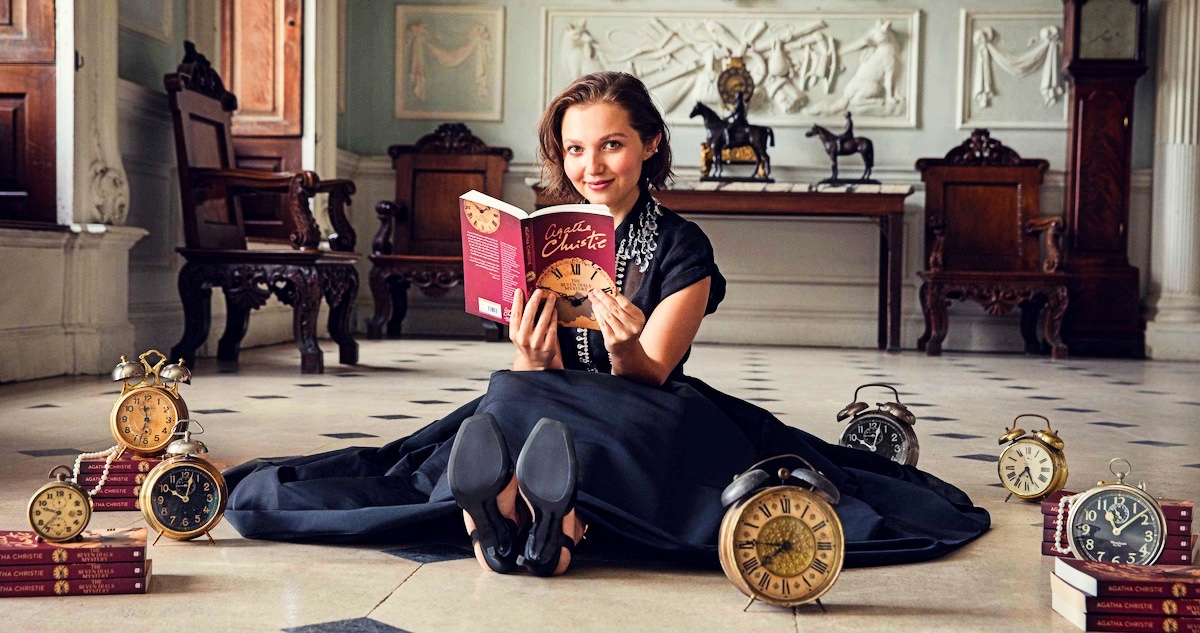
You know the setup. Rich people, fancy house, lots of guests, secrets everywhere. A prank involving alarm clocks goes wrong, someone turns up dead, and suddenly we’re off to the races.
Except… we’re not.
The mystery unfolds at a glacial pace, padded out with scenes that look nice but do very little. Conversations circle the same information. Characters pop in, contribute one vaguely suspicious line, then disappear for an episode. The show constantly hints at international intrigue and shadowy organizations, but the actual stakes never feel particularly urgent or dangerous.
This is where Seven Dials stumbles hardest as a mystery. Great whodunits make you feel clever for following along and even cleverer when you’re wrong. This one mostly makes you feel patient. The twists are either telegraphed far in advance or arrive with such muted energy that they barely register as twists at all.
Seeing Chris Chibnall’s name attached to this adaptation initially gave me hope. This is the man behind Broadchurch, a show that understood how to weaponize pacing, atmosphere, and character suspicion. In theory, he should be a perfect match for Christie.
In practice, Seven Dials feels like Chibnall on autopilot. The script lacks the narrative discipline that made his best work sing. Instead of tightening the story, the adaptation leans into its weakest impulses: inflating a minor mystery into a faux-epic conspiracy and mistaking complexity for depth.
The result is a story that keeps telling you it’s important without ever making you feel why. It’s like someone insisting a jigsaw puzzle is impressive while refusing to show you the finished picture.
Visually, Seven Dials is… fine. Not bad. Not good. Just aggressively serviceable. The costumes are period-appropriate and clean, the estates look expensive, and everyone speaks with the sort of accent that screams “Sunday night BBC drama.”
But the cinematography is oddly lifeless. The lighting skews relentlessly bright and yellow, draining scenes of tension and giving everything the same tonal weight. For a mystery that should thrive on shadows and secrecy, it often feels like it’s unfolding at noon under studio lights.
Worse, the occasional green-screen shots are distractingly obvious. There are moments where the characters feel physically disconnected from their environments, which undercuts the tactile, immersive quality that period mysteries live and die by.
The cast is stacked, which only makes the underwhelming execution more frustrating. Mia McKenna-Bruce does a perfectly competent job as Bundle, but competence isn’t enough for a character who’s supposed to radiate charisma and reckless charm. On the page, Bundle is a flapper tornado, the kind of woman Clara Bow would have eaten for breakfast. On screen, she’s toned down, restrained, and a little too polite.
Helena Bonham Carter and Martin Freeman are pros, and it shows. They elevate their scenes through sheer experience, but neither is given much to chew on. Freeman’s Superintendent Battle, already one of Christie’s more understated detectives, is rendered borderline inert here. It’s a waste of an actor who can communicate volumes with a raised eyebrow.
Edward Bluemel, fresh off the heartbreak of My Lady Jane’s cancellation, is the closest thing the show has to a spark plug. He brings charm, warmth, and actual personality, which in this context makes him feel like he wandered in from a better show.
Everyone else exists in a kind of narrative limbo, introduced with just enough fanfare to make you think they’ll matter, then quietly shuffled aside when the plot no longer needs them.
At the end of the day, Agatha Christie’s Seven Dials commits the cardinal sin of mystery storytelling: it’s boring. Not offensively bad, not laughably incompetent, just dull in a way that feels far more damning.
This is a run-of-the-mill adaptation of a run-of-the-mill Christie novel, stretched beyond its natural limits and polished until all its edges are sanded off. It’s the kind of show you put on because you want something mildly cozy, then forget entirely once the credits roll.
Christie’s legacy deserves better than this. Not every novel needs an adaptation, and Seven Dials stands as Exhibit A in that argument.