

The handheld gaming market has exploded over the past two years, reshaping how players think about portability, performance, and PC gaming on the move.
Following the rise of the Steam Deck and ASUS ROG Ally, Lenovo entered the field last year with the original Legion Go a bold device that fused Switch-like modularity with Windows-powered muscle.
The new Legion Go 2 takes that concept and evolves it further, aiming to be the most versatile and powerful handheld PC in the category. With an upgraded OLED display, improved processor options, refined controls, and a larger battery, it certainly looks like the generational leap the original needed. Yet ambition comes with baggage, and Lenovo’s newest gaming handheld still has to navigate the realities of heat, ergonomics, and price.
Design
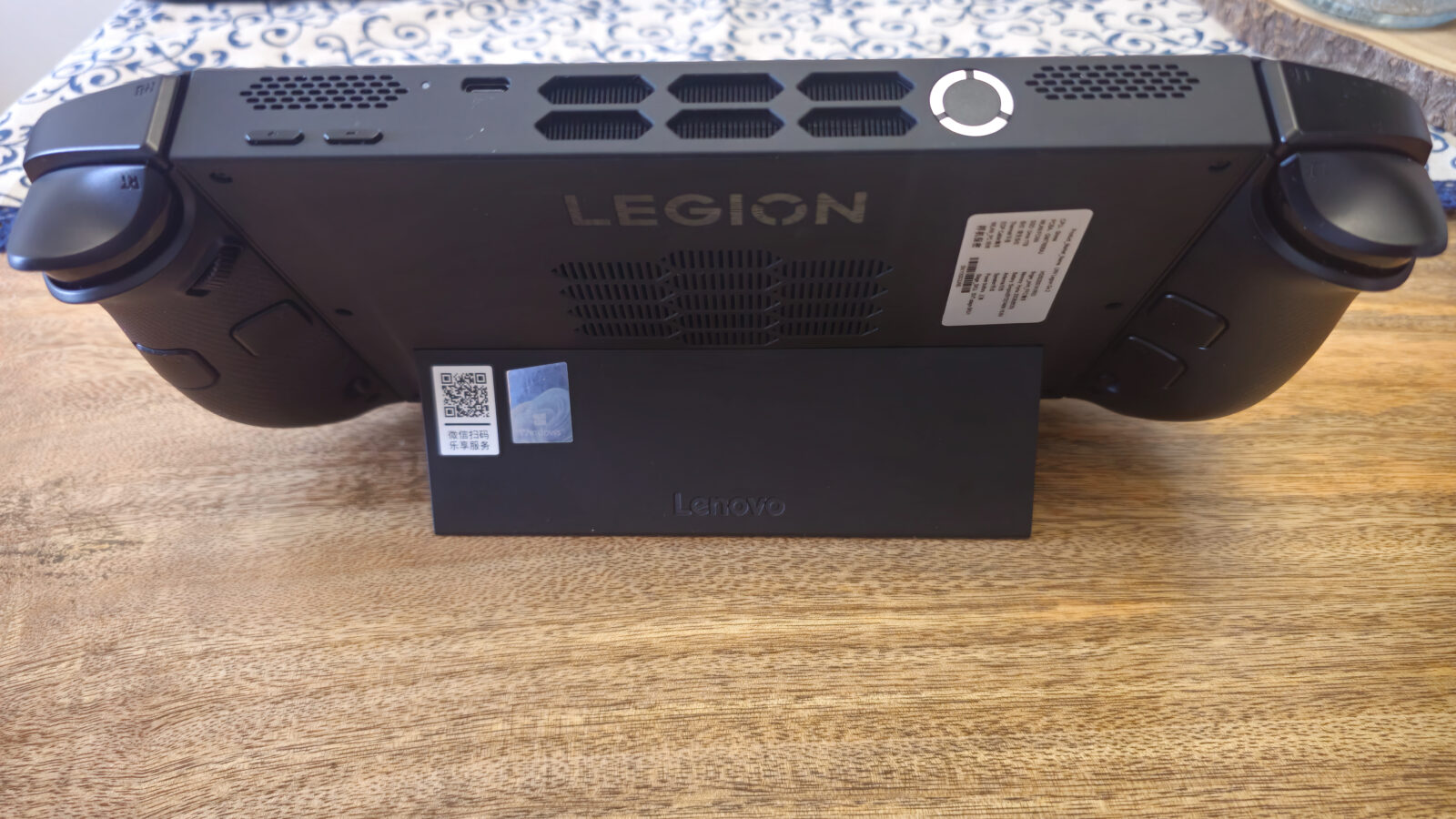
At first glance, the Legion Go 2 immediately feels premium. The chassis remains large and intentionally so but Lenovo has shaved off some rough edges and elevated the build quality.
The device still features the signature detachable TrueStrike controllers, complete with hall-effect joysticks that eliminate traditional drift, and a built-in kickstand that’s surprisingly sturdy for such a heavy device. The overall design still skews toward “portable console meets compact PC,” but its finish and material choices this year give it more of a confident gaming identity.
The Legion Go 2 resembles its predecessor, but close inspection reveals plenty of changes. Lenovo has shifted the Start/Select buttons, added new Windows shortcuts, incorporated a fingerprint reader into the enlarged power button, and generally adopted the more ergonomic layout introduced in the Legion Go S.
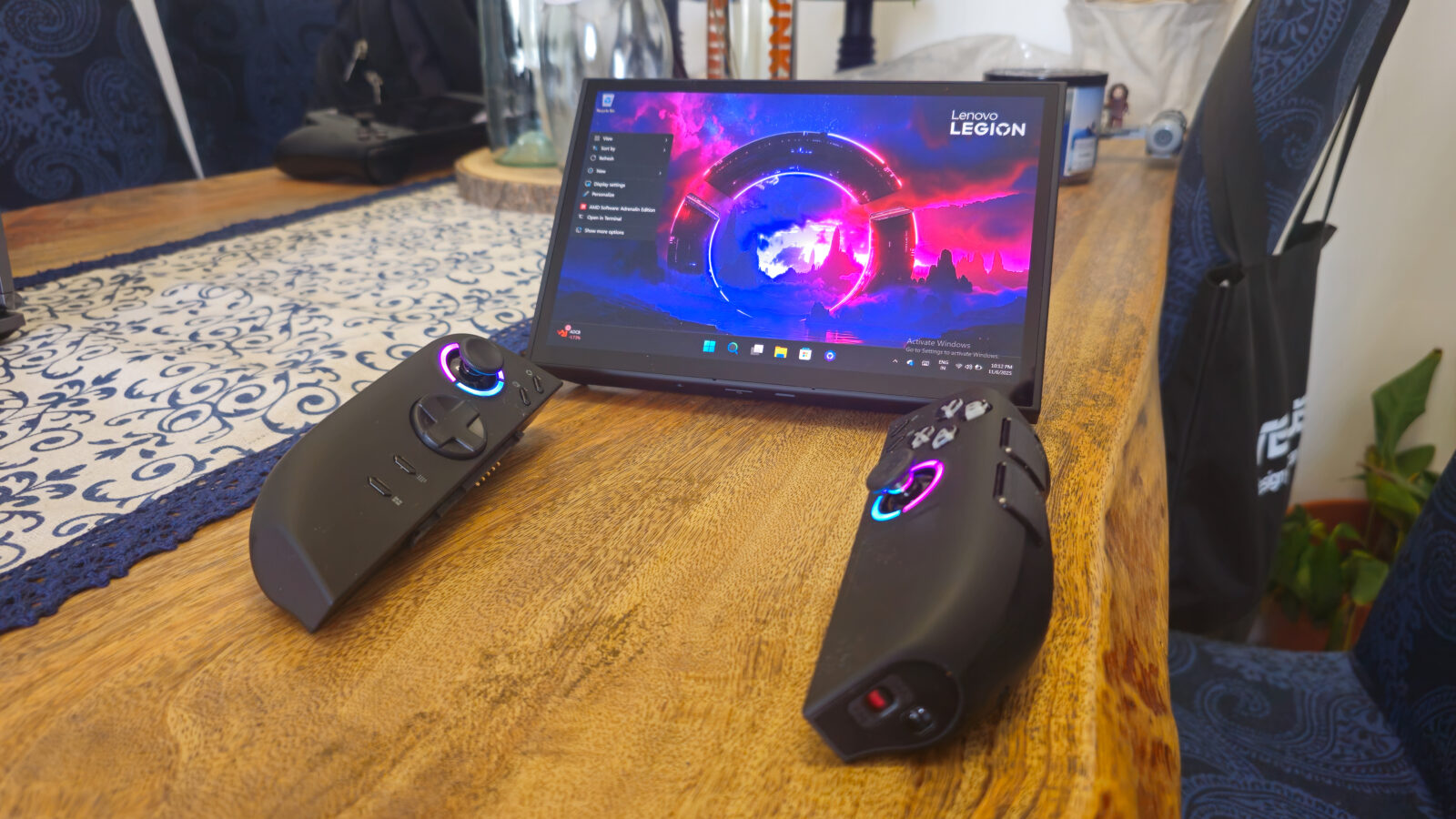
The device still leans into its hybrid identity: huge footprint, detachable controllers, and a sturdy full-width kickstand. It remains big over 11.6 inches wide and weighing just above two pounds so extended handheld play is tiring, but tabletop mode solves that quickly. The standout feature remains the large touchpad on the right controller, which is genuinely helpful for navigating Windows.
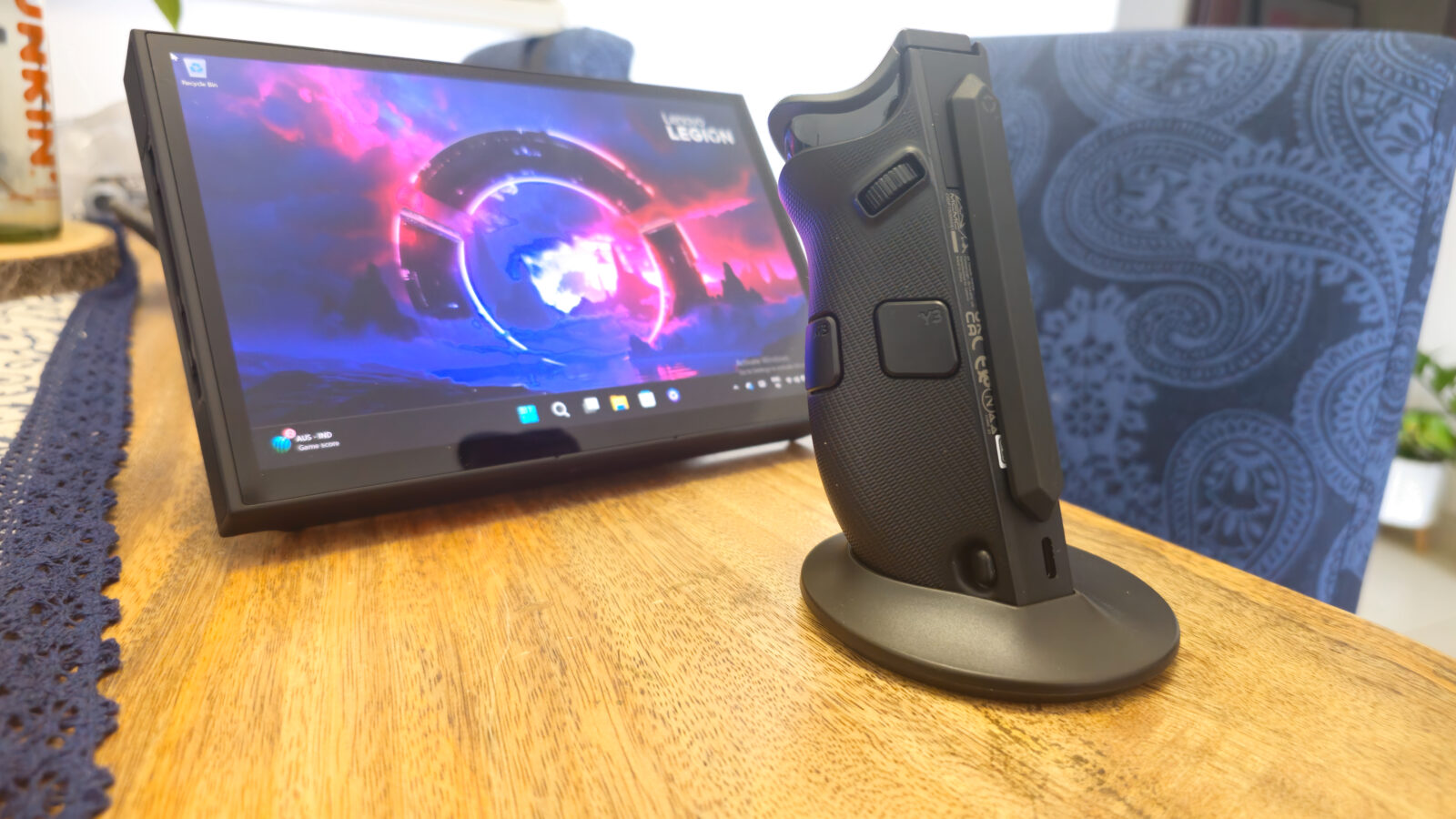
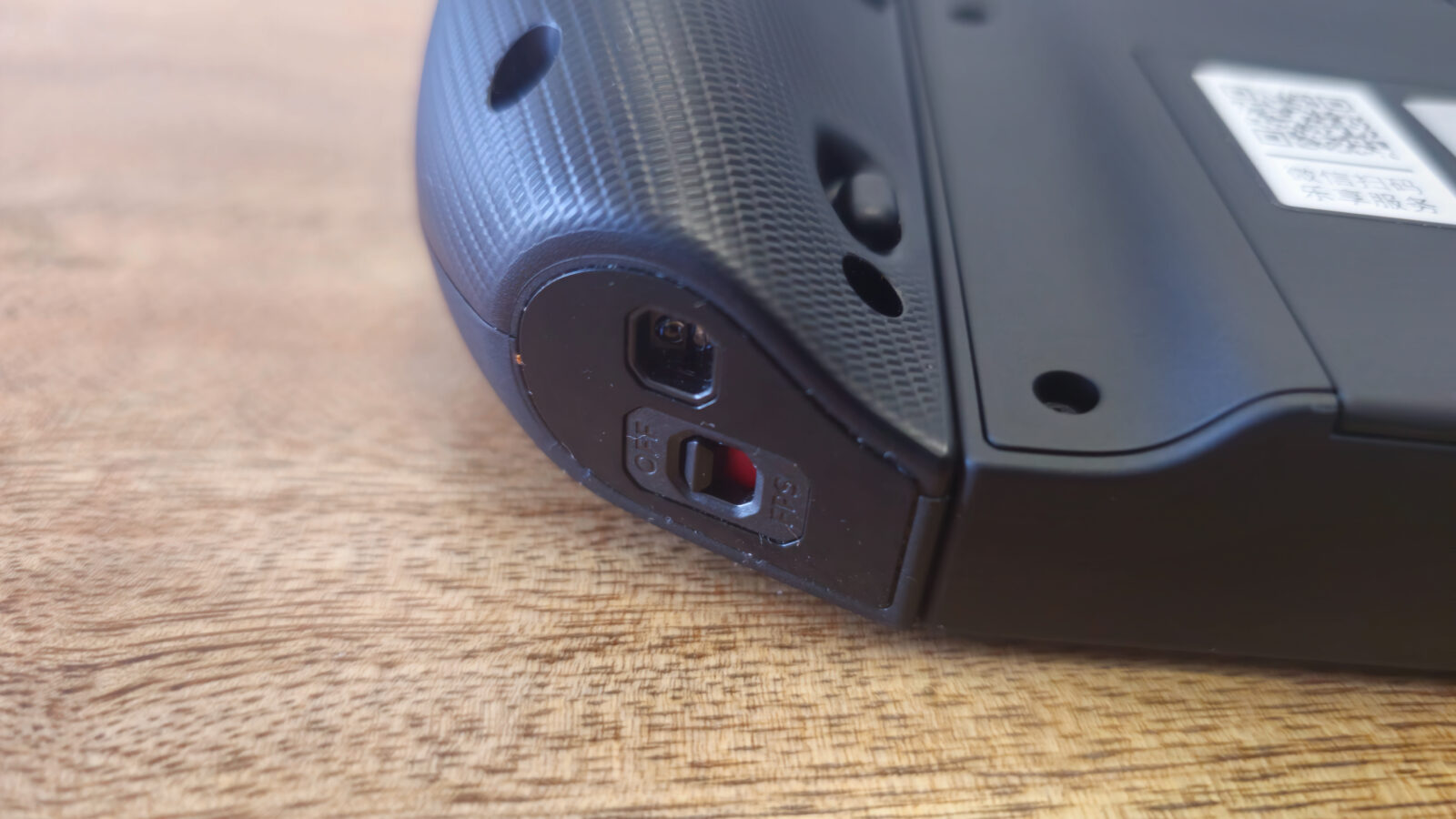
Where the Legion Go 2 stands out is in its modularity. The detachable right controller’s “FPS mode,” where it acts as a vertical mouse-like device for precision aiming, is still a bit gimmicky but improved. The hall-effect sticks are exceptional, the triggers feel well-tuned, and the tactile buttons have a satisfying click. Docking the device to a USB-C monitor instantly gives you a full desktop PC, and the combination of controllers + stand lets you shift between handheld, tabletop, and hybrid gaming in seconds. This versatility is unmatched among handheld competitors.
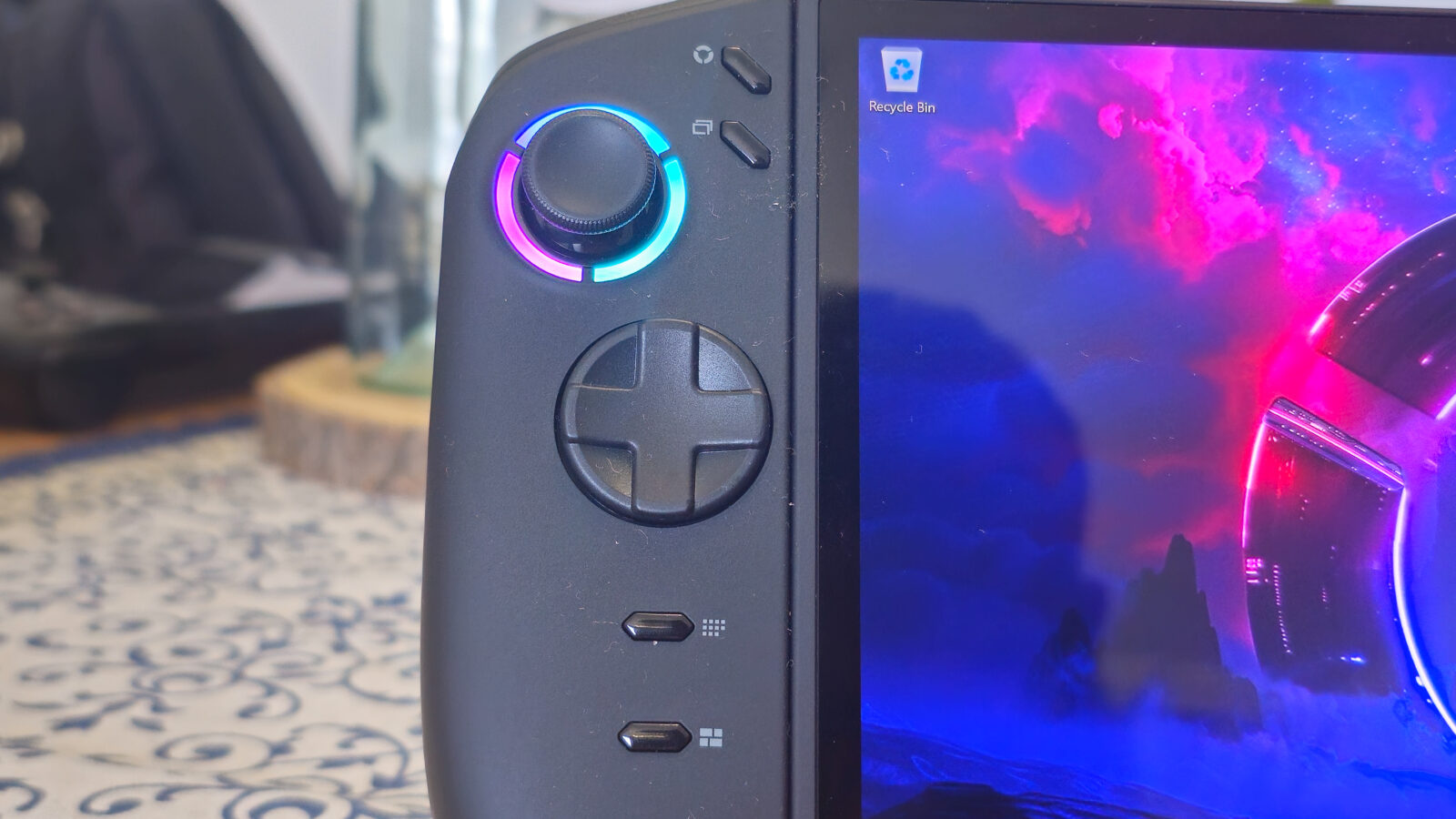
The Legion Go 2 also packs an impressive number of inputs—27 buttons in total—most of which can be remapped in Legion Space. Dual USB-C ports, MicroSD, 3.5mm audio, and a surprisingly effective cooling design round out a very feature-rich chassis.
Display
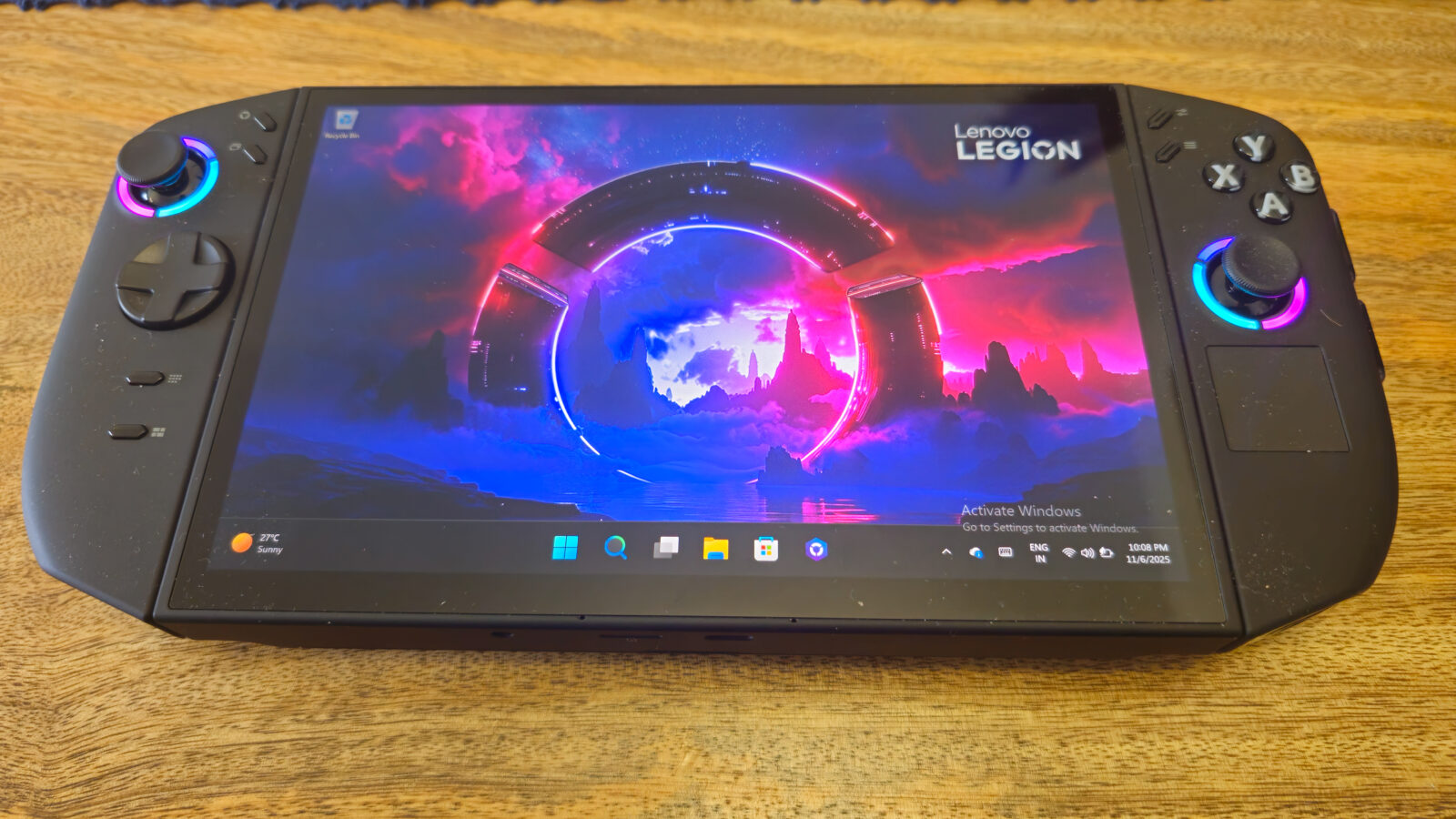
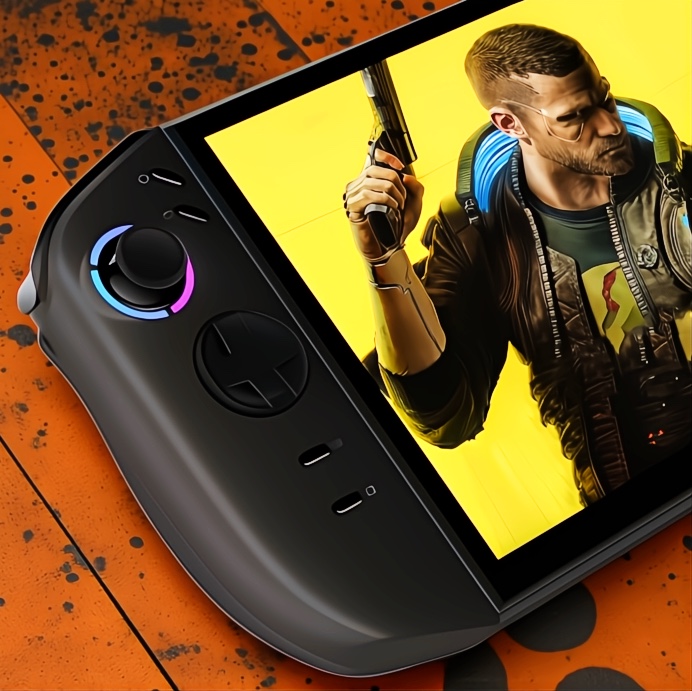
The star of the hardware redesign is unmistakably the new 8.8-inch OLED display, a huge improvement over the LCD panel in the first model.
The display is the headline upgrade. Lenovo replaces the old 1600p LCD panel with a 1920×1200 OLED running at 144Hz with VRR. The lower resolution actually benefits performance, and the move to OLED delivers dramatically better contrast, colours, and motion clarity. Next to the Steam Deck OLED, this is one of the best screens available on any handheld, and if OLED is a must-have, the Legion Go 2 instantly rises to the top of the list.
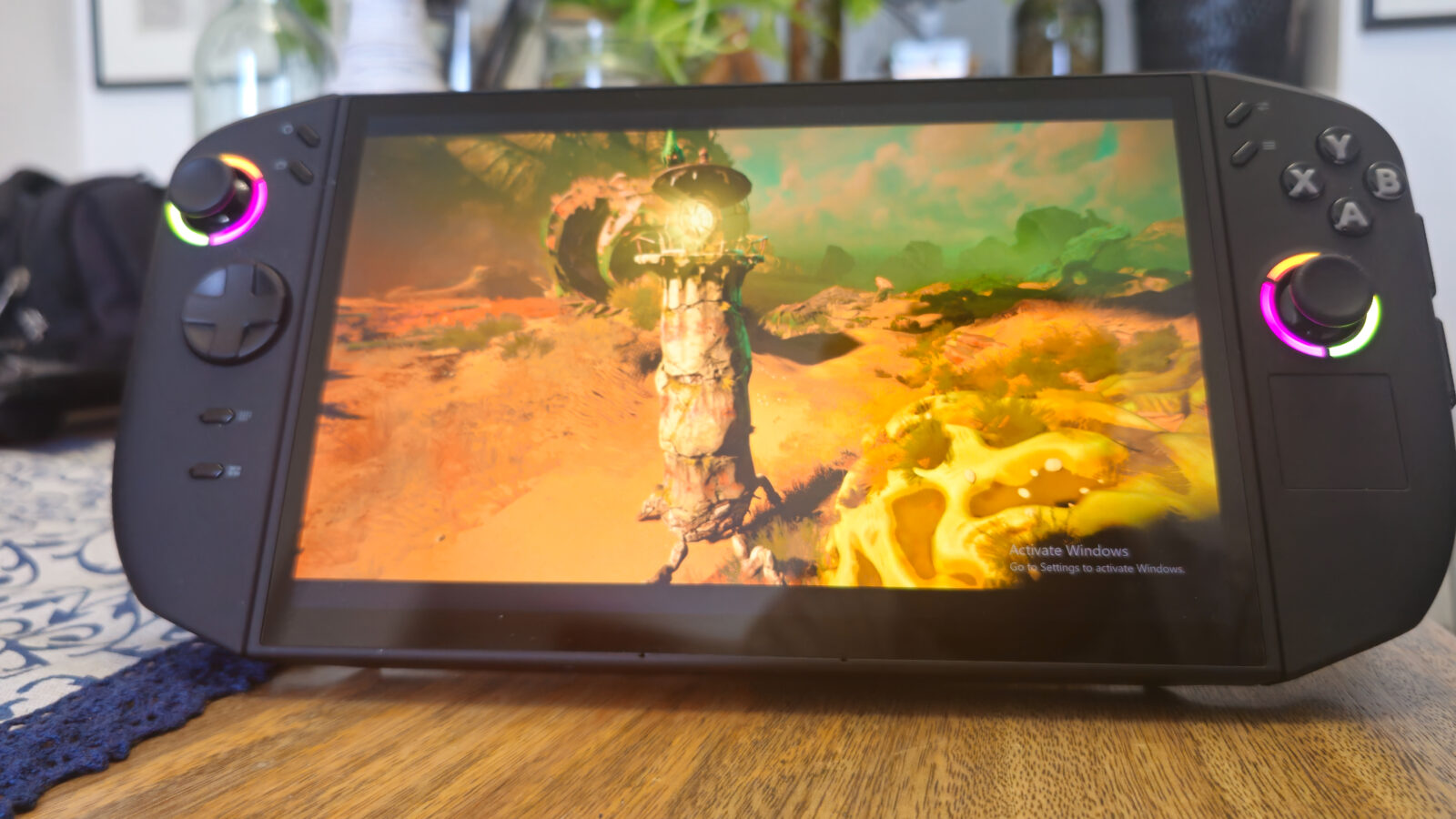
The downside however is that like many OLED-based portables, outdoor visibility remains a challenge. Under direct sunlight, the glossy finish and moderate brightness make it less than ideal for gaming outside, something to be aware of for travellers or commuters.
Performance
Powering the device are AMD’s new Ryzen Z2 and Ryzen Z2 Extreme processors, with the higher-end model offering 8 cores, 16 threads, and RDNA 3.5 graphics. The Legion Go 2 is paired with 32GB of RAM, a huge improvement over the original model’s cramped 16GB configuration. Performance is far stronger than the first-gen Legion Go, with smoother framerates and less memory bottlenecking across demanding titles.
In real-world performance, the Legion Go 2 comfortably handles demanding titles like Cyberpunk 2077, Helldivers 2, and Elden Ring at sensible settings. Frame rates vary depending on resolution and TDP configuration, but the combination of Windows flexibility, AMD efficiency gains, and Lenovo’s performance profiles creates a machine that can genuinely deliver AAA experiences on the go. Productivity tasks and creative tools run reliably as well, making this a device suited not just for gaming but for quick editing, remote work, and multitasking if required.
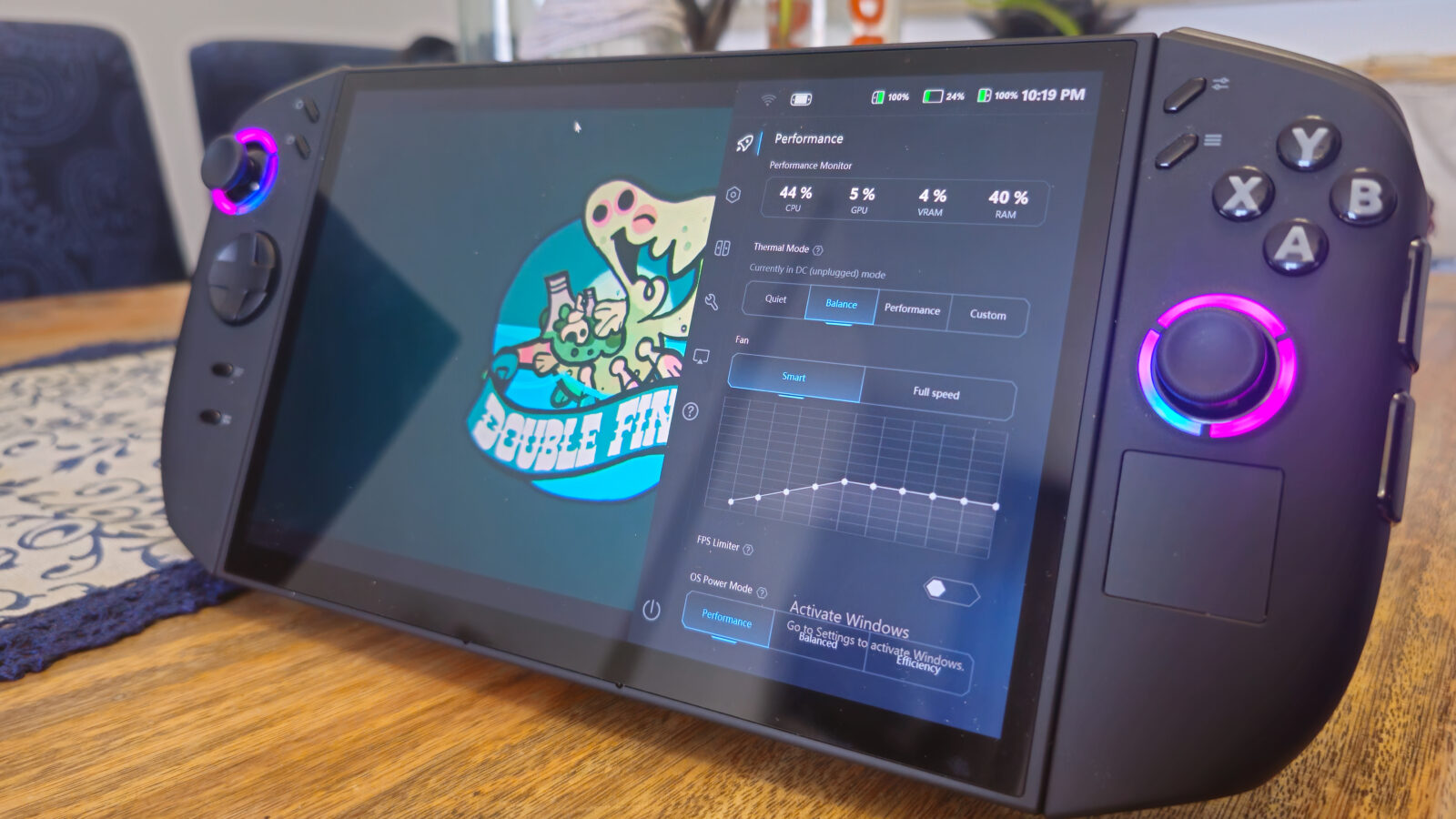
However, raw power comes at a cost. The Legion Go 2 remains one of the largest and heaviest handheld PCs currently available. This helps with cooling, which is more efficient this year, but the weight still limits how long you can comfortably hold it in handheld mode. Lengthy sessions or slow-burn games will eventually push you to use the kickstand or rest your elbows. The detachable controllers, while an advantage in tabletop mode, don’t fully solve the ergonomics challenge of extended handheld use.
Another trade-off comes in the form of fan noise. Lenovo has clearly improved the thermal system, but under load the Legion Go 2 is unmistakably loud. During quieter games or media consumption it stays reasonably controlled, but high-intensity scenes or prolonged sessions will ramp up the acoustics. It’s not a deal-breaker, yet it’s worth knowing if you’re used to the near-silent operation of some laptops or the more efficient thermal design of the Steam Deck OLED.
However, the gains over other modern handheld PCs aren’t as dramatic. While the Z2 Extreme outperforms the outgoing Z1 Extreme, the margin closes sharply when compared against competing devices running similar specs. Thermals are excellent the GPU rarely broke 65°C in my testing which suggests there may be headroom for future firmware or tuning, but out of the box the uplift is solid rather than revolutionary.
Battery life is better but still firmly in handheld-PC territory. The new, larger battery offers improvements of around 20–30% depending on the game you’re playing, which means around 2 to 3.5 hours of gameplay in most scenarios, and more for indie or retro titles.
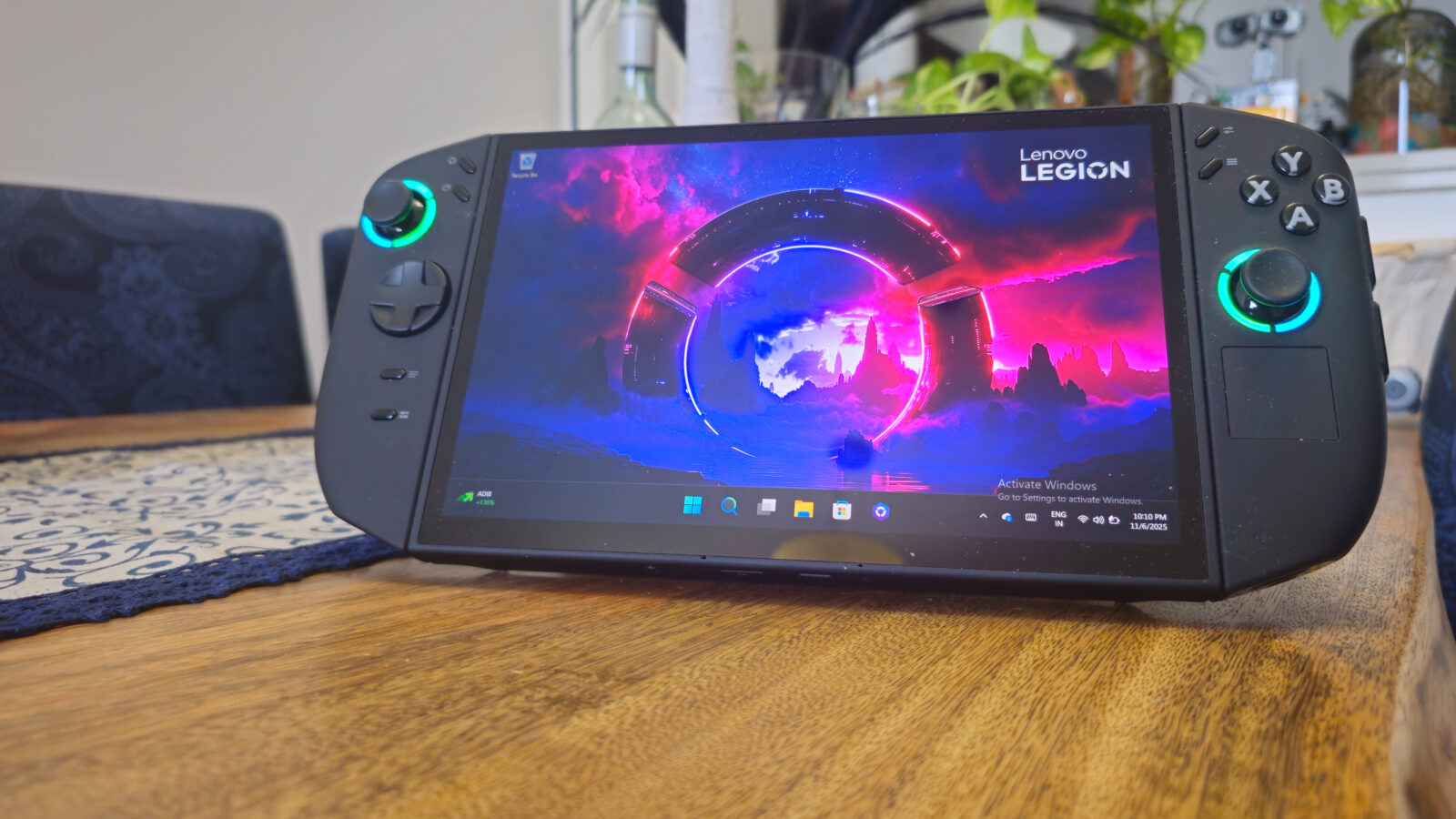
Running Cyberpunk 2077 (High), the Go 2 lasted just over two hours, while lighter productivity workloads approached 11 hours. Its combination of an efficient OLED display and AMD’s improved RDNA 3.5 graphics architecture delivers the best endurance I’ve seen on a Windows gaming handheld to date.
VRR helps minimise wasted energy, and Lenovo’s power profiles give users more control. But compared with a Nintendo Switch or even some gaming tablets, this is still a device designed for short bursts rather than all-day unplugged use.
Software remains the most contentious piece, largely because the Legion Go 2 runs full Windows 11. This gives you enormous flexibility with Steam, Epic Games Store, Xbox Game Pass, Battle.net, emulators, creator software but it also means a sometimes clunky, desktop-centric interface on a handheld screen.
Lenovo’s Legion Space frontend helps streamline access to games and settings, and Microsoft is rolling out its Xbox Full-Screen UI for Windows handhelds in 2026, which should dramatically improve the UX. For now, though, Windows handhelds come with a level of fiddling that’s simply unavoidable and I still can’t get over how limiting windows 11 has been in this space.
Verdict
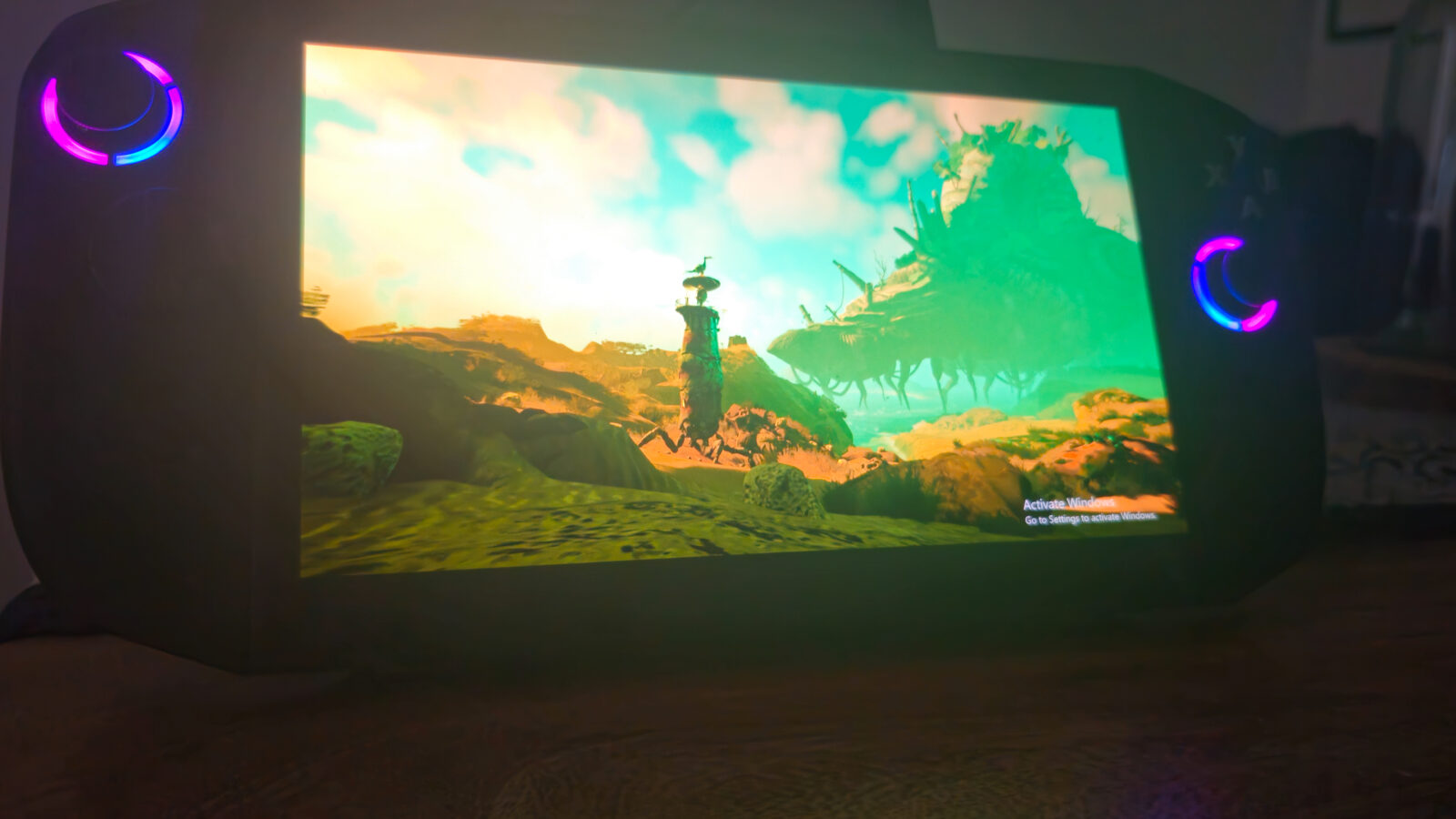
The Lenovo Legion Go 2 builds on the original with a far better display, more memory, and an improved design that fixes many usability issues. It’s large, powerful, thoughtfully engineered and undeniably expensive.
It offers one of the best displays in any handheld, powerful hardware capable of running modern PC games, and a versatile design that supports multiple gameplay styles.
It also carries the weight, literally and figuratively of being a high-end Windows gaming machine in a small shell. Performance is good, but not leagues ahead of cheaper alternatives, and the price jump is steep enough to make this a niche purchase. For gamers who want uncompromising performance and don’t mind the extra bulk, it’s one of the most impressive handhelds money can buy.
If you’re a diehard OLED fan or a handheld enthusiast who values screen quality and flexibility above all else, the Legion Go 2 is a compelling upgrade. For everyone else, similar performance can be found at lower prices.