
TL;DR: The A Knight of the Seven Kingdoms Season 1 finale trades spectacle for soul, delivering a thoughtful, character-driven ending that cements Dunk and Egg as one of Westeros’ most compelling duos. It’s emotionally resonant, thematically rich, and sets up Season 2 beautifully. My only complaint? Six episodes weren’t enough. I was just settling into the saddle.
A Knight of the Seven Kingdoms
After five episodes of bruised knuckles, broken lances, and political tension simmering just beneath the surface, the A Knight of the Seven Kingdoms Season 1 finale does something bold. It slows down. It breathes. And in true Westerosi fashion, it lets grief hang in the air like smoke from a funeral pyre.
Episode 6, The Morrow, isn’t interested in giving us another Trial of Seven spectacle. Instead, it asks a more uncomfortable question: what does honor actually cost? And more importantly, who ends up paying for it?
As someone who has spent years dissecting every corner of Westeros since the early days of Game of Thrones, I didn’t expect a six-episode season to hit this hard. But here we are. The A Knight of the Seven Kingdoms finale recap almost feels less like a recap and more like therapy.
Grief, Guilt, and a Hedge Knight Under a Tree
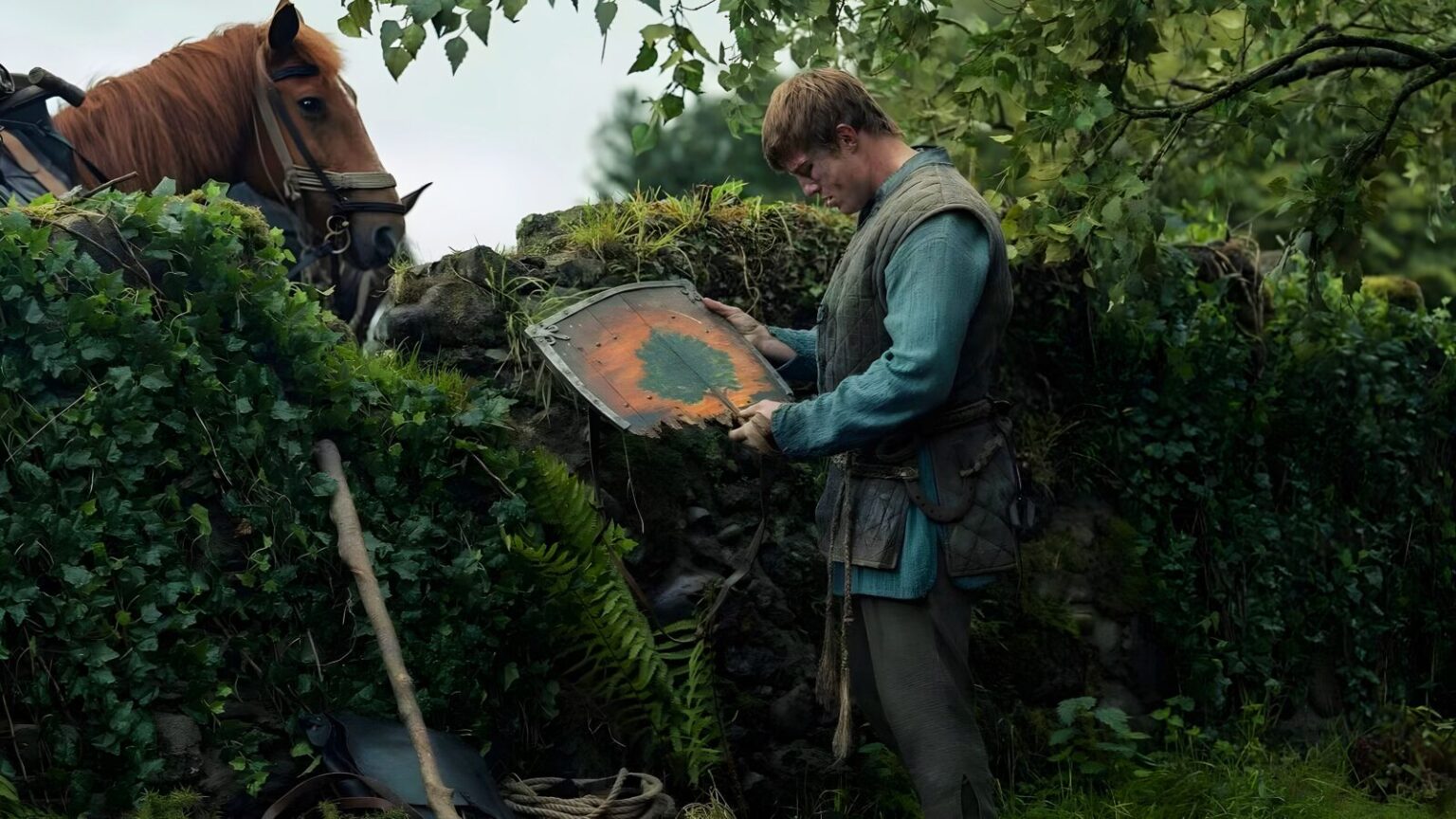
We open on Dunk, played with aching vulnerability by Peter Claffey, sitting under his tree, bleeding, battered, and emotionally wrecked. If Episode 5 was all steel and fury, this is the hangover. And it’s brutal.
Lyonel Baratheon strides in like a golden retriever in plate armor, offering Dunk a future at Storm’s End. It’s a generous offer, and for a split second, I imagined Dunk in Baratheon colors, booming laughter echoing in stone halls. But Dunk can’t see opportunity. He sees a body on a pyre. He sees Baelor.
Baelor Targaryen’s death lingers over this entire finale like a curse. Dunk blames himself. Of course he does. He’s a walking guilt sponge. The Trial of Seven was technically a victory, but in Westeros, victories are just tragedies wearing better PR.
What I love about this A Knight of the Seven Kingdoms Season 1 ending is how it refuses to let us off the hook emotionally. There’s no triumphant music cue. No easy absolution. Just Dunk wrestling with the idea that his very existence seems to cost other people their lives.
The Targaryen Funeral and the Weight of Legacy
The Baelor funeral sequence is peak Westeros pageantry. Fire, silence, and a dynasty that has built its entire brand on both.
Egg, portrayed with disarming emotional range by Dexter Sol Ansell, stands beside his father, Maekar. Watching him process grief is quietly devastating. He’s still a kid. A shaved-head prince pretending to be a squire. But here, he’s forced to confront what Targaryen legacy actually means.
The A Knight of the Seven Kingdoms finale doesn’t just mourn Baelor. It interrogates the idea of Targaryen greatness. Valarr asking why the gods took his father and left Dunk? That line hit me like a trebuchet to the chest.
And then there’s Maekar.
Sam Spruell plays him like a man who just realized he’s going to be remembered for a single terrible swing. He didn’t mean to kill Baelor. But history doesn’t care about intent. In Westeros, history cares about optics. And whispers.
This is where the show flexes its thematic muscles. The root of Targaryen “madness” isn’t just dragon blood. It’s pressure. It’s being raised in a family where destiny is both birthright and burden. When Daeron suggests that Aerion wasn’t always a monster, I felt the series subtly shift from medieval drama to psychological study.
If House of the Dragon is about power at its loudest, A Knight of the Seven Kingdoms is about power at its most intimate.
Dunk’s Identity Crisis Is the Real Final Boss
For a show marketed as a fantasy epic, this finale is surprisingly introspective. Dunk’s biggest battle isn’t with a lance. It’s with himself.
Maekar offers him a structured life at Summerhall. A chance to train properly. Stability. Prestige. Basically the Westerosi equivalent of a LinkedIn glow-up.
And Dunk says no.
Twice, actually. He turns down Lyonel. He resists Maekar. This man is allergic to upward mobility. But it makes sense. Dunk isn’t chasing status. He’s chasing something far more fragile: self-worth.
The flashback to Ser Arlan of Pennytree wrecked me. When Dunk asks why he was never knighted, it confirms what book readers have suspected for years. His knighthood exists in a moral gray zone. And yet, in that moment, I realized something: Dunk doesn’t need the ceremony. He embodies the ideal better than most anointed knights.
Pulling the penny from Arlan’s sword and nailing it into the elm tree? That’s not just a callback. That’s a mission statement.
In a world obsessed with bloodlines and banners, Dunk chooses principle.
Egg’s Breaking Point and the Knife Scene
Let’s talk about that scene.
Egg standing over Aerion with a knife in hand is one of the most tense moments of the entire season. No dragons. No armies. Just a kid deciding whether vengeance is easier than mercy.
And for a split second, I genuinely didn’t know what he would do.
That’s the brilliance of the A Knight of the Seven Kingdoms Season 1 finale. It understands that the real stakes are internal. Egg dropping the knife isn’t just restraint. It’s rebellion against the cycle that shaped his brother.
Maekar comforting him was the closest this show has come to tenderness within the Targaryen family. It doesn’t erase the dysfunction. But it complicates it. And I love that.
When Dunk later insists he’ll only take Egg as a squire if they live as hedge knights, traveling and learning from the world instead of hiding in castles, it feels like the thesis of the series.
Nature versus nurture. Crown versus countryside. Madness versus mentorship.
Maekar’s horror is understandable. From his perspective, Dunk is suggesting that the best heir to House Targaryen should go live like a peasant influencer on a medieval gap year.
But from Dunk’s perspective? It’s the only way to save the kid.
Sweetfoot, Small Joys, and a Perfectly Thematic Ending
In a show this heavy, Sweetfoot’s return feels like a gift. A reminder that not everything in Westeros ends in ash.
Dunk refusing to reclaim the horse says everything about who he is. He doesn’t cling. He lets go. Even when it hurts.
And then, just when I thought the episode might end on a melancholy note, Egg shows up in commoner clothes again.
Maekar sent him.
I actually laughed out loud. After all that tension, all that philosophical wrestling, the solution is pure character logic. Egg chooses Dunk. Again. And Maekar, for all his royal authority, loses to a scrappy hedge knight with a conscience.
The A Knight of the Seven Kingdoms Season 1 ending is bittersweet because it feels like the beginning of the real story. Six episodes suddenly feel criminally short. We’re just getting to the good stuff. The road trips. The moral lessons. The slow evolution of a boy who will one day be king.
And then it’s over.
Does the Finale Work?
Absolutely.
The Morrow may lack the explosive spectacle of Episode 5, but emotionally, it’s richer. It provides closure without sealing every door. It answers immediate questions while planting seeds for Season 2.
More importantly, it understands the DNA of this story. A Knight of the Seven Kingdoms was never meant to be about throne room power plays. It’s about the spaces in between. The roadside inns. The orchards. The elm trees with pennies nailed into them.
This A Knight of the Seven Kingdoms Season 1 finale recap could easily read like a list of plot points. Instead, what sticks with me are feelings. Dunk’s quiet despair. Egg’s trembling resolve. Maekar’s haunted eyes.
In a franchise famous for shock deaths and dragonfire, this show dares to focus on mentorship and moral growth.
And honestly? That might be its most radical move.