
TL;DR: Episode 4, “Seven,” is the darkest and most emotionally charged chapter of A Knight of the Seven Kingdoms so far, trading humor for moral weight as Dunk faces a rigged trial of seven. Stellar performances, especially from Bertie Carvel as Prince Baelor, elevate a bleak but riveting hour that sets the stage for an unforgettable finale.
A Knight of the Seven Kingdoms
Watching Episode 4 of A Knight of the Seven Kingdoms felt like that moment in a long RPG campaign where you’ve made one morally correct dialogue choice and suddenly the game locks you into the hardest possible boss fight. No save point. No fast travel. Just vibes, steel, and consequences. Titled “Seven,” this episode strips away whatever comfort the series had been gently offering and replaces it with mud, dread, and the full weight of Westerosi tradition bearing down on one very tall, very outmatched hedge knight.
From the opening moments, I could feel the tonal shift in my bones. The color drains out of the frame, the humor evaporates like morning dew over Flea Bottom, and what we’re left with is a world that suddenly remembers it belongs to the same brutal lineage as Game of Thrones. This is the episode where idealism gets put on trial, literally and spiritually, and the show finally asks the question it’s been circling since Episode 1: how good of a knight are you when the rules themselves are rigged?
I love how unapologetically bleak this hour is. It’s not trying to entertain you in the traditional sense. It’s not winking at the audience. It’s saying, sit down, shut up, and watch what happens when honor runs headfirst into bloodline privilege. The result is the gloomiest episode of the season so far, both visually and emotionally, and that’s not a complaint. It’s a deliberate narrative move, the classic second-to-last-episode descent where the hero is bruised, isolated, and staring at a wall with no obvious exit.
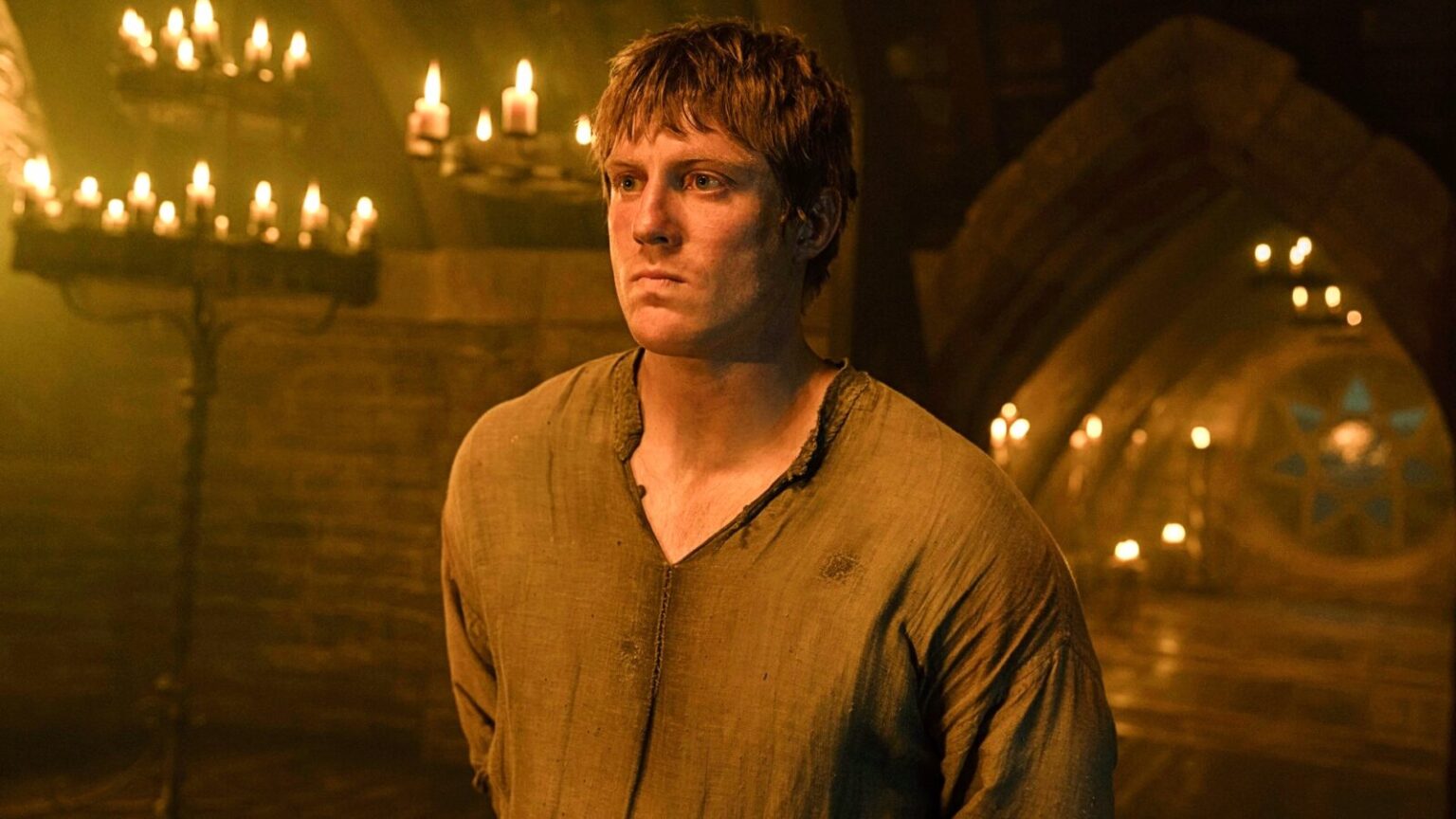
At the center of it all is Ser Duncan the Tall, our beloved moral battering ram, who now has to answer for doing the one thing Westeros claims to respect above all else: protecting the innocent. Beating the ever-loving arrogance out of Aerion Targaryen in the previous episode may have felt righteous, but righteousness doesn’t mean much when it leaves a prince bleeding in the dirt. Dunk’s crime isn’t that he was wrong. It’s that he forgot who he was allowed to be right against.
The political machinery grinds into motion with chilling efficiency. Enter Prince Baelor Targaryen, a man who immediately radiates the kind of authority that doesn’t need to shout. He’s calm, reasonable, and deeply aware that justice in this world is less about truth and more about optics. He understands why Dunk acted the way he did. He even respects it. But understanding doesn’t erase precedent, and precedent in Westeros is a blade that only cuts downward. Dunk can’t be spared entirely, but Baelor ensures he won’t simply be executed offscreen like an inconvenient footnote.
The trial that follows is a masterclass in aristocratic cowardice. Dunk invokes his right to trial by combat, the one equalizer the gods supposedly offer common men, and for a brief moment it feels like the story might grant him a fair shot. Then Aerion, proving once again that cruelty is his only consistent character trait, twists the knife by demanding a trial of seven. It’s a legal maneuver that’s technically allowed and morally repugnant, the kind of rule-lawyering that would make even modern internet trolls nod in appreciation.
A trial of seven is spectacle disguised as sanctity. It’s pageantry pretending to be divine will, and everyone in that hall knows it. Even Prince Maekar, no stranger to hard truths or harder discipline, recognizes it for what it is: Aerion hiding behind tradition because he doesn’t want to face Dunk alone. The gods may decide the outcome, but Aerion is stacking the deck, and everyone pretending otherwise is complicit.
What makes this sequence land so hard is how lonely Dunk suddenly becomes. He needs six knights willing to stand with him, not because they believe he’ll win, but because they believe he’s right. That distinction matters. In a world obsessed with lineage and banners, standing beside a hedge knight against royal blood is a social death sentence. One by one, potential allies vanish, promises evaporate, and Dunk is left staring at the consequences of being a good man in a bad system.
The arrival of Prince Baelor as the seventh champion is one of those moments that made me sit up straighter on my couch. It’s not triumphant in a fist-pumping way. It’s solemn, almost mournful. Baelor knows what this choice costs him, and he makes it anyway. Bertie Carvel brings a quiet gravity to the role that feels refreshingly alien among the Targaryens we’re used to. There’s compassion here, yes, but also resolve. This isn’t a soft man. This is someone who understands power and chooses restraint, which in Westeros is basically a superpower.
Parallel to Dunk’s external trial is the emotional reckoning between him and Egg, and honestly, this might be my favorite part of the episode. Seeing Egg fully revealed as Prince Aegon Targaryen reframes every interaction they’ve had up to this point. The opening scene, where Egg apologizes for deceiving Dunk, hit me harder than I expected. There’s something devastating about watching a child realize that the freedom he tasted came at the cost of someone else’s life potentially being ruined.
Dunk’s reaction is perfect. He’s angry, hurt, and disappointed, but not cruel. When he scolds Egg, it’s not because of the lie itself, but because Egg didn’t understand the weight of what he was playing with. This isn’t a game. This is a world where names kill people. Egg tearing up in that moment felt painfully real, a reminder that beneath the wigs and titles, he’s still just a kid who wanted to see a tourney and escape the suffocating orbit of his family.
The episode deepens this tragic irony by bringing Daeron back into focus. His prophetic dreams, dismissed by everyone as the ramblings of a drunk, carry unsettling implications. The image of Dunk standing over a slain dragon lingers like a bad aftertaste, especially when paired with the fortune teller’s grim prophecy about Egg’s future. It’s the kind of narrative breadcrumb that George R.R. Martin fans live for, and the show handles it with just enough restraint to avoid winking at the camera.
What I appreciated most about “Seven” is how it finds small, human moments amid the dread. Dunk petting a mouse through his cell window. Talking softly to his horses like they’re old friends who might understand. A brief, almost absurd vision of Ser Arlan shrugging, as if even his mentor doesn’t have advice for a situation this dire. These moments ground the episode, reminding us that Dunk’s strength has never been his sword arm. It’s his empathy.
Of course, the ugliness of Westeros is never far away. Aerion continues to be a walking HR violation from hell, casually recounting how he once threatened to mutilate Egg so he could marry him. It’s horrifying, and the show doesn’t soften it. Nor should it. This is who Aerion is, and the system protects him because of it, not in spite of it. Watching nobles demean each other for sport, force men to crawl under tables, and laugh at cruelty reinforces the episode’s core thesis: knighthood is an ideal, not a guarantee.
By the time the Game of Thrones theme swells at the end, I felt that familiar mix of dread and excitement that only this universe can deliver. It’s not hype for a battle. It’s anticipation for a moral collision. The trial of seven isn’t just about who survives. It’s about what Westeros chooses to value when blood is spilled and the gods are asked to watch.
As a penultimate episode, “Seven” does exactly what it should. It tightens the noose, darkens the palette, and forces every character to reveal who they are when comfort is stripped away. There’s less humor here, but what replaces it is far more compelling. The performances, particularly from Peter Claffey, Dexter Sol Ansell, and Bertie Carvel, explore new emotional terrain without losing the series’ intimate tone.
This is the episode where A Knight of the Seven Kingdoms stops being a charming medieval road story and fully embraces its tragic lineage. It’s heavier, harsher, and deeply unsettling in the best possible way.