


TL;DR: Season 9 Episode 11 of 9-1-1 delivers a charming charity bachelor auction and a compelling aging arc for Buck, but Eddie’s storyline lacks emotional payoff and the overall pacing continues to undermine character depth. It’s a step up from last week, yet the season still feels rushed and uneven.
9-1-1 Season 9
When I sat down to watch Season 9, Episode 11 of 9-1-1, I had that dangerous combination of hope and delusion that only long-time fans understand. A month-long hiatus is like a creative reset button. It’s the narrative equivalent of turning your router off and on again. Surely, I thought, the writers had used that time to recalibrate, tighten the pacing, and refocus on what has always made this series special: character first, spectacle second.
What I got instead is an episode that improves on last week but still feels caught between two creative instincts. On one hand, it wants to be a big, splashy, ensemble-driven hour built around a chaotic charity bachelor auction. On the other, it’s juggling lingering emotional arcs that desperately need depth and breathing room. The result is an installment that works in bursts yet never quite locks into place.
The Eddie Storyline That Could Have Been So Much More
Eddie Diaz has always been one of the most emotionally layered characters in this show. Since Ryan Guzman stepped into the role, Eddie has carried a quiet intensity that gives 9-1-1 much of its emotional weight. He’s a veteran, a father, a man shaped by faith, guilt, and an almost compulsive sense of responsibility. When last episode ended with Abigail taking Christopher, I expected fallout that would dig into Eddie’s psychology in a meaningful way.
Instead, the kidnapping cliffhanger resolves almost immediately. Christopher is safe. Abigail simply gave him a ride home. Eddie panics, understandably, and even calls Buck to steady himself, which is one of the few moments that feels authentically rooted in their long-standing emotional reliance on each other. But the narrative tension dissipates quickly, replaced with a storyline that shifts focus from Eddie’s internal conflict to Abigail’s instability and, eventually, her father’s threat.
Eddie snapping at Abigail makes sense in context, but the sharpness of it feels slightly misaligned with the version of him we’ve come to know. Not because he isn’t capable of anger, but because the show doesn’t give us access to what’s driving that anger. There’s no sustained exploration of his fear, no reckoning with how this situation echoes his past trauma, no reflection on how his upbringing and complicated relationship with religion inform his need to protect and fix.
When the twist reveals that Abigail’s father has been stalking her and manipulating events, the plot escalates, bringing in Athena to restore order. As always, Angela Bassett commands every frame she occupies. Athena is the show’s moral and narrative anchor, and her presence immediately stabilizes the chaos. Yet even with that escalation, Eddie’s emotional arc feels unfinished. Abigail leaves for a fresh start, Eddie sees her off, and the resolution seems to boil down to a reaffirmation that Eddie is kind.
That’s not a revelation. That’s baseline characterization.
For a storyline that spans two episodes and hinges on a child being taken, the payoff feels disproportionately small. This could have been a defining moment for Eddie in Season 9. Instead, it functions more as a detour.
Buck, Aging, and the Emotional Undercurrent
If Eddie’s arc underdelivers, Buck’s storyline is where the episode finds its footing. Oliver Stark continues to prove that Buck works best when the bravado drops and the vulnerability surfaces. The charity bachelor auction serves as the external plot engine, but the real story here is Buck confronting his own aging.
He’s dealing with back pain. He’s insecure about how he’s changed. He no longer sees himself as the invincible golden boy who once commanded $8,001 at a previous auction. That insecurity is deeply human. For a character who once defined himself by physicality and impulse, the slow realization that time changes everyone hits harder than any on-the-job injury.
Chimney, played by Kenneth Choi, pushes him to participate, but the tone of that push feels harsher than necessary. The banter edges into something slightly unkind, and even Eddie contributes a line expressing disbelief that anyone would have paid so much for Buck in the past. On paper, it reads like teasing. On screen, it lands with an uncomfortable thud, especially given the emotional groundwork the show has laid for Buck over nine seasons.
The turning point comes in Buck’s conversation with Maddie. Jennifer Love Hewitt brings warmth and steadiness to every sibling scene. Maddie reframes aging not as loss but as evolution. Their lives are fuller now. They are more stable, more self-aware, more loved. That reframing allows Buck to approach the auction not as a performance of who he used to be, but as an embrace of who he is now.
When he takes the stage and leans into his authentic self, talking about baking and knitting and being a devoted uncle, it works. It’s charming because it’s sincere. The audience within the show responds to that sincerity, and so did I. The auction becomes less about superficial appeal and more about self-acceptance.
May, Ravi, and the Underused Ensemble
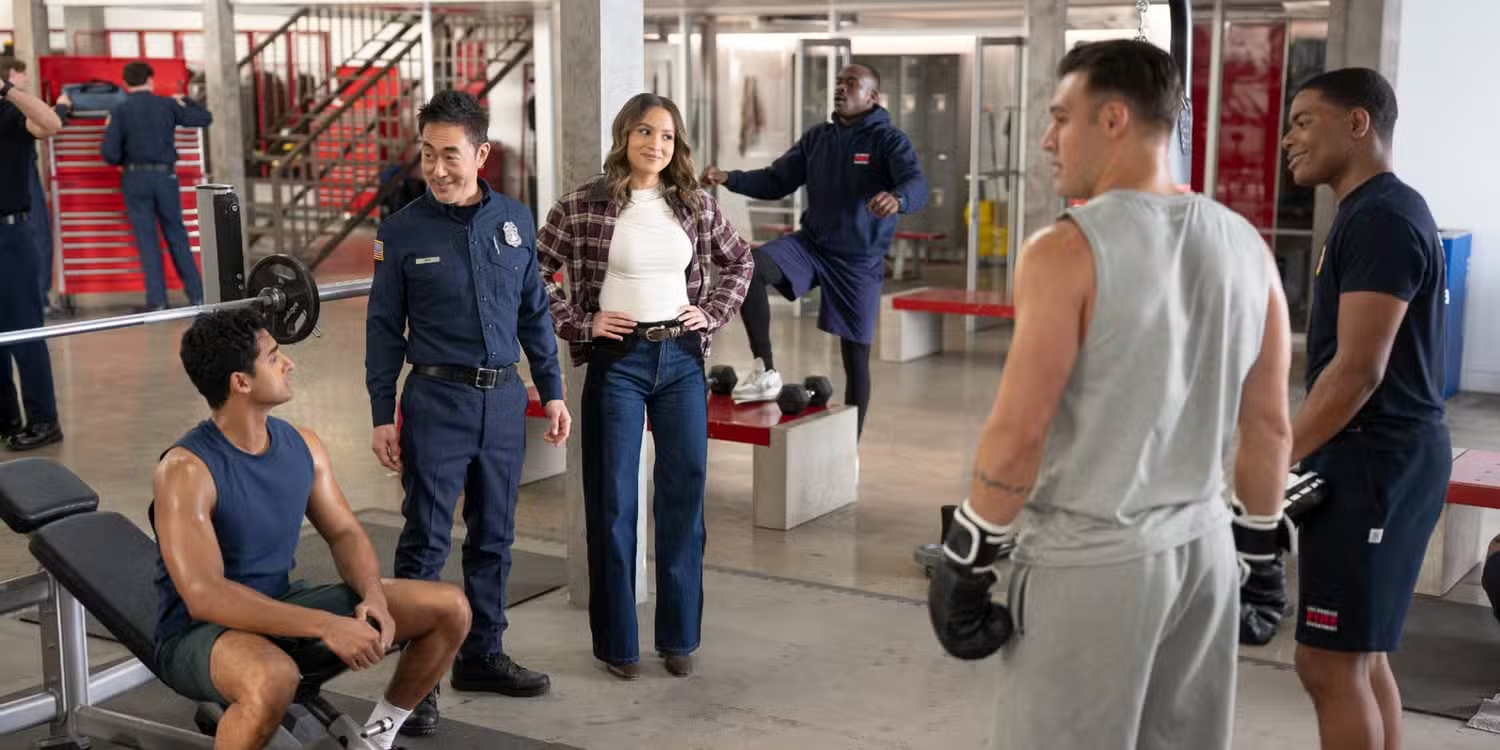
The auction also brings May back into the fold in a way that highlights both her potential and the show’s ongoing habit of sidelining her. Corrinne Massiah has grown tremendously in this role, and her training sessions with the 118 are genuinely funny. She cuts through firefighter swagger with sharp practicality, and it’s refreshing to see her in a position of authority.
Her dynamic with Ravi, played by Anirudh Pisharody, is sweet and understated. What begins as a strategic bid to get the auction rolling quickly reveals itself as genuine interest. Athena noticing her daughter’s feelings adds a layer of warmth, reinforcing the show’s emphasis on family connections.
Yet, as with Eddie’s arc, the storyline feels compressed. We don’t get enough time to see May and Ravi alone together before the auction to fully invest in their budding romance. The groundwork is there, but the show rushes through it, eager to check the box of a new relationship without lingering in the development.
Hen’s return to the 118 follows a similar pattern. Aisha Hinds brings gravity to every scene, but her recovery from chronic illness feels accelerated. A car accident, a lifesaving moment, and suddenly she’s ready to return. The emotional processing that should accompany such a major decision is condensed into a few beats. For a character as central as Hen, that speed feels like a missed opportunity.
The Bigger Issue: Pacing and Cohesion in Season 9
The overarching issue with 9-1-1 Season 9 is not lack of ideas. It’s lack of cohesion. Storylines ignite quickly and resolve just as fast, often without the emotional layering that once defined the series. The show still delivers spectacle and high-stakes emergencies, but the connective tissue between characters feels thinner than it used to.
What made 9-1-1 resonate wasn’t just the disasters. It was the aftermath. The kitchen conversations. The hospital waiting rooms. The quiet reassurances. Those moments built the found-family dynamic that elevated the show beyond standard procedural fare.
This episode gestures toward that magic. Buck knitting with his auction winners is endearing. Athena and Harry sharing a meal grounds the chaos. Eddie’s farewell to Abigail carries a softness that hints at deeper complexity. But the episode never fully settles into those moments. It moves on too quickly, chasing the next plot beat before the current one can breathe.
As a long-time viewer, I still see the blueprint of what makes this show great. The performances remain strong. The ensemble chemistry hasn’t vanished. But Season 9 needs to slow down. It needs to trust that character-driven storytelling, not just high-concept emergencies, is what keeps audiences invested.