

TL;DR: Gorier, smarter, and stranger than expected. Not beginner-friendly, but a gutsy and gripping middle chapter that turns zombies into the least scary thing on screen.
28 Years Later: The Bone Temple
I knew within the first five minutes of 28 Years Later: The Bone Temple that I was going to have a complicated relationship with it, the good kind, the kind that leaves you buzzing on the walk back to your car. The opening has this almost mischievous confidence, like it knows exactly how uncomfortable it plans to make you and is daring you to keep up. Somewhere behind me in the theater, a guy would later decide this was already the worst movie of the year. I couldn’t disagree more. Not because it’s perfect, but because it’s alive in a way most franchise sequels are not.
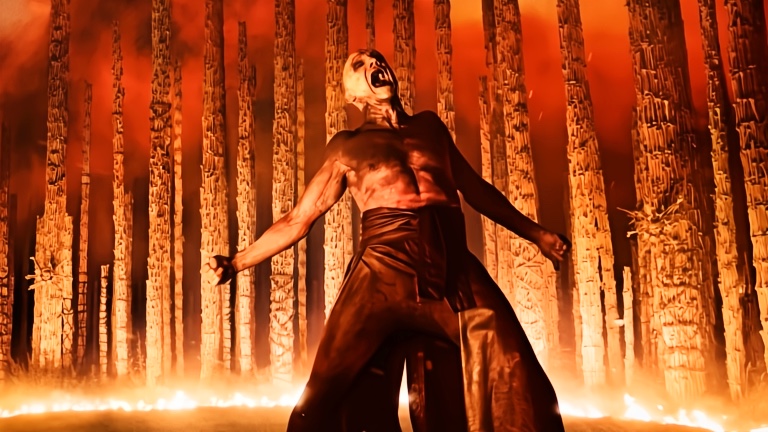
This new chapter in the long-running infected saga drops us right back into the rot and ritual of the world established in 28 Years Later, barely catching its breath before dragging us somewhere stranger, meaner, and unexpectedly funnier. Directed by Nia DaCosta, The Bone Temple feels like a deliberate pivot rather than a repeat. Where earlier films obsessed over collapse, panic, and rage, this one stares hard at what grows in the cracks once the screaming stops. It’s about belief systems, about people needing something to kneel in front of, even if that something is built from teeth and femurs.
The violence hits differently this time. Not louder, not faster, just closer. This is easily the most brutal entry in the series, not because of body counts, but because so much of the suffering is inflicted by humans who think they’re doing the right thing. The cult known as the Jimmys doesn’t kill like animals. They kill like missionaries. Watching them work is nauseating in a way that zombie attacks rarely are, because it strips away the genre comfort blanket. There’s no infection excuse here. Just choice. That thematic shift is the film’s sharpest weapon, and it’s probably what sent my unseen critic into such a huff.
At the center of that nightmare is Jack O’Connell, delivering a performance that’s so magnetic it almost feels dangerous. His Jimmy Crystal isn’t a frothing lunatic. He’s warm, articulate, and terrifyingly reasonable. O’Connell has been orbiting these kinds of volatile roles for years, but here the casting lands with a thud of grim inevitability. The character’s cultural echoes, especially for British audiences, add a layer of queasy recognition that makes every sermon-like speech feel poisoned. His followers, the Fingers, move with the same mindless devotion as the infected, and that parallel is not subtle, nor should it be.
What surprised me most, though, is how often The Bone Temple made me laugh. Not sitcom laugh. More like that shocked bark of laughter when a film drops something so pitch-black absurd that your brain needs a release valve. DaCosta has a wicked sense of timing, puncturing solemn moments with visual punchlines involving fire, sudden entrances, and one particularly unforgettable interruption involving a deer. It’s grotesque, yes, but also necessary. Without that humor, the movie’s ideas would suffocate under their own weight.
Then there’s Ralph Fiennes. I could watch this man read a cereal box and find subtext, but here he’s operating on another level entirely. His Dr. Kelson is gentle, almost monastic, carrying a sadness that never curdles into self-pity. Fiennes plays him with a physical weariness that says more than pages of dialogue ever could. Every slight smile feels earned. Every quiet moment by the river feels like a confession. The film understands how to use him, letting his warmth contrast violently with the cold fanaticism surrounding him.
Kelson’s relationship with Samson, the returning Alpha infected played by Chi Lewis-Parry, is one of the film’s strangest and most affecting threads. This isn’t a gimmick. It’s a patient, wordless exploration of what evolution might look like in a world defined by rage. Lewis-Parry gives Samson a presence that’s thoughtful rather than feral, and the dynamic between him and Fiennes unfolds with surprising tenderness. It’s the kind of subplot that sounds ridiculous on paper and works beautifully on screen.
On the cult side, Erin Kellyman brings an inquisitive vulnerability to Jimmy Ink, a character slowly realizing that faith can curdle into horror. Her arc mirrors Kelson’s in subtle ways, both characters questioning the structures they’ve been absorbed into. The film is smart about this symmetry, letting similar themes echo across very different lives without hammering the point home.
Visually, The Bone Temple is gorgeous in a grimy, reverent way. DaCosta and cinematographer Sean Bobbitt don’t mimic Danny Boyle’s frenetic style, but they nod to it through framing and perspective. The world often feels watched, hemmed in by broken glass, branches, and ruins. One early match cut, moving from a devastated city skyline to the pristine spires of the Bone Temple itself, tells you everything you need to know about the film’s worldview. Civilization doesn’t disappear. It mutates.
This is very much a middle chapter, and it knows it. You can feel the connective tissue stretching toward whatever comes next. While that franchise-forward structure occasionally makes the film feel like an appendix rather than a full stop, it never robs it of identity. Instead, it plays like a dangerous experiment, a creative team seeing how far they can bend the mythology without snapping it. I respect that gamble, especially when so many long-running series default to safety.
By the time the credits rolled, Iron Maiden blaring like a cursed benediction, I felt exhilarated, unsettled, and oddly grateful. This isn’t comfort food horror. It’s spiky, weird, and unafraid to alienate people looking for simple answers. Maybe that’s why it works so well.
Verdict
28 Years Later: The Bone Temple is a bold, vicious, and darkly funny sequel that reframes the franchise around belief, humanity, and the monsters we choose to become. Anchored by unforgettable performances from Ralph Fiennes and Jack O’Connell and guided by Nia DaCosta’s fearless direction, it’s not an easy watch, but it’s a rewarding one. As a companion piece, it deepens the world in unsettling ways and proves this series still has teeth.