

Roberto Colucci, Director of EVs, AWR Automotive explains why transportation is key in creating a sustainable environment long term in this op ed.
Every World Environment Day serves as a reminder that sustainability is not simply an environmental responsibility: it is an economic imperative. While this year’s global theme, – Inspired by Nature. For Climate. For Our Future – it also provides an opportunity to examine one of the largest contributors to greenhouse gas emissions worldwide: transportation.
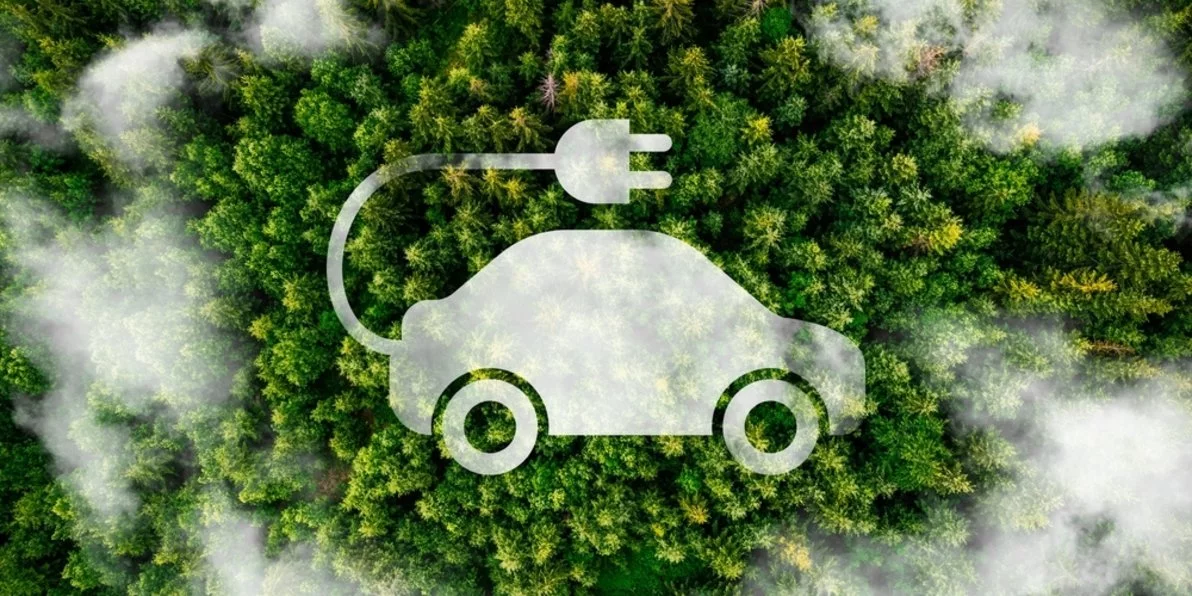
For decades, personal mobility has been powered almost exclusively by internal combustion engines. They transformed the way we live and work, but they also came with a significant environmental cost. Today, electric mobility offers a practical and scalable solution that reduces emissions while delivering tangible financial benefits to drivers.
The numbers speak for themselves.
According to the U.S. Environmental Protection Agency, a typical passenger vehicle emits approximately 4.6 metric tonnes of CO₂ every year. That equates to roughly 400 grams of CO₂ for every mile driven, or around 250 grams per kilometer. Over a typical ownership period of five years, a single vehicle can generate more than 20 tonnes of carbon dioxide. These emissions accumulate across millions of vehicles, making road transport one of the most significant sources of urban carbon emissions.
Electric vehicles fundamentally change this equation.
While the exact environmental benefit depends on the electricity source used for charging, numerous international studies consistently show that battery electric vehicles produce substantially lower lifetime emissions than equivalent petrol-powered vehicles. BloombergNEF research has found that lifecycle emissions from battery electric vehicles can be between 18% and 87% lower than comparable internal combustion vehicles, even after accounting for battery production and electricity generation.
To put that into perspective, if a conventional vehicle emits approximately 4.6 tonnes of CO₂ annually, transitioning to an electric vehicle can prevent several tonnes of carbon emissions every year. Across a fleet of 10,000 vehicles, that translates into tens of thousands of tonnes of CO₂ avoided over the life of those vehicles.

Roberto Colucci, Director of EVs, AWR Automotive
However, sustainability is only one side of the equation. Consumers increasingly ask a practical question: “Does an EV make financial sense?”
The answer is increasingly yes.
In the UAE, this practical case can also be explained through local energy costs. For example, UAE petrol prices for June place Special 95 at Dh3.83 per litre and Super 98 at Dh3.95 per litre. By comparison, home charging can be less expensive for many drivers. In Dubai, DEWA residential electricity tariffs start at Dh0.23 per kWh before fuel surcharge and VAT, depending on the consumption slab.
Historically, vehicle buyers focused primarily on purchase price. Today, more informed consumers evaluate Total Cost of Ownership (TCO), the combined cost of purchasing, fueling, servicing, and maintaining a vehicle throughout its life.
This is where electric vehicles create a compelling advantage.
First, electricity is significantly more efficient as an energy source than petrol. Electric drivetrains convert more than 85% of their stored energy into vehicle movement, compared with approximately 20–30% for traditional internal combustion engines. This efficiency translates directly into lower running costs.
Second, electric vehicles have far fewer moving parts. There are no engine oil changes, spark plugs, fuel injectors, exhaust systems, or complex transmissions requiring routine maintenance. As a result, servicing costs are generally lower, and owners spend less time and money on maintenance throughout the ownership cycle.
Third, advances in battery technology and vehicle manufacturing continue to improve vehicle range (now easily above 500 Km with one charge) while reducing operating costs. As charging infrastructure expands across the UAE and the region, both with home charging and public charging, convenience is rapidly catching up with capability.
When fuel savings and maintenance reductions are combined over several years of ownership, many EV drivers find that the initial purchase premium is fully offset by lower operating expenses. It is demonstrated, in fact, that driving an EV today generates more than AED 50,000 in savings in a standard 5-years ownership period.
This is particularly relevant in markets such as the UAE, where governments, businesses, and consumers are increasingly aligned around sustainability objectives. The country’s commitment to net-zero ambitions and clean energy development provides a strong foundation for accelerated EV adoption.
The transition to sustainable transportation is therefore not solely about reducing emissions. It is about creating a mobility ecosystem that is cleaner, more efficient, and economically smarter.
At AW Rostamani, we see this shift every day. Customers are no longer viewing electric vehicles as a niche technology or a future possibility. They are recognizing them as a practical solution that delivers immediate benefits: lower running costs, reduced environmental impact, and an enhanced driving experience.
World Environment Day reminds us that meaningful change is achieved through millions of individual decisions. Choosing a more sustainable mode of transportation is one of the most impactful decisions consumers can make.
The future of mobility is not merely electric because it is environmentally responsible. It is electric because it is increasingly the better choice: for our cities, our economy, and our planet.