



CASIO Middle East & Africa has introduced the MRG-B5000HT, a limited-edition model in the G-SHOCK MR-G series that draws on traditional Japanese metalworking while updating one of the brand’s earliest designs. The release arrives alongside the standard MRG-B5000 and is aimed at collectors who follow the company’s long-running effort to position MR-G as its most artisanal line.
Only 500 units of the MRG-B5000HT will be produced, each individually numbered. The watch’s defining feature is its hammered bezel and bracelet, created using the tsuiki technique by craftsman Kazuya Watanabe. This approach lends the metal surface a textured pattern associated with centuries of Japanese copperwork and reflects a move by the company to highlight hand-finished elements in an otherwise industrial product category. While the aesthetic echoes the original G-SHOCK model, the construction relies on modern materials, including a DAT55G titanium alloy that is significantly harder than standard titanium. The finish uses an oborogin silver-gray DLC coating, coupled with copper-tone accents on the buttons and screws for contrast rather than embellishment.
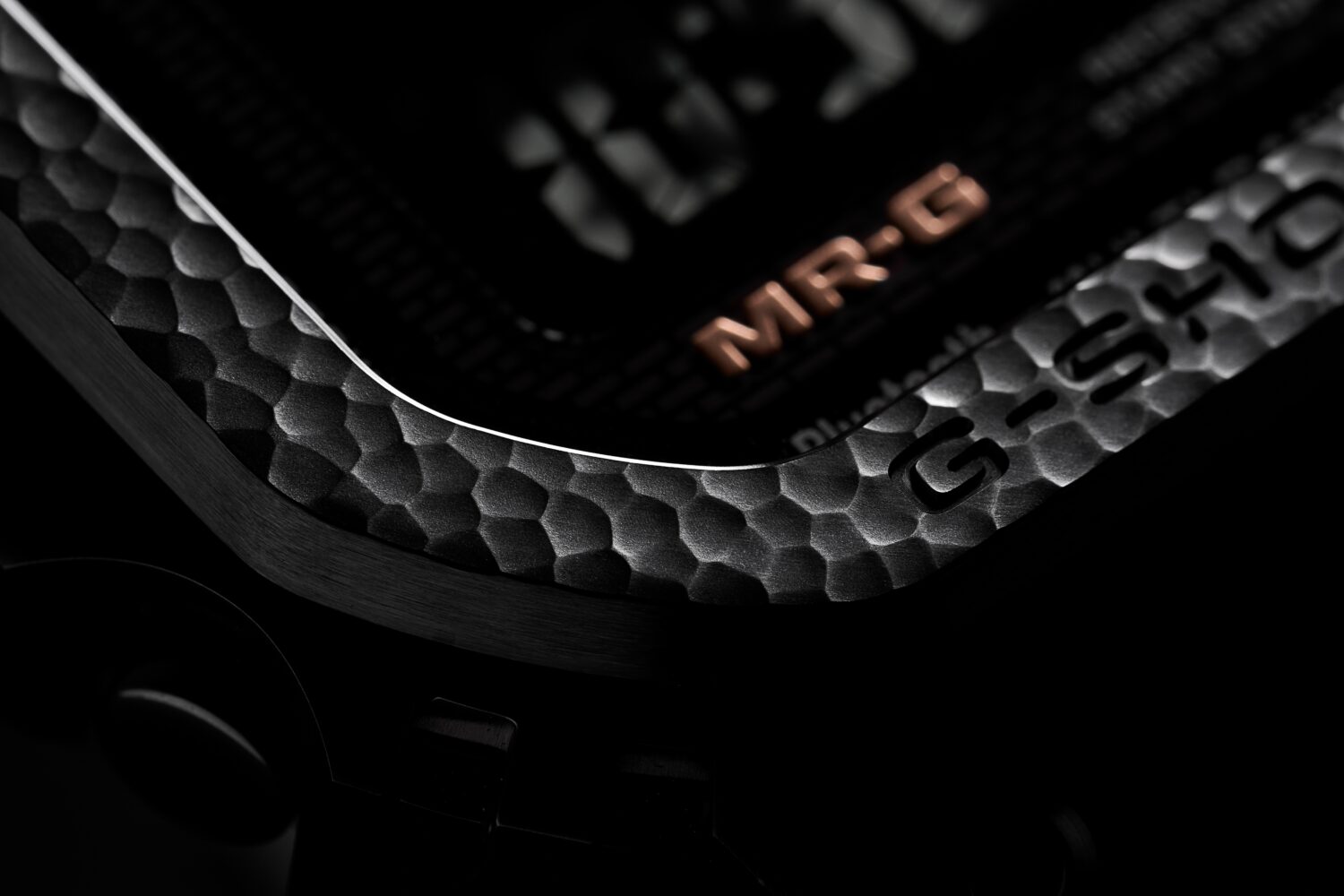
The regular MRG-B5000, released alongside the limited edition, continues to serve as the collection’s core model. It features a full-titanium construction, radio-controlled timekeeping via Multi-Band 6, Bluetooth smartphone connectivity, and solar power. Both watches follow the MR-G line’s familiar formula: premium materials, durability, and a blend of traditional techniques with contemporary engineering. CASIO frames this balance as a nod to takumi, a concept associated with precise craftsmanship, though the focus here remains on the practical merger of design heritage and modern production.
Availability is limited to select G-SHOCK stores and authorized retailers in the Middle East and Africa, a distribution strategy typical for special-run models intended for a niche audience rather than mass-market release.
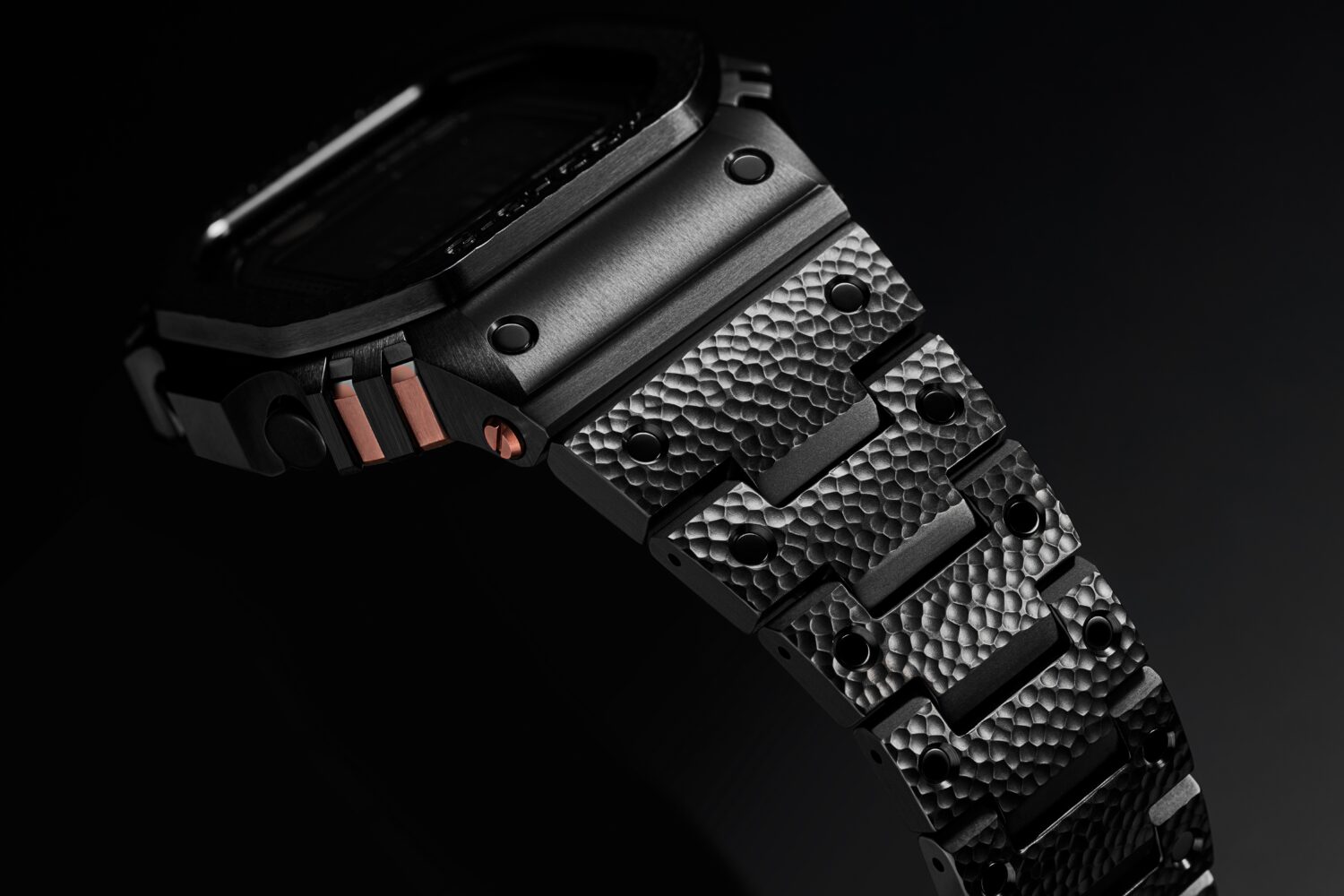
The announcement also highlights the background of Kazuya Watanabe, born in 1978 in Sanjo City, Niigata Prefecture. After studying arts and crafts design, he trained at Gyokusendo, a long-established copperware workshop, where he developed his hammering skills before opening his own forge in 2005. His work has been recognized through several contemporary crafts awards in Japan, and since 2010 he has focused primarily on solo exhibitions and cross-disciplinary collaborations, often exploring how traditional techniques can adapt to modern contexts.