
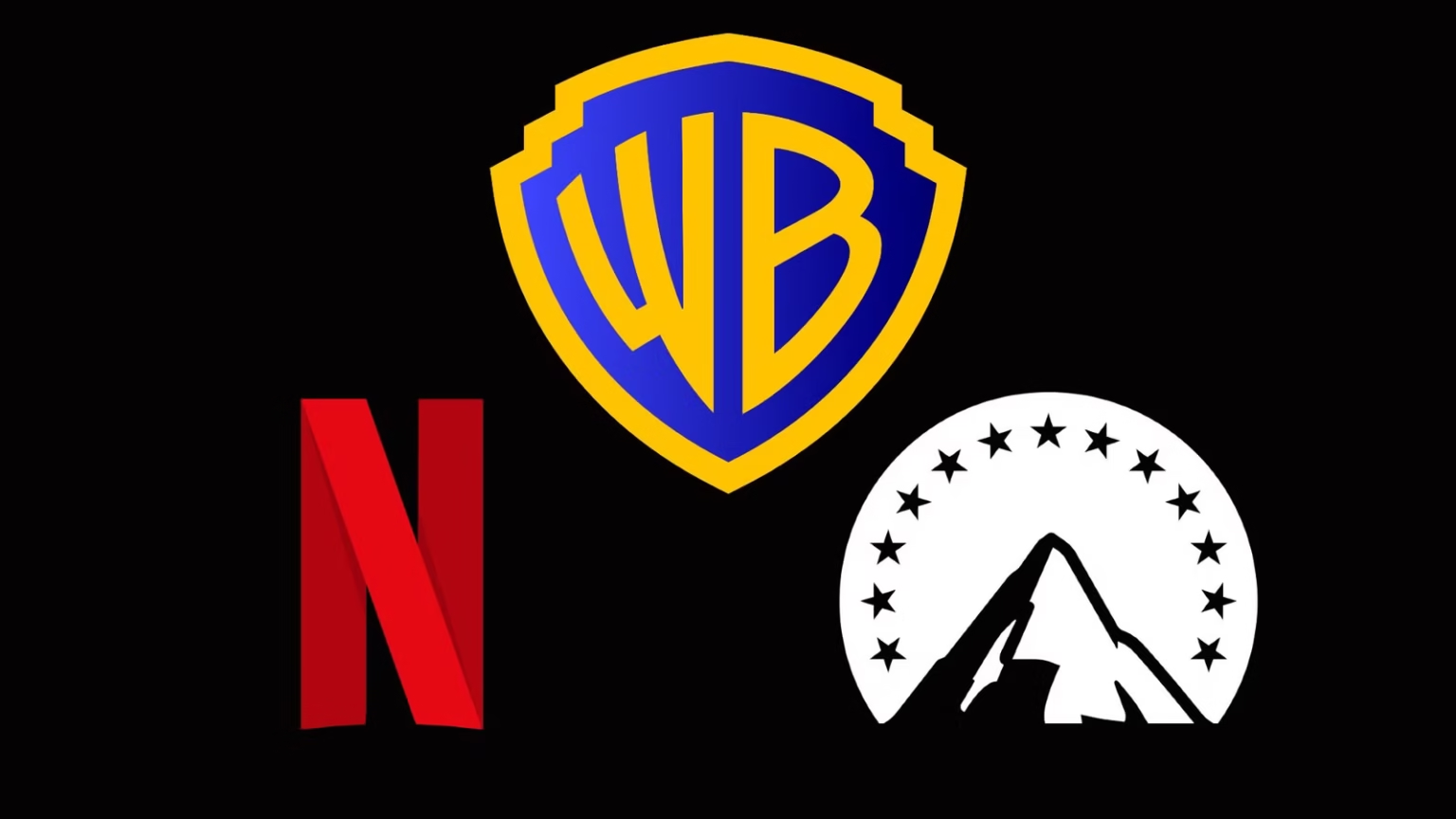
Warner Bros. Discovery has formally rejected a revised takeover proposal from Paramount, reaffirming its decision to proceed with a previously announced merger agreement with Netflix. In a letter to shareholders, the Warner Bros. Discovery board said it unanimously concluded that Paramount’s latest bid remained inadequate and carried material risks that were not in shareholders’ best interests, despite changes to the offer.
According to the board, the revised proposal failed to address core concerns that had already been raised during earlier discussions. These included the scale of debt financing required to complete the transaction and what the company described as insufficient protections for shareholders if the deal were to collapse. The board contrasted this with the Netflix agreement, which it characterized as offering a higher degree of certainty and a clearer path to completion.
Samuel A. Di Piazza Jr., chair of the Warner Bros. Discovery board, stated that Paramount’s offer was inferior across several key measures when compared with the existing agreement. He emphasized that the Netflix deal provides a defined cash consideration for shareholders while avoiding what the board views as elevated execution and financing risks. Under the Netflix transaction, shareholders are set to receive $23.25 per share in cash.
The board also raised doubts about Paramount’s ability to close the deal. Beyond the reliance on substantial debt, directors cited broader concerns related to financing sources and regulatory scrutiny, including potential national security considerations tied to foreign capital involved in Paramount’s proposal. These factors, the company argued, could delay or derail the transaction entirely.
Warner Bros. Discovery further noted that walking away from the Netflix agreement would carry significant financial penalties. Terminating the deal would trigger a $2.8 billion breakup fee, along with additional costs exceeding $1 billion, an outcome the board said would directly harm shareholder value. From its perspective, accepting Paramount’s offer would not only introduce greater uncertainty but also impose immediate and measurable costs.
The letter took a firm tone regarding Paramount’s approach, pointing out that the company had several weeks to review the Netflix agreement and submit a revised proposal that addressed the board’s stated concerns. Instead, Warner Bros. Discovery said Paramount chose not to meaningfully improve its bid, leading the board to stand by its earlier decision.
The takeover battle emerged in late 2025, when bids were submitted by Netflix, Paramount, and Comcast, although Comcast’s interest was widely seen as exploratory. Warner Bros. Discovery ultimately accepted Netflix’s offer, valuing the company at approximately $82.7 billion, while Paramount countered with a higher headline valuation that the board deemed too risky to pursue.
How Paramount and its leadership, including David Ellison, will respond remains uncertain. Meanwhile, the proposed Netflix acquisition continues to raise broader questions about consolidation in the media sector and its long-term implications for competition, theatrical distribution, and consumer choice.