
A reported theft involving a shipment of KitKat products has gained unexpected traction online, turning a relatively straightforward logistics incident into a widely discussed internet story.
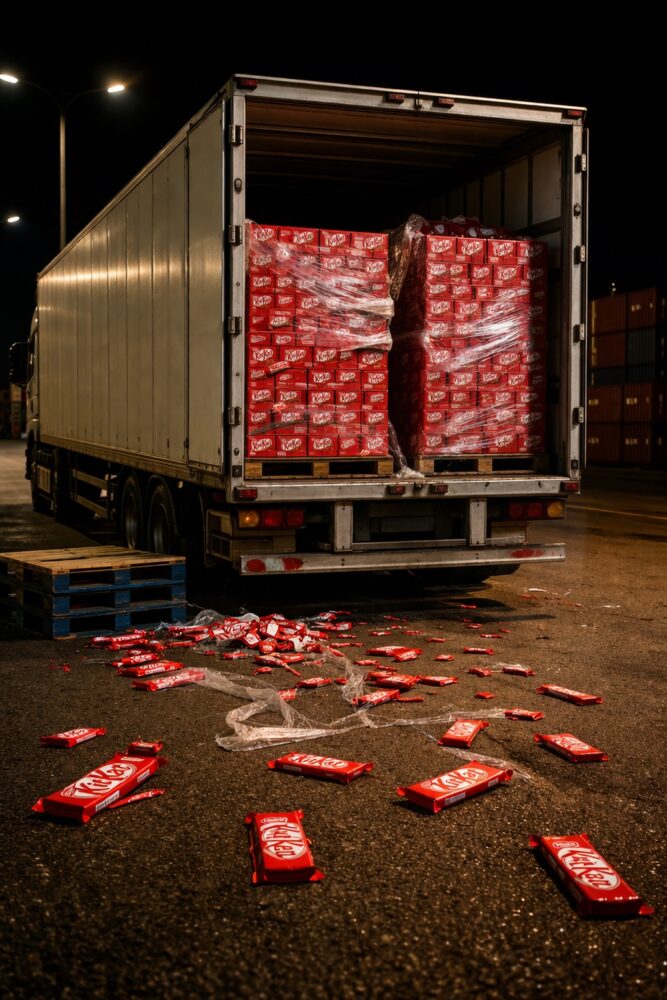
According to available details, a transport truck carrying approximately 12 tons of KitKat bars—estimated at over 400,000 individual units—was intercepted while traveling from central Italy to Poland. The vehicle has not yet been recovered, and the circumstances surrounding the theft remain unclear. While initial statements suggested potential concerns about supply disruption, follow-up communication indicated that there is no broader risk to product availability or public safety.
The scale of the incident is notable, but the online response has arguably been the bigger story. Social media users quickly turned the situation into a running joke, framing the theft as an elaborate heist. References to fictional crime scenarios and pop culture tropes have been common, with some users speculating—without evidence—that the event could be part of a staged marketing effort or timed publicity stunt.
Meanwhile… https://t.co/6iI4LANIZx pic.twitter.com/ZEeyIgV1fv
— Joe Shmo (@JoeShmo2pt0) March 30, 2026
Brands and corporate social media accounts have also engaged with the story, adding to its visibility. This type of interaction has become more common in recent years, where companies respond to viral moments in an attempt to stay relevant within fast-moving online conversations. In this case, those responses have helped extend the lifecycle of the story beyond its initial news value.
Nestlé, the parent company behind KitKat, addressed the situation with a measured tone, acknowledging the theft while avoiding alarmist language. A spokesperson noted the unusual nature of the incident but clarified that it does not pose a significant operational threat. This response contrasts with the more exaggerated interpretations circulating online, highlighting the gap between official communication and internet-driven narratives.
— LION (@Lion_Central) March 29, 2026
There is also a degree of skepticism surrounding the timing and framing of the story. With April Fools’ Day approaching, some observers have questioned whether the incident could be part of a broader promotional strategy, though there is no confirmation to support that theory. The overlap between genuine events and marketing campaigns has made audiences more cautious about taking unusual stories at face value.
First day working at KitKat. Give me a break. pic.twitter.com/Ekw2Z62gHA
— Sir Doge of the Coin ⚔️ (@dogeofficialceo) March 29, 2026
At its core, the situation reflects how quickly a niche news item can evolve into a viral topic, particularly when it combines elements of scale, ambiguity, and humor. While the theft itself remains unresolved, its online afterlife illustrates how digital culture often reshapes straightforward events into something closer to entertainment.