

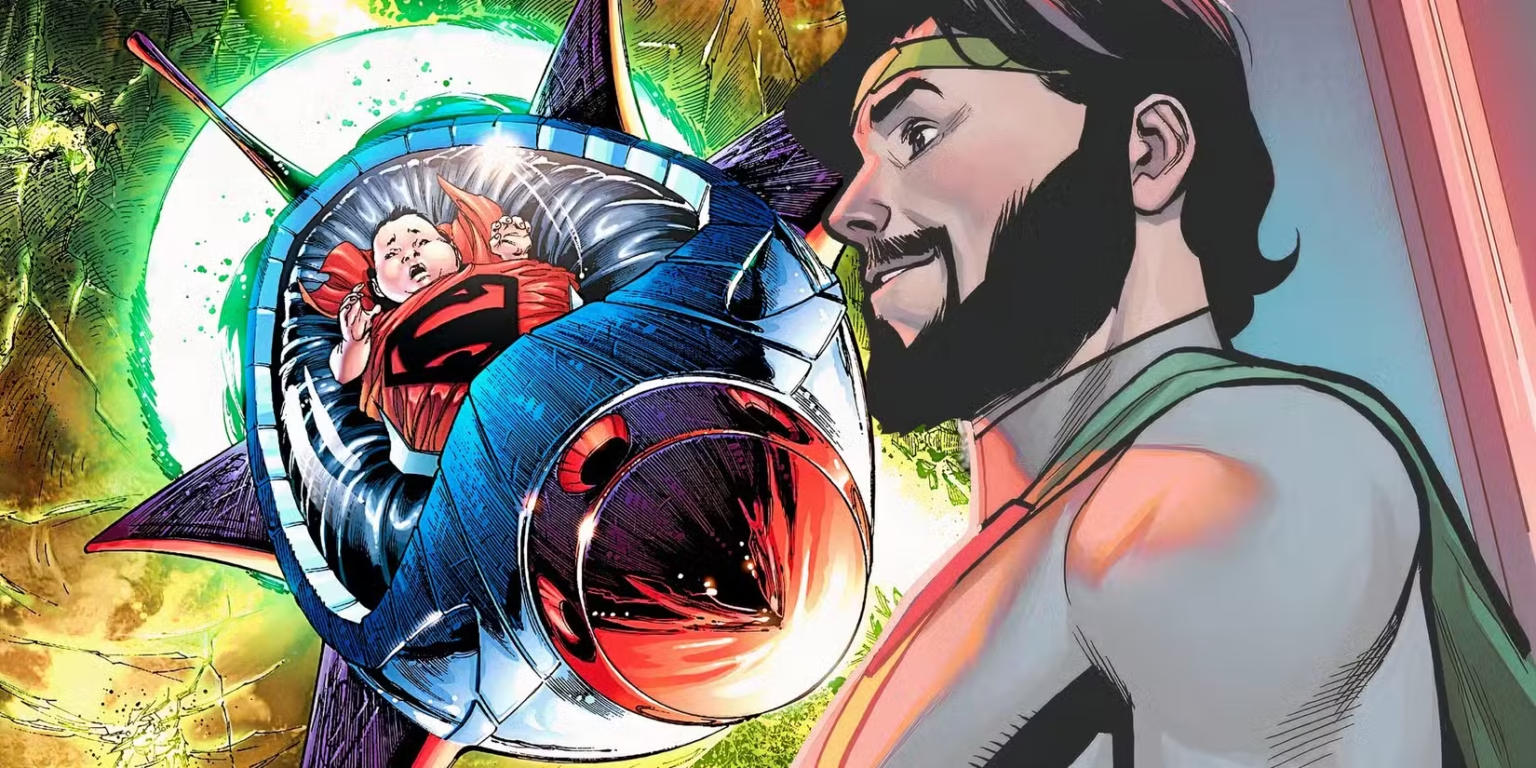
Superman: Father of Tomorrow is set to revisit one of the most established elements of Superman’s mythology by reworking the role of Jor-El. Early images released by DC Comics suggest a visual and narrative shift that places Jor-El at the center of the story rather than on the periphery, where he has traditionally remained.
For most of Superman’s history, Jor-El has been defined by absence. Introduced in 1939, he is typically portrayed as the scientist who saves his infant son, Kal-El, by sending him to Earth moments before Krypton’s destruction. That origin has remained largely intact across decades, reinforcing Jor-El as a symbol of foresight and sacrifice rather than an active participant in events on Earth.
This new series takes a different approach. Instead of Kal-El escaping Krypton, Jor-El survives as an adult and arrives on Earth himself. The premise places him in direct contact with Jonathan Kent and Martha Kent, who become central to his adjustment to human life. Early preview pages indicate a familiar dynamic—outsider meets rural Kansas—but with a different emotional weight, as Jor-El arrives with full awareness of Krypton’s destruction.
Visually, the redesign leans into a more overtly heroic presentation. Variant covers show Jor-El in a suit that blends Kryptonian elements with a silhouette closer to traditional superhero costumes. The aesthetic signals a shift away from the reserved, scientist archetype toward a more active, frontline role. While not radically disconnected from past interpretations, the design makes it clear that this version of Jor-El is intended to function as a protagonist rather than a historical figure.
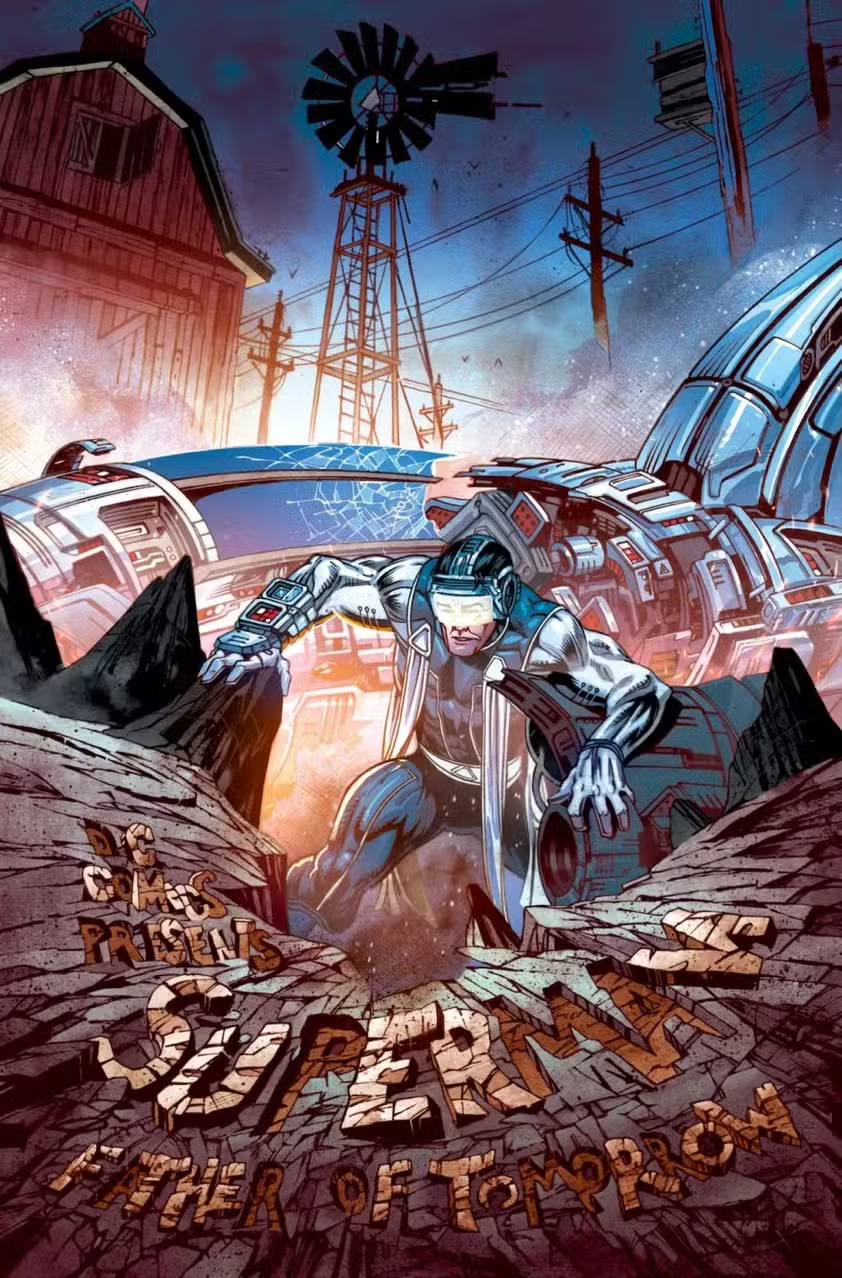
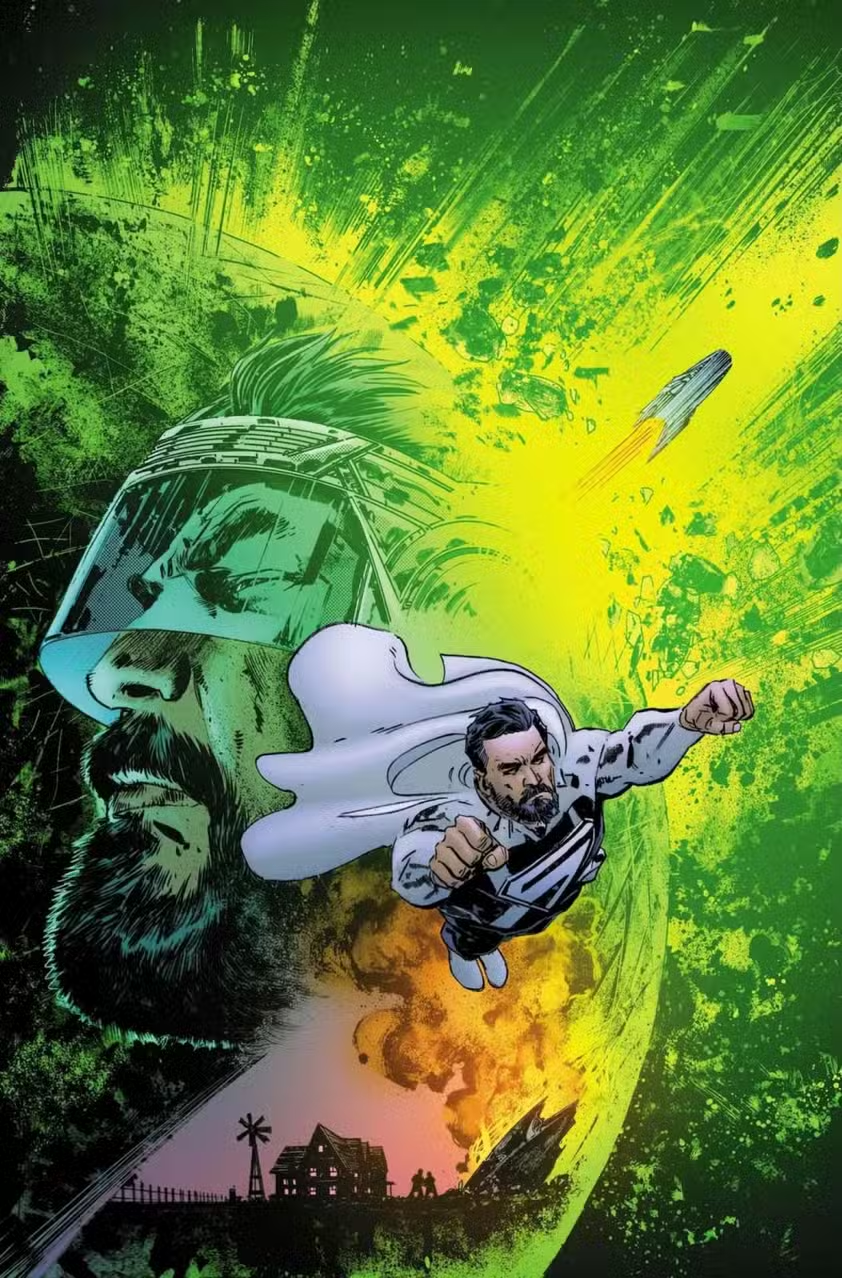
The series is part of DC’s revived Elseworlds line, which has historically allowed creators to reinterpret established characters outside of main continuity. That framework gives writers and artists room to explore alternate outcomes without permanently altering core canon. Previous stories, such as Superman: The Last Family of Krypton, have already experimented with similar ideas by relocating Kryptonian characters to Earth under different circumstances. What distinguishes Father of Tomorrow is its narrower focus on Jor-El as an individual, rather than as part of a larger family narrative.
Narratively, the concept opens up a different set of questions. Instead of raising a child who will become Superman, Jor-El must define his own role on Earth while dealing with the trauma of witnessing Krypton’s end. That perspective aligns him more closely with characters like Supergirl, who often carry direct memories of Krypton rather than inherited ones. It also shifts the thematic focus from legacy to adaptation—how a fully formed individual responds to loss and displacement.
While it remains unclear how far the series will depart from established Superman themes, the early material suggests a story more concerned with character exploration than spectacle. Jor-El’s interactions with the Kents appear to ground the narrative in familiar territory, even as the broader premise diverges significantly from tradition.
Superman: Father of Tomorrow #1 is scheduled for release on May 27. As with many Elseworlds projects, its reception will likely depend on how well it balances reinterpretation with the expectations tied to one of DC’s most enduring mythologies.