
TL;DR: A brilliant, unsettling puzzle game about language, power, and censorship. Come for the archive-diving mystery. Stay for the existential dread.
TR-49
There are puzzle games that make me feel clever. There are narrative games that make me feel something. And then there’s TR-49, which did both and then had the audacity to make me deeply uncomfortable about the state of the world in 2026.
Inkle has been quietly building a reputation as one of the most intellectually ambitious studios in games. After losing myself in the dusty cosmic archaeology of Heaven’s Vault and gleefully manipulating timelines in Overboard!, I thought I knew their rhythm. Elegant systems. Language as gameplay. Stories that reward patience. What I didn’t expect was TR-49 to feel like it was staring directly at our cultural moment and refusing to blink.
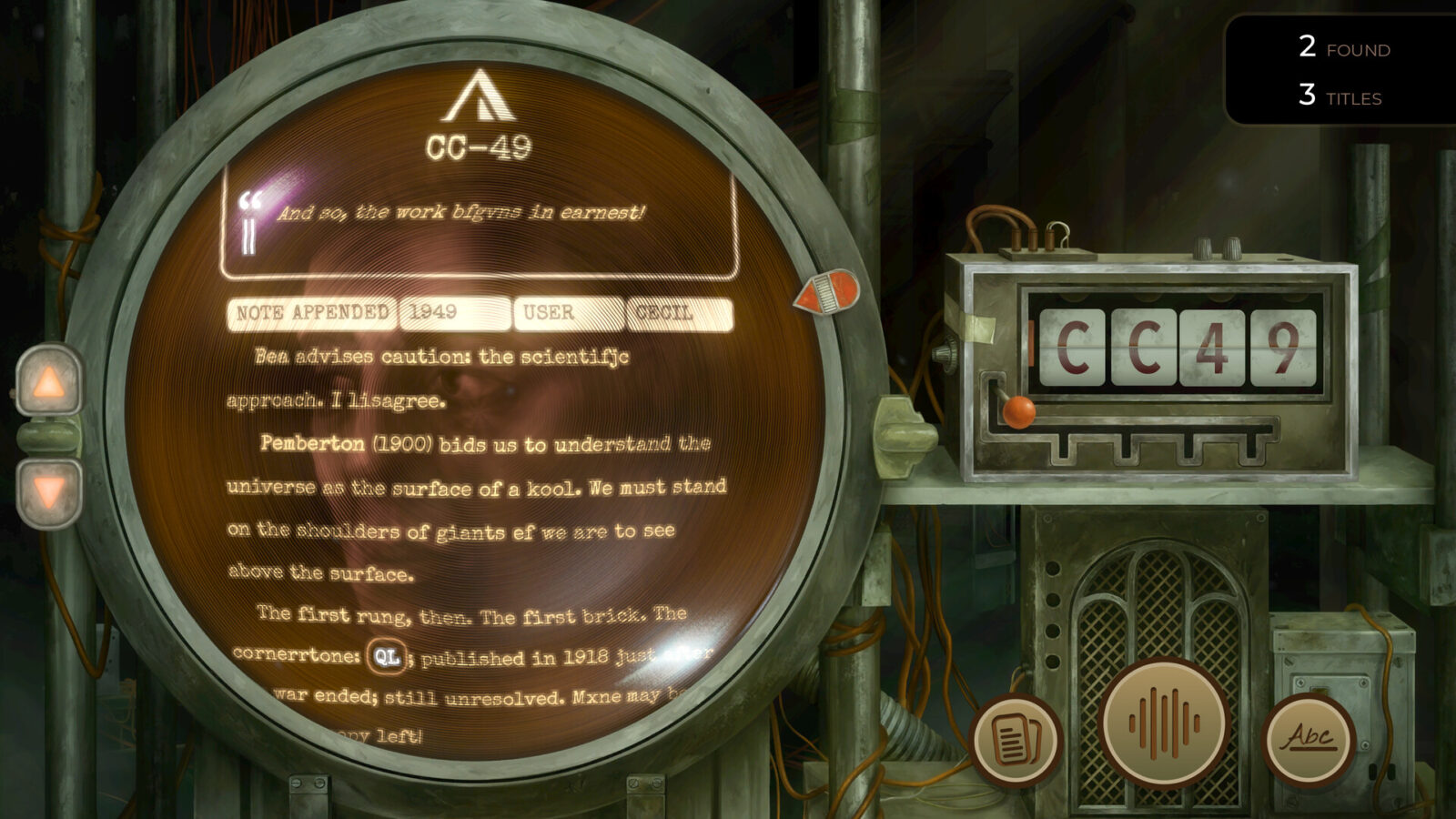
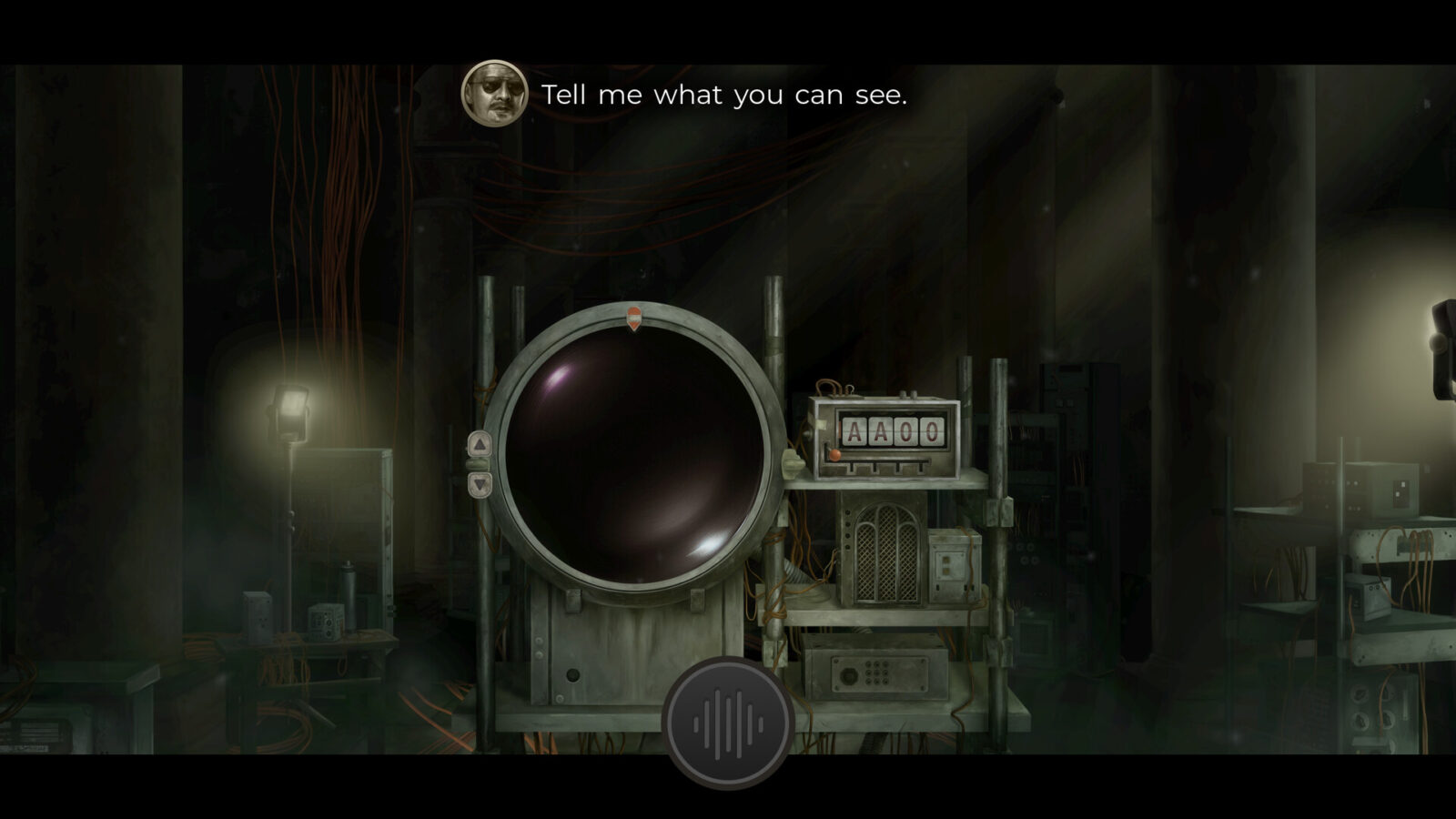
On the surface, TR-49 is an alt-history dystopian document discovery game. You sit in a grimy stone basement in a war-torn version of the UK, operating a hulking machine cobbled together from salvage. Your task is simple to describe and terrifying to unpack: find a specific piece of writing in a vast archive so it can be destroyed.
Yes. Destroyed.
That’s the pitch. And it’s one of the most loaded gameplay premises I’ve encountered in years.
A Machine That Eats Books
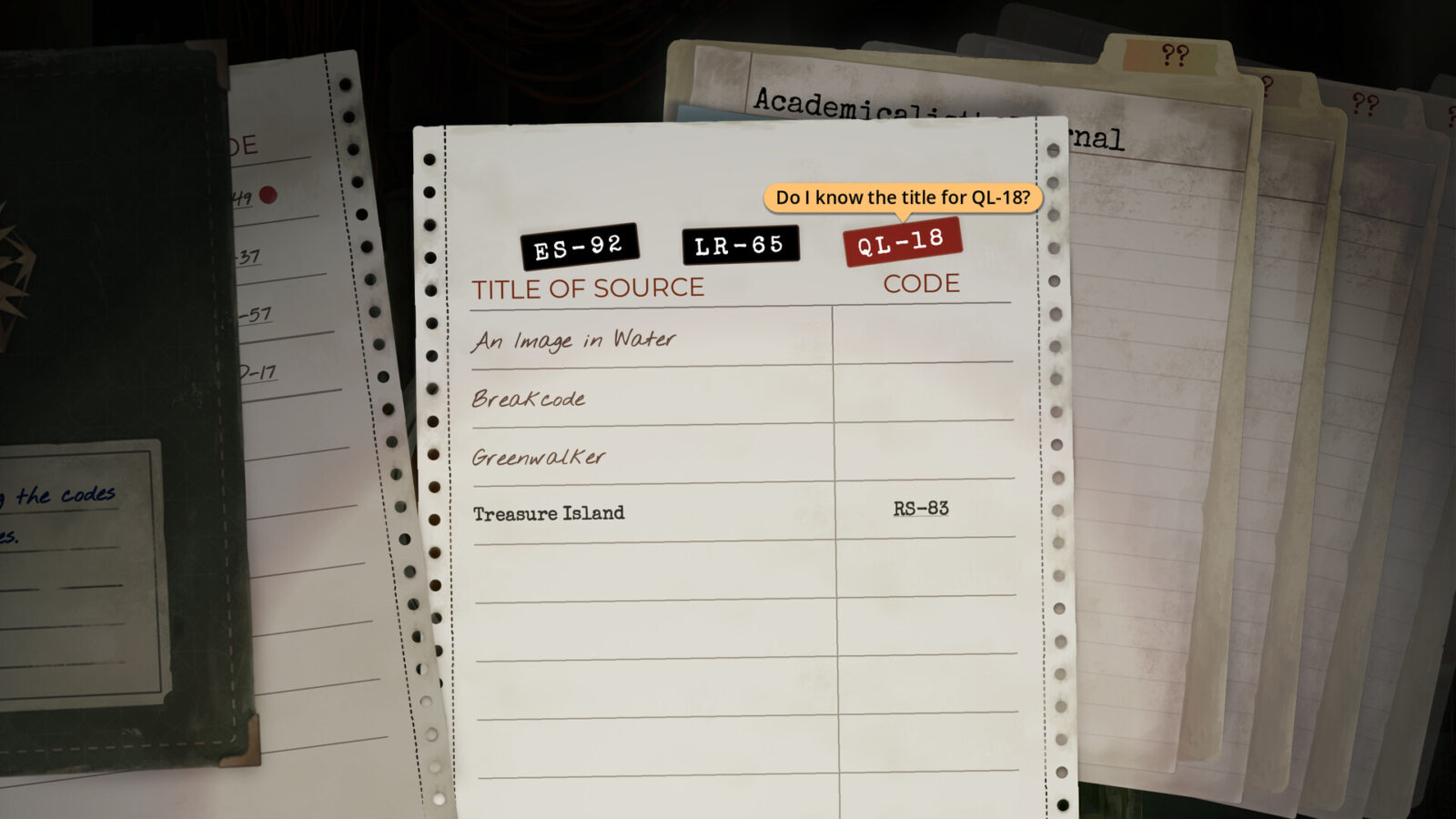
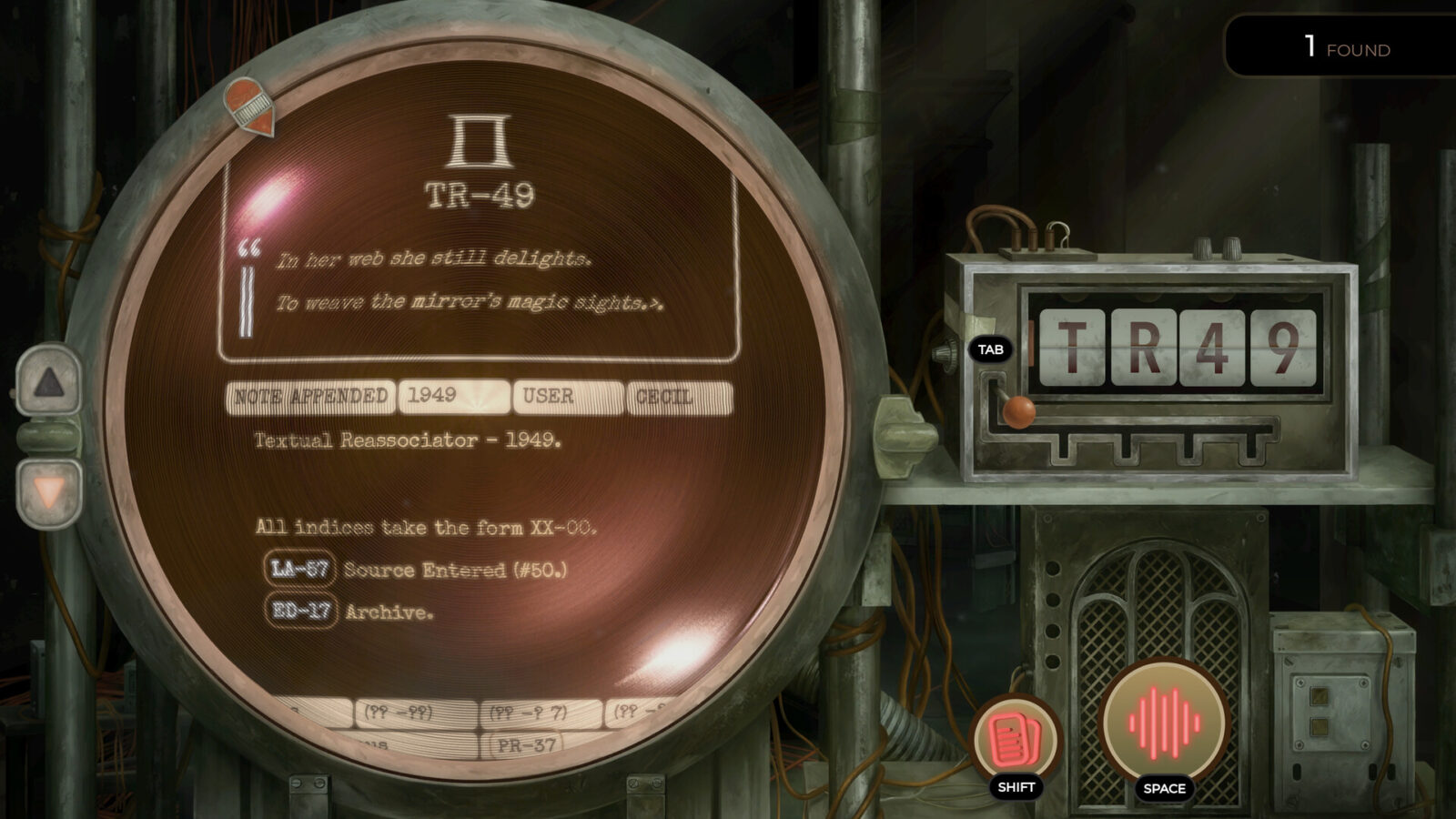
The core loop in TR-49 is deceptively straightforward. You search an archive of dozens upon dozens of texts and commentary notes. You match excerpts to titles. You uncover connections between fictional academics and writers. You slowly build an internal map of a linguistic subculture that never existed, but feels eerily plausible.
If you’ve played database-driven narrative games before, you’ll have some instincts. Search for key terms. Follow names. Cross-reference dates. Let patterns emerge. But TR-49 doesn’t hold your hand, and it doesn’t need to. It trusts you to sit in confusion for a while.
And that confusion is deliberate.
Early on, I felt adrift. I wasn’t sure what I was missing. I had that nagging sense of having overlooked something obvious. But as hours passed, disparate threads began to weave together. A scholar’s footnote reframed another’s manifesto. A personal letter exposed ideological fault lines in the machine’s creators. The archive transformed from a pile of documents into a living ecosystem of ideas.
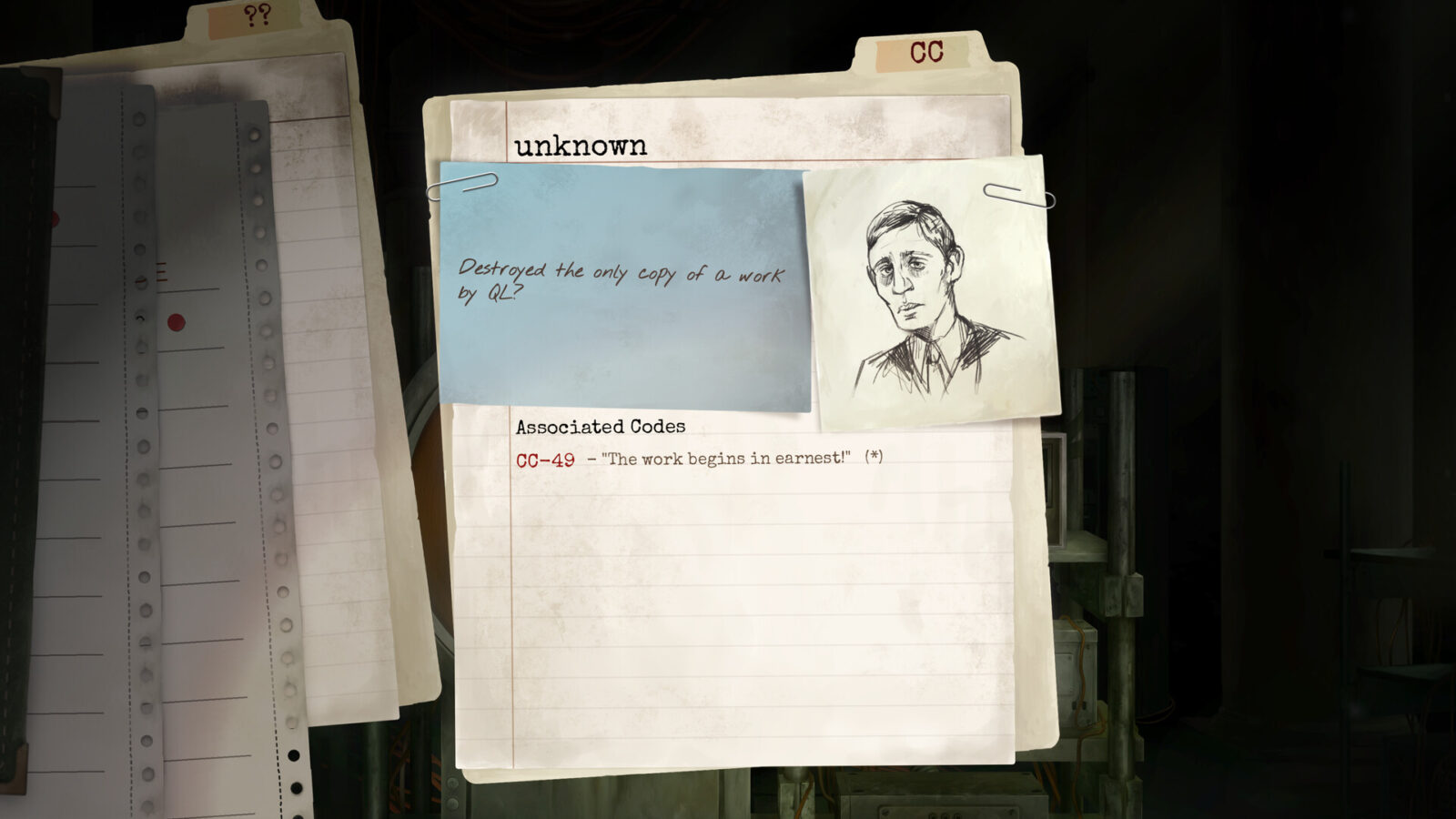
The genius of TR-49’s design is its automatically updated notes system. It quietly organizes what you’ve learned without solving anything for you. I never had to grab a notebook. I never felt overwhelmed in the way I sometimes do with dense deduction games. Instead, I felt… capable. Focused. Like I was slowly learning how to think inside the game’s logic.
And that feeling is intoxicating.
Linguistic Relativity, But Make It Dystopian
Beneath the puzzle mechanics, TR-49 is doing something far more ambitious. It’s wrestling with the idea that language shapes thought. The archive you’re exploring isn’t just a collection of academic curiosities; it’s a battleground of ideas about how words influence cognition, culture, and power.
The game leans into a fictionalized, magical-realist interpretation of linguistic relativity. Entire movements spring up around theories that language doesn’t just describe reality—it constructs it. In this alt-20th-century timeline, that belief mutates into something both visionary and dangerous.
And here’s where TR-49 stops being clever and starts being uncomfortably relevant.
In 2026, we’re living in a world where generative AI consumes vast swathes of human-created text. Where governments openly dispute observable reality. Where censorship can be bureaucratic rather than theatrical. TR-49 doesn’t shout about any of this. It hums. It lets you connect the dots.
You are, after all, operating a machine that atomizes books.
The metaphor isn’t subtle, but it isn’t crude either. The game refuses easy answers. Is language a liberatory force? A tool of oppression? Both? Are you preserving knowledge, or complicit in erasing it? The tension sits with you long after you shut the game down.
Magical Realism in a Stone Basement
What floored me most was the world-building. TR-49 constructs a linguo-punk 20th century out of footnotes, manifestos, academic rivalries, and personal tragedies. The people behind the machine slowly emerge through fragments. Their relationships, their ambitions, their ideological fractures—they’re all there, if you’re patient.
The writing is extraordinary. Dense but never self-important. Playful without being flippant. It trusts you to keep up.
There’s a kind of magical realism at work, too. Not in the sense of overt fantasy, but in how ideas seem to ripple outward and reshape the world. The archive feels haunted—not by ghosts, but by consequences.
And then there’s the music. Subtle. Mechanical. Melancholic. It sits in the background like the low hum of the machine itself. I didn’t consciously notice it for long stretches, but when it dipped into silence, I felt its absence immediately.
Liam, Please Let Me Think
I do have one recurring frustration, and his name is Liam.
Liam is your voice in the machine. He guides Abbi, your protagonist, offering commentary that oscillates between reassurance and gentle nudging. In theory, this is fine. In practice, he kept interrupting my flow.
There’s a strange mechanic where, after Liam speaks, you have to click a glowing button to prompt Abbi’s response. It sounds minor. It isn’t. When I’m mid-thought, tracing thematic links between two essays about constructed vocabularies, the last thing I want is to click a dialogue button out of obligation.
More than once, I muttered at my screen for him to just stop talking so I could think. Ironically, in a game about language’s power, I craved silence.
This isn’t a knock on the writing or voice acting. Both are excellent. It’s about pacing. TR-49 is at its best when it lets me sink into the archive uninterrupted. When it insists on foregrounding its narrative scaffolding, it slightly undercuts the purity of its puzzle design.
It’s a small blemish on an otherwise astonishing experience.
Why TR-49 Feels So Urgent in 2026
It would be easy to call TR-49 a “smart puzzle game” and leave it at that. But that undersells what it accomplishes.
This is a game about the fragility of truth. About the commodification of human expression. About the thin line between preservation and erasure. It’s about how systems—political, technological, linguistic—shape what we are allowed to think.
And yet, it never feels preachy. It never waves a sign that says, “This is about now.” It simply presents a machine that consumes books and asks you to operate it.
That restraint is what makes it hit so hard.
By the end of my six-hour playthrough, I felt wrung out in the best possible way. I’d pieced together the puzzle. I’d seen one ending and immediately chased another. And I walked away feeling sharper. Not just smarter in a game-logic sense, but more alert to the way language frames the world around me.
Few games manage that.
Verdict
TR-49 is one of Inkle’s most daring and resonant works—a masterfully constructed linguistic puzzle game that feels chillingly relevant in 2026. Its world-building is extraordinary, its systems elegantly designed, and its themes cut deep. Minor pacing frustrations aside, this is a bold, cerebral experience that lingers long after the machine powers down.