
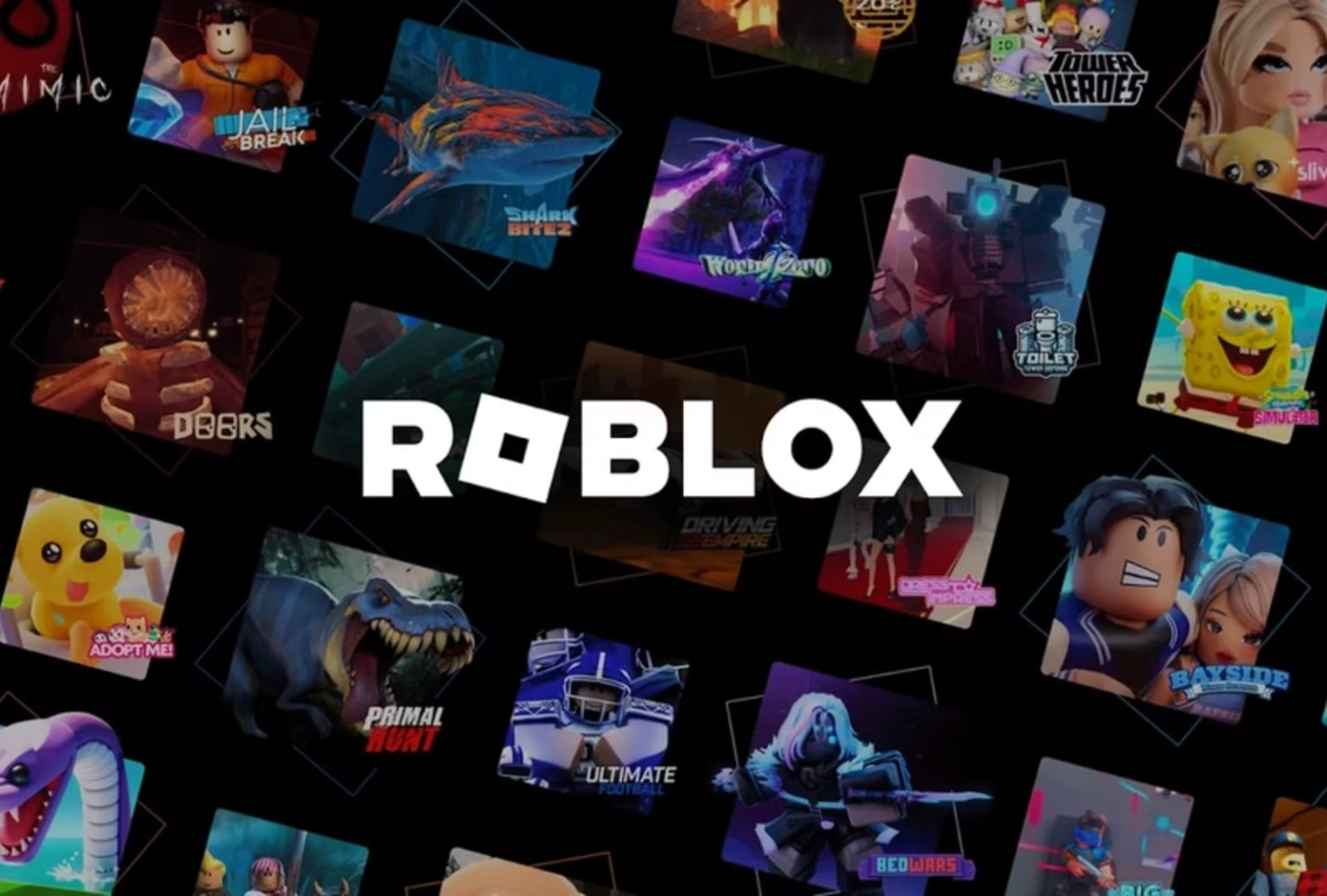
Roblox is introducing two new initiatives aimed at expanding the kinds of games developed on its platform, signaling a broader push to support more complex experiences as its audience ages. The programs—Roblox Incubator and Roblox Jumpstart—were announced during the Game Developers Conference 2026 and are intended to provide mentorship, development support, and visibility for creators building new titles using Roblox Studio.
The new Roblox creator programs reflect a noticeable change in the platform’s audience profile. According to company data, about 27 percent of Roblox’s age-verified daily users are now over 18. While the platform has long been associated with younger players, the increasing presence of adults is creating demand for games with deeper mechanics, more developed narratives, and more diverse genres. With roughly 144 million daily active users overall, Roblox appears to be positioning itself to support projects that appeal to a wider age range.
The Roblox Incubator program is structured as a six-month development cycle designed for experienced teams. Participants are expected to enter the program with either a working prototype or a clear plan for a game concept that can be developed during the program period. Each Incubator cohort will include up to 40 teams. During the program, developers receive guidance from Roblox specialists and structured milestones aimed at helping projects move toward full release.
Rather than focusing only on early experimentation, the Incubator is intended to help teams refine concepts into games that can scale on the platform. Support includes feedback on gameplay design, assistance with audience building, and advice on navigating the Roblox ecosystem. Teams accepted into the program will need to commit significant development time over the six-month period.
Roblox Jumpstart takes a more open-ended approach. The program is designed for creators who are new to Roblox development or for teams experimenting with their first project on the platform. Applications remain open year-round, allowing developers to apply whenever they are ready rather than within fixed cohort windows.
Jumpstart emphasizes learning the tools and systems behind Roblox Studio while helping teams release their first original project. Participants receive educational resources, access to platform experts, and guidance on attracting players both inside and outside the Roblox ecosystem. Early Jumpstart presentations took place at GDC 2026, but the program is expected to continue throughout the year with ongoing submissions.
Both programs share a similar focus on encouraging different types of games than those traditionally associated with Roblox. The company has indicated particular interest in genres such as role-playing games, strategy games, and shooters. These categories are relatively limited on the platform compared with casual multiplayer experiences, yet they tend to appeal to older players who expect deeper gameplay systems.
Roblox is also encouraging experimentation with visual design and game structure. Developers are being invited to explore approaches ranging from highly detailed 3D environments to stylized 2.5D artwork, as well as hybrid projects that combine familiar game genres with Roblox’s social and avatar-based systems. The goal appears to be expanding the platform’s range without abandoning its core identity as a social gaming environment.
The development tools behind these initiatives rely on Roblox Studio, the platform’s integrated development environment. The system includes the Luau scripting language, collaborative project tools, and infrastructure designed to support large numbers of concurrent players across multiple devices. Roblox has also introduced features such as instance streaming and texture streaming to allow more complex worlds to run on both high-end hardware and mobile devices.
Artificial intelligence tools are also being integrated into the development workflow. Roblox’s MCP client offers assistance with code generation, debugging, and environment design, which may help smaller teams accelerate development. Once a game launches, developers can access analytics tools that track metrics like player acquisition, session length, retention, and in-game monetization performance. The platform also offers experimentation systems that allow creators to run A/B tests on onboarding flows or gameplay adjustments.
For developers deciding whether to apply, the choice between the two programs largely depends on experience level and project maturity. Incubator is aimed at teams already comfortable with game development who are ready to commit to a structured production timeline. Jumpstart, by contrast, provides a more flexible entry point for developers learning the Roblox ecosystem or testing early concepts.
Neither program guarantees success, but both provide access to mentorship and audience-building resources that can be difficult for independent developers to secure on their own. For teams outside major game development hubs—including those in regions such as the Middle East—the initiatives may also offer a path into Roblox’s global marketplace.
Ultimately, the introduction of Roblox Incubator and Roblox Jumpstart reflects a broader shift in how the platform views its creator ecosystem. As Roblox continues attracting older users and competing with traditional gaming platforms, the company appears to be encouraging developers to experiment with more ambitious projects while still working within its accessible, user-generated framework.