


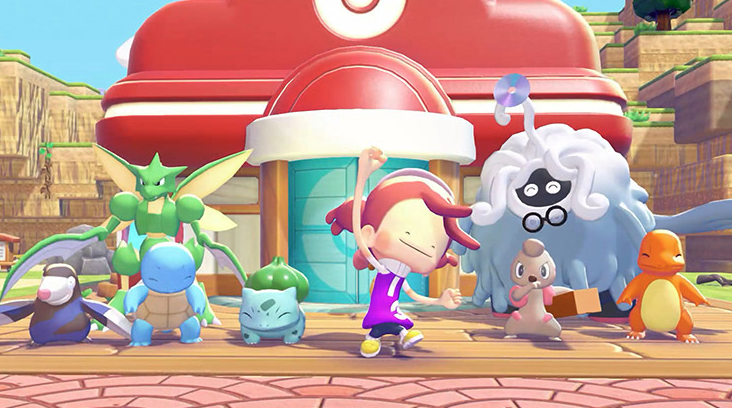
TL;DR: Pokémon Pokopia is a cozy Pokémon life sim where you play as Ditto, build habitats, restore a broken world, and befriend Pokémon. It’s charming, addictive, and emotionally richer than expected.
Pokémon Pokopia
There’s a certain kind of comfort I associate with the Pokémon franchise. It’s the same warm hum I get booting up an old handheld and hearing that familiar jingle before Professor Whoever starts talking about tall grass. Pokémon has always been cozy-adjacent. Even when the stakes are “save the world,” the vibes are still soft sweaters and best friends who fit in your backpack.
But Pokémon Pokopia feels different. This isn’t cozy as a side dish. This is cozy as the main course.
After spending my first hour with Pokémon Pokopia — and later poking around a more developed multiplayer world — I walked away thinking this might be the boldest tonal shift the series has made in years. Not because it’s louder or flashier. Because it’s quieter.
And honestly? I’m kind of obsessed.
Playing as Ditto Changes Everything
The first thing Pokémon Pokopia does is wake you up as a Ditto.
Not a trainer. Not a kid with a hat and a dream. A Ditto.
And not just any Ditto — one that’s been asleep for who-knows-how-long, clutching onto the memory of a trainer that’s suddenly gone. The narrator gently notes how happy you looked being petted. It’s sweet in a way Pokémon rarely allows itself to be. And then it hits you: your trainer isn’t here.
So you do what any emotionally fragile blob would do. You transform into them.
Mechanically, this leads into Pokémon Pokopia’s character creator. Seven hairstyles, a surprisingly generous palette of 28 hair colors, outfits, hats, bags. You can’t just stay purple and gooey, because you’re trying to look human enough to ask around. That constraint actually makes the roleplay stronger. I wasn’t building “me.” I was building someone my Ditto remembered.
And here’s where the design philosophy clicked for me. By making the protagonist a Pokémon — specifically Ditto — the power dynamic flips. There’s no trainer barking orders. There’s no turn-based hierarchy. You’re not commanding Pokémon. You’re collaborating with them.
That shift sounds subtle. It isn’t.
In most Pokémon games, your bond with your team is implied. Here, it’s the entire point.
The Core Gameplay Loop in Pokémon Pokopia Is Ridiculously Addictive
Let me explain the loop, because this is where Pokémon Pokopia’s life sim mechanics sink their claws into your brain.
You meet a Pokémon. That Pokémon teaches you something. That new ability lets you modify the world. Those modifications create habitats. Habitats attract new Pokémon. Repeat forever.
It’s the most dangerously satisfying gameplay loop I’ve touched in a while.
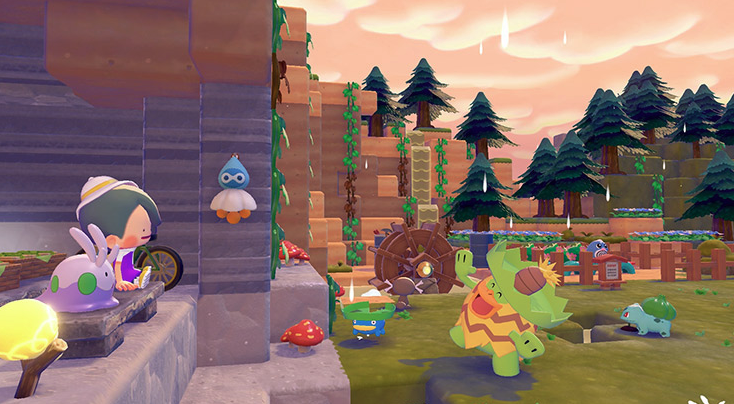
Bulbasaur teaches me Leafage, which lets me grow tall grass wherever I want. Suddenly, the dry, cracked Withered Wasteland isn’t just a sad patch of dirt — it’s a canvas. Four squares of grass create a basic habitat. Add water nearby? Now we’re talking.
Squirtle hands me Water Gun and I start reviving land like some kind of eco-friendly wizard. Charmander doesn’t give me a move but introduces the concept of Specialties. I can literally ask them to follow me and light fires where needed. Timburr can build. Bulbasaur can accelerate plant growth.
This isn’t Pokémon battling. This is Pokémon urban planning.
And then there’s Ditto’s Stockpile mechanic. Hold the collect button and Ditto inhales everything nearby — furniture, materials, debris — until its face stretches into something that looks like it crawled out of a cursed museum. It’s equal parts adorable and deeply unsettling. I laughed out loud the first time I did it.
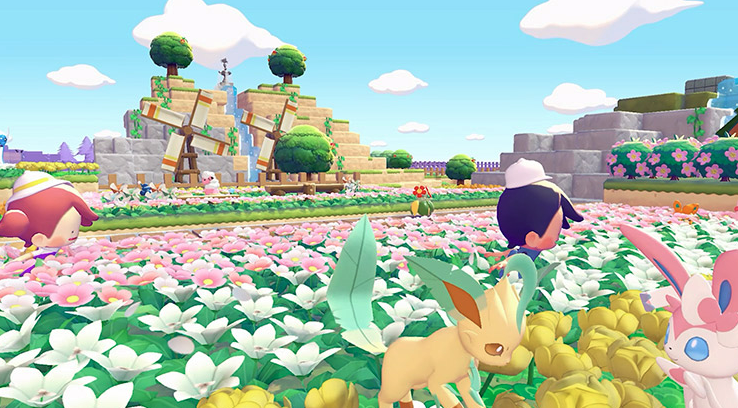
The Habitat Dex might secretly be my favorite addition. It tracks every environment you’ve successfully created. Boulder-shaded tall grass for Fighting-types like Timburr and Machop. Hydrated flower beds for more delicate visitors. Sometimes the ground sparkles with a “trace of Pokémon,” teasing a habitat you haven’t figured out yet.
It scratches the same itch as filling the Pokédex — but instead of catching, you’re cultivating.
And that’s such a powerful shift.
Pokémon Pokopia’s Tutorial Doesn’t Feel Like Homework
One of my biggest fears going into Pokémon Pokopia was tutorial bloat. Life sims love to overexplain themselves. But here, the onboarding feels natural. You meet Professor Tangrowth, you discover a broken-down Pokémon Center, and the Poké Life Environment Improvement App kicks in.
Yes, it’s basically a task list. But it’s smart about it.
Increase the Environment Level. Improve Comfort Levels. Rebuild the Pokémon Center. Collect sturdy sticks. Craft a Straw Bed because Bulbasaur specifically asked for one.
That last part is the magic. When Bulbasaur asked me for a bed, I didn’t roll my eyes at a fetch quest. I felt weirdly protective. Of course you deserve a bed. Let me make you one.
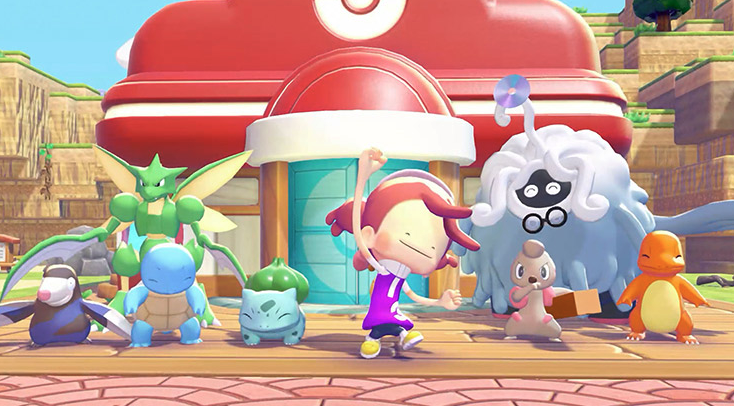
Placing furniture inside visible habitat boundaries raises Comfort Levels. Higher Comfort Levels attract more Pokémon. More Pokémon unlock new skills and materials. It’s always about being with Pokémon.
I’ve played a lot of life sims — from Animal Crossing: New Horizons to Stardew Valley — and Pokémon Pokopia stands apart because the villagers aren’t flavor text. They are the gameplay.
Every action routes back to them.
Multiplayer in Pokémon Pokopia Is Controlled Chaos
I only got a brief look at four-player multiplayer, and I’m limited in what I can spill, but here’s what I can say: it’s dangerously charming.
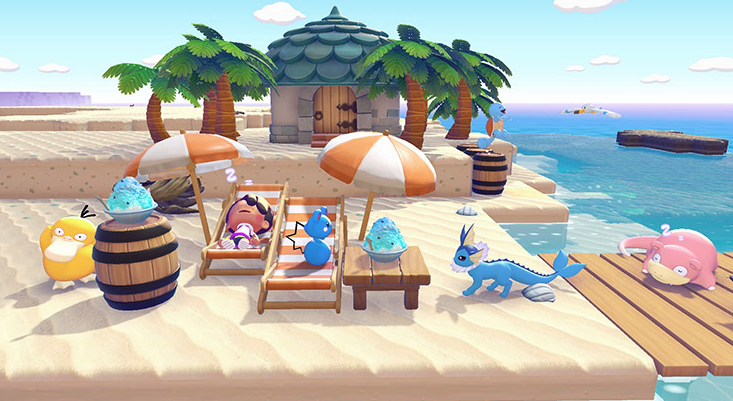
The world I visited was fully developed. Pokémon living inside actual houses. Sidewalks lining manicured paths. Lamp posts. Fences. Plushies inside decorated rooms. A stage in the town square that made it feel like a tiny festival was about to start.
It felt less like survival and more like restoration.
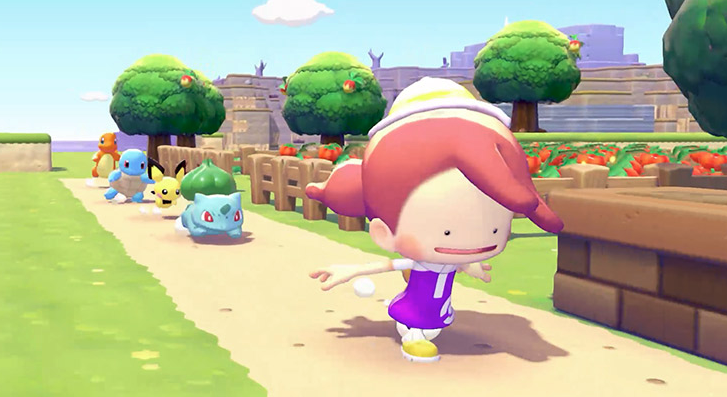
And I immediately became That Friend — the one who wanders off to reorganize flower beds while everyone else focuses on objectives. Pokémon Pokopia is incredibly easy to get distracted in. In multiplayer, I can already imagine the chaos: one friend speedrunning environment upgrades, another obsessing over furniture placement, someone else chasing a sparkle hint across the map.
It’s the good kind of hectic. The Discord-call-at-midnight kind.
The Bigger Mystery Behind the Cozy
What surprised me most about Pokémon Pokopia isn’t the crafting. Or the loop. Or even the multiplayer potential.
It’s the melancholy.
This world is empty. Withered. Abandoned. There are hints of humans — Human Records like diaries and documents that flesh out what used to be here. Professor Tangrowth’s backstory includes life with a human partner. There’s something apocalyptic lingering in the background.
And I want to know what happened.
The developers say it’ll take roughly 20 to 40 hours to reach the end credits depending on playstyle. But that almost feels beside the point. Pokémon Pokopia isn’t about racing to credits. It’s about building a place worth staying in.
Apparently, there’s meaningful post-game content and even daily events that reward logging in on specific days. If that loop holds up, this could easily become one of those “I’ll just check in for 20 minutes” games that devours entire weekends.
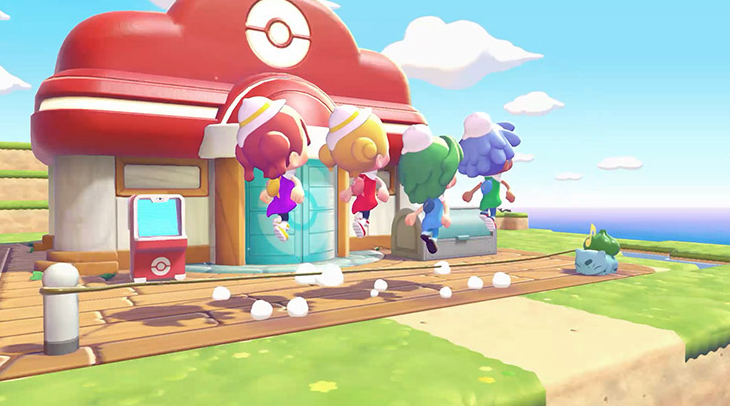
I’ve seen what Animal Crossing did to my friends. Pokémon Pokopia feels like it has the same gravitational pull — but with emotional stakes that hit a little harder.
Final Thoughts on Pokémon Pokopia
After just an hour, Pokémon Pokopia feels like a bold reinvention of what a Pokémon game can be. By making Ditto the protagonist and centering the entire gameplay loop around communication, habitats, and environmental restoration, this life sim carves out a genuinely fresh identity within the franchise.
It’s cute. It’s cozy. It’s quietly sad. And it’s already living rent-free in my brain.
Verdict
Pokémon Pokopia takes the franchise’s coziest impulses and builds an entire life simulation around them. The habitat-building loop is deeply satisfying, multiplayer shows huge promise, and the emotional hook of Ditto searching for its lost trainer adds surprising depth. If the full game sustains this momentum, it could become one of the most quietly transformative Pokémon experiences in years.