
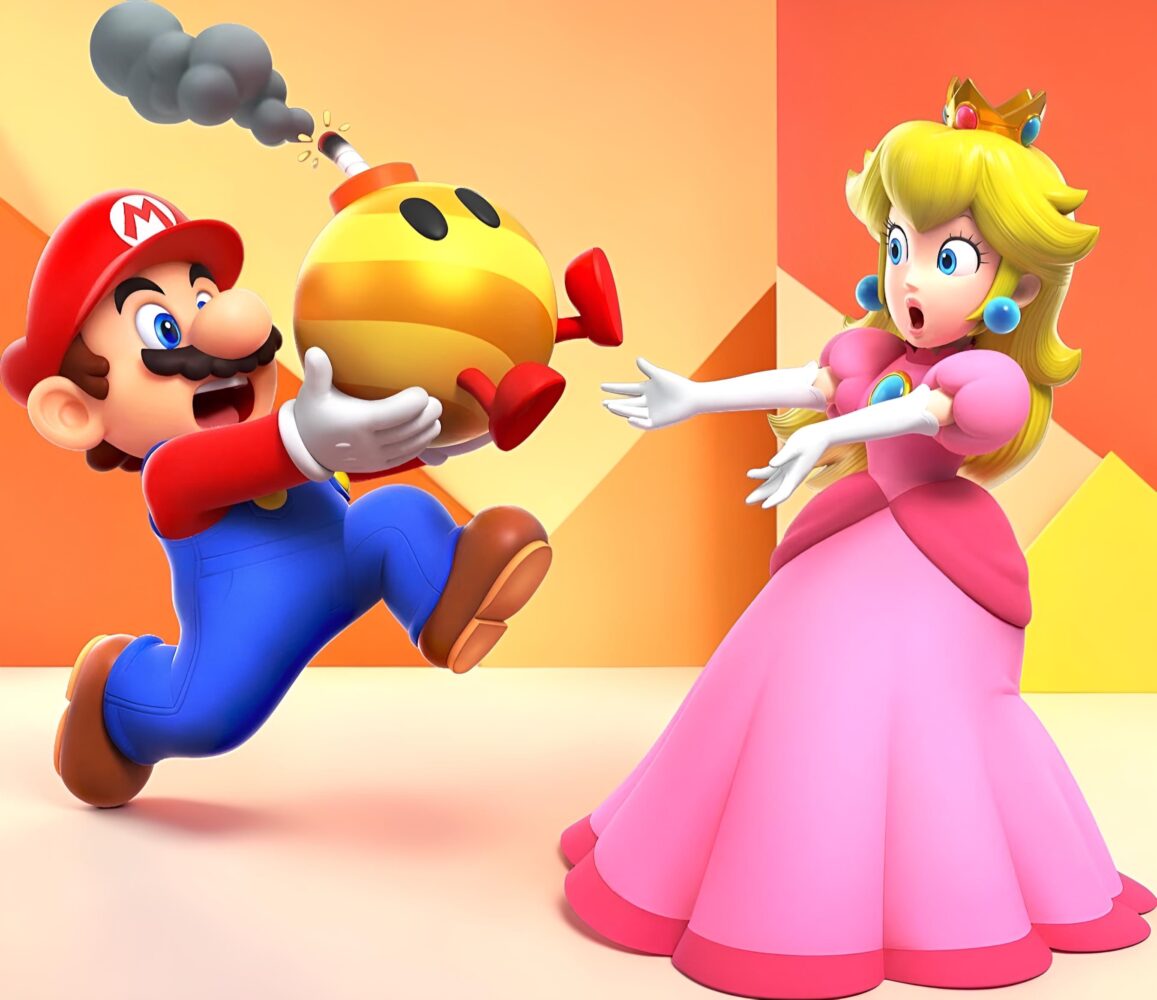
TL;DR: It’s basically Wonder at its best. Better bosses, tougher challenges, smarter multiplayer, and smoother performance. Not perfect, but easily the version you should play.
Super Mario Bros. Wonder + Meetup in Bellabel
I went into this so-called “Super Mario Bros. Wonder Nintendo Switch 2 Edition + Meetup in Bellabel Park” expecting the usual Nintendo remix energy. You know the type. Slightly shinier graphics, a couple of bonus modes, and a polite nod toward people who already bought the original. What I didn’t expect was something that feels weirdly close to a full-on redemption arc for the handful of things that held the original Wonder back.
And yeah, I’m calling it Wonder 2.0. Because that’s honestly what it feels like.
This rewrite is based on the original review provided here , but what I experienced playing through this upgraded version felt much more personal, like revisiting a favorite album that suddenly got a remaster and a bunch of new tracks that actually matter.
Relearning How Good 2D Mario Feels
Booting this up again reminded me of something I think we all quietly agreed on back in 2023: Super Mario Bros. Wonder is absurdly good at the fundamentals. The movement alone is enough to carry entire sessions. There’s a tactile joy to how Mario accelerates, lands, pivots midair, and commits to jumps that feels almost musical. It’s the kind of thing you don’t consciously notice until you go play a lesser platformer and suddenly feel like your character is made of wet cardboard.
Coming back to it on Switch 2, that sensation is even sharper. The cleaner performance, the rock-solid framerate, the crisp 4K presentation when docked… it doesn’t transform the game so much as remove the last thin layer of friction between you and the experience. The Flower Kingdom pops in a way that feels almost unfair to other platformers.
I didn’t expect to care this much about performance in a 2D Mario game, but here we are.
Bellabel Park Is Where Things Get Interesting
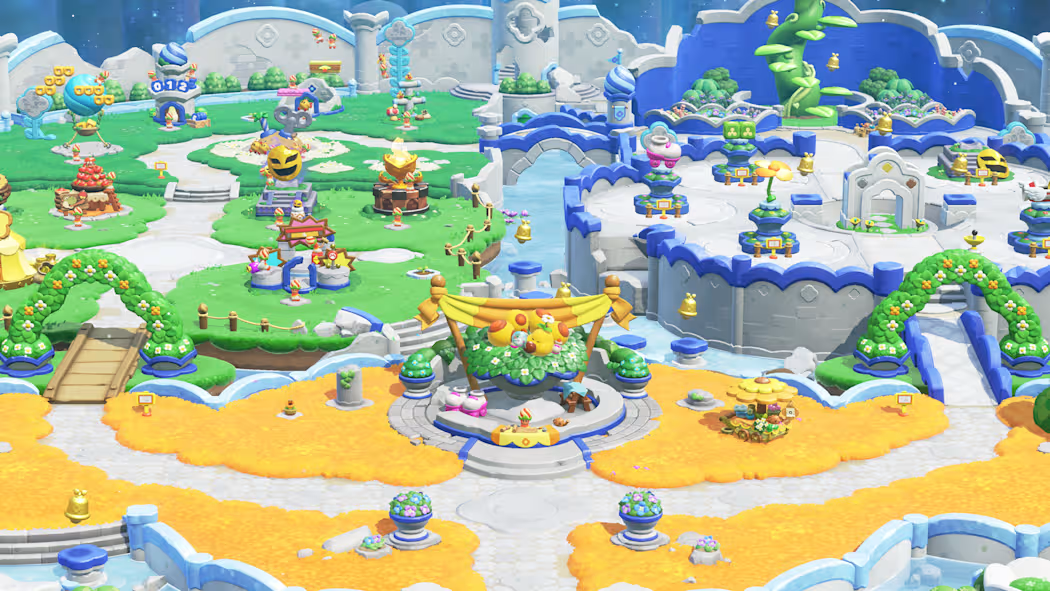
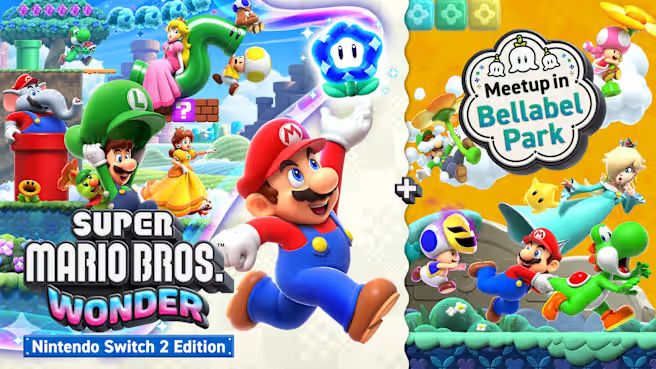
The real hook, though, is Bellabel Park, which is where this whole expansion earns its unnecessarily long title. This is basically a playground built on top of Wonder’s mechanics, and for the most part, it absolutely works.
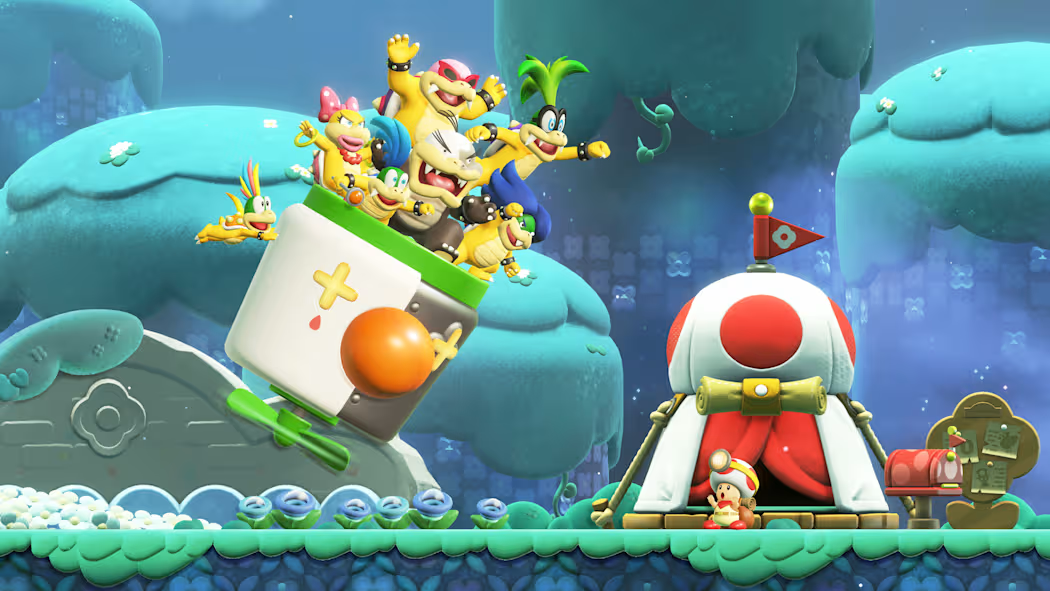
The first thing that hit me was the Koopaling boss fights. I’ve spent most of my life tolerating 2D Mario bosses rather than loving them. They’ve always been fine, functional, occasionally charming, but rarely memorable. That changes here.
These fights feel like Nintendo finally asked, “What if bosses were actually as creative as the levels?”
Suddenly you’re dealing with transformations, screen-wide mechanics, environmental chaos, and setups that actually demand awareness and adaptation. I had moments where I had to stop and rethink my approach instead of just defaulting to muscle memory. That alone feels like a minor miracle for this series.
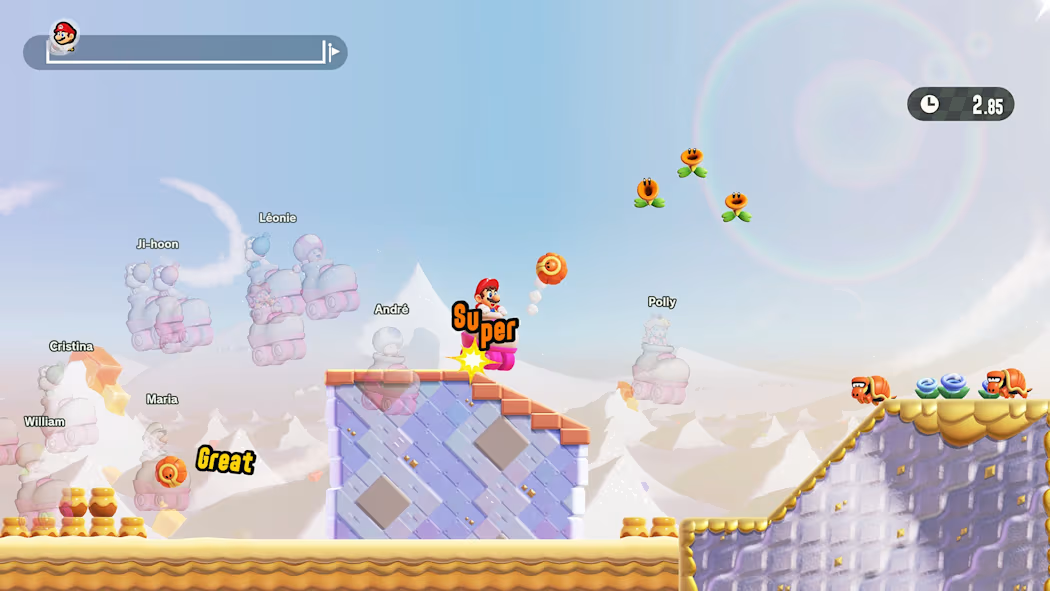
And for once, badges actually matter in these encounters. I found myself experimenting instead of just sticking to a comfort pick, which is something the base game never really forced me to do.
The part that surprised me most? I died. More than once. In a Mario boss fight. I genuinely can’t remember the last time that happened.
Finally, Some Real Challenge
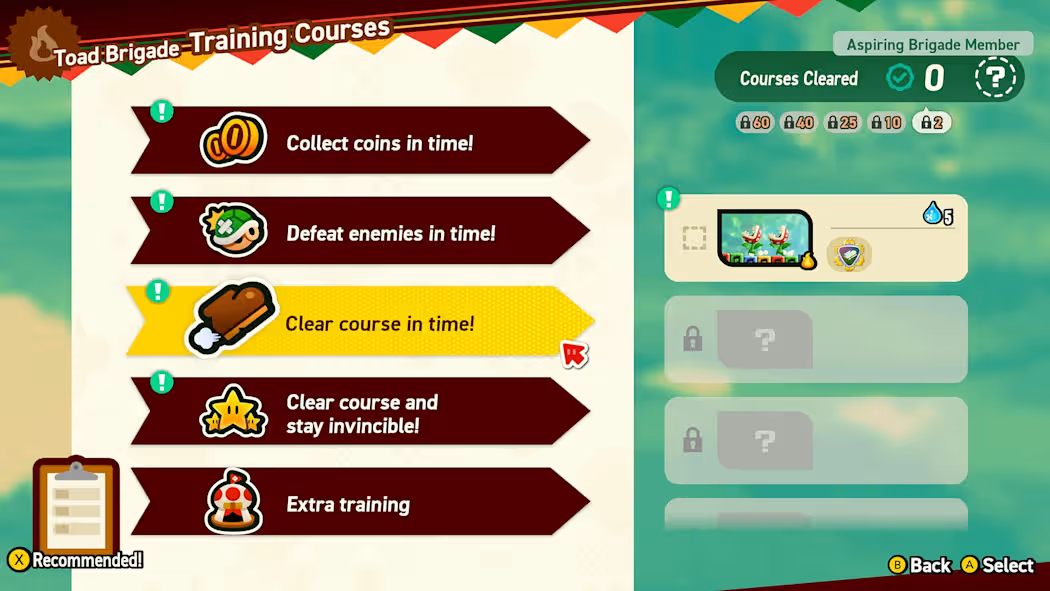
Then there’s the Toad Brigade Training Camp, which feels like Nintendo quietly slipping a hardcore mode into a game that was previously very forgiving.
These are tight, focused challenges that strip away the spectacle and just ask one thing: are you actually good at this game?
And I mean really good.
There were moments where I felt like I was threading a needle while riding a unicycle. Timing jumps across tiny windows, managing momentum perfectly, using abilities with zero margin for error. It’s the kind of design that exposes every bad habit you’ve developed.
And I loved it.
At one point, I spent an embarrassing amount of time trying to clear a section where one mistake meant instant failure. When I finally nailed it, I had that rare, almost arcade-era satisfaction where your hands are slightly shaking and you just sit there for a second like, “Okay, yeah, that was worth it.”
If anything, my biggest complaint is that there isn’t more of this. Once I hit 100% completion, I immediately wanted another batch of equally brutal challenges.
Multiplayer Chaos, For Better and Worse
Bellabel Park also leans heavily into multiplayer, and this is where things get a bit uneven.
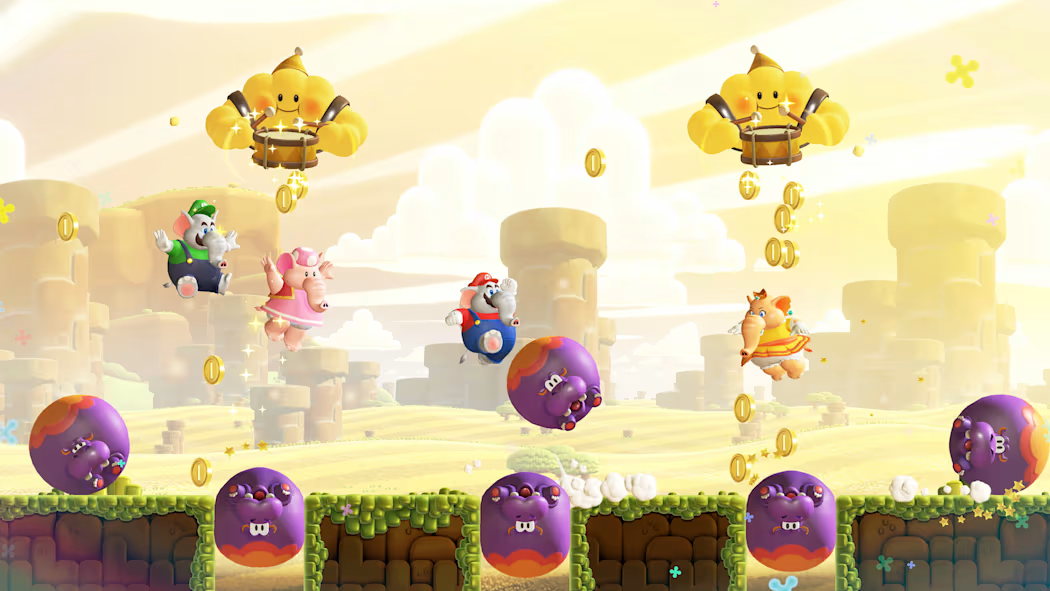
The cooperative minigames are genuinely brilliant at times. They twist familiar mechanics into weird social experiments where communication becomes more important than skill. I had sessions that felt less like playing Mario and more like trying to coordinate a heist with friends who refuse to listen.
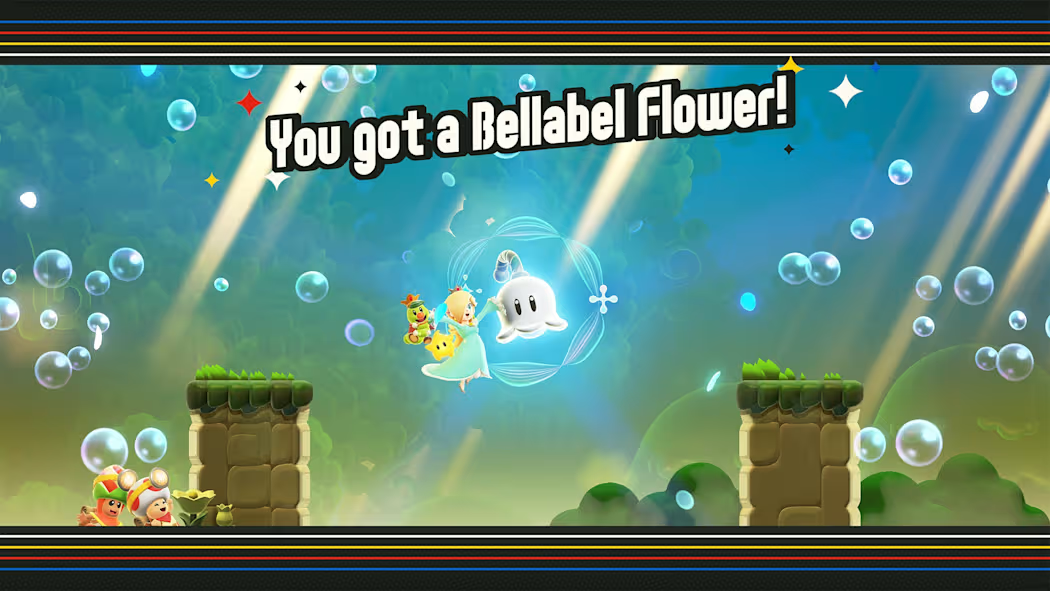
There’s something magical about that.
One mode in particular had us constantly second-guessing each other, counting actions in our heads, and collectively panicking at the finish line. It’s chaotic in a way that feels intentional, like the game is gently trolling you.
But then you swing over to the competitive side, and the energy just… dips.
It’s not bad, exactly. It’s just safe. Predictable. The kind of party game content that fills space but doesn’t stick in your memory. After a few rounds, my group started drifting, the way you do when something is technically fine but not exciting enough to hold attention.
It feels like a missed opportunity, especially considering how inventive the co-op stuff is.
The Quiet Fixes That Actually Matter
What really impressed me, though, were the smaller, almost invisible changes to the main campaign.
The camera adjustments alone feel like a revelation. If you’ve ever tried to play local multiplayer in the original Wonder, you probably remember the chaos of players pulling the camera in different directions, people getting left behind, turning into ghosts, and generally disrupting the flow.
That’s mostly gone now.
Being able to zoom out, lock the camera to a lead player, and instantly bring stragglers back into the action turns multiplayer from mildly frustrating into something that actually works. It’s one of those changes that sounds minor on paper but completely reshapes the experience in practice.
It also makes the game far more welcoming if you’re playing with less experienced players, which feels very in line with what Mario should be.
There are also small additions like a new playable character, some fun Easter eggs, and quality-of-life tweaks that don’t scream for attention but quietly make everything smoother.
The Part Where It Almost Goes Further… But Doesn’t
As much as I enjoyed this expansion, I kept running into this recurring feeling: this could have gone even further.
The Dual Badge system, for example, hints at a ridiculous amount of potential. Combining abilities should open the door to all kinds of wild level design experiments. But the game only really scratches the surface of what’s possible.
It’s like being handed a box of Lego and only building half the set.
Same goes for some of the challenge design and multiplayer ideas. There are flashes of brilliance that make you wish Nintendo had pushed just a little harder, taken a few more risks, or simply added more content in those directions.
What’s here is great. It just stops short of being overwhelming in the best way.
Verdict
Super Mario Bros. Wonder Nintendo Switch 2 Edition doesn’t just polish the original, it meaningfully evolves it. The improved performance, smarter multiplayer systems, and genuinely creative new content make this feel like the definitive version of an already fantastic platformer. While some ideas don’t reach their full potential, what’s here is strong enough to make returning players fall in love all over again, and new players wonder why every platformer doesn’t feel this good.