
TL;DR: A stylish, chaotic arcade racer with deep mechanics and big personality, held back by uneven tracks and an overbearing story—but still absolutely worth the ride.
Screamer (2026)
I went into Screamer [2026] expecting another neon-drenched arcade racer trying to cosplay as something cooler than it actually is. You know the type. Loud, fast, and ultimately forgettable once the credits roll. Instead, what I got was something far stranger and, at times, far more interesting—a chaotic, anime-fueled racing experiment that feels like it was designed by someone who genuinely loves both high-speed racing and over-the-top character drama… but maybe a little too much of both.
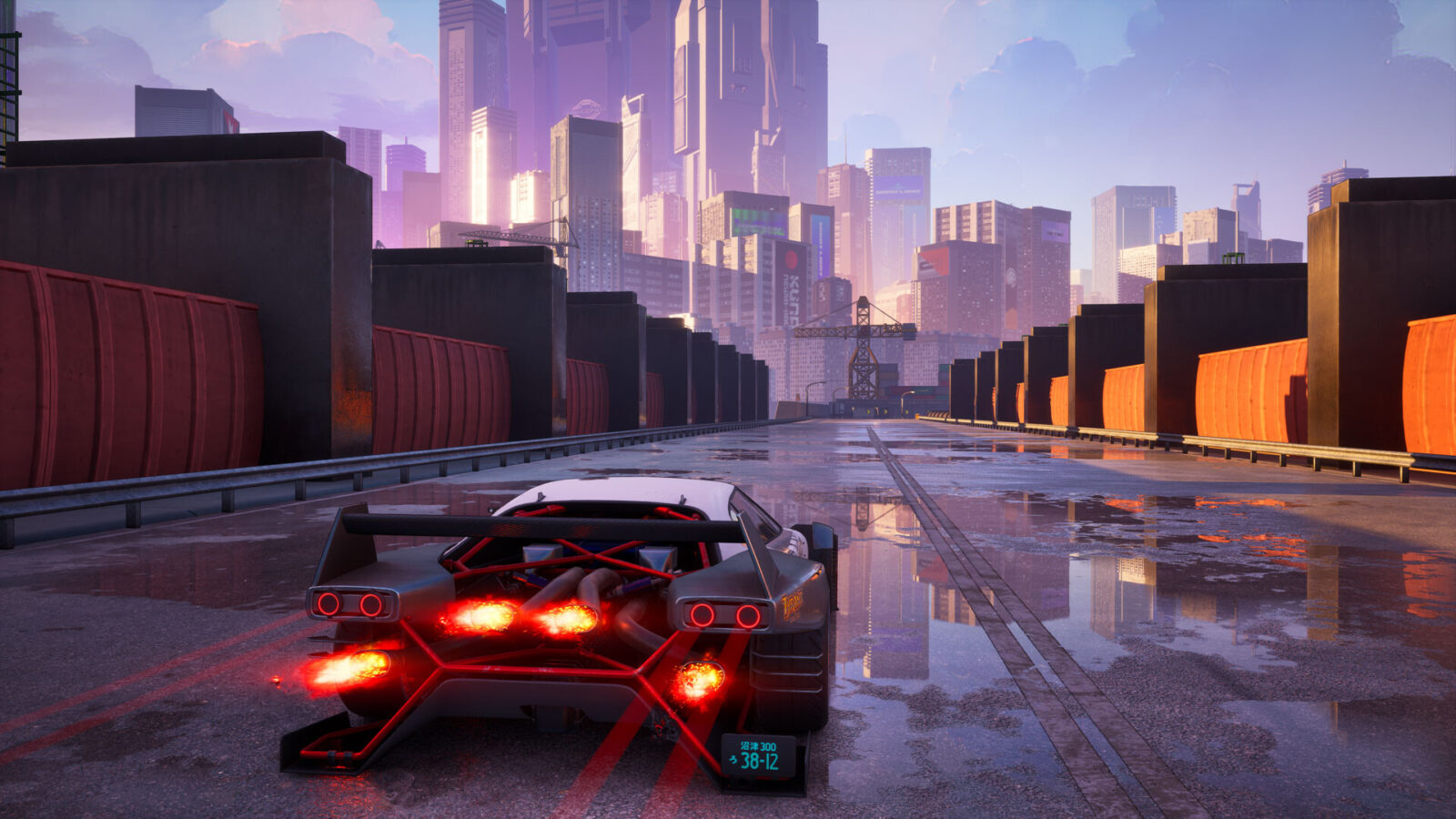
Let’s get this out of the way early: Screamer is not a chill game. It does not want you to lean back and vibe. It wants your full attention, your thumbs working overtime, and your brain juggling three different systems at once while neon lights scream into your retinas. And weirdly, that’s exactly where it shines.
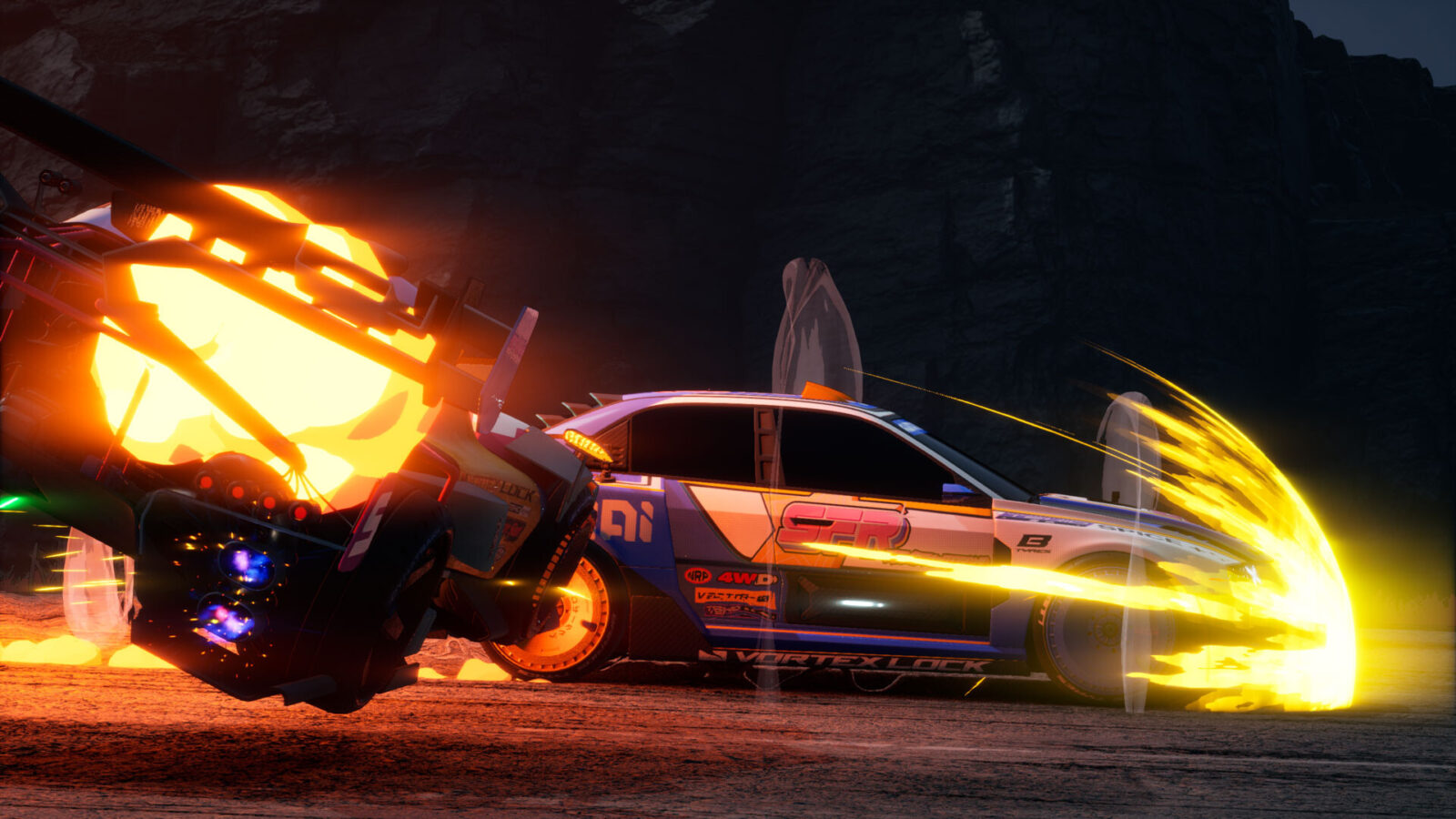
The first time I hit the track, I immediately realized this wasn’t going to be a “hold accelerate and drift occasionally” kind of racer. The twin-stick control system alone changes the entire rhythm of how you drive. The left stick gently nudges your direction, but the real magic—and chaos—comes from the right stick, which controls your drift angle. It feels less like steering a car and more like swinging the back end of a shopping cart at 200 km/h and hoping physics stays on your side.
There’s a learning curve here, no question. At first, I drove like I had never seen a road before. But once it clicks, it clicks hard. Suddenly, every corner becomes this delicate dance between control and aggression, and you start to understand why the game demands so much from you. It’s not just about going fast—it’s about managing momentum, timing gear shifts for boost, and constantly deciding whether to attack or defend.
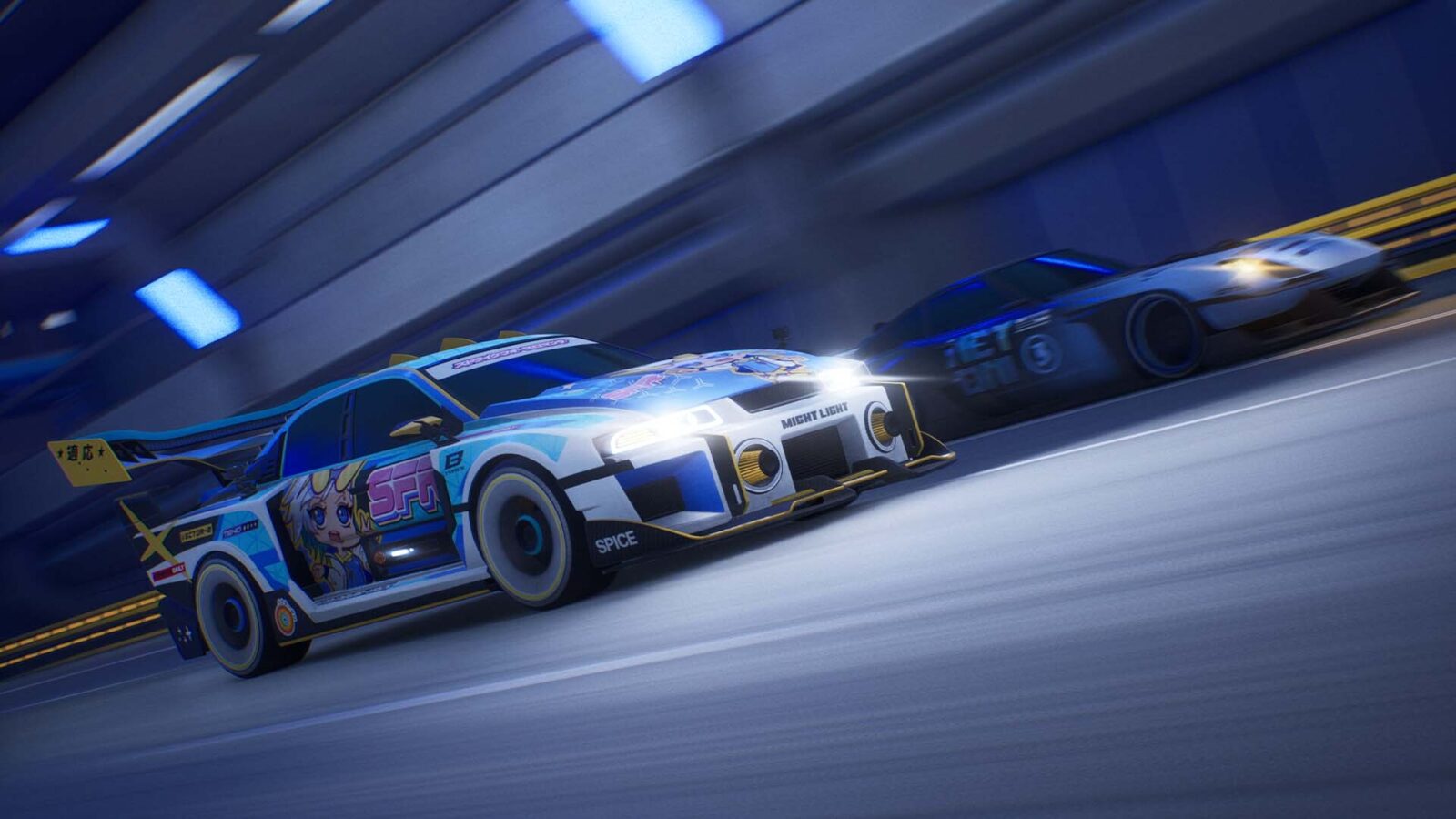
Because yes, Screamer isn’t content with just being a racing game. It also wants to be a fighting game. And somehow, it mostly pulls that off.
The dual-meter system—one for boost, one for combat—adds this constant push-and-pull tension. You burn boost to build attack energy, which you then use to mess with opponents. It creates this loop where you’re never just racing in isolation. You’re always thinking about the car behind you, the one ahead of you, and whether now is the moment to strike or save your resources.
I had races where I was so locked into this rhythm—drift, shift, boost, attack—that everything else disappeared. Those moments are where Screamer feels genuinely special. It’s busy, yes, but in a way that makes you feel like you’re mastering something complex rather than just reacting.
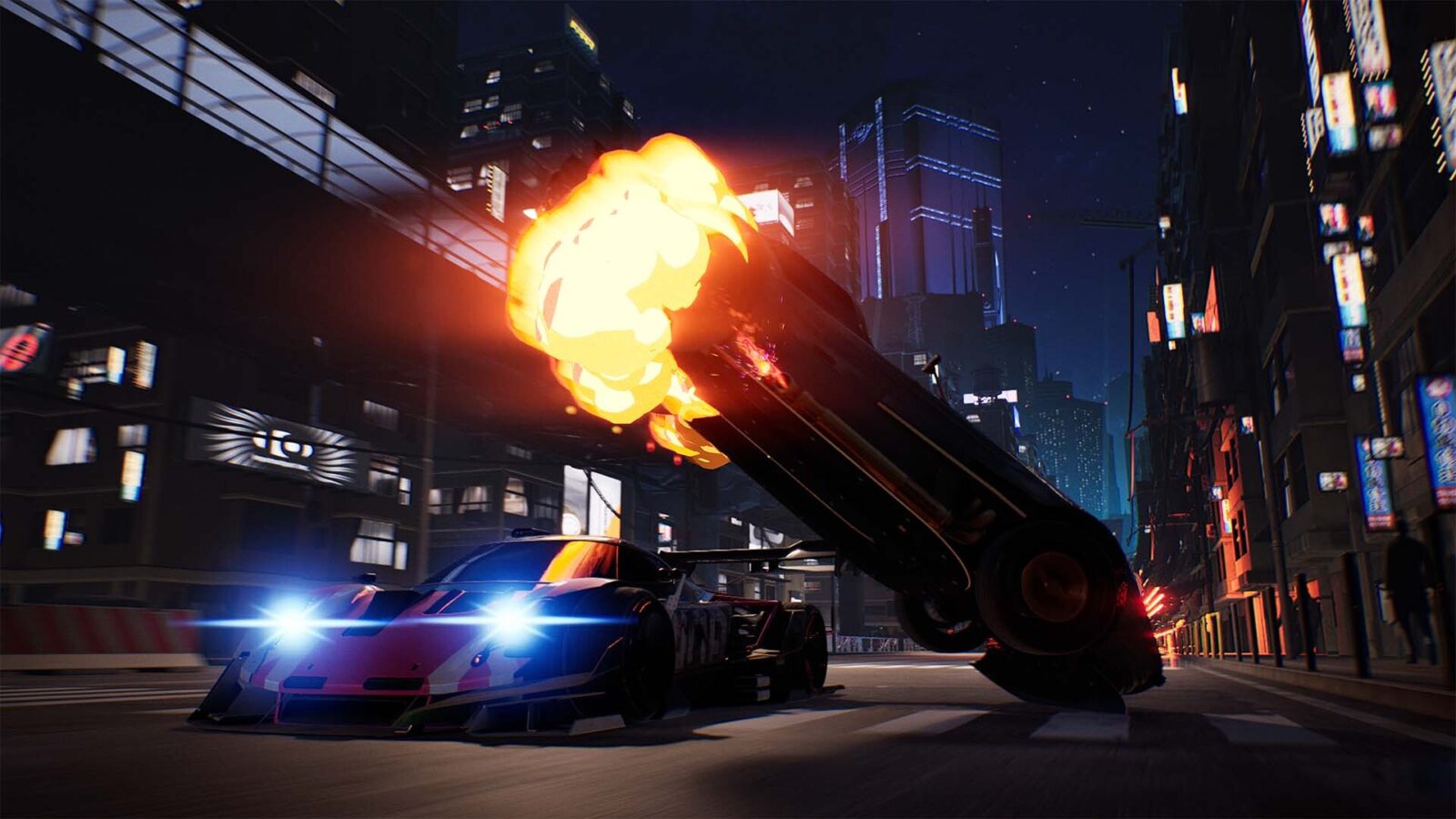
But then the game throws you onto one of its tighter, more cramped tracks… and suddenly that magic starts to wobble.
The twisty circuits are, frankly, a bit of a buzzkill. All that beautiful speed gets strangled by constant braking and awkward cornering. The handling, which feels so expressive on wide, sweeping roads, starts to feel sluggish and awkward when the space tightens. I found myself actively dreading certain tracks, which is never a great sign in a racing game.
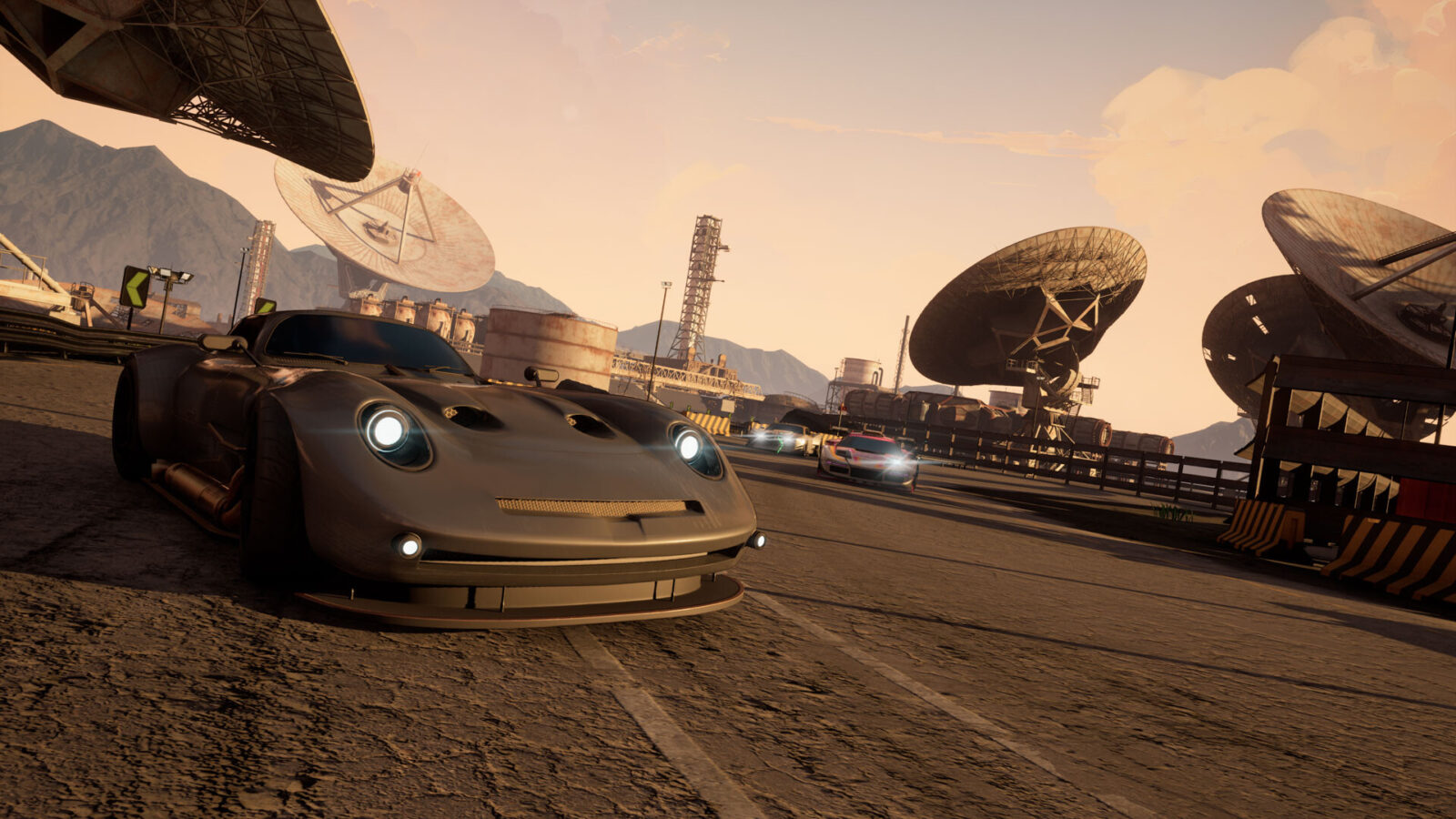
On the flip side, when Screamer gives you room to breathe—long straights, wide curves, rain-slick neon cityscapes—it absolutely sings. These are the moments where the game’s identity fully comes together. The visuals, the speed, the systems—they all align into something that feels effortlessly cool.

And speaking of visuals, I have to admit: I’m a sucker for this aesthetic.
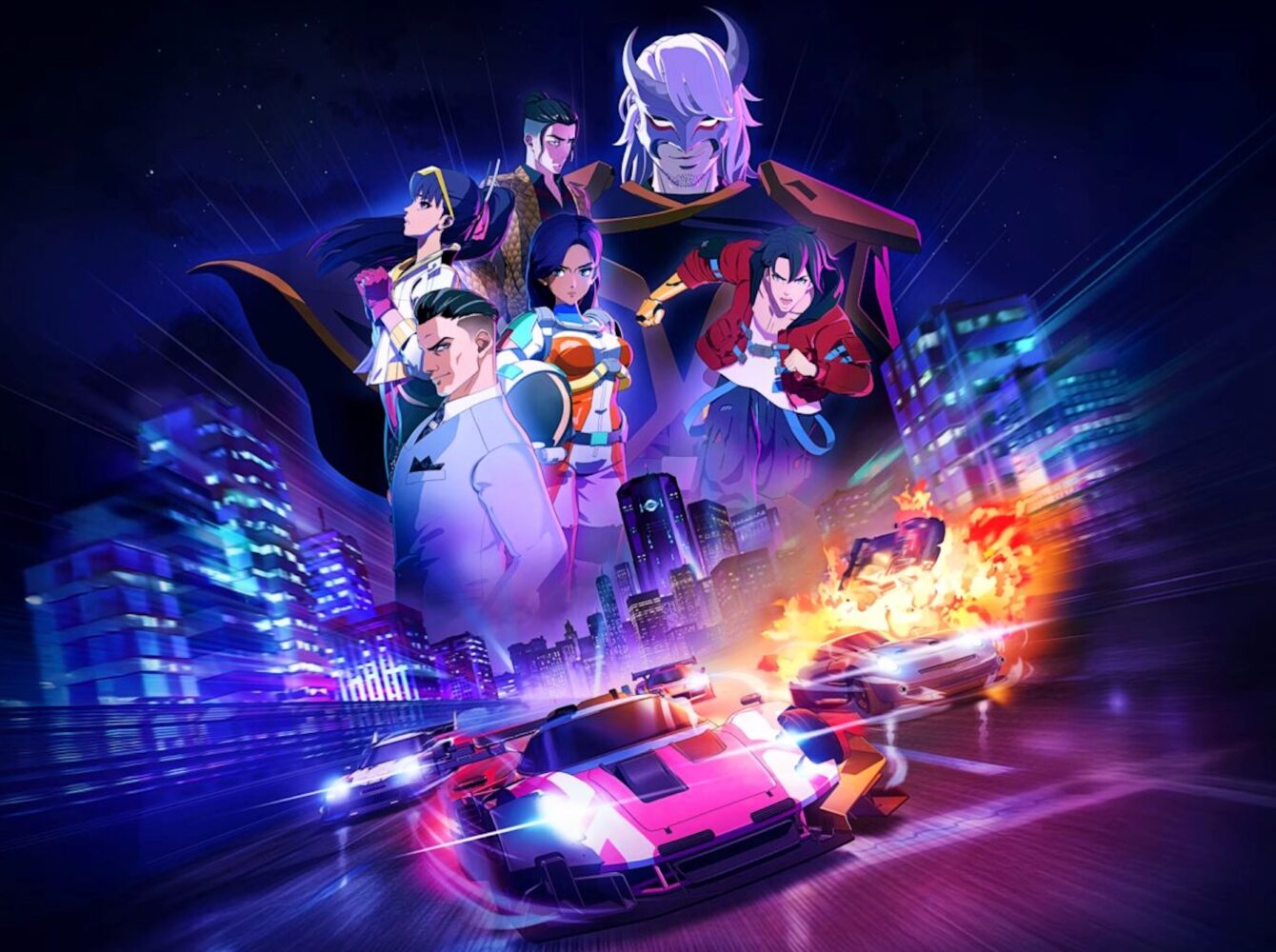
The cars look like they were ripped straight out of a ‘90s anime fever dream, all exaggerated shapes, glowing accents, and tiny design details that didn’t need to exist but absolutely do. At one point, I caught myself admiring a set of pop-up brake lights mid-race, which is probably not safe, but it says a lot about how much personality is packed into these machines.
That anime influence doesn’t stop at the cars. It completely takes over the game’s story mode—and this is where things get… complicated.
Screamer really, really wants you to care about its characters. It throws you headfirst into a tournament involving pop stars, astronauts, mercenaries, and a masked guy running what is apparently a 100-billion-dollar illegal racing event. There’s also a mechanic who seems allergic to buttoning shirts and a dog that can drive. I wish I was exaggerating.
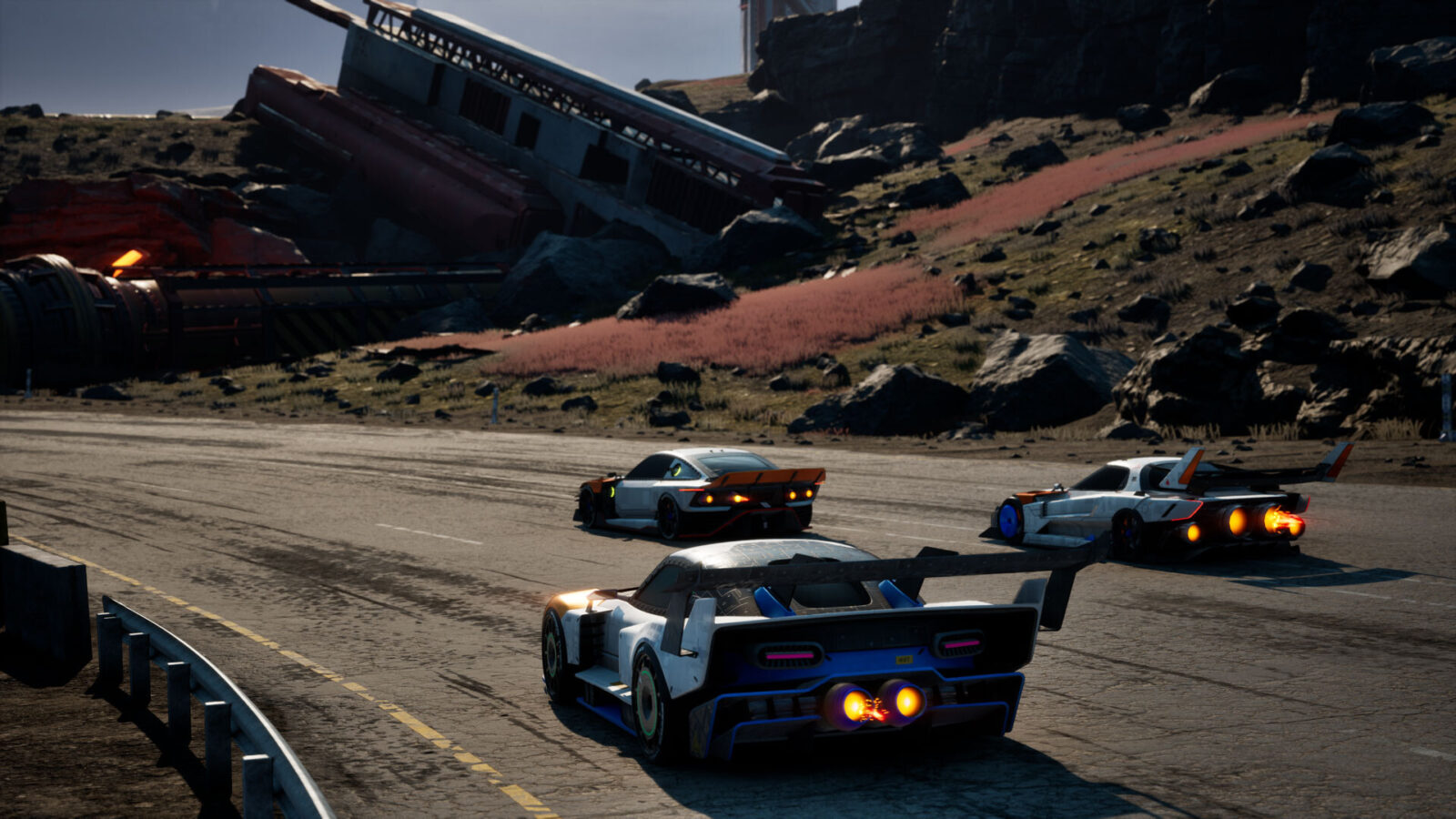
At first, I was intrigued. The presentation is slick, the cutscenes are beautifully animated, and there’s clearly a lot of effort here. But the writing quickly becomes exhausting. Characters don’t just talk—they monologue. Constantly. About past events you don’t understand, emotions that feel dialed up to eleven, and rivalries that never quite land because the game keeps jumping between different teams.
It feels like being dropped into season four of an anime you’ve never watched, where everyone expects you to already care. I didn’t. And the more the game insisted that I should, the more I checked out.
What makes this worse is how aggressively the game pushes its story at the start. You don’t ease into Screamer—you’re shoved into it. For a while, I genuinely wondered if there was more to the game than this heavily scripted tournament mode. There is, thankfully, and it’s actually where Screamer becomes far more enjoyable.
Outside of the story, the game opens up in a big way. Arcade mode lets you tweak races to your liking, adjusting everything from lap counts to how power systems behave. You can strip the combat out entirely or crank it up into pure chaos. It’s flexible in a way that feels designed for experimentation, and I spent a surprising amount of time just messing around with different setups.
And then there’s the multiplayer.
Four-player split-screen in 2026 feels almost rebellious. It’s the kind of feature that makes you want to text your friends and say, “Hey, come over. We’re doing this properly.” It’s not the easiest game for newcomers to pick up, but with the right settings tweaks, you can smooth that learning curve enough to make it work.
Even the accessibility options deserve a shout. The one-handed control scheme, in particular, feels thoughtfully implemented rather than tacked on. It’s rare to see a game this mechanically demanding still make room for different ways to play.
That said, Screamer isn’t without its frustrations beyond the story and track design. Some missions in the tournament mode feel bizarrely designed, like they were meant to challenge you but ended up just wasting your time. I had moments where I “solved” a mission in a way that felt completely unintended, which breaks immersion in a very specific, annoying way.
Still, I keep coming back to this feeling that Screamer knows exactly what it wants to be—it just doesn’t always execute it cleanly.
When it’s firing on all cylinders, it’s one of the most engaging arcade racers I’ve played in a while. It demands skill, rewards mastery, and looks incredible doing it. But it also trips over its own ambitions, whether it’s through uneven track design, frustrating mission structure, or a story that mistakes noise for depth.
And yet, despite all that, I kind of love it.
Verdict
Screamer [2026] is messy, loud, and occasionally exhausting—but it’s also bold, mechanically rich, and refreshingly different. It doesn’t always get out of its own way, but when it does, it delivers a kind of high-speed chaos that’s hard to find anywhere else. If you’re willing to push through its rough edges, there’s a genuinely great arcade racer hiding underneath all that neon and anime drama.