
TL;DR: A clever and chaotic roguelike built on coin-pusher mechanics that works more often than it doesn’t, but struggles to stand out in a genre full of heavy hitters.
RACCOIN: Coin Pusher Roguelike
There’s a very specific kind of skepticism I carry into games like Raccoin: Coin Pusher Roguelike, the kind that comes from years of watching simple mechanics get stretched into full-blown “systems-driven experiences” with varying degrees of success. Coin pushers, at their core, are the gaming equivalent of idly poking a vending machine and hoping something good falls out. There’s no deck to master, no deep combat loop, no twitch skill ceiling—just gravity, probability, and a faint sense that you’re being gently scammed by physics. So when I first booted this up, I wasn’t expecting a roguelike I’d take seriously. I was expecting a novelty. A gimmick. Something I’d uninstall after an hour and forget about by dinner.
And yet, somewhere between my third and fifth run, something strange happened. I stopped rolling my eyes and started leaning forward.
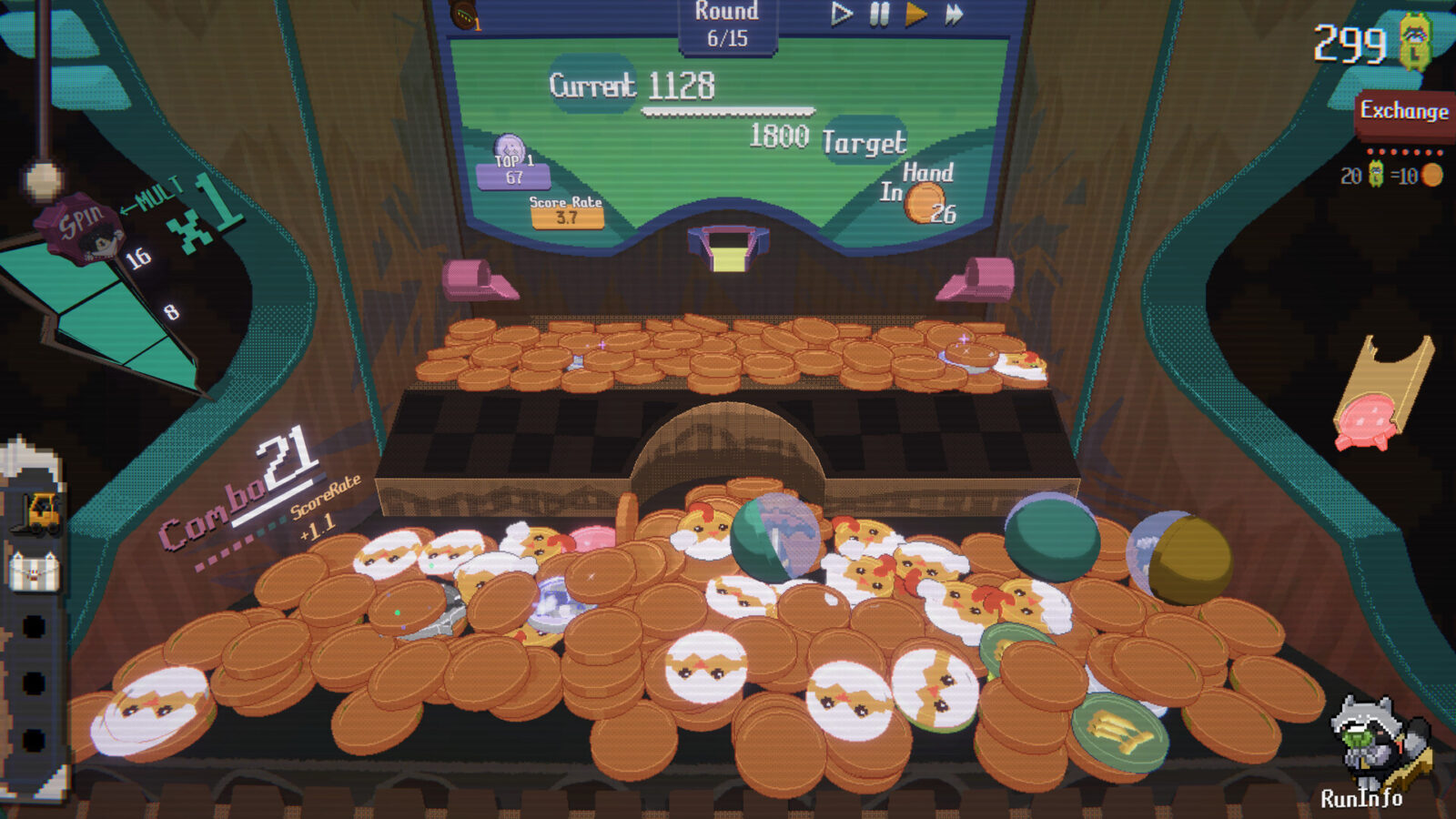
The thing about Raccoin is that it understands exactly how fragile its premise is, and instead of fighting that simplicity, it weaponizes it. The core loop still revolves around dropping coins and watching them cascade forward like a tiny metallic landslide, but layered on top of that is a surprisingly dense ecosystem of modifiers, special coins, and run-based decisions that slowly transform chaos into something resembling strategy. Not clean strategy, mind you—this isn’t chess, it’s more like playing Jenga during an earthquake—but there’s intention here. There’s design.
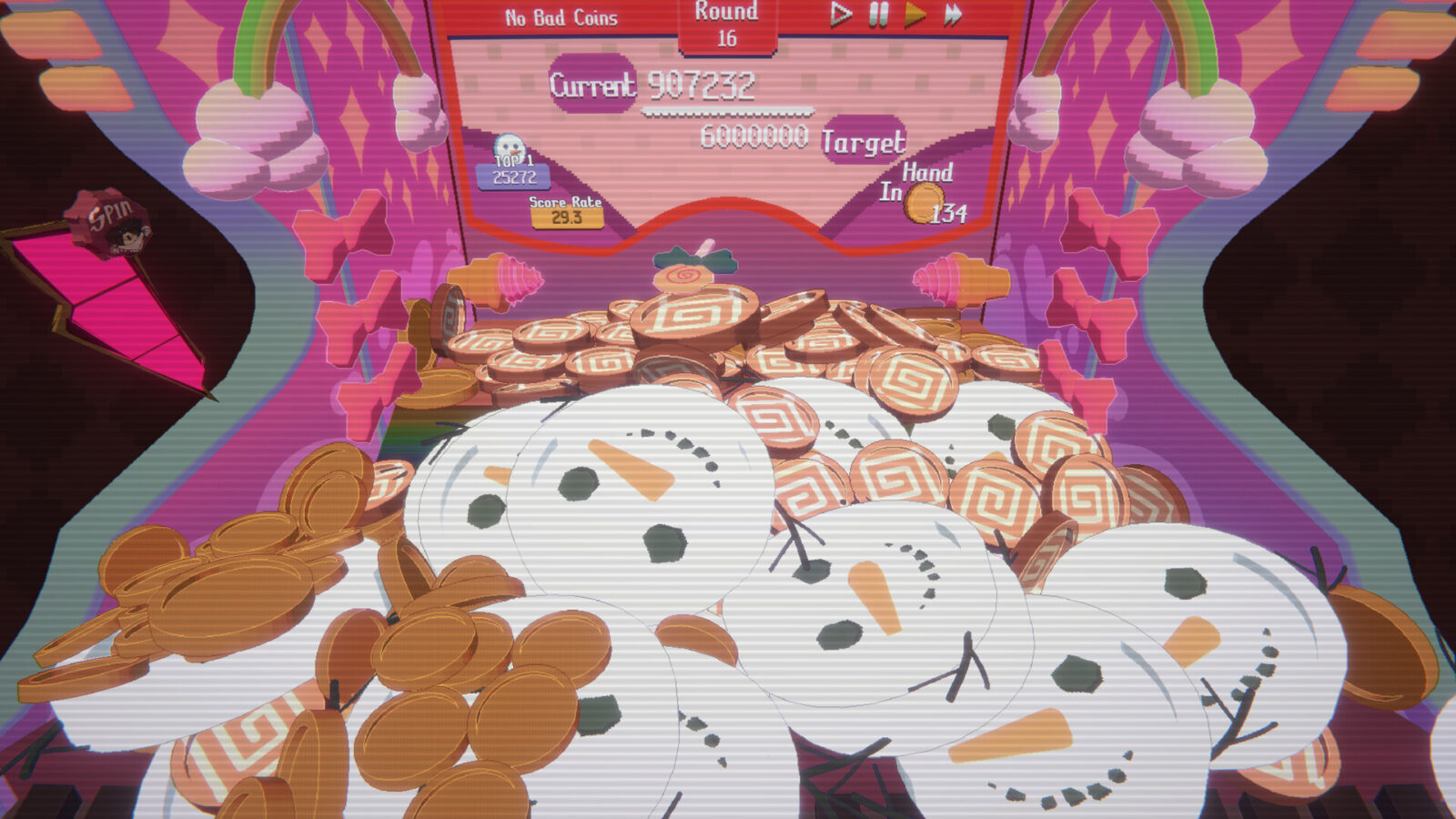
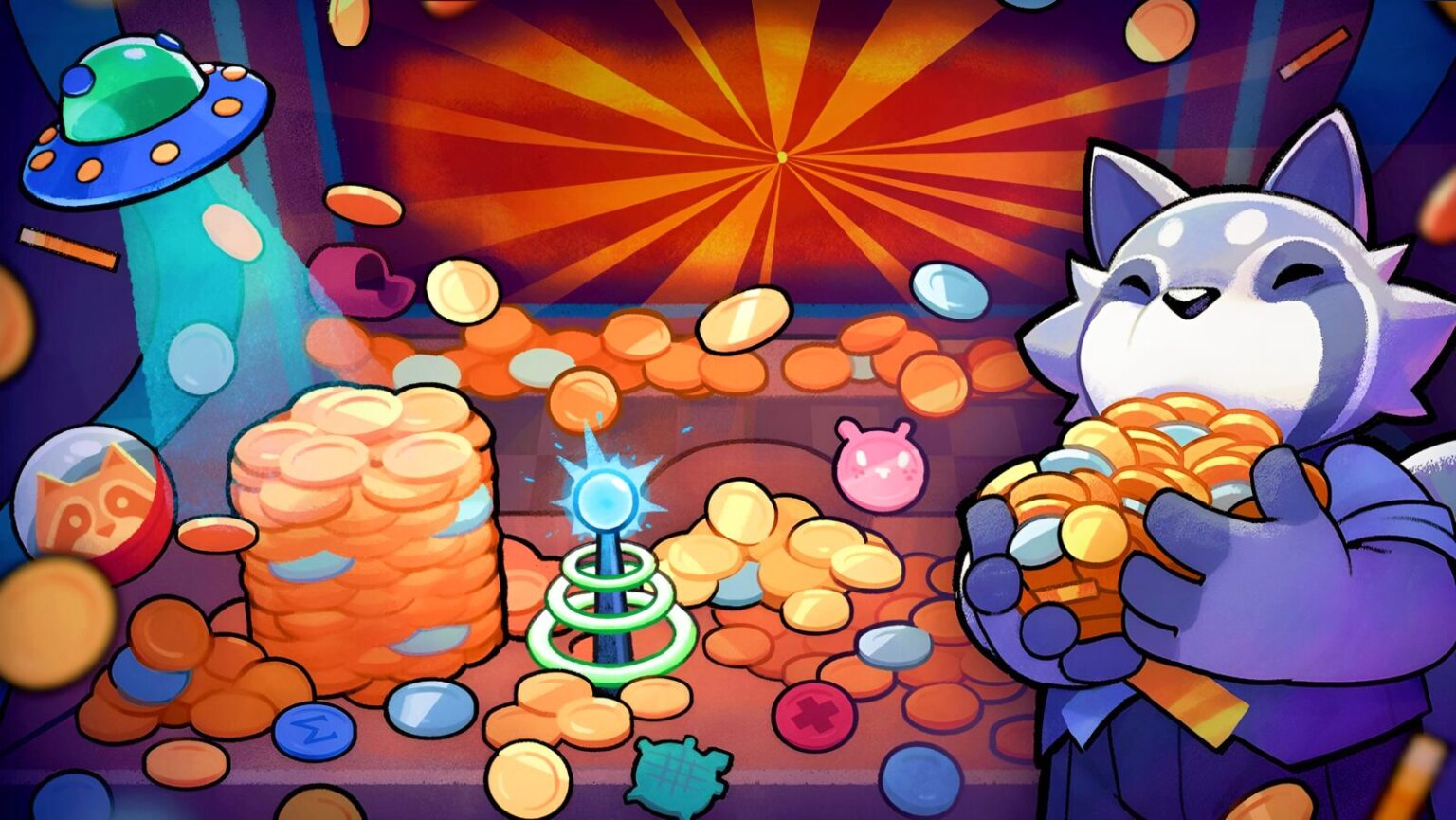
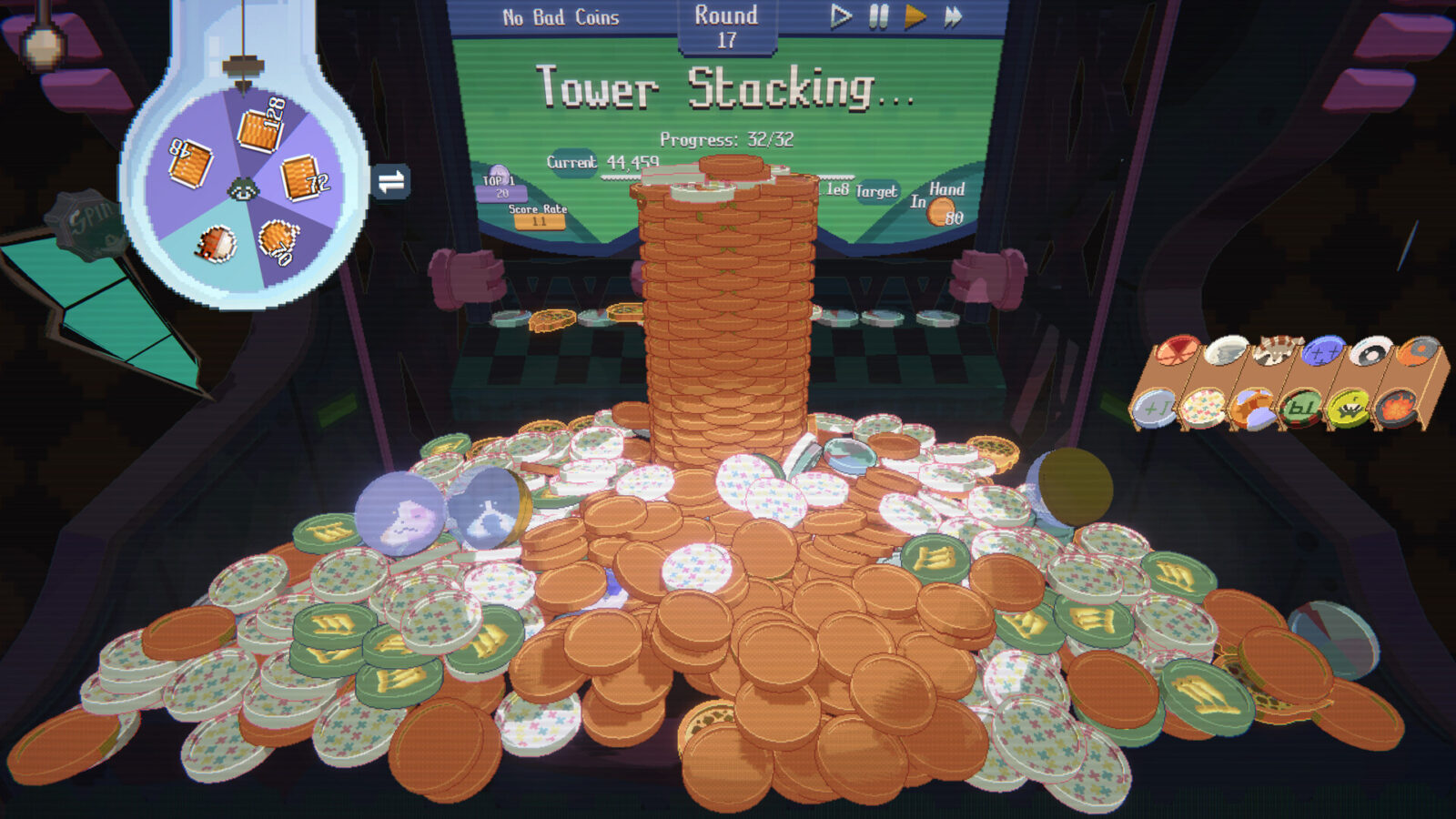
What really hooked me wasn’t the act of pushing coins itself, but the way the game starts stacking weird rules on top of that act. Coins that grow larger when they collide. Coins that need to stay on the board to keep your multiplier alive. Coins that behave like tiny predators, hunting down other coins for value like some bizarre arcade food chain. At one point, I realized I wasn’t just dropping coins anymore—I was managing a fragile ecosystem, trying to keep certain pieces alive while sacrificing others for short-term gain. It felt less like gambling and more like orchestrating controlled chaos, which is a very roguelike thing to be doing in a game that looks like it belongs in the corner of a pizza place.
That said, the chaos never really goes away, and depending on your tolerance for randomness, that can either feel liberating or mildly infuriating. There were runs where I felt like a genius, carefully preserving key coins and building up ridiculous multipliers, only for a poorly timed drop or an unlucky bounce to unravel everything in seconds. It’s the kind of game where you can lose not because your strategy was bad, but because physics decided to have a sense of humor. And while I eventually made peace with that, it never fully stopped stinging.
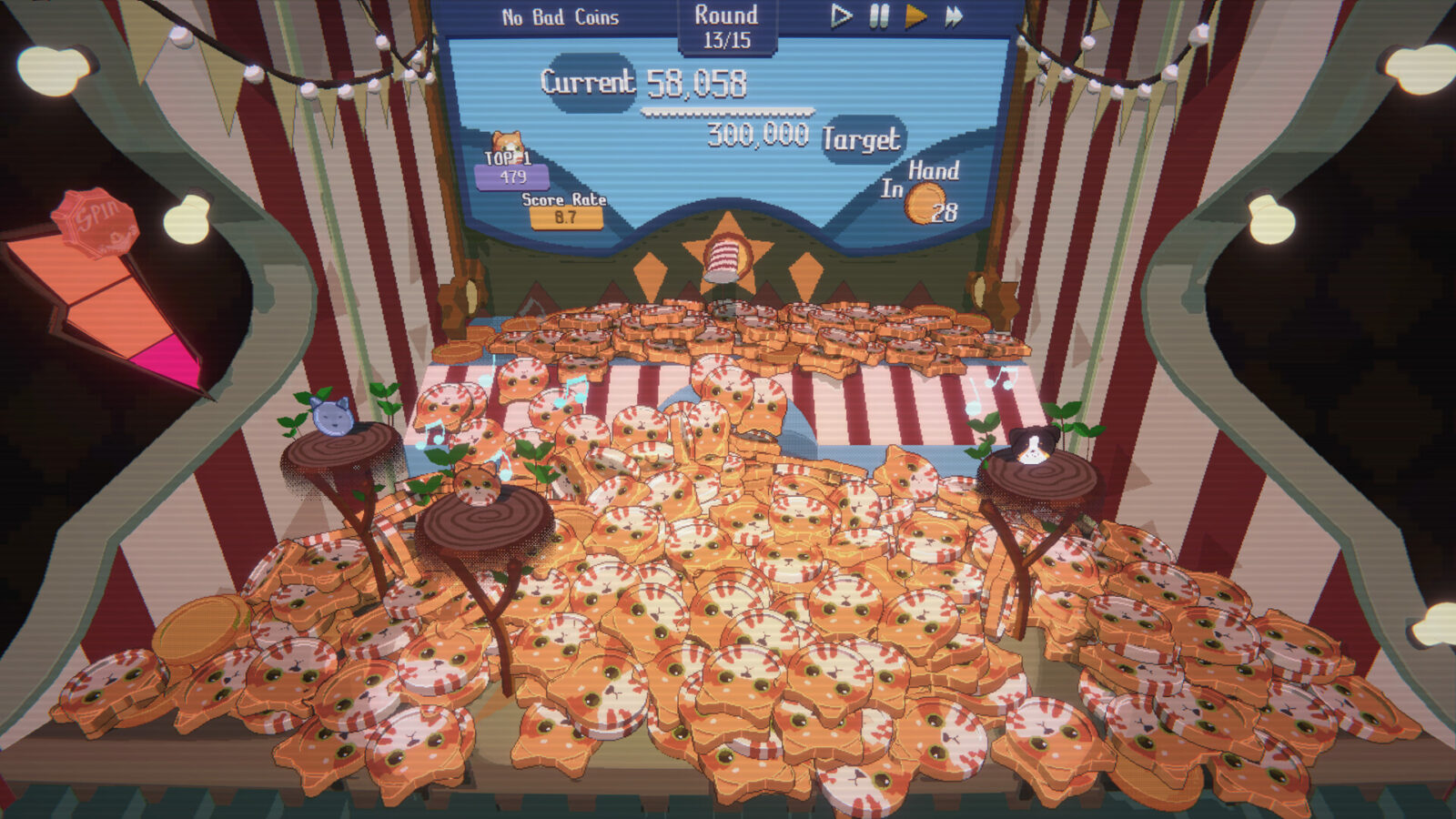
Structurally, Raccoin borrows heavily from the modern roguelike playbook, and if you’ve spent any time with games in this genre, you’ll immediately recognize the rhythm. You start a run by choosing your loadout—here framed as Cards and Tickets—and then move through a fixed number of rounds, stopping at shops in between to pick up upgrades. Chips act as your long-term build-defining perks, while consumables give you those clutch, run-saving moments when things start to spiral. Then there are the equivalent of boss modifiers, which twist the rules just enough to keep you from getting too comfortable.
On paper, it’s a formula that works, and in practice, it mostly does. The problem is that I couldn’t shake the feeling that Raccoin is slightly outclassed by its own peers. Not in terms of creativity—if anything, it’s one of the more inventive takes on the genre I’ve played recently—but in how compelling that loop feels over time. There’s a certain magic that the best roguelikes have, that “just one more run” pull that turns a quick session into a lost evening, and while Raccoin gets close to that feeling, it never quite locks me in the way I expected.
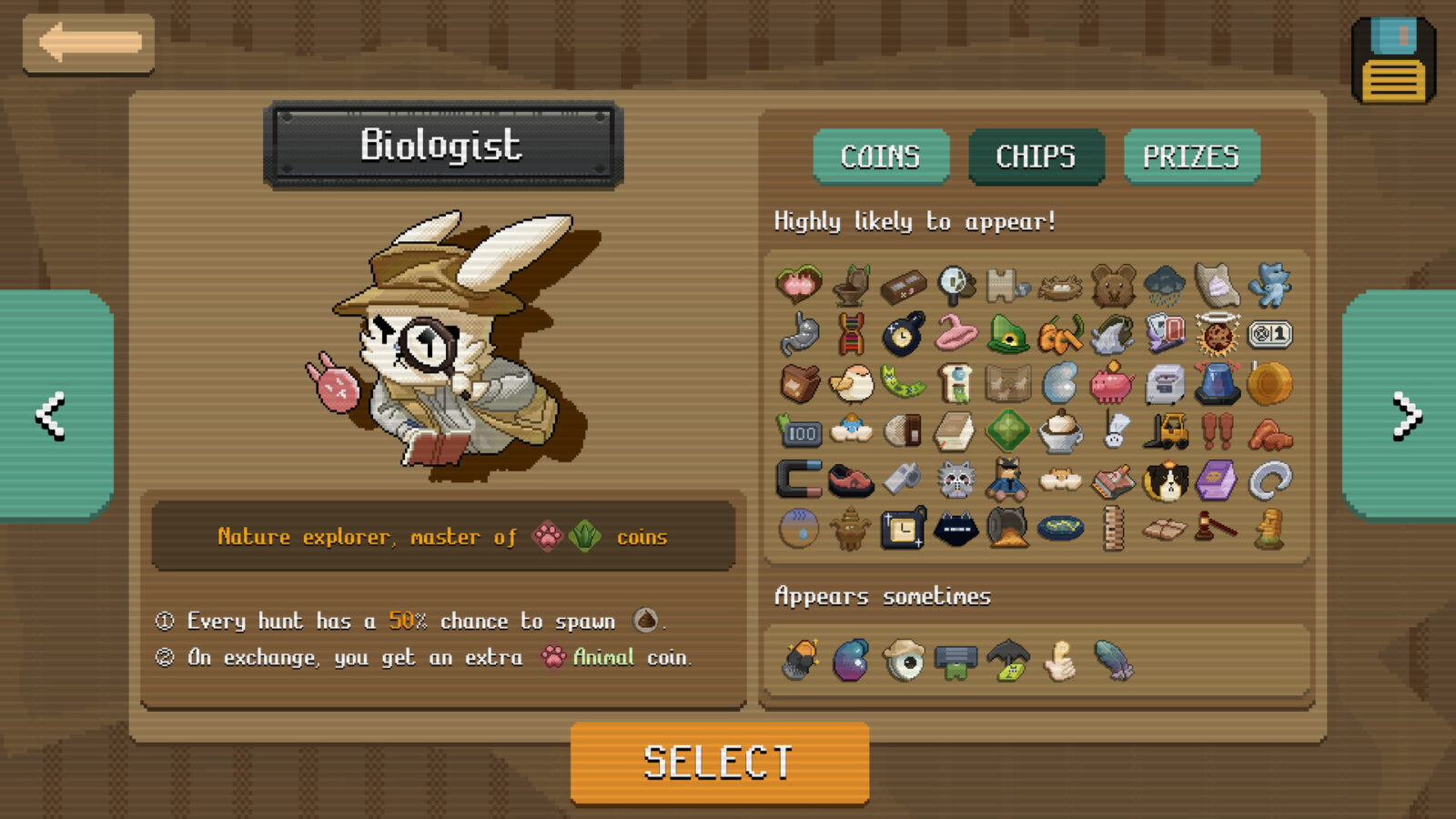
Part of that comes down to the upgrades themselves. For every genuinely exciting modifier that changes how I approach a run, there’s another that feels like it barely moves the needle. Some of the more significant upgrades, especially the rarer ones, swing wildly between game-changing and completely forgettable, which creates this odd sense of inconsistency in progression. I’d sometimes finish a run feeling like I had assembled something clever and powerful, and other times like I had just stacked a bunch of mildly helpful bonuses that never quite came together.
There are also moments where the game feels like it’s actively getting in its own way. Being forced to interrupt a strong combo to engage with certain mechanics, like the prize wheel, breaks the flow in a way that feels more annoying than strategic. It’s not a dealbreaker, but it’s the kind of friction that adds up over time, especially in a genre where smooth, satisfying loops are everything.
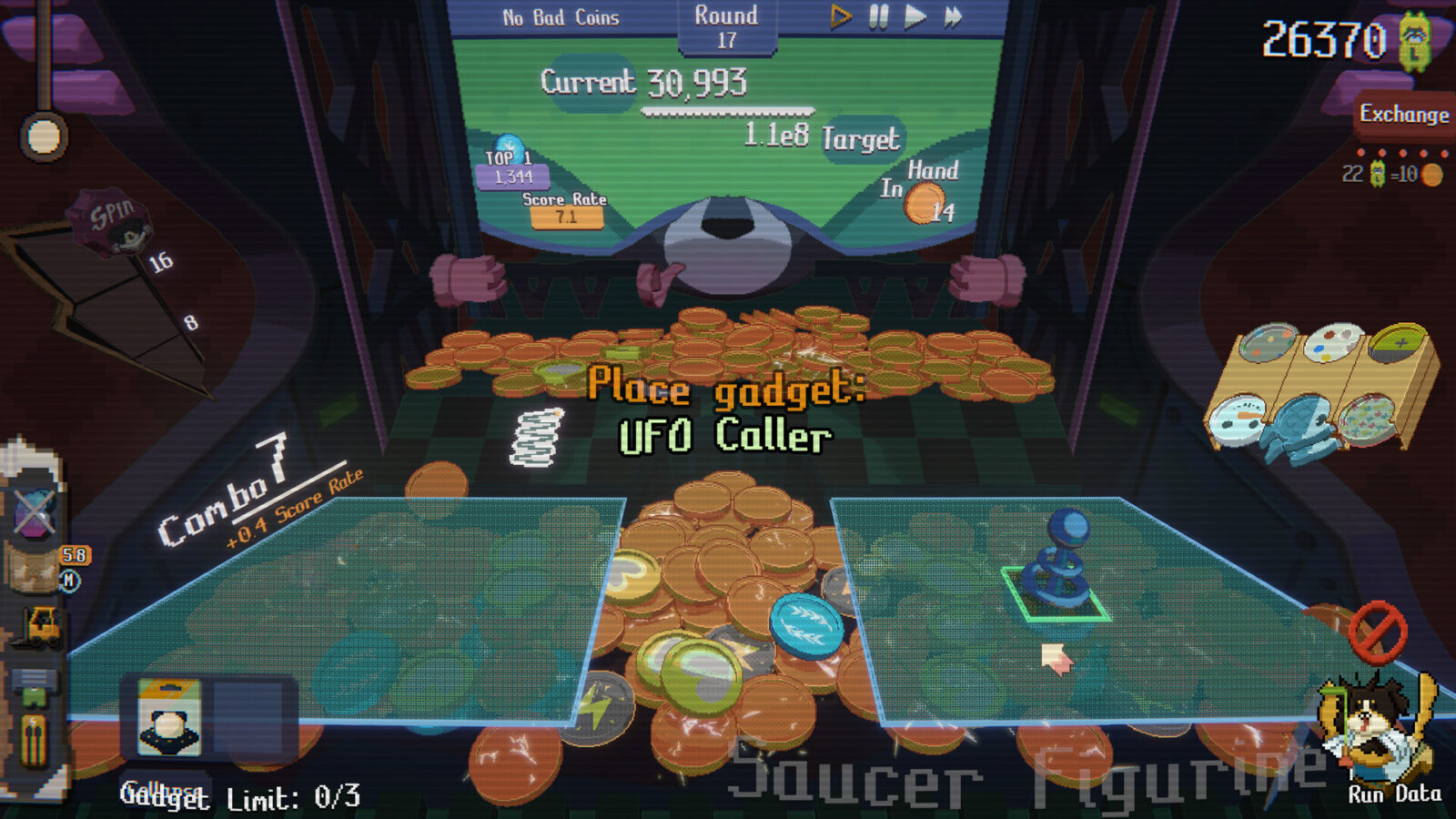
And yet, despite all of that, I kept coming back. Not obsessively, not with that all-consuming hunger I’ve felt with the genre’s heavy hitters, but consistently. Raccoin has this low-key charm that’s hard to ignore. The runs are short enough to fit into the cracks of a day, the systems are weird enough to stay interesting, and there’s just enough depth to make experimentation feel worthwhile. It’s the kind of game that lives comfortably in that middle space—never overwhelming, never essential, but always kind of inviting.
After spending a decent chunk of time with it, I think that’s where Raccoin ultimately lands for me. It’s a smart, creative, and occasionally brilliant take on a very strange idea, but it exists in a genre that’s currently overflowing with masterpieces. And in that context, being “really good” isn’t always enough.
Verdict
Raccoin: Coin Pusher Roguelike surprised me more than I expected, turning a deceptively simple arcade concept into something layered, chaotic, and genuinely engaging. It doesn’t always stick the landing, especially when its randomness or underwhelming upgrades get in the way, but there’s enough creativity and charm here to make it worth your time—just don’t expect it to completely take over your life.