
TL;DR: Demon Tides takes open world 3D platforming, hands you the physics engine, and says “have fun.” Slightly messy structure aside, it’s an absolute joy to play and easily one of my games of the year.
Demon Tides
I didn’t expect Demon Tides to move into my head rent-free. But here we are. Weeks later, I’m still thinking about the way Beebz arcs through the air, the way a perfectly timed transformation turns a desperate fall into a swaggering recovery, the way the ocean horizon in this open world 3D platformer practically dares me to break it.
If you’re searching for a Demon Tides review to figure out whether this is the next Super Mario Odyssey moment, let me spoil the suspense: this game absolutely earns its spot in the modern 3D platformer conversation. Not because it copies greatness, but because it understands why movement matters.
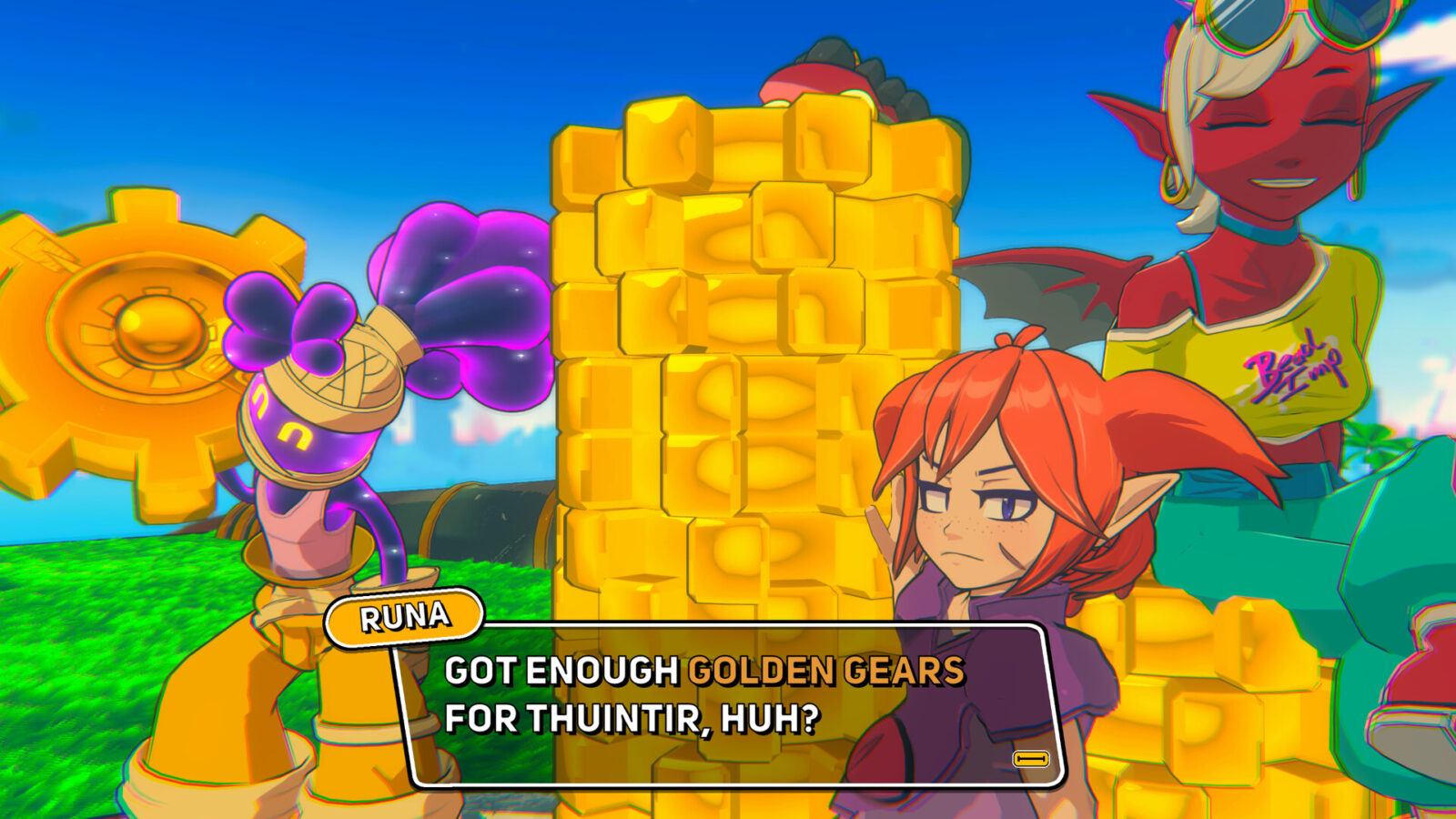
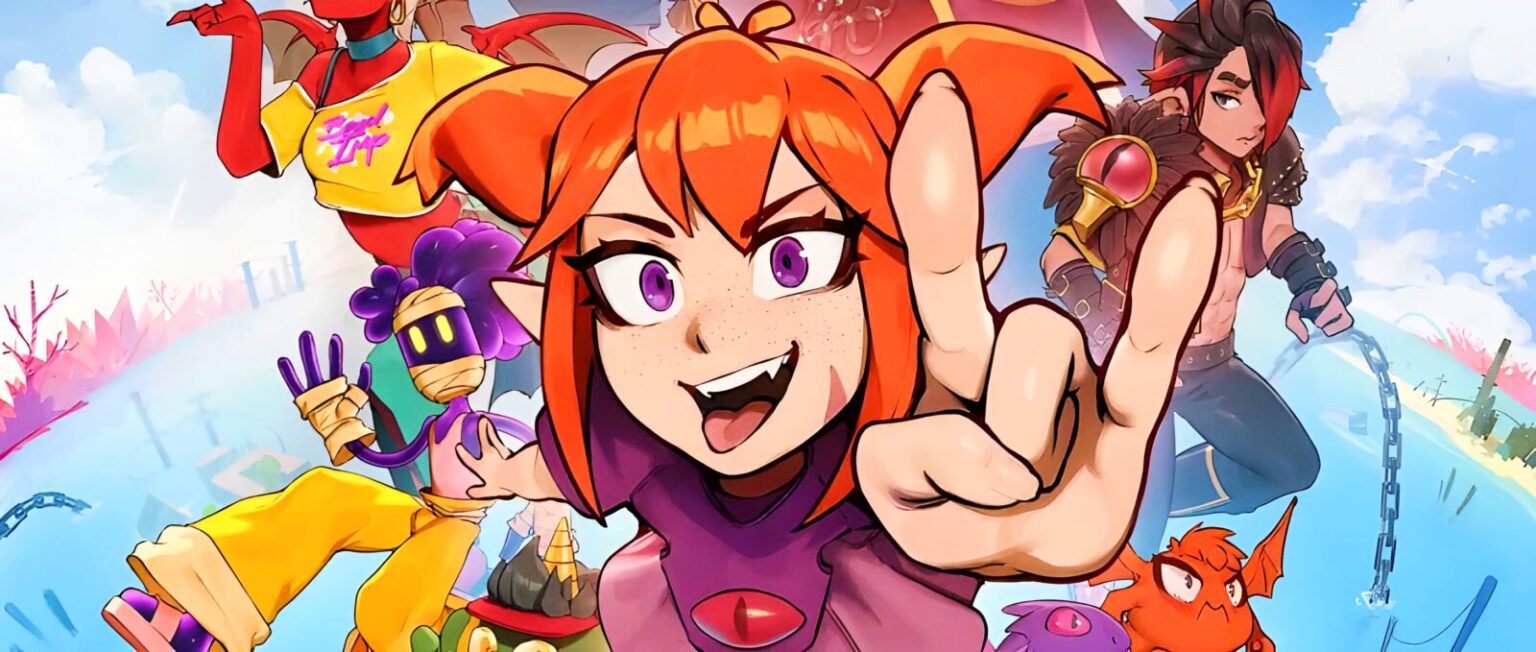
The pitch is simple and absurd in the best way. In Demon Tides, I play as Beebz, demon queen, estranged daughter, chaos gremlin with a heart of gold. She sails to a sun-drenched archipelago called Ragnar’s Rock after receiving an invitation from her distant father. Family reunion vibes quickly devolve into political revolution, cannon-building, and an excuse to collect golden gears across a sprawling ocean dotted with platforming islands. It’s basically therapy, but with wall jumps.
And from the first leap, I knew this was my kind of game.
Movement that feels illegal (in a good way)
Let’s talk about the thing that makes Demon Tides one of my games of the year: the movement system.
On paper, it sounds familiar. You jump. You double jump. You dash. You wall-run. If you’ve ever mainlined a 3D platformer, your muscle memory will kick in immediately. But Demon Tides doesn’t just hand you a moveset. It hands you a box of parts and says, “Cool, build your own.”
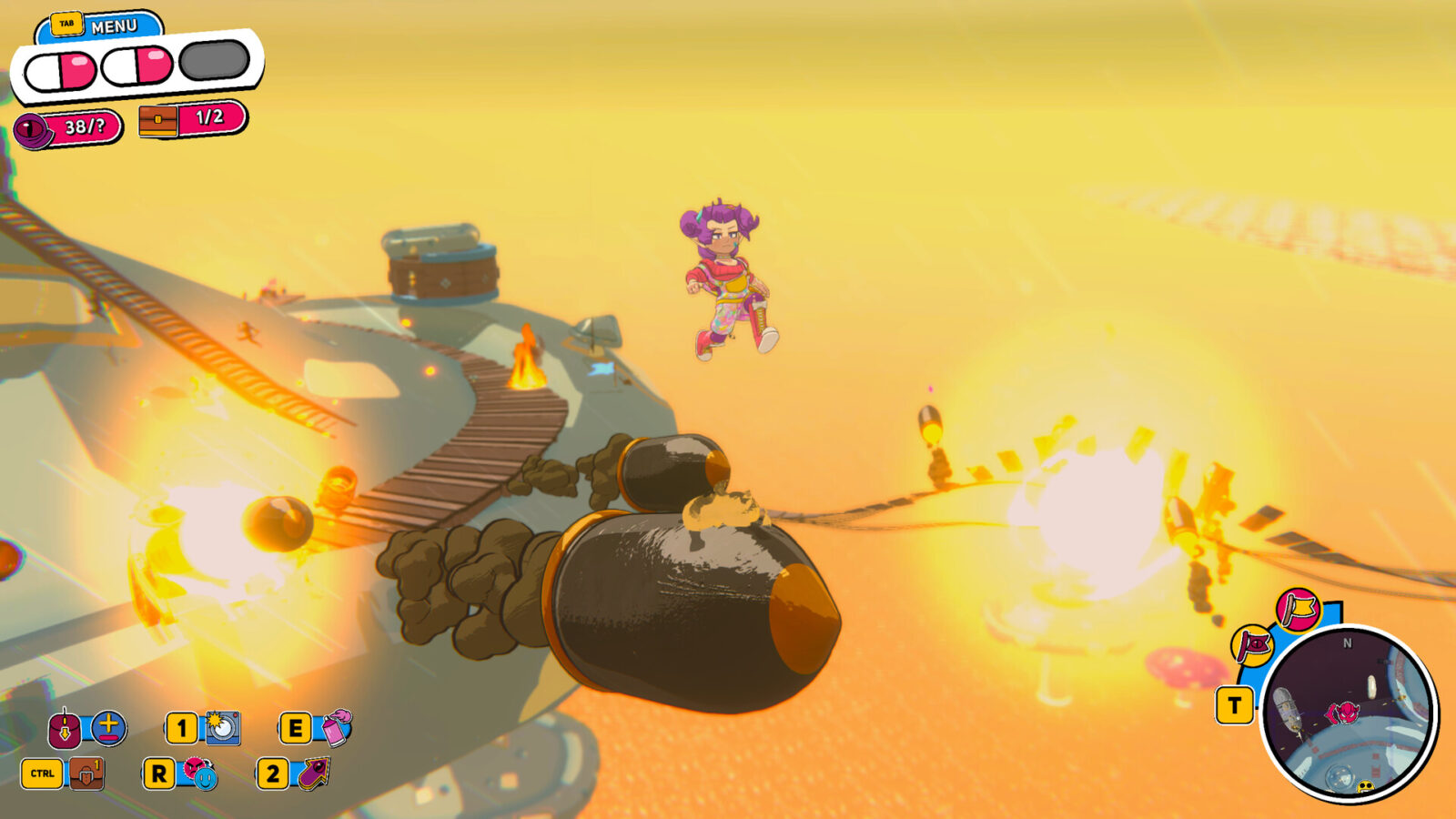
Beebz can transform mid-jump into different demon forms: a bat for extra air control, a drill that lets her hover and reposition, a snake that rockets forward in a burst of speed. The twist is that the order you chain them in changes the physics of the move. Float first, then flap, and suddenly you’re launching horizontally like you’re exploiting a speedrunner glitch. Flap first, then drill, and you get a more precise, surgical descent.
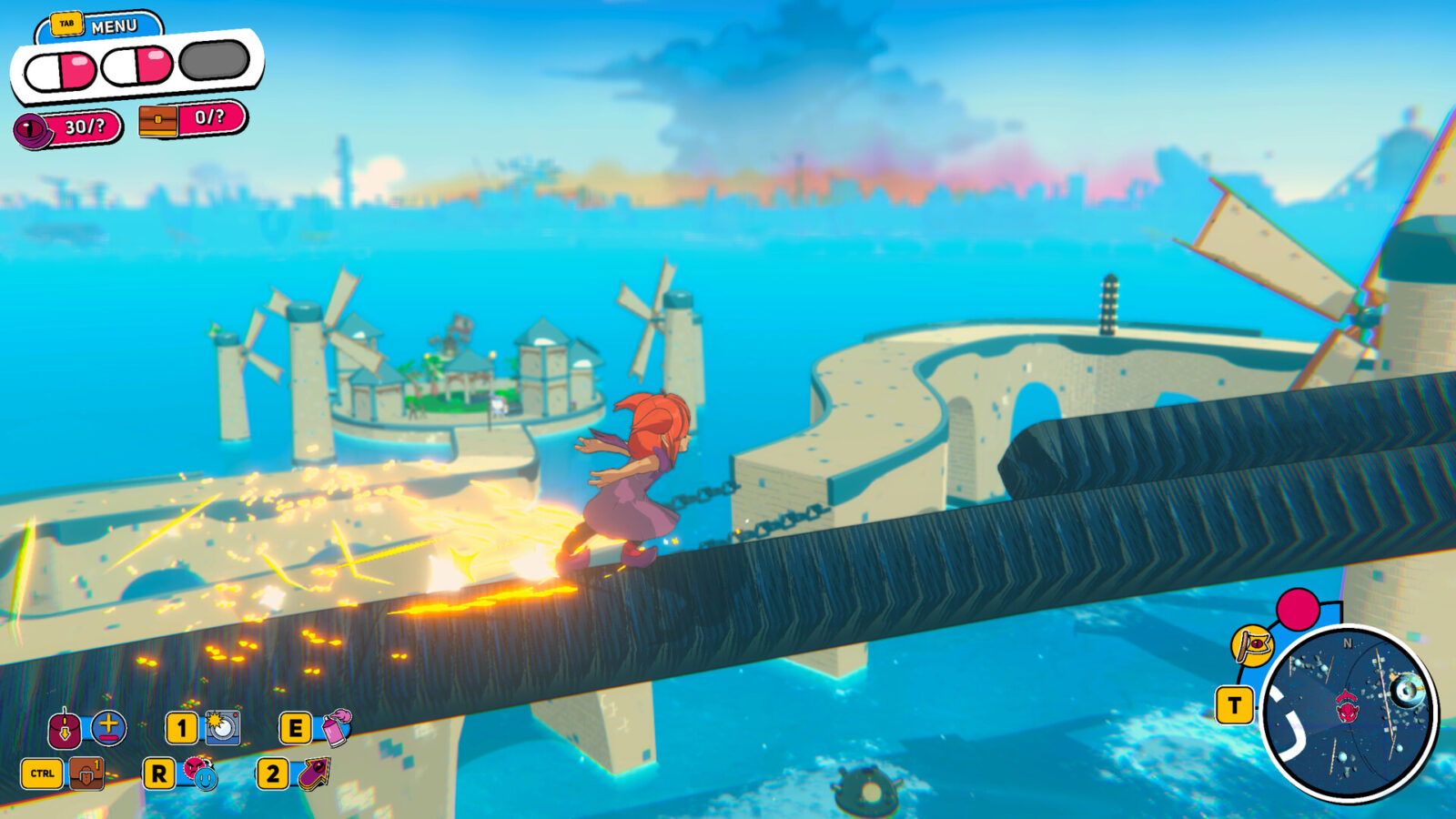
I lost entire evenings just experimenting. Not because the game forced me to, but because it felt like I was discovering secret laws of motion.
The best comparison I can make is that Demon Tides feels like someone studied Super Mario Odyssey’s fluidity, stared lovingly at the oceanic vibes of The Legend of Zelda: The Wind Waker, and then decided to let the player break both of them open. It’s not about perfectly executing a developer-approved route. It’s about asking, “What if I just… ignored that ledge and went straight up the cliff?”
And more often than not, the answer is: yeah, you totally can.
The talisman rabbit hole
If the transformations are the core of Demon Tides’ expressive platforming, talismans are the chaos engine.
Talismans tweak your abilities in granular ways. You can sacrifice height for distance. Add glide properties. Tweak dash angles. Grant entirely new mechanics like short paraglides or even bubble suspension. You can equip multiple at once, and eventually swap between two loadouts on the fly.
I went full mad scientist.
There was one icy island where you’re meant to carefully hop between bonfires to avoid freezing. I instead equipped a talisman that boosted my speed but punished me if I stood still too long. Suddenly, the level wasn’t about careful survival. It was about relentless momentum. I was basically speedrunning my own bad decisions.
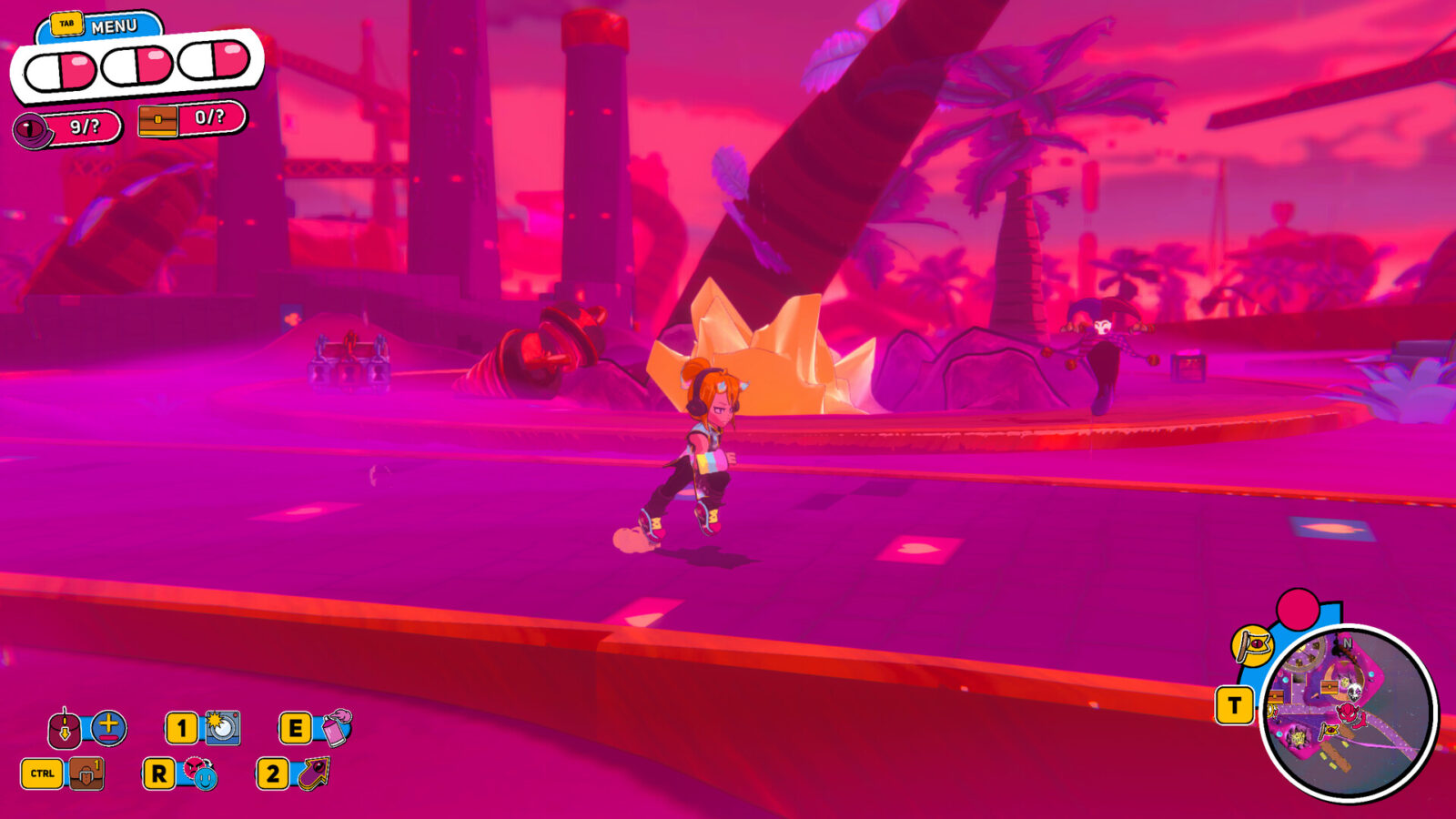
Another time, I strapped on rollerskates and turned a tight platforming gauntlet into a reckless Tony Hawk fever dream. It shouldn’t have worked. It absolutely did.
This is where Demon Tides separates itself from most modern 3D platformers. It doesn’t just give you power-ups; it gives you authorship. When I made a section easier, I knew it was because I had engineered the loophole. When I failed, it was because I’d over-optimized and gotten cocky.
That sense of ownership over difficulty is intoxicating.
An open world that’s both freeing and slightly messy
Ragnar’s Rock is divided into three ocean regions, but beyond that, Demon Tides largely shrugs and says, “Go nuts.”
Islands vary wildly. Some are tight, vertical challenges that feel like concentrated platforming espresso shots. Others are sprawling sandboxes packed with collectibles, NPCs, hidden objectives, and secret routes that feel like they were designed by someone who loves watching players sequence-break.
That openness is mostly a gift. I adored charting my own path, deciding which islands to tackle first, chasing golden gears at my own pace. The ocean setting gives the game a breezy, summery tone that keeps everything feeling light, even when the jumps get nasty.
But here’s where my affection gets a little complicated.
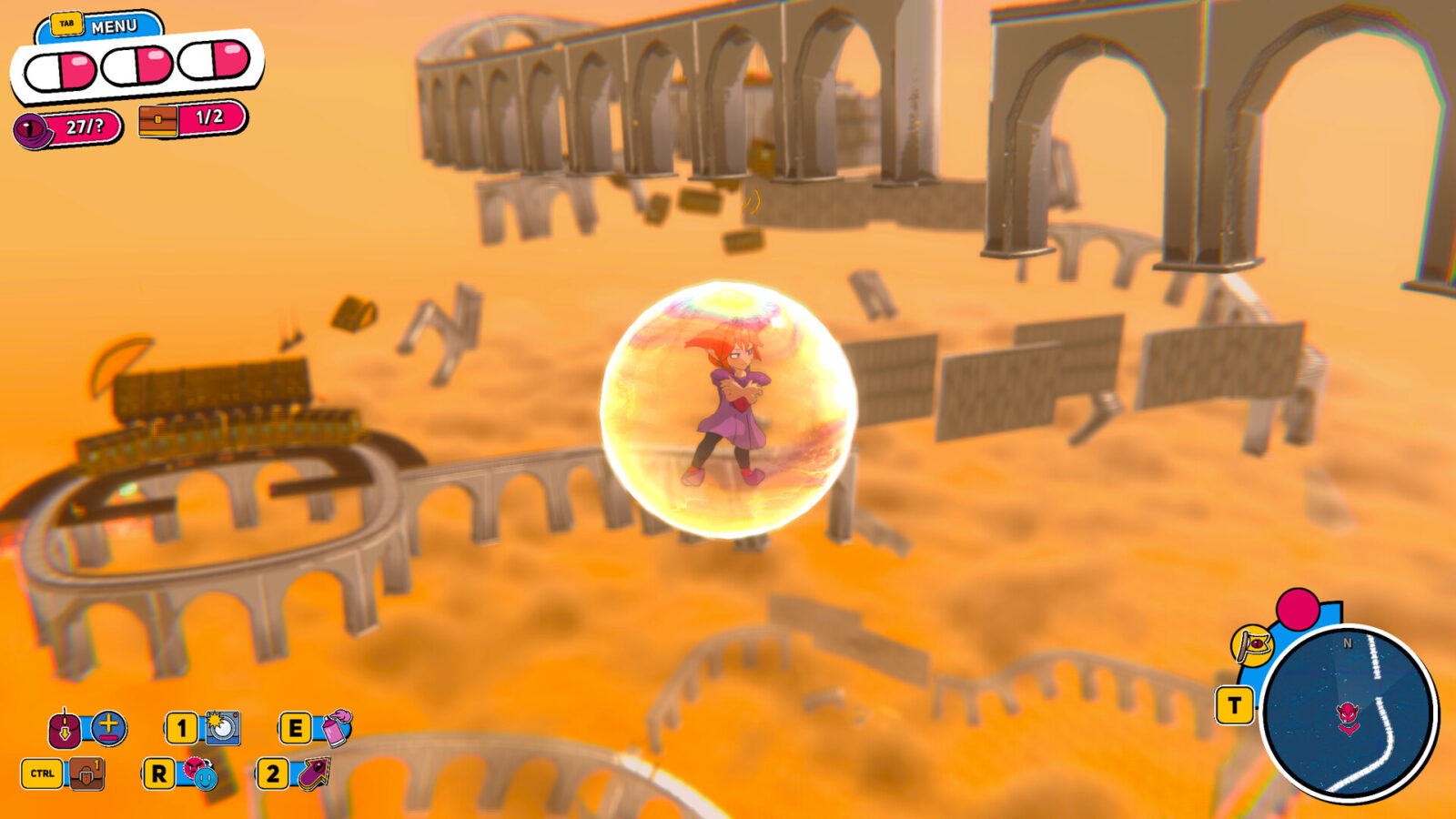
The progression structure can feel strangely weightless. Golden gears, the primary collectible driving the story forward, sometimes lack punch. Too many are tucked behind repetitive guardian fights that don’t match the creativity of the traversal. And because the game is so open, its biggest highs can feel randomly distributed.
I adored the first stretch of islands. By the time I reached the later ocean region, which leans heavily into cave environments, I felt a slight dip in momentum. Not because the movement stopped being great, but because the surrounding structure didn’t escalate in the same way.
It’s the rare case where I found myself wishing for just a bit more authorial control. Not rails. Just a stronger rhythm.
Easier than it looks, and I’m okay with that
If you played Demon Turf, you might expect Demon Tides to be punishing. It isn’t. Not really.
Checkpoints are generous. Shortcuts soften long climbs. And because you can stack talismans in creative ways, it’s very possible to “solve” difficult sections by brute-forcing your build.
Here’s the thing: I don’t mind.
Demon Tides is tricky, but it’s rarely cruel. And when I made it easier, that was on me. I had built a movement monster and unleashed it. If I wanted pain, I could simply unequip the safety net.
What I appreciate most is that even the nastiest gauntlets feel approachable. They’re intimidating, sure, but never demoralizing. The game wants you to experiment, not suffer.
In a year stacked with massive open-world releases, it’s weirdly refreshing to play an open world 3D platformer that values playfulness over prestige.
Why Demon Tides sticks with me
The joy of Demon Tides isn’t in ticking boxes. It’s in flow state.
It’s in chaining a bat transformation into a drill hover into a snake dash and landing exactly where you hoped, even though you absolutely did not follow the intended path. It’s in seeing an island silhouette on the horizon and knowing you’ll approach it differently than anyone else.
Yes, I wish the progression had more dramatic peaks. Yes, some boss encounters blur together. But those are surface blemishes on something mechanically brilliant.
At its best, Demon Tides makes me feel like I’m coloring outside the lines of a 3D platformer blueprint. And in a genre that too often plays it safe, that’s rare.
Verdict
Demon Tides is one of the most expressive and inventive 3D platformers I’ve played in years. Its customizable movement system and open world island design make every jump feel personal, even if the progression structure occasionally lacks punch. When it’s firing on all cylinders, it stands shoulder to shoulder with the modern greats.