
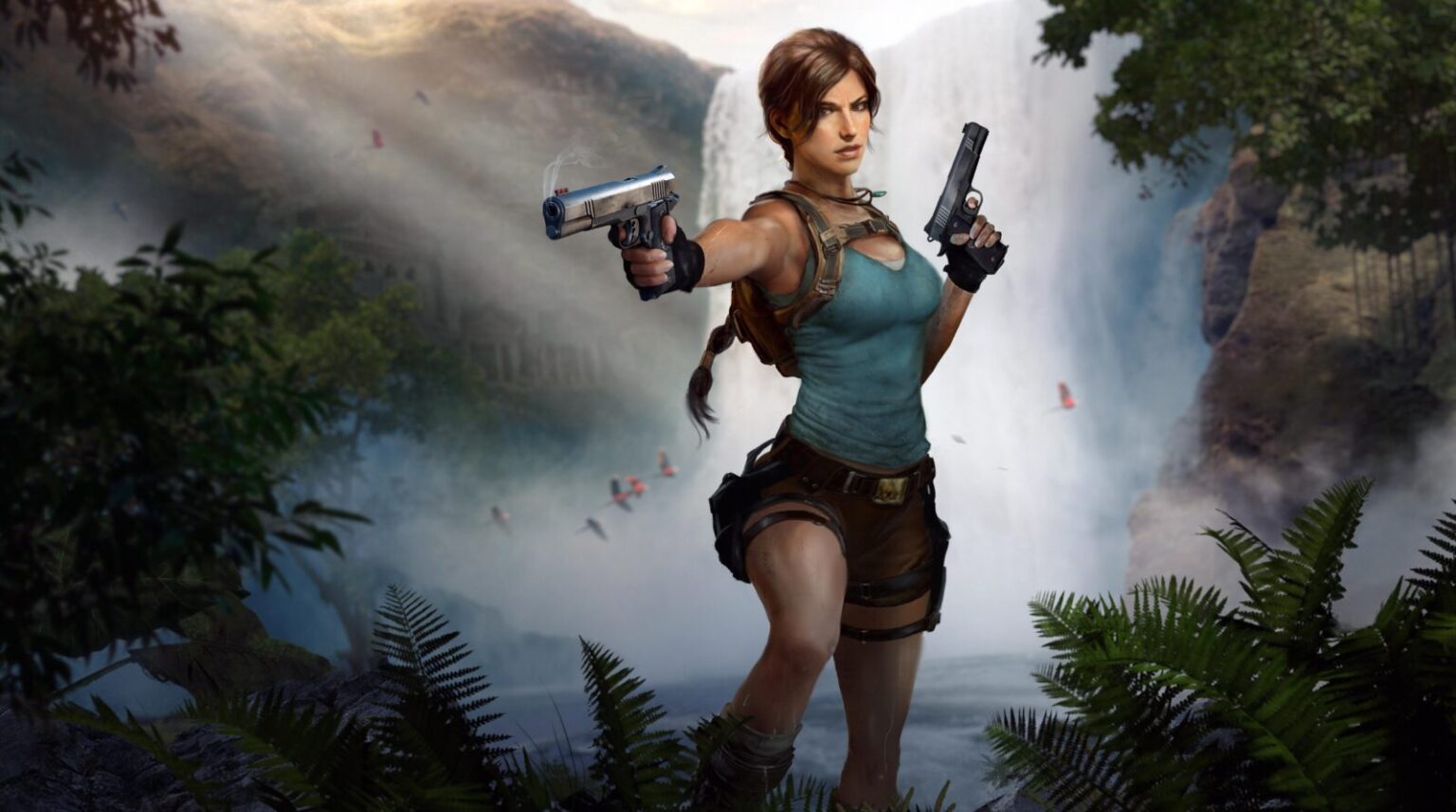
Crystal Dynamics has confirmed two new Tomb Raider projects, formally outlining the next phase of the long-running franchise during The Game Awards 2025. Rather than a single reveal, the studio announced a paired strategy: a modern remake of the original game and a separate, story-driven sequel. Both titles are built in Unreal Engine 5 and are scheduled to release across 2026 and 2027, signaling a multi-year roadmap for Lara Croft rather than a one-off revival.
The first project, Tomb Raider: Legacy of Atlantis, is described as a reimagining of the original 1996 Tomb Raider. The wording is deliberate. This is not positioned as a straightforward remaster, but as a full rebuild that reworks traversal, combat, and level flow while preserving the tone and structure of Lara’s earliest adventure. Players once again pursue the Scion artifact across isolated ruins filled with traps, hostile wildlife, and puzzle-heavy tombs. Development is being handled jointly by Crystal Dynamics and Flying Wild Hog, with a planned release window in 2026. The stated goal appears to be accessibility rather than reinvention, updating mechanics that would feel dated today while keeping the deliberate pacing and atmosphere that defined the series’ origins.
Alongside the remake, Crystal Dynamics also revealed Tomb Raider: Catalyst, a brand-new mainline entry targeting 2027. Set in Northern India after a large-scale mythical cataclysm, the game places Lara in a contested region where multiple treasure hunters are competing for control of newly exposed ancient secrets. The setup leans toward larger narrative stakes, with an emphasis on shifting alliances, political tension, and the consequences of awakening long-dormant forces. While still grounded in exploration and tomb raiding, Catalyst is framed as a step forward from the recent Survivor trilogy, positioning Lara in a broader conflict rather than a purely personal struggle.
Announcing two Tomb Raider games at once is notable given Crystal Dynamics’ recent history. The studio confirmed its move to Unreal Engine 5 in 2022 and has since undergone several rounds of restructuring and layoffs between 2023 and 2025. Public statements during that period consistently emphasized Tomb Raider as a protected priority, even as other projects were scaled back. The confirmation of both Legacy of Atlantis and Catalyst suggests that the franchise is being used as a stabilizing foundation, pairing a familiar remake with a more ambitious sequel built on shared technology and tools.
Taken together, the announcements point to a cautious but deliberate reset. Legacy of Atlantis offers a lower-risk return to the series’ roots, while Catalyst provides room to expand the world and narrative in new directions. Rather than rebooting Lara Croft yet again, Crystal Dynamics appears focused on reconnecting past and present versions of the character, spreading that effort across two distinct releases instead of forcing everything into a single game.