

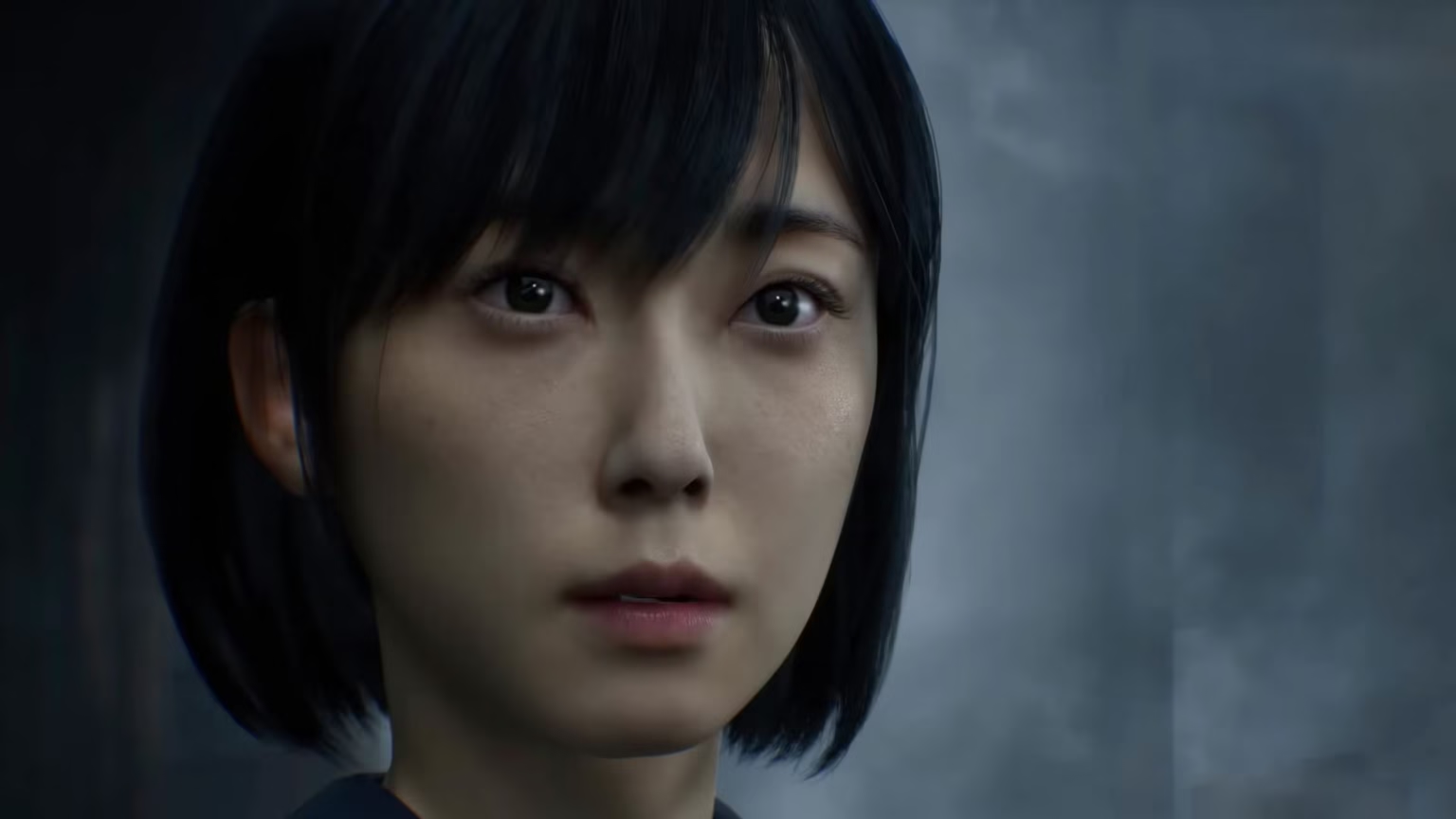
Silent Hill is once again positioned as an active, ongoing property after years of relative dormancy, but the direction outlined by its publisher may not align with what longtime fans expect from the series. Following renewed attention around the Silent Hill 2 remake and the release of Silent Hill f, Konami has made it clear that it sees the franchise as something closer to a regular content pipeline rather than an occasional prestige release.
According to comments attributed to producer Motoi Okamoto, the company’s goal is to release roughly one Silent Hill-related project per year, including titles that have not yet been announced. While this does not guarantee a mainline game annually, it signals an intent to keep the brand visible through a steady cadence of releases across games and related media.
In practical terms, Konami may be able to sustain that pace in the near future. Multiple projects are already in development, including the Silent Hill 2 remake by Bloober Team, the experimental Silent Hill f, and Silent Hill Townfall, which is being developed with external creative partners. Outside of games, the upcoming film Return to Silent Hill is scheduled for release in early 2026, further contributing to the sense of an active release schedule.
Even within Konami, there appears to be some acknowledgment that an annual target may be difficult to maintain indefinitely. Okamoto has described the approach as aspirational rather than guaranteed, suggesting that while the next few years may see consistent output, the pace could slow depending on development realities. That caveat matters, because Silent Hill has historically been defined more by atmosphere, thematic ambition, and careful pacing than by frequency.
There are clear trade-offs in treating the series as a yearly franchise. Faster turnarounds increase the risk of uneven quality, particularly if projects are spread across multiple external studios with differing interpretations of what Silent Hill should be. While Silent Hill f demonstrated that the concept can stretch beyond its familiar setting, not every experiment will resonate equally, and a higher volume of releases increases the likelihood of misfires.
There is also the issue of audience fatigue. Silent Hill games tend to be dense, psychologically demanding experiences, often designed to be replayed for alternate endings. Asking players to commit to that kind of experience every year, especially at full price, could narrow the audience rather than grow it.
For Konami, a steady release schedule may help maintain relevance and commercial momentum. For fans, however, the value of Silent Hill has rarely come from how often it appears, but from how carefully its ideas are developed. Whether the franchise can balance consistency with creative restraint remains an open question.