
Following a console as successful as the original Nintendo Switch was always going to be an uncomfortable exercise. Nintendo entered the second half of the 2010s in recovery mode after the Wii U, then unexpectedly delivered one of the most commercially and creatively dominant hardware cycles in its history. The Switch wasn’t just a popular device; it became the home of defining releases like The Legend of Zelda: Breath of the Wild and Super Mario Odyssey, games that helped reframe expectations for Nintendo’s biggest franchises. Against that backdrop, the Nintendo Switch 2 launched under an unusual amount of pressure to prove that momentum wasn’t a one-off.
What made the Switch 2’s first year surprising wasn’t a lack of software, but the nature of it. Rather than leaning heavily on predictable follow-ups, Nintendo’s early lineup leaned into risk. Eight first-party releases arrived during the system’s opening year, and only a handful resembled the kinds of sequels most people expected. The absence of a new mainline Mario platformer in particular felt deliberate, as if Nintendo was more interested in stress-testing ideas than recreating its greatest hits.
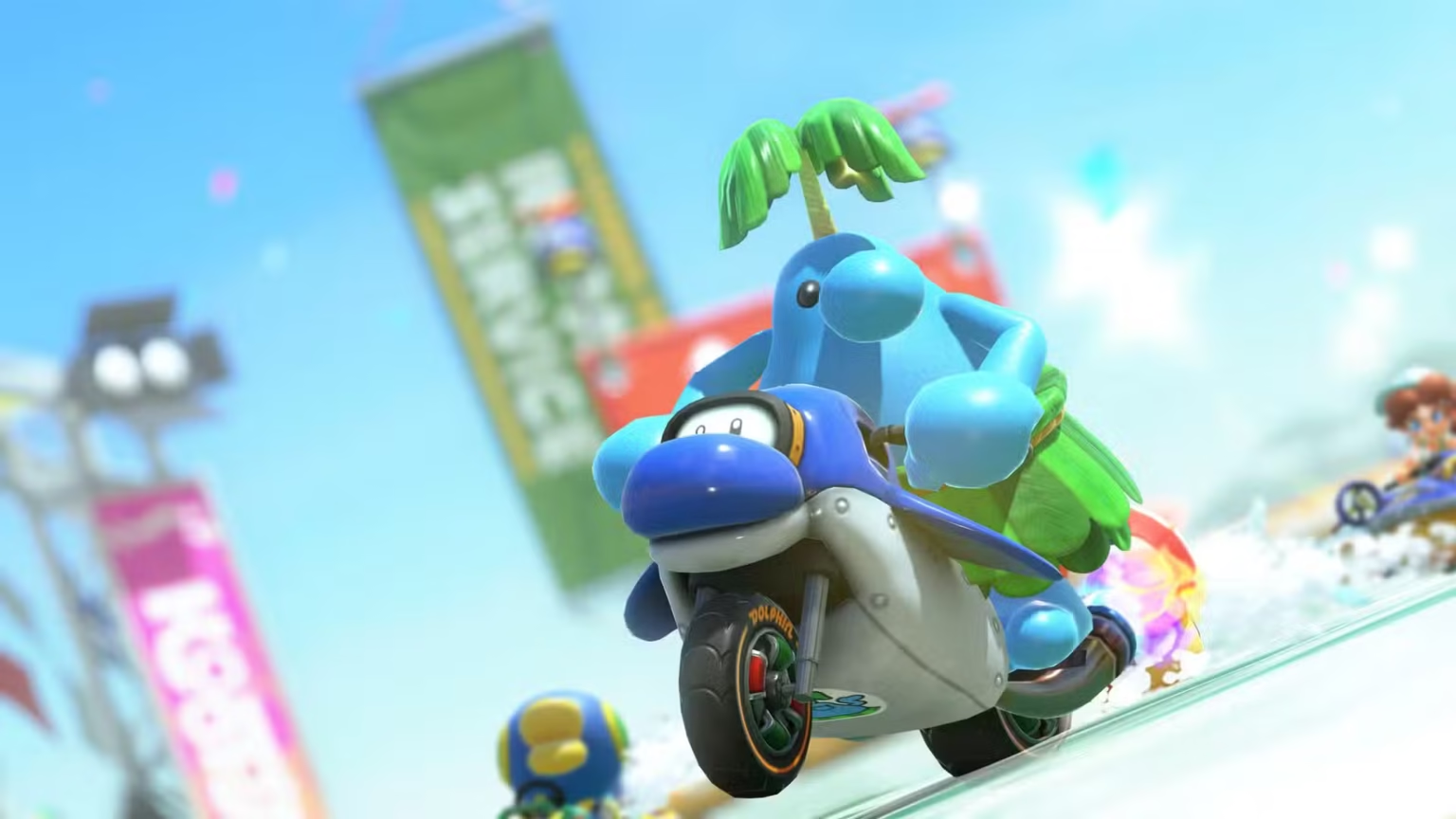
That mindset was visible from day one with Mario Kart World. On paper, it looked like a guaranteed win, following one of the best-selling games in Nintendo history. In practice, it took structural swings that split its audience. New movement mechanics, a Knockout Tour mode that challenged the traditional Grand Prix hierarchy, and an open-world approach to track design pushed the series into unfamiliar territory. Some players embraced the changes, others rejected them outright, but few found the result forgettable.
The console’s clearest success story came with Donkey Kong Bananza, which effectively became the Switch 2’s early reference point. Instead of iterating on familiar Mario design language, Nintendo let the development team dismantle its platforming conventions and rebuild them around a more chaotic, physics-driven structure. The gamble paid off critically, earning award recognition and giving the console a flagship title that felt distinct rather than inherited.
Not every experiment landed. Nintendo Switch 2 Welcome Tour leaned too heavily into sterile tech-demo territory, while Drag x Drive struggled to justify the console’s more unconventional control ideas. In those cases, novelty outpaced utility, and it already feels as though some hardware features are quietly being sidelined, much like the original Switch’s abandoned peripherals.
Still, the middle ground is where the Switch 2’s identity has taken shape. Pokémon Legends: Z-A aggressively reworked its own subseries, Kirby Air Riders revived a long-misunderstood GameCube title with unexpected confidence, and Metroid Prime 4: Beyond sparked debate by leaning into narrative and open-ended exploration. None of these games achieved universal acclaim, but all of them gave players something to argue about.
By the end of 2025, the Switch 2 lacks a single, consensus-defining masterpiece. What it does have is personality. Its games invite discussion more than reverence, curiosity more than certainty. In a crowded entertainment landscape, that willingness to be strange may prove more valuable than chasing instant classics. Nintendo’s second act with the Switch 2 hasn’t been neat or predictable, but it has been engaging, and for now, that’s enough to keep people paying attention.