
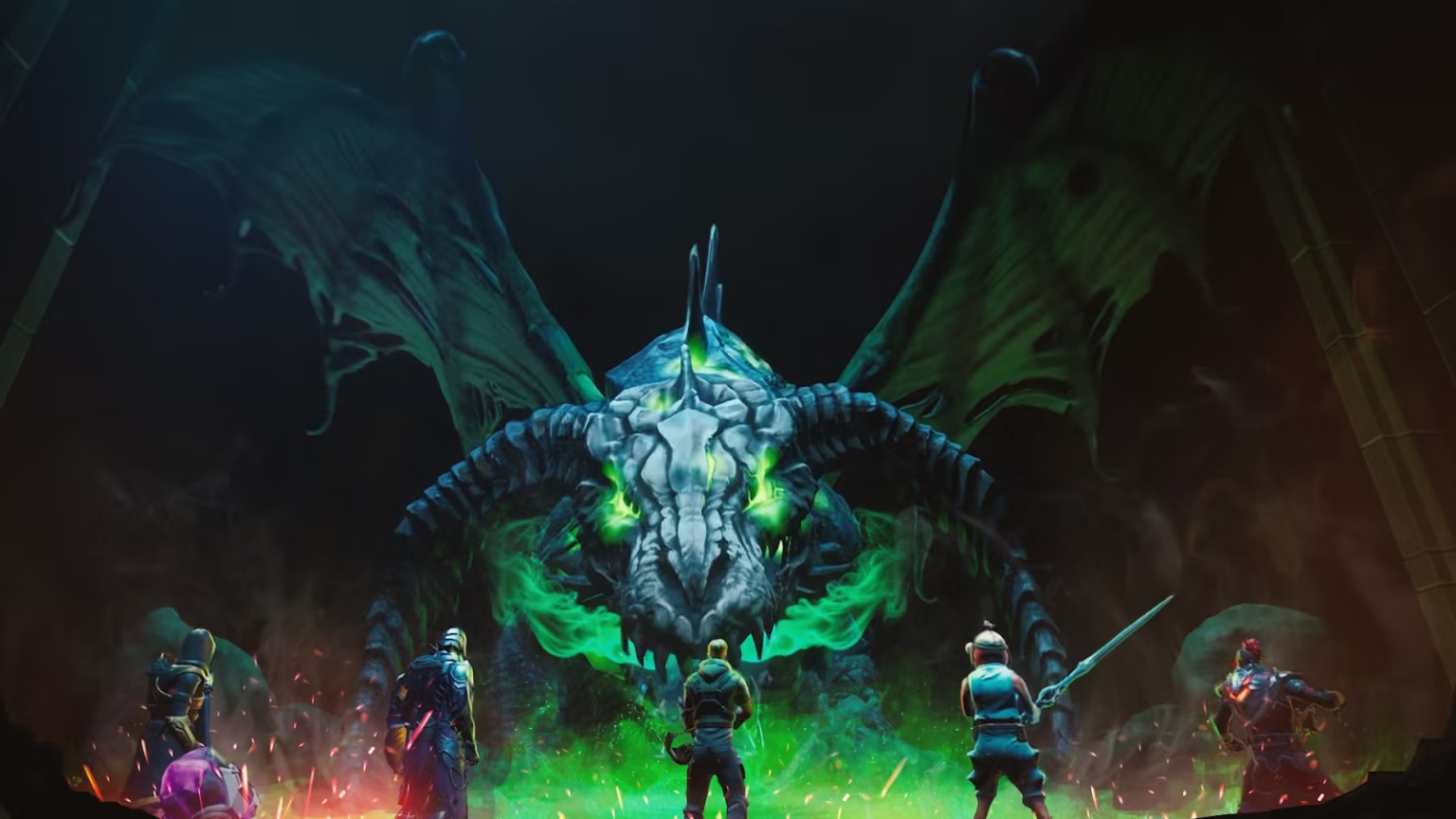
Dungeons & Dragons arriving in Fortnite feels less like a surprise and more like a convergence that had been waiting for the right structure. The tabletop role-playing game has maintained a steady cultural presence since the 1970s, and in recent years has benefited from renewed mainstream visibility through shows like Stranger Things. Fortnite, meanwhile, continues to operate as a flexible platform that absorbs recognizable ideas, genres, and personalities wherever it sees sustained audience interest. The overlap between the two is not obvious on the surface, but it becomes clearer when viewed through Fortnite’s creator-driven ecosystem.
Rather than launching with official cosmetics or a branded battle pass, Dungeons & Dragons is entering Fortnite through a collection of Creative islands. The initiative is led by Wizards of the Coast in partnership with community creators Chartisand Teravision Games. Both teams are already familiar to Fortnite players, having previously built popular user-generated experiences such as Zombie: Escape Tag and Havoc Hotel. Their involvement signals that this collaboration is as much an experiment in format as it is a brand crossover.
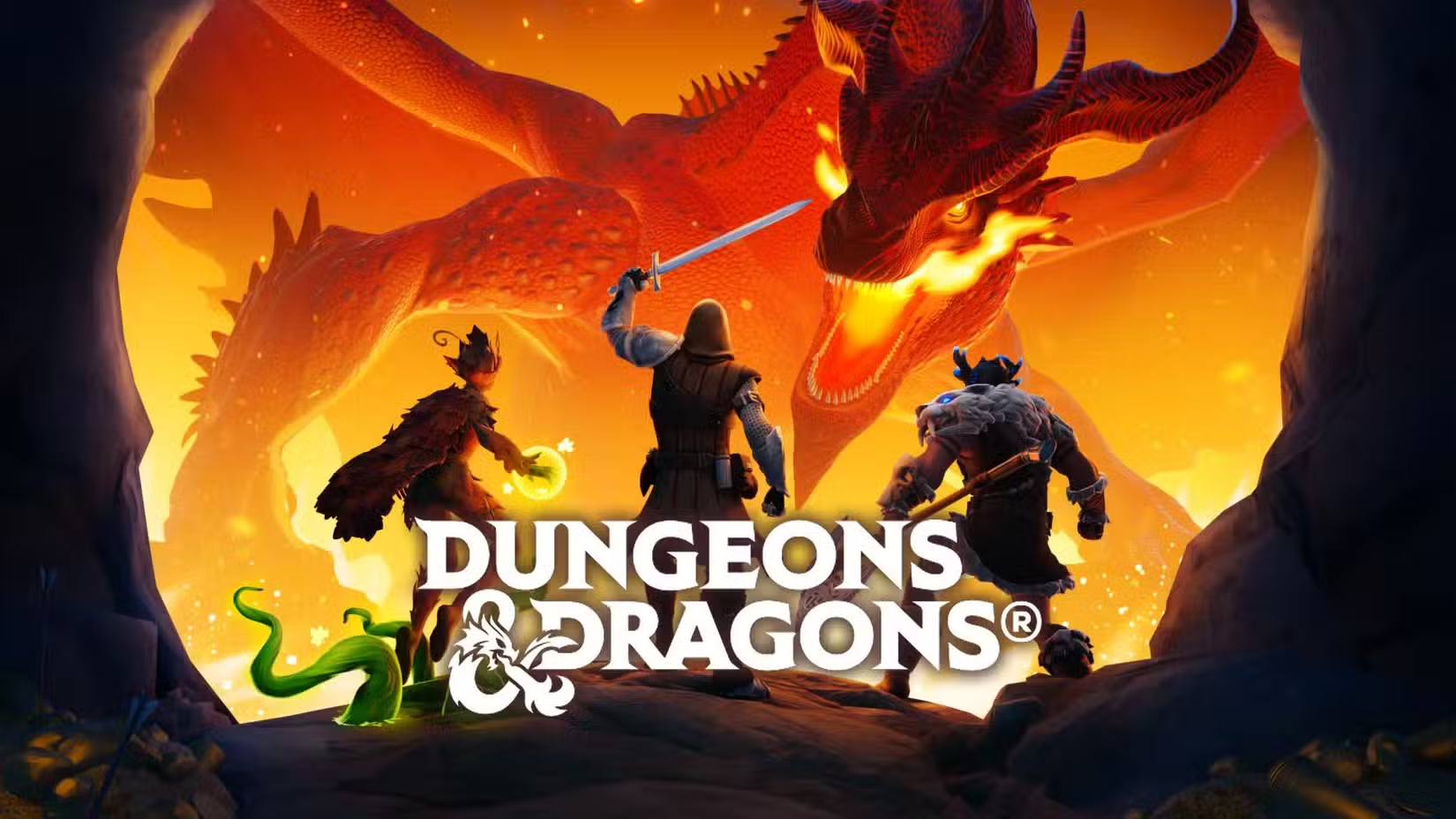
According to Wizards of the Coast, the D&D islands are part of a “launch and learn” effort designed to understand how the franchise might resonate with Fortnite’s broad and varied audience. Unlike recent high-profile Disney-led islands, these experiences were not developed internally by Epic Games. Instead, they rely on Fortnite’s creator tools and community talent, a decision that aligns closely with Dungeons & Dragons’ long-standing emphasis on player-driven storytelling and customization.
The five islands currently available cover a wide range of play styles. They include a social hub, competitive box fights, cooperative dungeon challenges, and a large-scale roguelike experience described as the biggest of its kind within Fortnite Creative. Rather than attempting to replicate tabletop rules directly, the islands translate familiar D&D themes, such as dragons, treasure, and party-based combat, into formats that fit Fortnite’s mechanics and pacing.
This approach allows Wizards of the Coast to test how Dungeons & Dragons concepts function outside traditional tabletop spaces, without committing to a single definitive interpretation. Feedback from players will likely influence whether the collaboration expands into cosmetic items, narrative events, or more permanent in-game features. For now, the emphasis appears to be on observation rather than spectacle.
The move also reflects a broader strategy within Fortnite itself. Epic Games has increasingly positioned Creative mode as a testing ground for partnerships, where external brands can gauge interest without the overhead of full-scale seasonal integrations. For Dungeons & Dragons, that makes Fortnite less a destination and more a proving ground.
Whether this collaboration grows into something larger remains uncertain. What is clear is that both brands are using the experiment to explore how long-running properties can adapt to platforms shaped by player behavior rather than fixed design.