
TL;DR: A faster, friendlier Dragon Quest VII that trades challenge and discovery for accessibility and comfort. Great for newcomers, bittersweet for veterans.
Dragon Quest VII Reimagined
I have a complicated relationship with nostalgia. I pretend I’m immune to it, like I’m some hardened critic who only cares about frame pacing and mechanical purity, but the moment a familiar overworld theme hits my ears, I’m gone. I’m back on a couch that no longer exists, holding a controller that probably had crumbs inside it even then. That’s why booting up Dragon Quest VII Reimagined felt less like starting a new RPG and more like opening a time capsule that someone had lovingly sanded down so no one could cut themselves on the edges.
This release arrives as part of the series’ 40th anniversary celebration, and you can feel the intent immediately. This isn’t a remaster meant to preserve every quirk for diehards who already know where every tablet fragment is hidden. This is a reinterpretation, a smoothing and reshaping of one of the most famously unwieldy JRPGs ever made. Square Enix clearly looked at Dragon Quest VII’s reputation as the slow, stubborn oddball of the franchise and decided this was the moment to sandblast it into something friendlier, faster, and far more approachable. Whether that’s a good thing depends heavily on what you come to Dragon Quest for.
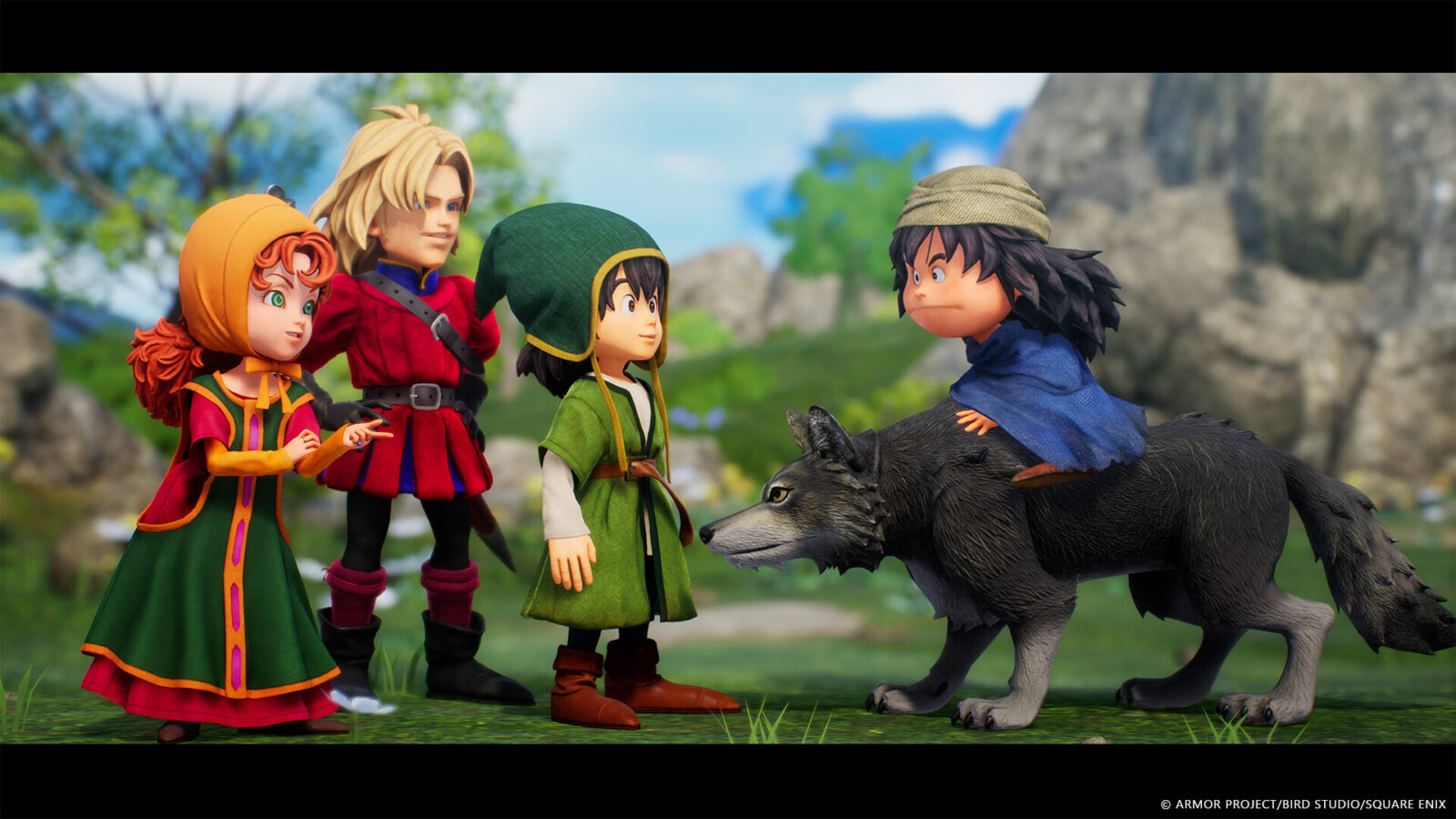
At its core, the soul of Dragon Quest VII is still intact. You begin on a lonely island surrounded by endless sea, playing as a fisherman’s kid whose world feels small in a way that’s almost oppressive. Alongside Maribel, all attitude and sharp edges, and Kiefer, the kind of princely rebel whose jawline could cut glass, you stumble into a mystery built around ancient tablets and lost lands. One by one, islands re-emerge, histories unfold, and you start to realize that you’re not just saving places, you’re resurrecting entire timelines.
What’s always made Dragon Quest VII special to me is how patient its storytelling is. It doesn’t shove an epic plot down your throat in the first hour. Instead, it tells dozens of smaller stories that feel disconnected at first, almost disposable, until they quietly braid themselves into something much bigger. There’s a melancholy to it, a recurring sense of isolation and consequence, especially when you revisit places in the present and see how your actions in the past echoed forward. That structure remains one of the game’s greatest strengths, and Reimagined wisely doesn’t mess with it too much.
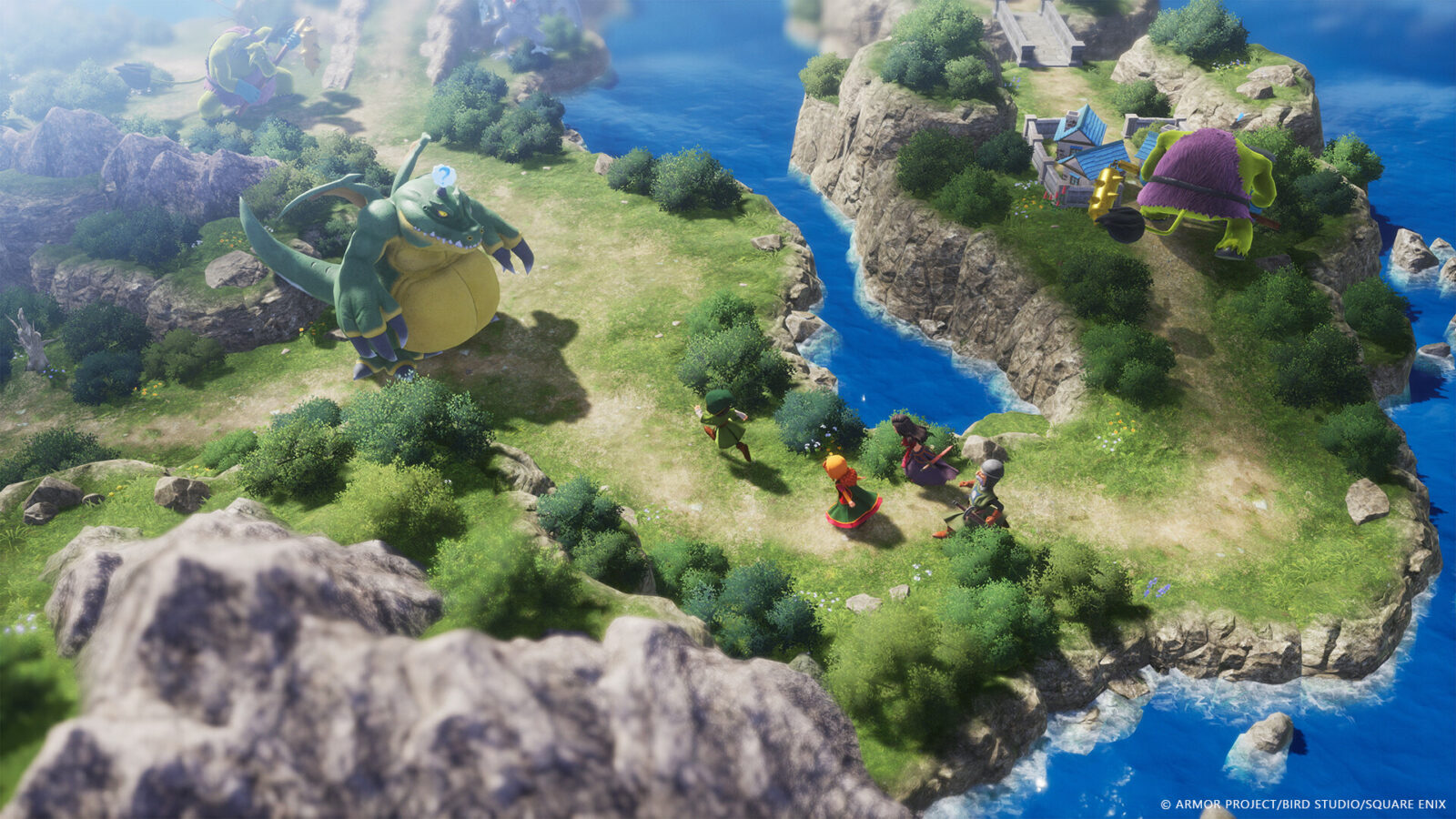
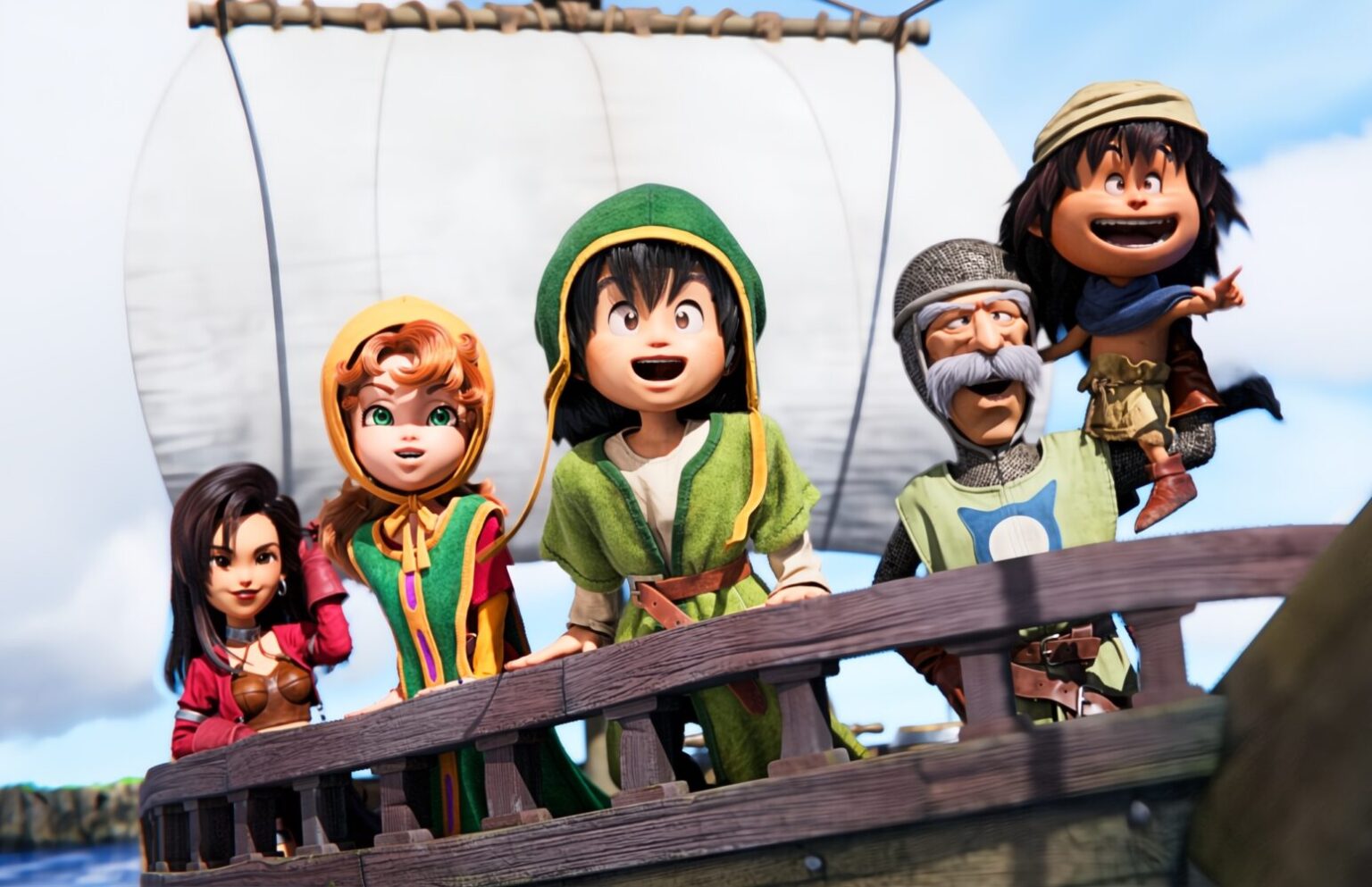
What it does mess with, immediately and aggressively, is presentation. The new high-definition visuals ditch the bright, anime-bold look Dragon Quest is known for in favor of something softer and stranger. Characters look like articulated figurines, little puppets dropped into handcrafted dioramas. You can see fabric textures, muted color palettes, and a kind of storybook tactility that feels designed to be cozy first and dramatic second. I’ll admit, it threw me at first. Dragon Quest is comfort food, but this was a different recipe than I’m used to.
Over time, I warmed to it, especially watching my wife and toddler hover behind me on the couch, pointing out how cute everything looked. There’s a warmth here that’s undeniably charming. Still, I couldn’t shake the feeling that something was lost in translation. The removal of vocation-based outfit changes from the 3DS version stings more than I expected. Part of the joy of Dragon Quest has always been watching your party visually evolve alongside their mechanical growth, and that feedback loop is weaker here. I’d be perfectly happy if this art style remains a fascinating one-off experiment.
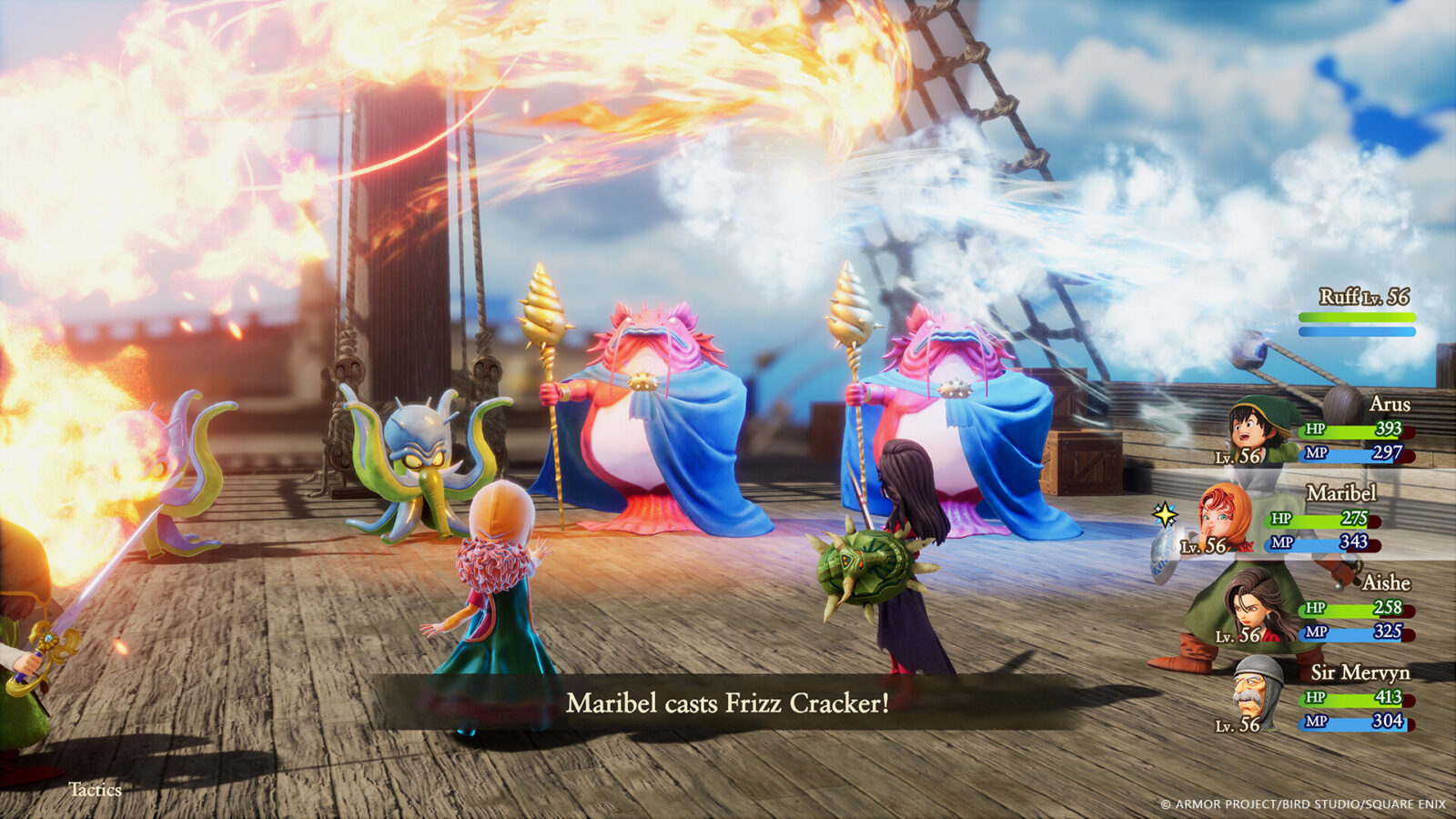
Mechanically, though, Reimagined is anything but timid. This is not just Dragon Quest VII with a fresh coat of paint. Combat has been significantly retooled, and for better or worse, it’s far more willing to let you break it over your knee. Monster Heart accessories introduce wild trade-offs that dramatically alter how characters function. Let Loose abilities act as flashy, supercharged moves that wouldn’t feel out of place in a Final Fantasy limit break montage. The Moonlighting system, which allows characters to equip two vocations at once, opens the floodgates to absurdly powerful combinations that feel incredible to pull off.
There’s a gleeful sense of experimentation here. Watching a character clone themselves to triple-cast an attack, or guaranteeing critical hits that turn multi-strike abilities into boss-melting nonsense, scratches a very specific JRPG itch. The fact that Moonlighting carries no real drawbacks and accelerates vocation mastery only reinforces how aggressively this version wants you to feel powerful. If you enjoy tinkering with systems and watching numbers explode, this is easily the most generous Dragon Quest VII has ever been.
And generosity is the operative word across the entire experience. The infamous pacing issues of earlier versions are almost completely gone. You’re fighting monsters within half an hour. The vocation system arrives in a fraction of the time it used to. When I compared my progress to an old save from the 3DS release, the difference was almost comical. Higher levels, more mastered vocations, less time invested. Rolling credits at around 46 hours felt surreal for a game once synonymous with triple-digit playtimes.
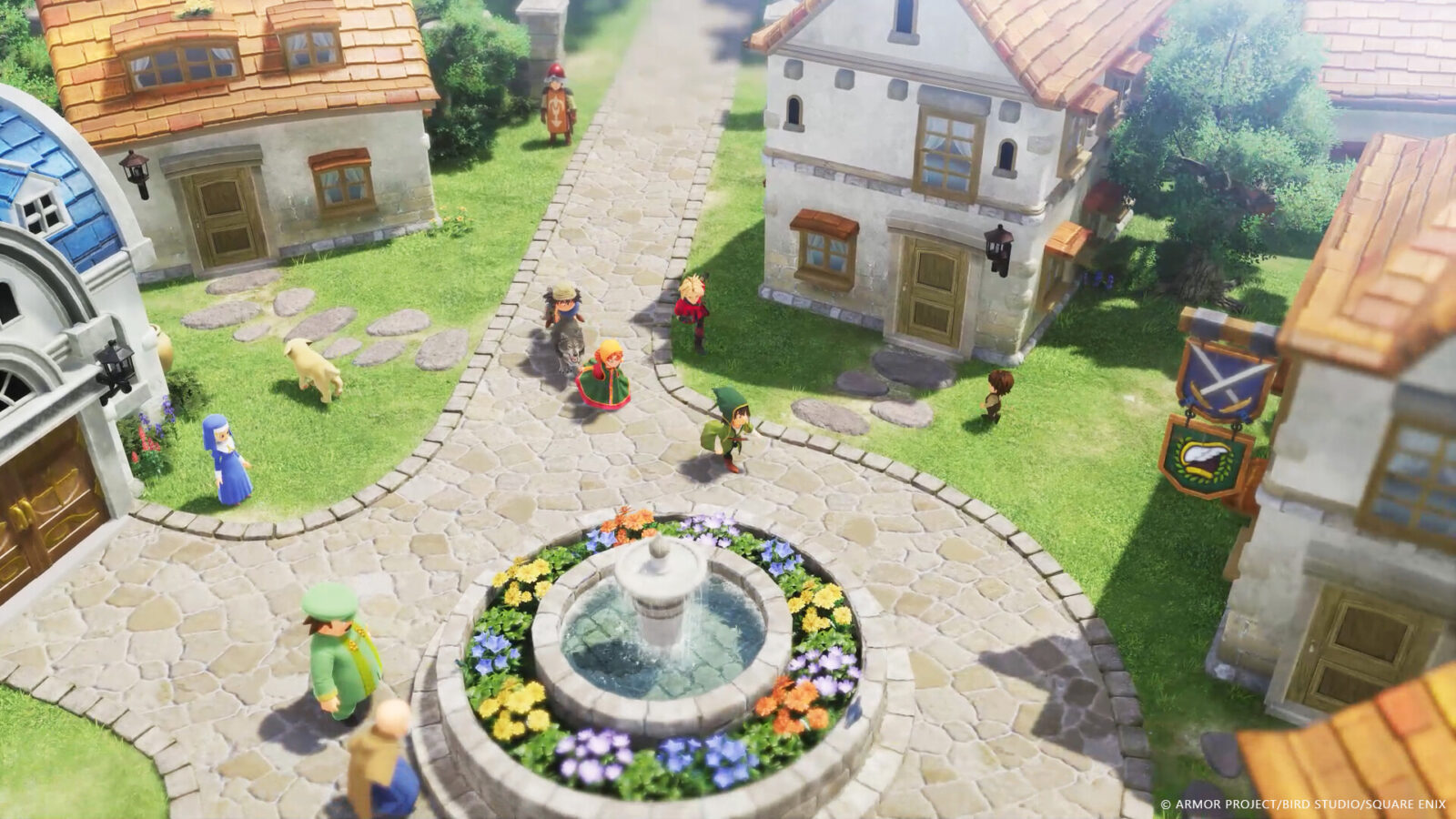
But here’s the rub. In solving Dragon Quest VII’s pacing problem, Reimagined also bulldozes much of its friction, and with it, a lot of its identity. Entire locations and dungeons are gone or dramatically shortened. While the narrative flow rarely feels broken, the sense of scale and endurance is diminished. More troubling is how thoroughly the game cushions you from failure. Resource management, once a defining pillar of the series, barely exists. Healing is everywhere. Death is toothless. Penalties are laughably small. Even the iconic image of fallen party members trailing behind you as coffins has been quietly retired.
The game goes out of its way to ensure you’re never lost, never stuck, and never uncomfortable. Tablet fragments are marked. Enemy weaknesses are telegraphed. Inventory management is streamlined to the point of being invisible. Difficulty sliders exist, but they mostly tweak rewards rather than restoring tension. You can even opt to fully heal after every single fight, which feels less like accessibility and more like a cheat code the game forgot to hide.
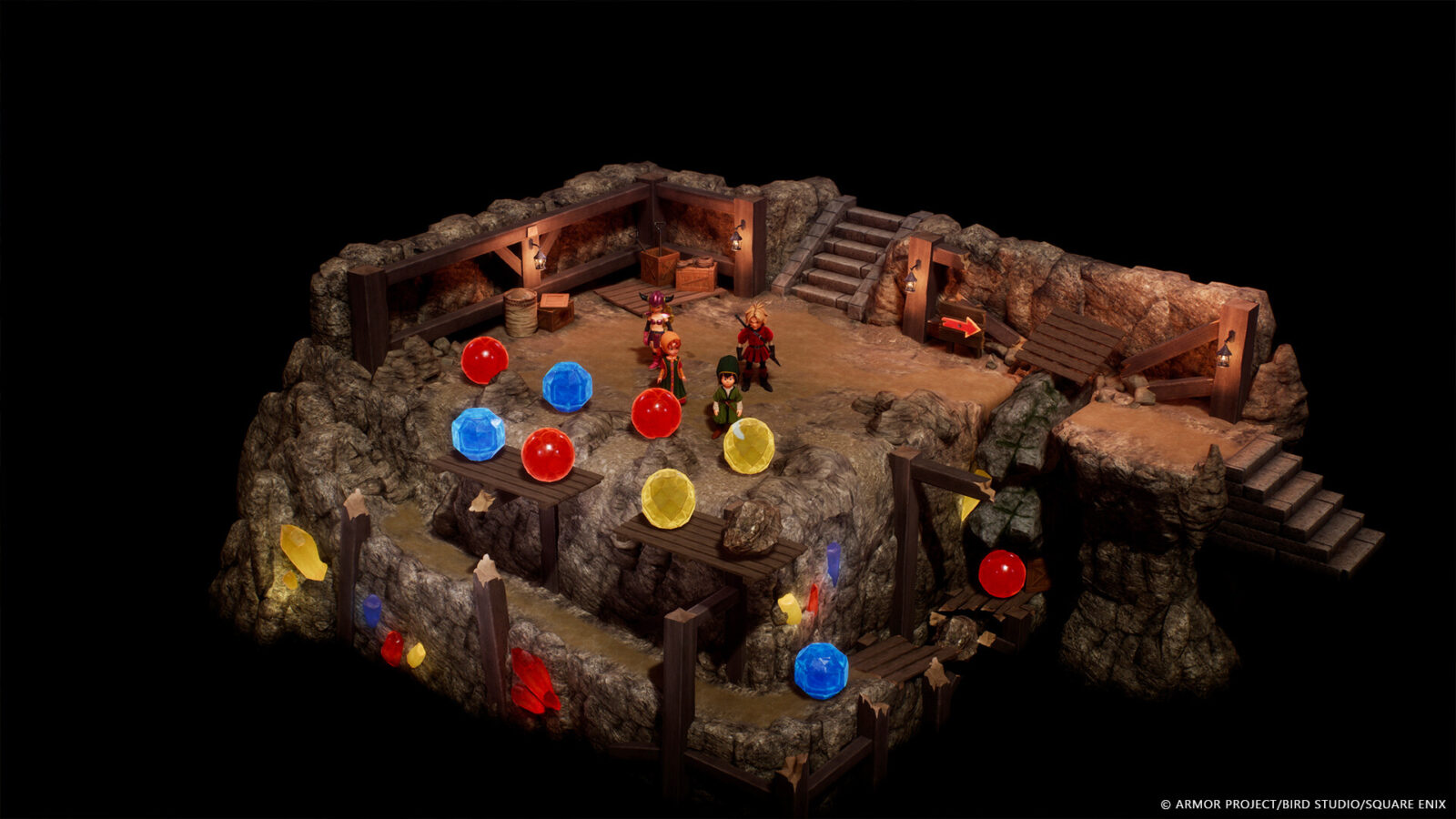
The result is a Dragon Quest VII that plays less like a grand adventure and more like a guided tour. After spending time with last year’s HD-2D remakes of Dragon Quest I & II, which respected modern players while still demanding respect in return, this felt jarringly safe. The sense of discovery, of pushing just a little too far into a dungeon and wondering if you can make it back alive, is almost entirely absent.
And yet, despite all of that, I kept playing. I kept smiling. Once I stopped wishing this was the Dragon Quest VII I remembered and accepted it as something else entirely, I found a rhythm. This is Dragon Quest VII rebuilt as an onboarding experience, a welcoming gateway for players who bounced off older entries or never touched the series at all. When viewed through that lens, it succeeds brilliantly. The story still lands. The characters still charm. The world still feels worth saving.
I just had to let go of the idea that it was ever going to challenge me the way it once did.
Verdict
Dragon Quest VII Reimagined is a thoughtful, sometimes frustrating reinterpretation of one of the series’ most distinctive games. It fixes the pacing, modernizes the systems, and opens the door wide for newcomers, but it does so by sanding down much of the resistance that once defined the journey. For new players, it’s an inviting and generous epic. For longtime fans, it’s a gentler, less demanding version of a flawed gem you may still love, just not in quite the same way.