
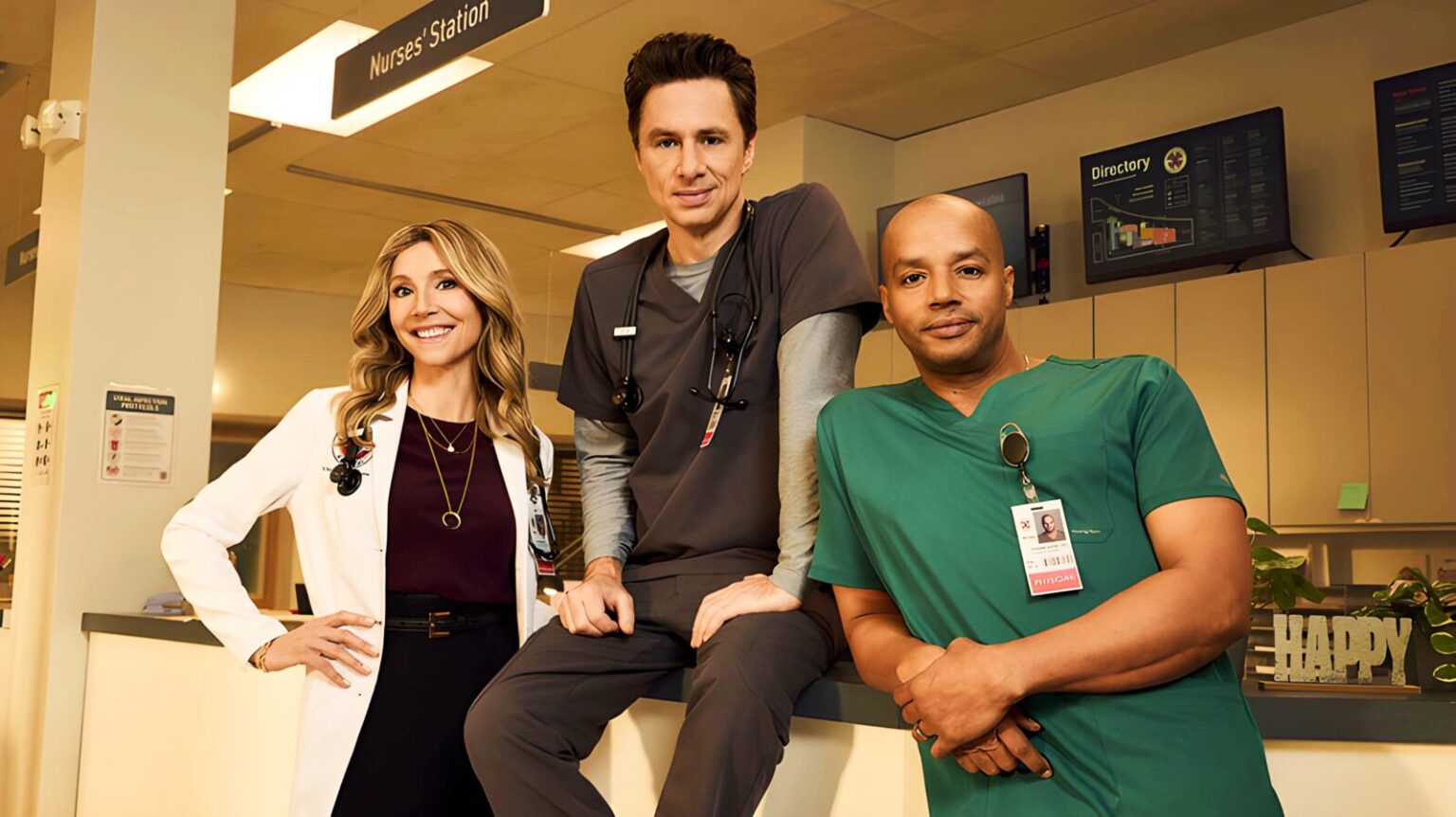
TL;DR: Scrubs Season 10 is an emotionally resonant, chemistry-driven revival that restores the heart of Sacred Heart. While some modern updates feel cautious, the return of Zach Braff, Donald Faison, and the original ensemble delivers the humor, surrealism, and humanity that made the series iconic.
Scrubs Season 10 review
Reviving a beloved sitcom is a little like reopening a hospital wing that’s been condemned for structural damage. You can repaint the walls, upgrade the equipment, and bring in fresh interns with shiny stethoscopes, but if the foundation is cracked, the whole thing collapses the second someone leans on it. That’s exactly why I approached Scrubs Season 10 with the emotional caution of a man who still hasn’t fully processed Season 9. I loved Scrubs in a way that only early-2000s network television could inspire: obsessively quoting Dr. Cox monologues, attempting The Eagle with my friends long after it stopped being socially acceptable, and quietly admitting that no show blended absurdity and existential dread quite like Sacred Heart did. So when the Scrubs revival was announced with Zach Braff and Donald Faison officially returning, I felt hope surge through me like an ill-advised Appletini at 2 a.m.
If you’re here for a full Scrubs Season 10 review, the kind that tells you whether this revival justifies its existence in a landscape already drowning in reboots, here’s my thesis upfront: this is not a perfect season of television, but it is a deeply sincere one, and sincerity has always been Scrubs’ secret weapon. The reason it works, more often than not, is simple and impossible to fake. The chemistry between Braff and Faison hasn’t faded. It hasn’t dulled. It hasn’t turned into self-parody. It feels lived-in, matured, and somehow even more grounded than before.
From the opening episode, when J.D.’s voiceover returns with that familiar diary-like cadence, I felt my guard drop. Zach Braff doesn’t play J.D. as a man clinging desperately to youth; he plays him as someone who grew older but never stopped being introspective, slightly neurotic, and wildly empathetic. That distinction matters. Donald Faison’s Turk still radiates effortless charisma, but there’s a new layer of weight to him. When Turk shows cracks under the pressure of modern healthcare realities, it doesn’t feel like forced drama; it feels like the natural evolution of a surgeon who has spent decades fighting a system that keeps moving the goalposts. Their banter remains sharp, their rhythm untouched. Watching them attempt The Eagle again, knees protesting in audible protest, isn’t just a nostalgia gag about aging. It feels like the kind of stubborn, joyful stupidity that lifelong friends refuse to give up, even when their bodies file formal complaints.
One of the smartest structural decisions in Scrubs Season 10 is the refusal to repeat the mistake that haunted its predecessor. Season 9 faltered because it sidelined the emotional core of the series and tried to hand the baton to a new generation without properly honoring the old one. This revival understands that Sacred Heart only works when J.D., Turk, Elliot, Carla, and Dr. Cox are the gravitational center. The new interns exist, yes, and they matter, but they orbit the originals rather than replace them. That dynamic shift changes everything. Instead of feeling like a spin-off awkwardly stapled to the Scrubs name, Season 10 feels like a continuation of the same emotional arc, just further down the timeline.
The generational humor is present, sometimes subtly and sometimes with the finesse of a sledgehammer. Elliot nicknaming an intern “Dr. Selfie” is about as subtle as a hospital alarm at 3 a.m., and there are moments where the show leans a bit too heavily into the cultural gap between Gen X and Gen Z. However, what prevents these moments from derailing the season is the underlying mentorship theme. Turk guiding a driven surgical intern creates echoes of the original J.D. and Dr. Cox dynamic, and that mirroring feels intentional in a way that honors the show’s legacy. It reinforces one of Scrubs’ core ideas: nobody becomes a great doctor alone.
Where Scrubs Season 10 becomes more complicated is in its attempt to reconcile its early-2000s humor with contemporary sensibilities. The original series thrived on edgy jokes, exaggerated masculinity, and a kind of bro-coded chaos that would spark immediate discourse if launched unchanged today. The revival doesn’t ignore this tension; it addresses it head-on. The Todd now asks for “Consent Fives.” Certain jokes are delivered and immediately self-corrected. Characters occasionally pause to acknowledge that maybe something they once said casually would not fly anymore. Sometimes this meta-awareness lands beautifully, turning self-reflection into comedy. Other times, it feels like the show nervously adjusting its collar mid-scene.
The addition of a mental health professional character who often functions as a moral compass underscores this balancing act. She provides sharp lines and occasionally genuine insight, but she also embodies the show’s need to signal that it understands the cultural shift. I respect the effort. Growth is good. But there are moments when I miss the reckless confidence of classic Dr. Cox rants flying unfiltered into the ether. Not because I want regression, but because Scrubs always trusted its audience to understand the exaggeration. Still, the revival never descends into preachiness. It simply sometimes hesitates where it once sprinted.
What truly reassured me throughout this Scrubs Season 10 review process was how intact the show’s stylistic DNA remains. The surreal cutaways are back. The fantasy sequences still erupt mid-conversation like intrusive thoughts given a production budget. The tonal whiplash between slapstick and heartbreak is executed with precision. One minute you’re laughing at an absurd visual gag; the next you’re staring at the screen in quiet devastation as a patient storyline unfolds with devastating realism. That alchemy has always been Scrubs’ superpower, and it still works.
The healthcare commentary feels particularly relevant. The series doesn’t shy away from insurance battles, medication costs, and systemic burnout. When Turk breaks down under the weight of responsibility in the premiere, it hits differently in 2026 than it would have in 2004. The revival understands that its audience grew up. We’ve navigated careers, watched institutions strain under pressure, and felt the exhaustion of systems that don’t always prioritize humanity. Scrubs meeting that reality head-on gives the season emotional credibility. It doesn’t just rely on nostalgia; it evolves alongside its viewers.
Perhaps the most satisfying element of Scrubs Season 10 is how it frames aging not as a punchline, but as a perspective shift. J.D. missing a personal celebration to advocate for a patient isn’t framed as martyrdom; it’s framed as purpose. Elliot’s intensity now carries authority. Carla commands rooms with earned confidence. Dr. Cox, still razor-sharp, reveals vulnerability in quieter moments that feel earned rather than tacked on. The characters are older, yes, but they’re not diminished. They are expanded.
Is every storyline airtight? No. A few jokes strain for relevance. Some of the meta-commentary occasionally interrupts the comedic flow. But the heart remains strong, steady, and unmistakably Scrubs. Bill Lawrence and the returning cast didn’t attempt to reinvent Sacred Heart into something unrecognizable. They reinforced the foundation, repaired the cracks, and invited us back into hallways that still echo with absurdity and empathy in equal measure.
By the time the season settles into its rhythm, I found myself forgetting that this was a revival at all. It felt like a continuation of a conversation that paused, not ended. And that’s the highest compliment I can give. Scrubs Season 10 doesn’t erase the missteps of the past, but it absolutely redeems the franchise’s legacy. It proves that when the original cast stands together, the chemistry alone can power an entire hospital.