
TL;DR: A joyful, movement-first 3D platformer that blends Mario-like flow with Breath of the Wild-style freedom, Big Hops is charming, clever, and absolutely worth your time.
Big Hops
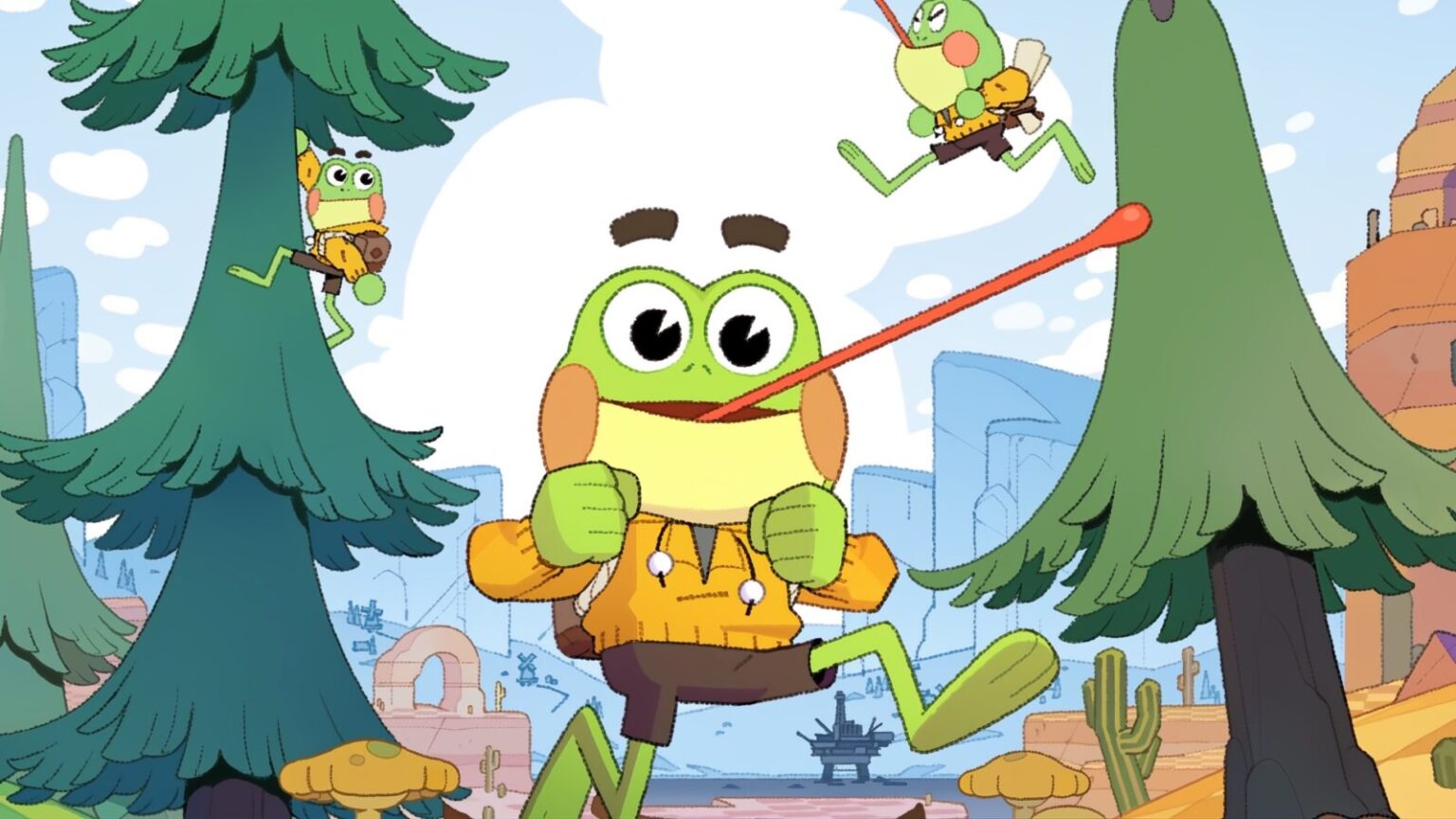
The first thing Big Hops did to me wasn’t impress me. It relaxed me. There’s something quietly confident about a game that opens with a tiny frog in a cozy forest, stretching his legs, testing his jumps, letting you feel momentum before it ever asks you to save a world. Within ten minutes of playing Big Hops, I realized my shoulders had dropped and my brain had switched into that rare, childlike mode where exploration feels like the point rather than a checklist. That’s when it hit me: this is one of those games that understands movement not as a mechanic, but as a feeling.
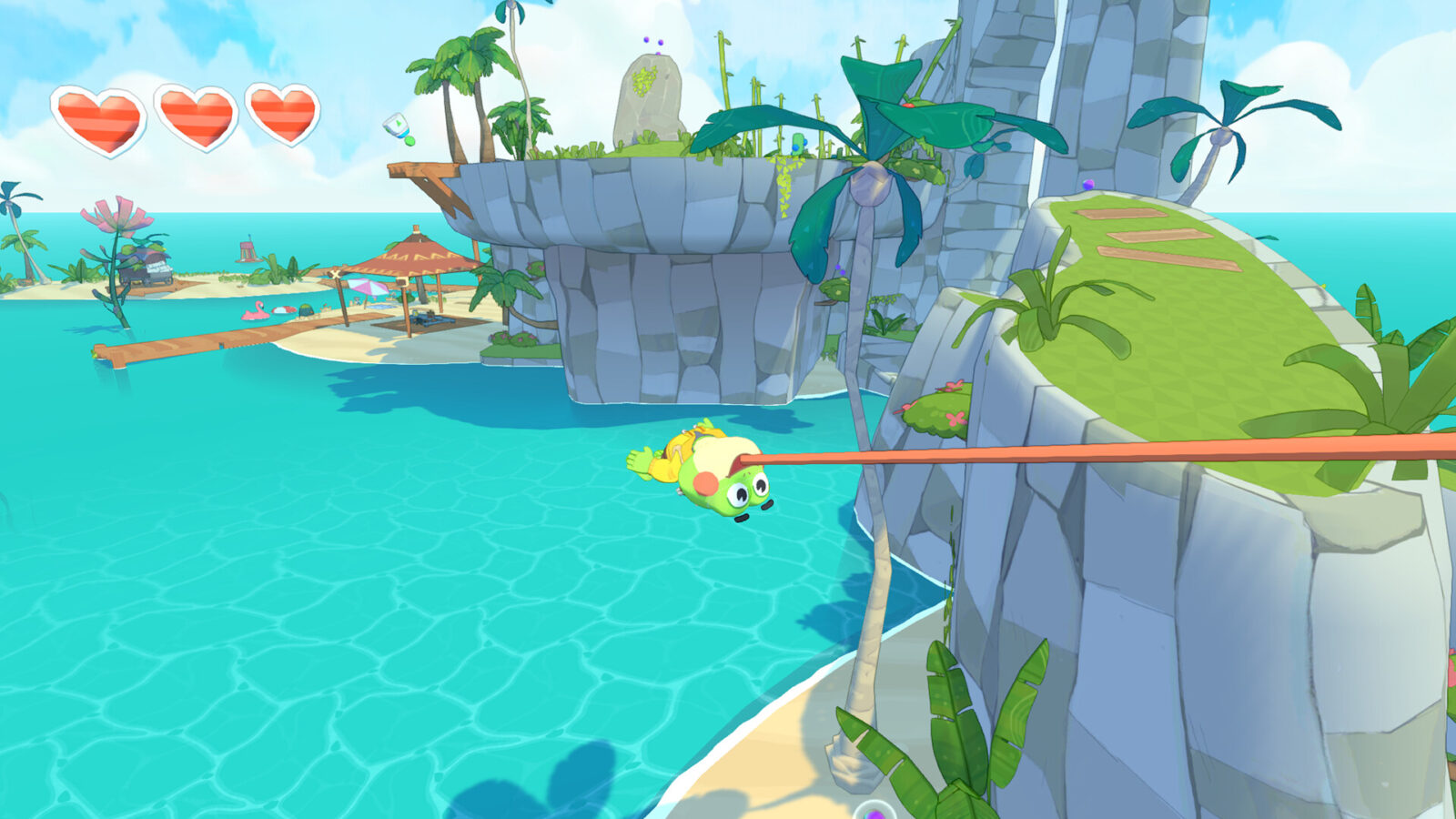
I don’t throw this comparison around lightly, but the way Hop moves immediately reminded me of the first time I booted up Super Mario Odyssey. Not in a derivative way, but in that same deeply tactile sense where every jump has weight, every landing has intention, and chaining actions together feels like jazz improvisation rather than execution. You leap, you slide on your belly, you rebound off walls, and your fingers start doing things before your brain consciously tells them to. It’s muscle memory forming in real time, and it’s intoxicating.
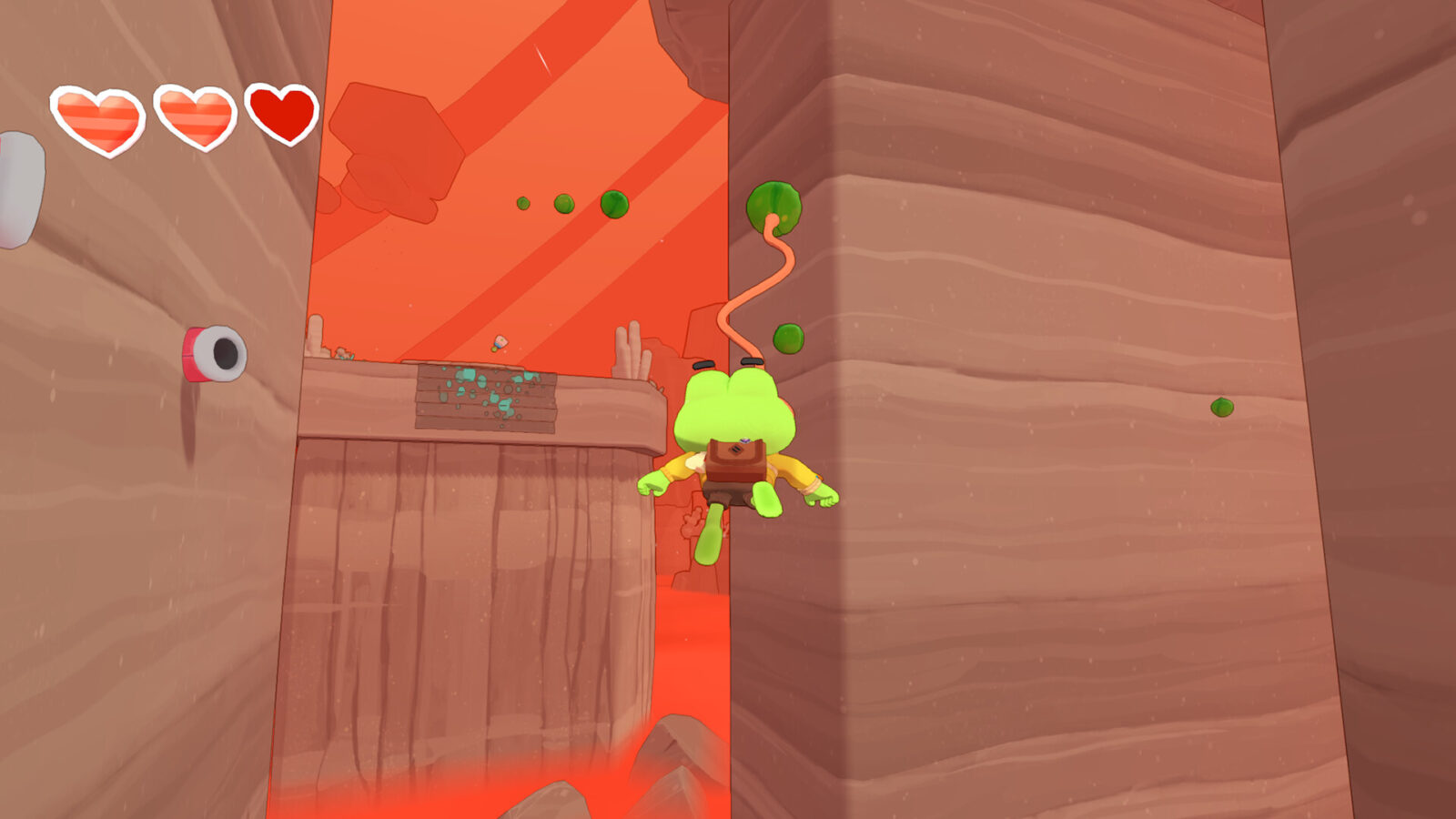
Then Big Hops keeps piling on ideas, but somehow never collapses under them. Wall-running flows naturally into climbing, and the climbing system will ring bells for anyone who lost entire weekends to The Legend of Zelda: Breath of the Wild. Yes, there’s stamina. Yes, you can climb basically anything. But here it feels tuned for playfulness instead of survival. You’re not scaling cliffs to reach shrines; you’re scrambling up surfaces because you’re curious what’s up there, and because the game clearly wants you to ask that question.
The frog tongue deserves its own love letter. It’s a grappling hook, a lasso, a precision grabber, and occasionally a snack delivery system. Swinging across gaps, yoinking fruit from trees, snatching bugs mid-hop—it’s endlessly satisfying, and it reinforces Big Hops’ core thesis: traversal should feel like a toy box, not a test. Before long, I was chaining tongue swings into wall runs into slides into absurdly long jumps that felt illegal in the best way. The game constantly lets you feel like you’ve outsmarted it, then gently reveals that it planned for this all along.
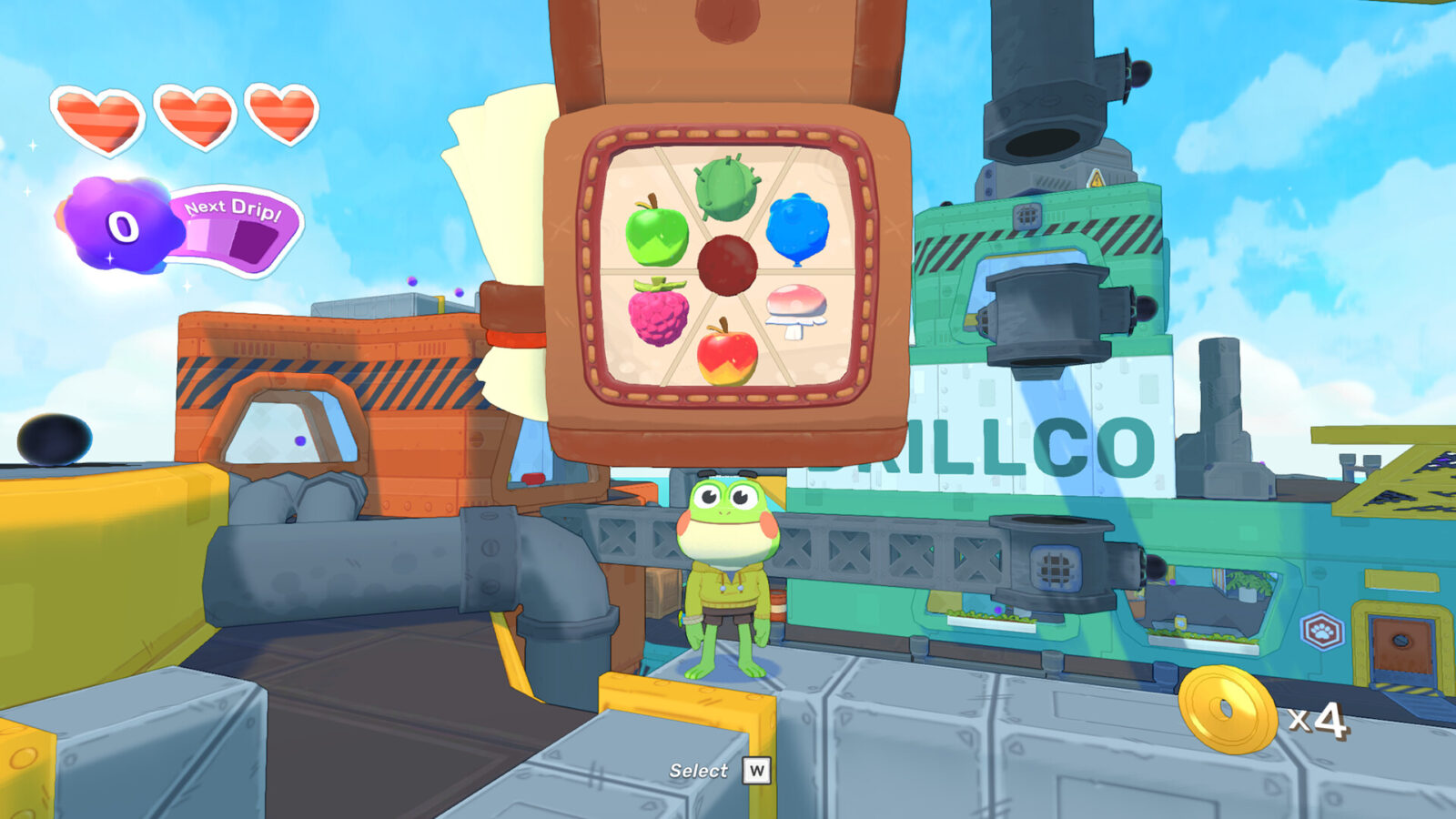
Things get weird, narratively and physically, when Diss shows up. Diss is an extradimensional imp with the energy of a Reddit mod who’s read too much philosophy and not slept enough. He whisks Hop into the Void, a space where gravity twists in on itself and perspective becomes optional. The first time I landed upside-down and realized the world had politely rotated to accommodate me, my brain flashed straight back to Super Mario Galaxy. Thankfully, by then Big Hops’ controls felt so natural that my hands adapted faster than my eyes, and what could have been disorienting instead became delightful.
Story-wise, Big Hops surprised me by being quieter than I expected. Diss wants Dark Drips, little globules of void energy, for reasons he refuses to explain. Meanwhile, Hop meets a mechanic who promises an airship home if you gather the right parts. It’s a simple setup, but it’s emotionally effective because Hop’s motivation subtly shifts. He starts out dreaming of adventure, but once he’s actually out there, he just wants to go home. That emotional pivot landed harder than I expected from a cartoon frog game, and it gives the journey a gentle melancholy that lingers beneath the whimsy.
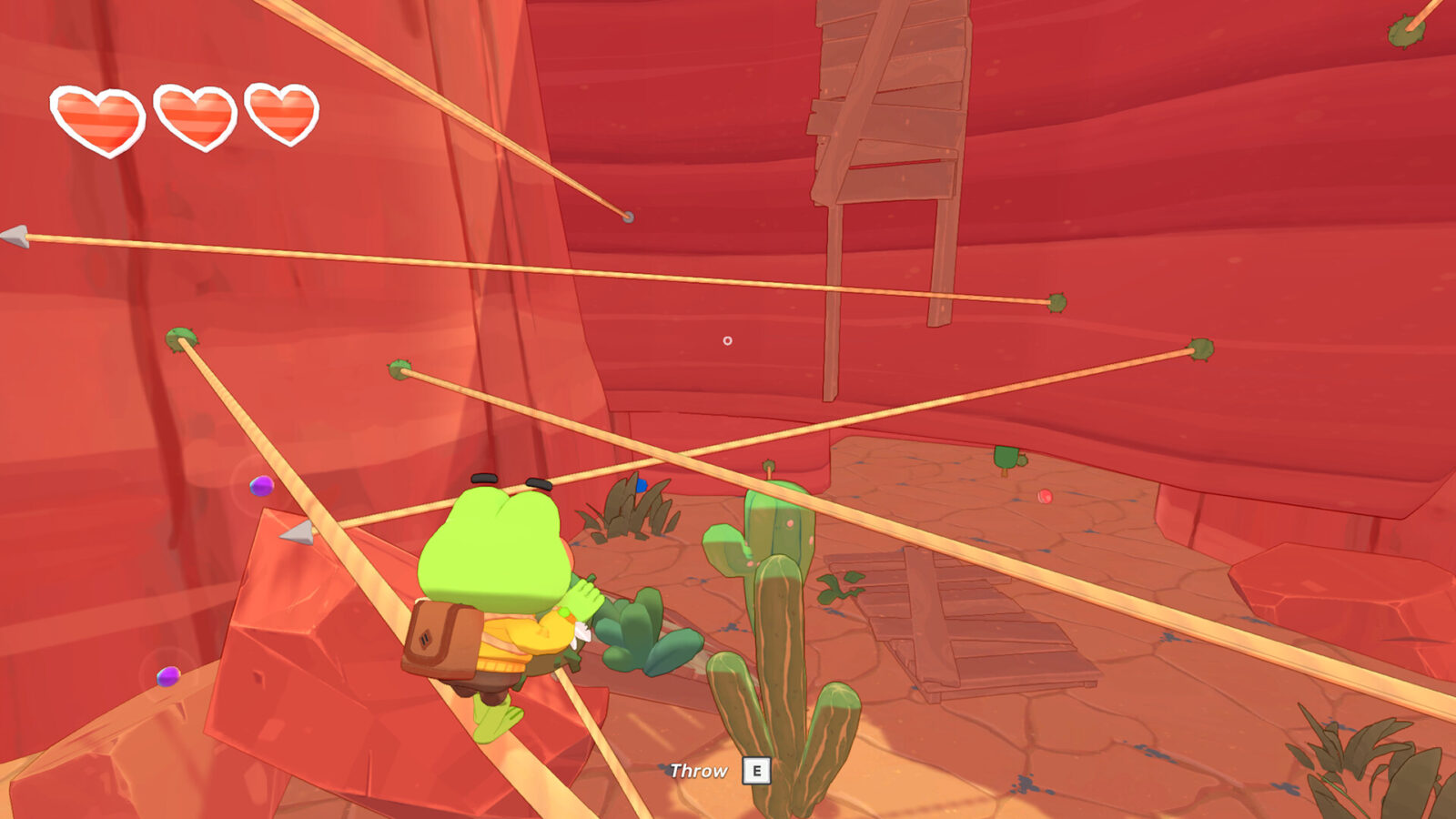
Each world you visit feels like a self-contained fable populated by animals dealing with very relatable problems. A rabbit-run town ignoring a sinkhole because it’s inconvenient. An otter oil operation fracturing under ideological differences. These stories don’t wrap themselves up in a neat bow, and I appreciated that. They resolve enough to move on, but not enough to pretend everything’s perfect. The main arc with Diss, unfortunately, doesn’t stick the landing quite as gracefully. Near the end, the plot accelerates, explanations get fuzzy, and I found myself more confused than intrigued. It’s not disastrous, but it is noticeable.
Mechanically, though, the game rarely misses. Dark Drips act as a currency for trinkets that radically alter how you play. Reduced stamina drain. Extra slide friction. Compass indicators. Even permanent invincibility if you’re willing to sacrifice all other perks. It’s a system that quietly encourages experimentation, letting you tune Big Hops to your personal rhythm. I desperately wanted loadouts to swap builds on the fly, but even without them, the freedom here is refreshing.
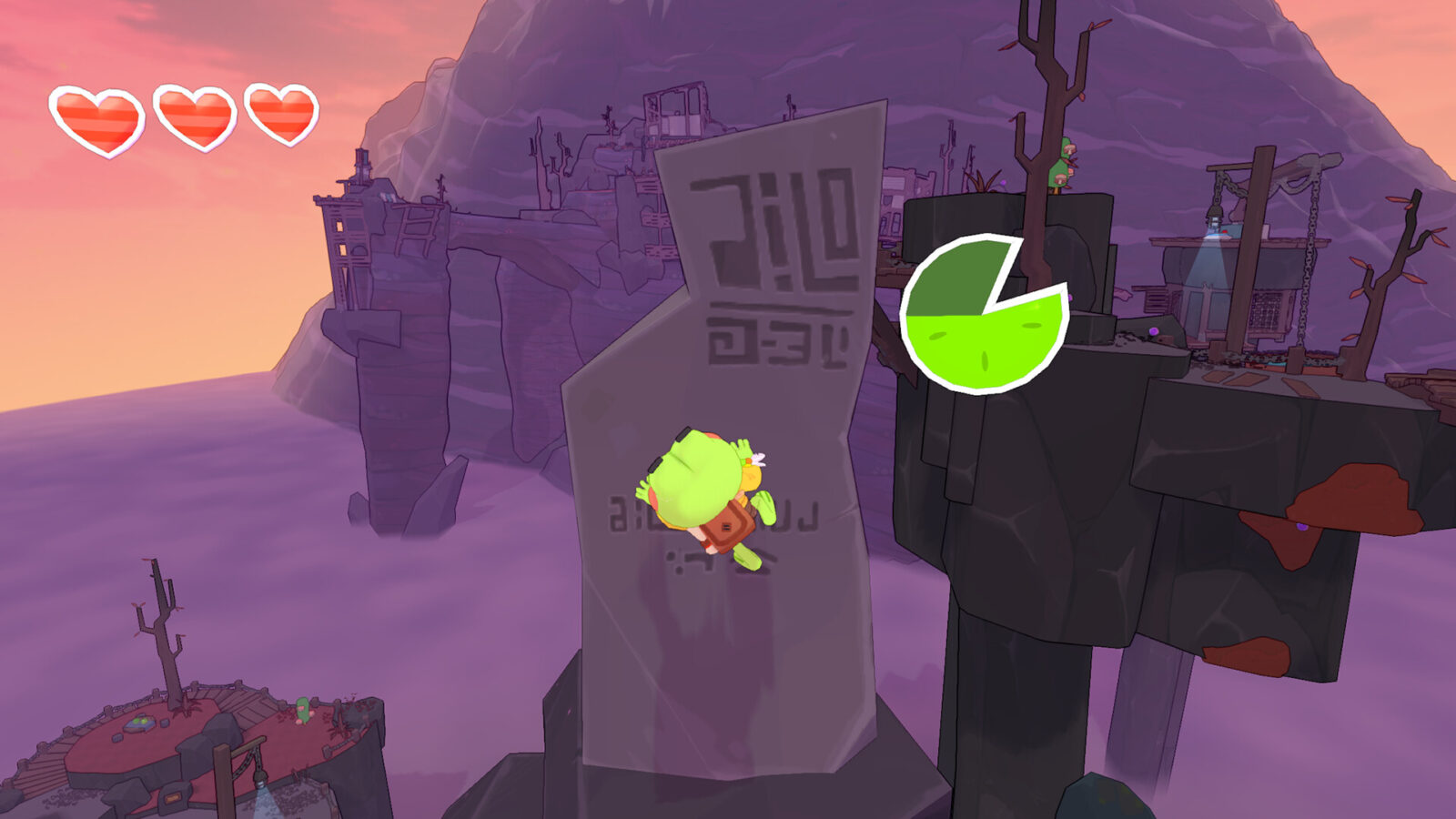
The real stars, though, are the fruits and seeds scattered across the worlds. These are the kinds of mechanics that turn good platformers into playgrounds. One seed grows a massive climbable vine. Another creates bouncy bubbles. Others flip gravity, blow open walls, or generate floating zero-G zones. You can stash them in your backpack and deploy them creatively, bending level design to your will. There are just enough constraints to keep things from breaking entirely, but often I found solutions that felt like exploits—only to realize the developers absolutely intended that. Few games manage to make you feel clever without also making you feel guided, and Big Hops threads that needle beautifully.
That’s why the occasional forced segment stings a little. There’s a mine cart section late in the game that feels stiff and awkward, like a reminder of what Big Hops isn’t. It’s overly prescriptive, slightly janky, and lacks the improvisational joy that defines the rest of the experience. It’s brief, but it underlines how much stronger the game is when it trusts the player.
Visually and aurally, Big Hops punches well above its weight. The worlds are colorful without being garish, stylized without feeling cheap. Hop and Diss are fantastic designs, instantly readable silhouettes with expressive animation. Voice acting is surprisingly strong, giving even minor characters personality. You do occasionally see the seams—NPCs teleporting ahead rather than walking there—but these moments are easy to forgive when the overall presentation is this polished.
By the time the credits rolled, I realized Big Hops had done something rare. It made movement feel joyful again. Not optimized, not speedrun-ready, not obsessed with mastery—just joyful. It reminded me why I fell in love with 3D platformers in the first place, back when exploring a space was its own reward. If this is what Luckshot Games can do out of the gate, I’m paying attention to whatever they do next.
Verdict
Big Hops is a confident, generous platformer that understands the magic of movement and trusts players to find their own fun. Its story occasionally stumbles, and a few restrictive moments break the spell, but the sheer delight of traversal, exploration, and experimentation makes it one of the most memorable games of early 2026.