

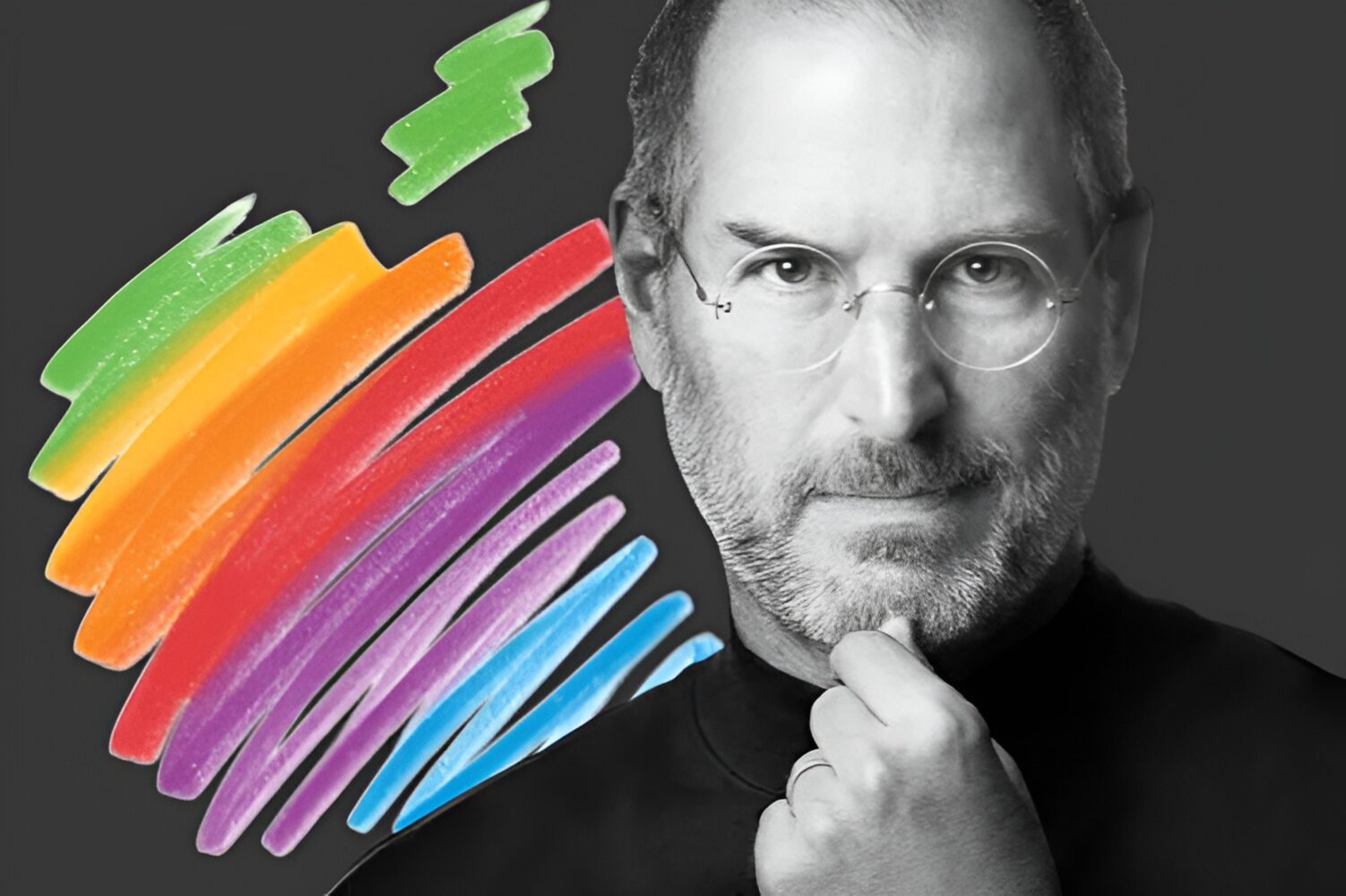
There are anniversaries, and then there’s this one.
On April 1, 2026—yes, April Fools’ Day, because Apple’s origin story has always had a sense of humor—the company turns 50. Half a century of existence in an industry where most companies barely survive a decade without reinventing themselves into something unrecognizable. Apple, somehow, didn’t just survive. It defined entire eras of computing, music, mobile, and now spatial computing, all while convincing millions of people that aluminum edges and rounded corners are a personality trait.
And as the company hits the big five-zero, the internet is doing what it does best: celebrating, speculating, reminiscing, and debating whether the iPhone peaked somewhere around the headphone jack era. But behind all that noise, something genuinely interesting is happening. Apple is celebrating its past in a way that still feels very… Apple.
The official messaging around the anniversary leans heavily into creativity and the people who use Apple products rather than the products themselves. Which, if you’ve been following the company long enough, tracks perfectly. Apple has always preferred to position itself as an enabler rather than the hero of its own story, even if the hardware and software stack it builds is often the real star. This anniversary is less about listing milestones and more about reminding everyone what those milestones enabled, from bedroom music production setups to entire filmmaking pipelines shot on devices that fit in your pocket.
Of course, this wouldn’t be an Apple celebration without a bit of spectacle. The company kicked things off with global activations, including a surprise Alicia Keys performance at Apple’s Grand Central store, because apparently your local Apple Store can now double as a concert venue if the occasion calls for it. It’s part retail, part cultural hub, part flex. And this is just the beginning, with events rolling out worldwide in a way that feels less like a corporate anniversary and more like a global tour.
Tim Cook, stepping into reflection mode, acknowledged the milestone with a tone that balanced pride and restraint. The messaging is clear: Apple has come a long way from its garage beginnings, but it’s not interested in becoming a legacy brand that lives in its own highlight reel. The focus remains on what comes next, even as the company takes a rare moment to look back. It’s a delicate balance, and one Apple doesn’t usually indulge in. This is a company that historically prefers shipping the next thing over celebrating the last one.
At the same time, the world outside Cupertino is turning Apple’s history into something almost museum-like. There are exhibitions opening with thousands of artifacts, from early Macs to obscure prototypes that hardcore fans will instantly recognize. There are auctions featuring pieces of Apple’s past that now carry the kind of value usually reserved for fine art. Even retro-inspired accessories are making a comeback, because nothing says technological progress like re-releasing the aesthetic of 1984 with modern internals and a premium price tag.
What makes all of this fascinating is that Apple has never been particularly comfortable with nostalgia. Unlike many tech companies that lean heavily into their past, Apple has always been forward-facing, sometimes to the point of aggressively abandoning older ideas the moment something better comes along. The fact that it’s allowing itself this moment of reflection says a lot about where the company is today. It’s confident enough in its present and future to acknowledge its past without getting stuck in it.
And that future is, as always, already in motion. While the world celebrates fifty years of Apple, the company is quietly continuing its work on what the next fifty might look like. The iPhone remains central to everything, even as new categories like spatial computing and increasingly sophisticated AI experiences begin to expand the ecosystem. Rumors of foldables, ultra-tier devices, and entirely new product categories continue to swirl, because Apple doesn’t do anniversaries without also hinting at what’s next.
All signs point to a larger, more elaborate finale at Apple Park, likely the centerpiece of this anniversary celebration. If history is any indication, it will be meticulously produced, emotionally calibrated, and just restrained enough to avoid feeling self-congratulatory. There may or may not be a “one more thing” moment, but even if there isn’t, Apple has already achieved something most companies never do. It has remained relevant, influential, and culturally embedded for five decades in an industry that rarely allows for that kind of longevity.
Apple at 50 isn’t slowing down. It isn’t pivoting into nostalgia. It isn’t taking a victory lap. It’s doing something much more characteristic. It’s acknowledging the journey, appreciating the impact, and then immediately getting back to building whatever comes next.
From a garage in 1976 to a global ecosystem that touches nearly every aspect of modern digital life, Apple didn’t just survive fifty years of technology. It helped define them. And if there’s one thing this anniversary makes clear, it’s that somewhere in Cupertino, there’s already a team working on the next moment that will make everything we use today feel like history.

Fifty years ago in a small garage, a big idea was born. Apple was founded on the simple notion that technology should be personal, and that belief — radical at the time — changed everything.
April 1st marks 50 years of Apple. From the first Apple computer to the Mac, from iPod to iPhone, iPad to Apple Watch and AirPods, as well as the services we use every day — the App Store, Apple Music, Apple Pay, iCloud, and Apple TV — we’ve spent five decades rethinking what’s possible and putting powerful tools into people’s hands. Through every breakthrough, one idea has guided us — that the world is moved forward by people who think different.
That’s because progress always begins with someone — an inventor or scientist, a student or storyteller — who imagines a better way, a new idea, a different path. That spirit has guided Apple from the start. But it has never belonged to us alone.
Every invention we bring into the world is just the beginning of a story. The most meaningful chapters are written by all of you — the people who use our technology to work, learn, dream, and discover. You’ve made breakthroughs and launched businesses. You’ve cheered up loved ones in the hospital and captured your toddler’s first steps. You’ve run marathons, written books, and rekindled friendships. You’ve chased your curiosity, found your new favorite song, and shared stories that connect us all.
In your hands, the tools we make have improved lives, and sometimes even saved them. And that is what inspires us — not what technology can do alone, but everything you can do with it.
At Apple, we’re more focused on building tomorrow than remembering yesterday. But we couldn’t let this milestone pass without thanking the millions of people who make Apple what it is today — our incredible teams around the world, our developer community, and every customer who has joined us on this journey. Your ideas inspire our work. Your trust drives us to do better. Your stories remind us of all we can accomplish when we think different.
If you’ve taught us anything, it’s that the people crazy enough to think they can change the world are the ones who do.
So here’s to the crazy ones.
The misfits.
The rebels.
The troublemakers.
The round pegs in the square holes.
The ones who see things differently.
Here’s to you.
TIM COOK