

TL;DR: Smaller stakes, stronger characters, and a refreshingly human story make A Knight of the Seven Kingdoms the smartest and most satisfying direction the Game of Thrones universe has taken since its original peak.
A Knight of the Seven Kingdoms
I’ve spent a frankly embarrassing amount of my adult life thinking about Westeros. I was there on Sunday nights when Game of Thrones felt like appointment television for the entire internet, when dragons were cultural events and character deaths were workplace conversation stoppers. I was also there at the end, staring at the screen in stunned silence, trying to convince myself that maybe it wasn’t that rushed, maybe I was just tired, maybe this was all part of some larger plan. Spoiler: it wasn’t. I watched this new chapter early via screeners provided by OSN+ and Warner Bros. Discovery, which gave me time to actually sit with it rather than react in the moment. Since then, the franchise has felt like a band trying to recapture a once-perfect album, cycling through spinoff ideas, timelines, and tones, never quite sure which version of itself it wanted to be anymore.
House of the Dragon helped, at least a little. It reminded me that the world still worked when you let it breathe, when you trusted political tension and character rot more than spectacle for spectacle’s sake. But even that show leaned hard into scale. Big houses. Big wars. Big emotional operas delivered in capital letters. After a while, I realized what I actually missed wasn’t the size of Game of Thrones. It was the texture. The mud under the boots. The quiet desperation of people who don’t get theme music when they walk into a room.
That’s why A Knight of the Seven Kingdoms feels like such a minor miracle, and why it might genuinely be the smartest path forward this universe has taken in years.
Instead of trying to outdo the past with bigger dragons or louder destiny, this series shrinks the lens until it’s almost uncomfortably intimate. The entire first season unfolds around a single event, over a handful of days, with stakes that would barely register on the War Council table in King’s Landing. No prophecy hangs in the air. No army is marching. The world isn’t ending. One man is just trying not to lose the only armor he owns.
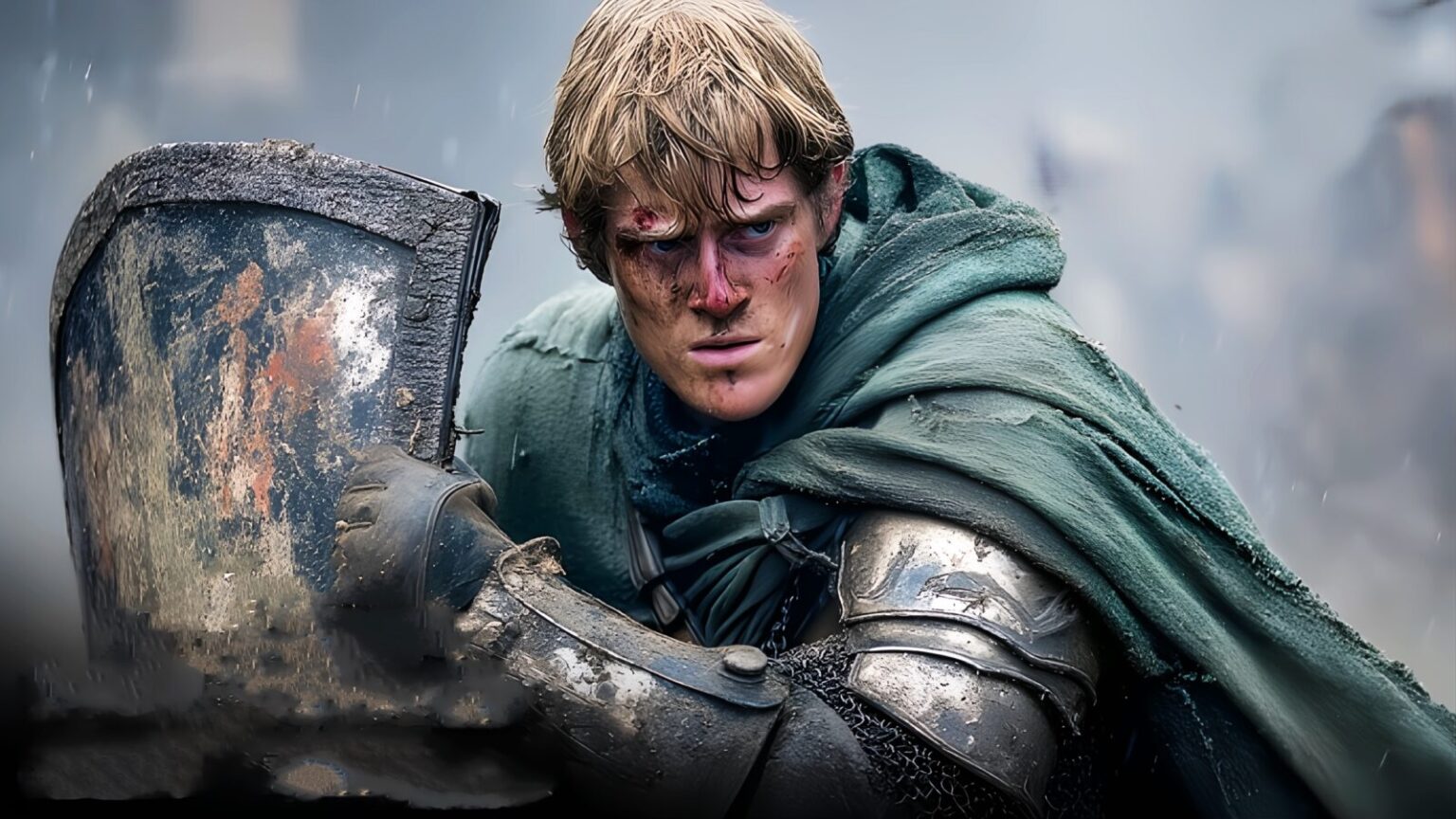
That man is Dunk, and following him around Westeros is a revelation. He’s not clever in the way Tyrion was clever, or politically gifted in the way Olenna was dangerous. He’s big, earnest, awkward, and painfully aware of how little space the world has reserved for someone like him. Watching him navigate the rigid hierarchies of knighthood, where pedigree matters more than decency and confidence is mistaken for worth, feels like the franchise rediscovering empathy as a storytelling tool.
This is where the adaptation of The Hedge Knight really shines. The story understands that the most brutal thing about Westeros isn’t the violence, it’s the precarity. Dunk exists in a constant state of almost-failure. One bad decision, one lost fight, one offended noble, and he drops out of history entirely. That tension is quieter than a dragon attack, but it sits in your chest longer.
The jousting tournament at the heart of the season becomes a perfect microcosm of everything Game of Thrones used to do well. Class warfare without speeches. Power dynamics without exposition dumps. Lords who treat honor like a costume they can remove when it becomes inconvenient. Familiar house names pop up, and longtime fans will recognize them instantly, but the show uses that recognition cleverly. Instead of nostalgia bait, these houses feel like inherited entitlement made flesh, and Dunk’s complete lack of insulation against them makes every interaction feel dangerous.
And then there’s Egg. Their relationship is the emotional backbone of the series, and it works because it’s messy and undefined. They’re not a neat mentor-student duo. They’re not father and son. They’re two people clinging to each other because the world is colder when you’re alone. Some of the best scenes in the season are just the two of them talking, arguing, or silently negotiating what they owe each other. It’s the kind of character work that early Game of Thrones thrived on before the plot started sprinting ahead of the people living inside it.
What surprised me most, though, was the humor. This is a funny show in a way the franchise has rarely allowed itself to be. Not quippy Marvel humor, but crude, awkward, bodily, deeply human comedy. The kind that comes from nerves, hunger, and social humiliation. Watching Dunk unravel in uncomfortable situations reminded me that laughter can coexist with dread, and that sometimes the fastest way to make a world feel real is to let it be a little gross.
Importantly, the series also knows what to leave behind. The sexual violence and relentless misery that often weighed down the parent show are largely absent here. Women are still underrepresented, which is a valid criticism, but the story never feels like it’s withholding cruelty just to appear softer. Instead, it’s choosing a different battlefield. Power here isn’t enforced through spectacle, but through casual indifference, and that restraint makes the moments of genuine menace land harder.
I can already hear some fans bouncing off this. If you come to Westeros exclusively for dragons, magic, and continent-shaking wars, this will feel almost aggressively small. But for me, that’s the point. After years of escalation, of every problem needing to be bigger than the last, A Knight of the Seven Kingdoms remembers that stories don’t need to be enormous to matter. They just need to be honest.
By the time the season wrapped, I felt something I hadn’t felt about this franchise in a long time: trust. Trust that the creators understood the material. Trust that they were willing to let scenes breathe. Trust that the future of this world doesn’t have to be louder, just better focused. If future seasons continue adapting Dunk and Egg’s journey, I’m in. Not because it promises more lore, but because it promises more humanity.
Verdict
A Knight of the Seven Kingdoms is a grounded, character-first return to everything that once made Westeros compelling. By stripping away spectacle and focusing on decency, desperation, and small-scale honor, it delivers the most emotionally satisfying Game of Thrones-adjacent story in years and quietly proves the franchise still has life when it stops trying to chase its own shadow