
TL;DR: Something Very Bad Is Going to Happen is a twisted, atmospheric Netflix horror series that blends psychological dread, brutal gore, and masterful cinematography into an unforgettable experience. It’s unsettling, stylish, and just messy enough to feel dangerous—in other words, exactly what great horror should be.
Something Very Bad Is Going to Happen
There’s a very specific kind of horror show that doesn’t just try to scare you—it tries to crawl under your skin, unpack your worst anxieties, and then rearrange the furniture while it’s in there. Something Very Bad Is Going to Happen is exactly that kind of show. It doesn’t knock politely. It kicks the door down, smiles too wide, and asks if you’re absolutely sure you want to stay for dinner.
And yeah… you probably shouldn’t. But you will anyway.
After finishing all eight episodes, I sat there in that familiar post-binge haze—the one where your brain is still processing what it just witnessed, like you just walked out of a particularly unhinged A24 film and now sunlight feels suspicious. This Something Very Bad Is Going to Happen review is me trying to make sense of that experience, because this Netflix horror series doesn’t just deliver on its promise—it weaponizes it.
Welcome to the Wedding From Hell (and I Mean That Literally)
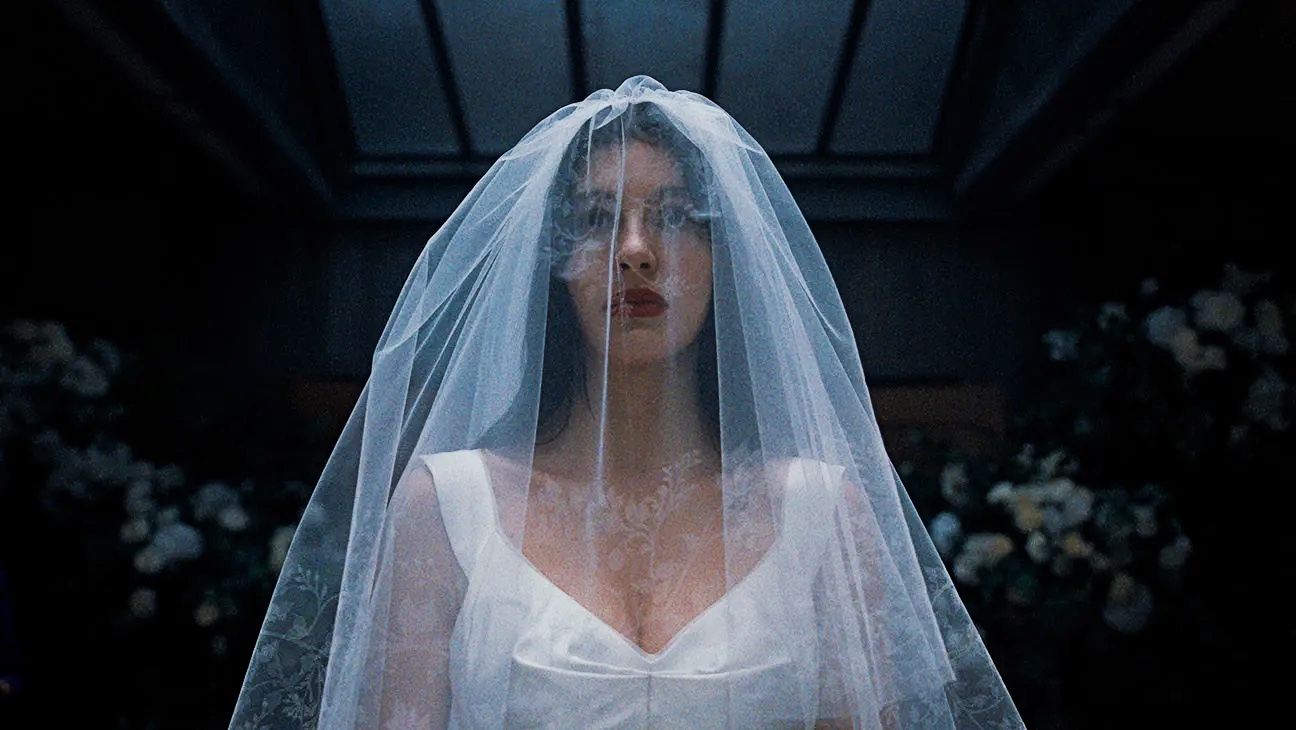
The premise sounds deceptively simple. Rachel agrees to marry her boyfriend Nicky and travels to his family’s remote cabin. Snow, isolation, weird in-laws—honestly, this already feels like the start of every horror movie that ends with someone running barefoot through the woods.
But here’s the thing: the show knows that you know that.
And it uses that against you.
From the jump, Something Very Bad Is Going to Happen establishes this suffocating atmosphere where nothing feels right. Conversations are just a little too rehearsed. Smiles linger a little too long. The Cunningham family doesn’t just give off bad vibes—they radiate them like a cursed Wi-Fi signal you can’t disconnect from.
What hooked me immediately is how the show weaponizes paranoia. It turns the audience into Rachel. You’re constantly second-guessing everything. Is Nicky just awkward, or is he hiding something? Is the family eccentric, or are they straight-up dangerous?
Spoiler: it’s never the comforting option.
The writing thrives on that uncertainty. Every episode peels back a layer, only to reveal something worse underneath. It’s like peeling an onion, except every layer makes you more anxious instead of just making you cry—although, to be fair, you might do both.
A Masterclass in Controlled Narrative Chaos
Let’s talk structure, because this is where the show really flexes.
The storytelling isn’t linear comfort food. It’s more like controlled chaos. Twists don’t just happen—they stack. You think you’ve figured out the trajectory, and then the show pulls the rug out from under you, rolls you up in it, and throws you down a staircase.
What impressed me most is how deliberate it all feels. This isn’t shock for shock’s sake. Every reveal is carefully positioned to reframe what you’ve already seen. Characters you thought you understood suddenly feel alien. Moments that seemed harmless take on a much darker tone in retrospect.
And yet, for all its complexity, the story remains incredibly watchable. That’s not easy to pull off. There’s a fine line between “intriguing” and “exhausting,” and this show dances on it like it’s performing for its life.
That said, it’s not flawless.
There are a few dangling threads that never quite get resolved. Certain character details feel like they were introduced with purpose and then… quietly abandoned. It’s the kind of thing that doesn’t break the experience, but it does leave you with that lingering “wait, what about that?” feeling.
Still, in the grand scheme of things, these are minor scratches on an otherwise razor-sharp narrative.
Horror That Understands Fear Is More Than Jump Scares
If you’re coming in expecting a parade of cheap jump scares, you’re in for a surprise. Yes, the show uses them—but sparingly, like a chef who knows that too much spice ruins the dish.
The real horror here is atmospheric.
It’s in the lighting. The way shadows seem to stretch just a little too far. The way hallways feel longer than they should, like they’re subtly warping reality. The cabin itself becomes a character—a claustrophobic maze that traps both Rachel and the audience.
And then there’s the gore.
Look, I’ve seen my fair share of horror. I’m not easily rattled. But this show? It goes there. Not constantly, but when it does, it commits. The practical effects and VFX are disturbingly convincing, the kind that make you instinctively look away for a second—just enough to catch your breath.
Pro tip: maybe don’t watch this while eating. Learn from my mistakes.
What I appreciate most is how the show blends different horror subgenres without feeling like a Frankenstein monster. You’ve got psychological horror, body horror, gothic influences, even a touch of the supernatural. And somehow, it all works together.
It’s like the show built a horror playlist and every track hits.
Cinematography That Feels Like a Fever Dream
I need to geek out for a second about the visuals, because this is where Something Very Bad Is Going to Happen elevates itself from “great” to “borderline iconic.”
The cinematography is doing so much heavy lifting, and it’s doing it beautifully.
There’s this deliberate use of movement—tilts, slow pans, unsettling angles—that creates a constant sense of unease. The camera doesn’t just observe; it participates. It feels like it’s searching, lurking, sometimes even hiding things from you.
Lighting plays a huge role too. Scenes shift between dim, shadow-heavy interiors and eerie, almost surreal color palettes. The bar sequences, drenched in neon and darkness, feel like they belong in a completely different reality. Meanwhile, candlelit moments lean hard into gothic horror vibes, like you’ve stumbled into a modern-day séance.
Every frame feels intentional. Nothing is accidental. And as someone who pays way too much attention to this stuff, I was eating it up.
The Soundtrack Is Quietly Destroying Your Nerves
A good horror score doesn’t just accompany the scene—it manipulates it. And the work here does exactly that.
The music creeps in when you least expect it, building tension in ways that feel almost subliminal. It’s not loud or overpowering. It doesn’t need to be. It understands that sometimes the scariest thing is the anticipation, not the payoff.
There were multiple moments where I realized my shoulders were tense for no reason other than the score quietly messing with my brain.
That’s when you know it’s working.
Characters You Don’t Trust (And That’s the Point)
Let’s circle back to the characters, because this is where the emotional core of the show lives—or, more accurately, where it slowly unravels.
Rachel is our anchor, and she’s incredibly effective in that role. Her growing paranoia feels earned, not exaggerated. You’re with her every step of the way, even when things start to spiral into full-blown nightmare territory.
And then there’s Nicky.
I don’t trust Nicky. I don’t think I ever trusted Nicky. And the show leans into that ambiguity beautifully. He’s not a cartoon villain. He’s worse—he’s plausible.
The Cunningham family, though? They’re the real stars. Each member feels distinct, unsettling in their own unique way. They don’t just act strange—they operate on a completely different wavelength, like they’re following rules that no one else understands.
It creates this constant tension where every interaction feels like it could go sideways at any moment.
And often, it does.
Verdict: Netflix Horror at Its Most Unhinged (In the Best Way)
Something Very Bad Is Going to Happen isn’t just another entry in Netflix’s growing horror catalog—it’s a statement. It’s the kind of show that reminds you how powerful the genre can be when it’s handled with care, creativity, and just the right amount of madness.
Yes, it has a few narrative loose ends. Yes, it occasionally leans into its own weirdness a little too hard. But honestly? That’s part of its charm.
This is horror that lingers. The kind that sticks with you, not because it scared you in the moment, but because it keeps whispering in the back of your mind long after it’s over.