
TL;DR: In The Pitt Season 2 Episode 14, Al-Hashimi reveals her seizure disorder to Robby, while Robby confesses he no longer wants to be alive — his motorcycle sabbatical sounding like a final ride. Langdon nails a risky spinal save but races a drug test, and Whitaker suffers badge loss, a hilarious Langdon roast, and a $250 vomit-filled Lyft fine. Burnout and raw mental health truths dominate, setting up a brutal finale. The Pitt gets brutally honest about doctors breaking.
The Pitt
Listen, fellow geeks, I’ve been glued to medical dramas since the days when ER still had George Clooney swaggering through County General like he owned the place, but nothing — and I mean nothing — has hit me quite like the raw, unflinching gut-punch that is The Pitt Season 2, Episode 14. As we barrel toward the finale, this penultimate hour doesn’t just crank the tension; it peels back the last layers of denial from characters we’ve grown to love (and occasionally want to shake by the shoulders). If you’ve been riding along with Dr. Robby’s slow-motion unraveling all season, buckle up. The episode finally says the quiet part out loud, and it does so in a way that feels both devastatingly honest and weirdly cathartic.
I’ll be real with you — I started watching The Pitt expecting another glossy Max procedural with Noah Wyle doing his best “wise but tormented mentor” thing. What I got instead was a slow-burn character study dressed up as a high-stakes trauma bay, and Episode 14 is the moment the show stops pretending it’s just about saving lives. It’s about the people doing the saving, and what happens when their own wiring starts short-circuiting.
The Quiet Bombshell That Changes Everything for Dr. Al-Hashimi
Let’s start at the end, because that’s where The Pitt Season 2 Episode 14 drops its biggest jaw-dropper. Dr. Al-Hashimi, who has spent most of this season playing the composed, hyper-competent counterweight to Robby’s chaos, finally lets the mask slip. She hands Robby her own medical file under the thinnest of pretenses — “just asking for advice on a patient” — and there it is in black and white: a history of viral meningitis that left her with a seizure disorder.
Suddenly a dozen little moments from earlier episodes click into place like puzzle pieces I didn’t even know were missing. Those brief spaces where she freezes mid-procedure? Not hesitation or incompetence, but the physiological warning signs creeping in. The hushed phone call to a neurologist from the bathroom stall? That wasn’t gossip or personal drama — it was a doctor quietly terrified her own brain might betray her in the middle of a shift. Watching her admit it to Robby, of all people, felt like witnessing someone hand over the keys to their deepest vulnerability.
What I loved most about this scene wasn’t just the reveal itself (though damn, it lands like a brick). It was the tiny, fragile bridge it built between two people who have been circling each other with suspicion and professional jealousy all season. Robby, who has been low-key looking for any excuse to declare Al-Hashimi unfit to run the ER in his absence, actually listens. He offers real advice. She tells him she values his opinion. In a show that has wallowed in interpersonal friction, this moment of mutual respect felt like a rare exhale. It reminded me of those old-school ER episodes where the attendings would finally drop the power games and just be human for five minutes. Except here, the stakes feel heavier because we know how much both of them are carrying.
If The Pitt keeps this level of medical realism into the finale, I’m here for it. Seizure disorders in high-pressure environments like an ER aren’t something most medical shows touch with any nuance — they usually get reduced to a dramatic faint or a convenient plot device. Here, it feels lived-in and scary in exactly the right way.
Robby’s Motorcycle Confession: The Moment We’ve All Been Dreading (and Waiting For)
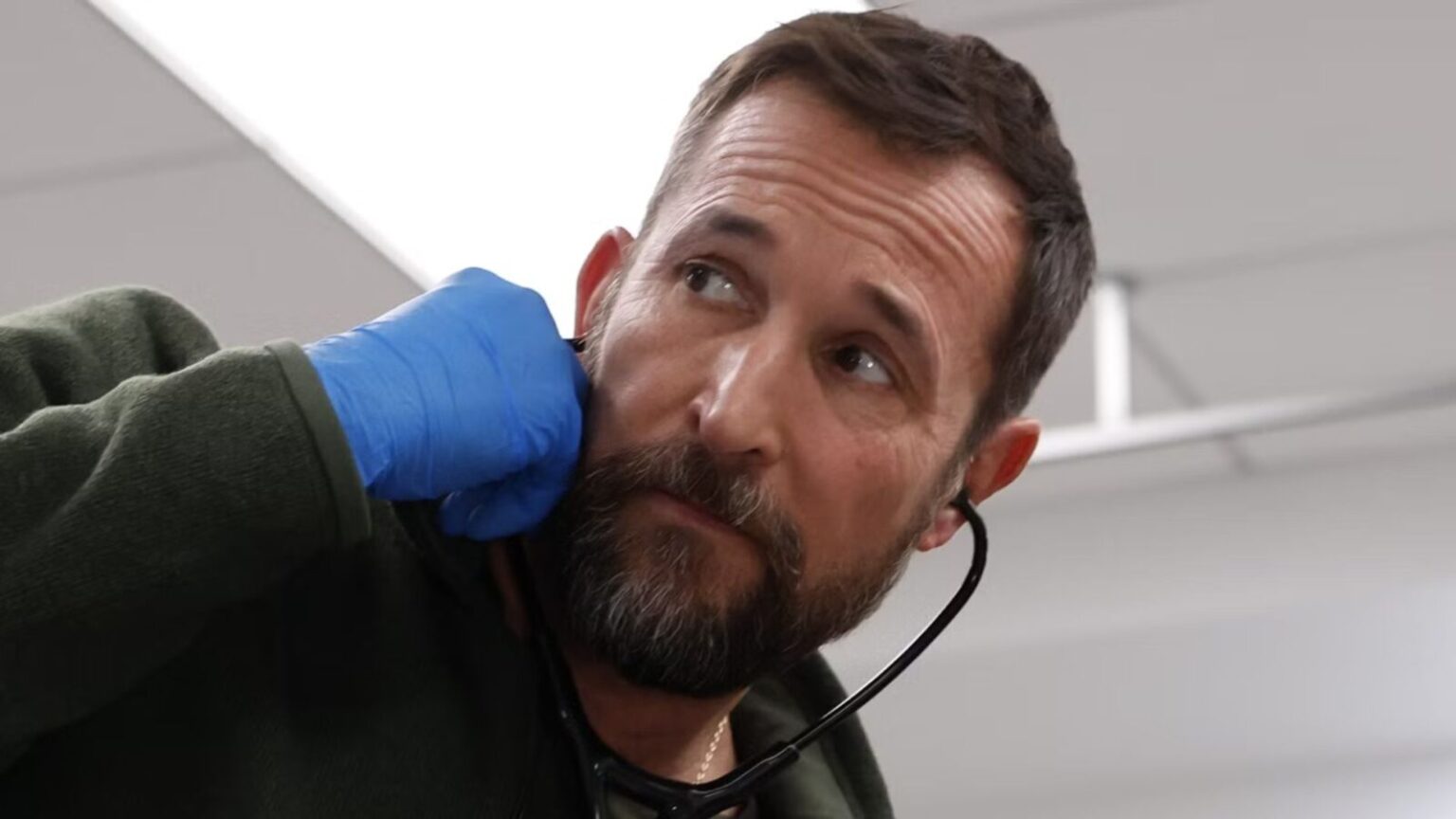
Okay, let’s talk about the elephant that’s been revving its engine in the background since the season premiere. Dr. Michael “Robby” Robinavitch has been spiraling, and Episode 14 stops dancing around it. After his motorcycle gets sideswiped by an ambulance (talk about cosmic irony), he ends up in the garage with his mechanic buddy Duke. What starts as shop talk quickly turns into the most honest conversation Robby has had all season.
“I don’t want to be alive anymore.”
He doesn’t say it with tears or grand drama. He says it almost matter-of-factly while staring at his damaged bike — the very vehicle he planned to use for his “sabbatical” to Head-Smashed-In Buffalo Jump. That name has always sounded ominous, and now we know why. Robby isn’t just taking a break to clear his head. He’s been planning to ride off into the literal and figurative sunset and not come back.
The genius of this scene is how it flips the usual “burnout” trope on its head. Robby doesn’t hate the ER. In fact, he tells Duke the chaos is the only place he feels okay — the constant adrenaline and life-or-death decisions act like a distraction from the depression gnawing at him. The sabbatical isn’t an escape from work; it’s an escape from everything else. From himself.
Duke, bless him, doesn’t pull punches. He calls Robby out for running away and reminds him that his final lesson to the residents can’t be “abandon ship when it gets hard.” It’s the kind of tough love that feels earned because Duke has zero institutional power in the hospital. He’s just a guy who fixes bikes and sees through bullshit. In a season full of doctors talking past each other, this conversation between a trauma attending and a motorcycle mechanic might be the most therapeutic moment we’ve gotten.
As someone who has lost people to that particular darkness, I appreciated how The Pitt didn’t turn this into a tidy “talking fixes everything” resolution. Robby is passively suicidal. He’s still going on that ride. The confession is a crack in the armor, not the whole demolition. It leaves the finale with massive stakes that feel painfully real.
Langdon’s High-Wire Act and the Drug Test Sword Hanging Overhead
On a slightly lighter (but still pulse-pounding) note, Dr. Langdon got to play hero this week in a way that reminded me why we fell for him in the first place. A patient comes in with a nasty spinal cord injury after wrapping his car around a telephone pole. Langdon spots the jumped facet and kinked vessel, then decides to perform a blind closed reduction — a risky maneuver that both Crus and Robby warn him against.
He does it anyway. And he nails it.
The adrenaline high on Langdon’s face afterward was pure catharsis after his recent crisis of confidence. For a few glorious minutes, he was the brilliant, decisive doctor we know he can be. Then reality crashes back in the form of Dana reminding him his random drug test is due at 8:00 PM — exactly when the episode started. The clock is ticking, and Langdon may have just peed away his chance (literally) while handling the case.
This subplot is classic The Pitt: thrilling medical procedural wrapped around deeply human consequences. One heroic save could be undone by a missed pee test. It’s the kind of bureaucratic nightmare that feels ripped from real resident life, and it keeps us wondering if Langdon will even make it to the finale.
Whitaker’s Rough Day: From Badge Loss to Racist Lyft Karma
Poor Dr. Whitaker can’t catch a break, can he? The guy who spent most of Season 1 as the designated punching bag finally starts asserting himself, only for the universe to respond with a comedy of errors. He loses his brand-new doctor’s badge (good luck with that paperwork), stands up to Langdon in a hilarious Gilligan’s Island-themed rant that had me snort-laughing, and then tries to do a good deed by ordering a Lyft for a patient… who turns out to be racist and then vomits in the car, sticking Whitaker with a $250 cleanup fee.
The standout moment? Whitaker finally telling Langdon off for the constant sarcastic jabs. He even crowns Robby the “Professor” and Dana the “Skipper” of their chaotic PTMC island. Langdon, to his credit, takes it well and calls it healthy. It’s a small but important step for a character who has spent too long absorbing everyone else’s frustration. If The Pitt Season 2 has been about breaking people down, Episode 14 starts hinting at how they might start building themselves back up — one awkward confrontation at a time.
Why This Episode Feels Like the Calm Before the Emotional Storm
The Pitt Season 2 Episode 14 isn’t flashy. There are no massive multi-casualty incidents or shocking deaths (yet). Instead, it’s a pressure-cooker of quiet revelations, mounting burnout, and the relentless grind of scanning old paper records while a cyberattack threat looms. The entire staff is exhausted, frayed, and quietly falling apart in their own ways. The episode trusts us to feel the weight of that collective fatigue without needing explosions or cliffhangers every five minutes.
It’s the kind of television that respects its audience’s intelligence — the same way the best episodes of The West Wing or Friday Night Lights did. The drama comes from character, not contrivance. And in an era where so many streaming shows chase spectacle, that restraint is refreshing as hell.
As we head into the finale, I’m equal parts excited and terrified. Will Robby actually take that ride? Can Al-Hashimi keep her condition from compromising patient care? Will Langdon’s drug test drama blow up his second chance? And what about the rest of the team who have been quietly carrying their own burdens all season?
The Pitt has spent two seasons showing us that trauma medicine isn’t just about the patients on the gurneys — it’s about the scars the doctors carry long after the shift ends. Episode 14 finally forces the biggest scars into the light, and it does so with a level of empathy and technical accuracy that puts most medical dramas to shame.
I came into this season as a casual viewer. I’m leaving it (or rather, heading into the finale) as someone who will probably rewatch the whole thing with fresh eyes, looking for all the subtle signs I missed the first time around. That’s the mark of great television — it doesn’t just entertain. It lingers.