


TL;DR: O’Romeo sees Vishal Bhardwaj pivot from literary finesse to gritty mafia melodrama, delivering a technically polished but emotionally inert Romeo and Juliet adaptation. Shahid Kapoor and Triptii Dimri commit fully, but the film’s obsession with brutality drains it of tragic romance, leaving behind a stylish yet hollow descent into Bollywood’s current antihero era.
O’Romeo
There are certain filmmakers I trust blindly. The kind where, if they announced they were adapting the back of a cereal box, I’d still pre-book tickets. Vishal Bhardwaj has long been that guy for me. This is the man who gave us Maqbool, Omkara, and Haider—a Shakespeare trilogy so textured and culturally rooted it felt less like adaptation and more like reincarnation.
So when I heard he was taking on Romeo and Juliet, I was ready. I had already mentally cleared space on my “modern classics” shelf. Instead, O’Romeo feels like watching your favorite literature professor suddenly pivot into grindhouse exploitation. It’s not boring. It’s not incompetent. But it is a jarring swerve into Bollywood’s current obsession with morally bankrupt antiheroes and aestheticized brutality.
And as a longtime Bhardwaj apologist, I’m not sure I’m okay.
From Shakespeare to Hussain Zaidi: A Shift in DNA
Let’s get one thing straight: O’Romeo is not a straightforward Romeo and Juliet retelling. Instead of leaning fully into Verona-by-way-of-Mumbai, Bhardwaj folds in elements from Mafia Queens of Mumbai by Hussain Zaidi. If that title rings a bell, it’s because it also inspired Gangubai Kathiawadi, directed by Sanjay Leela Bhansali.
Where Bhansali turned that source into a grand, operatic character study, Bhardwaj seems to have inhaled the pulp and exhaled something far nastier. This isn’t star-crossed romance. This is star-crossed carnage.
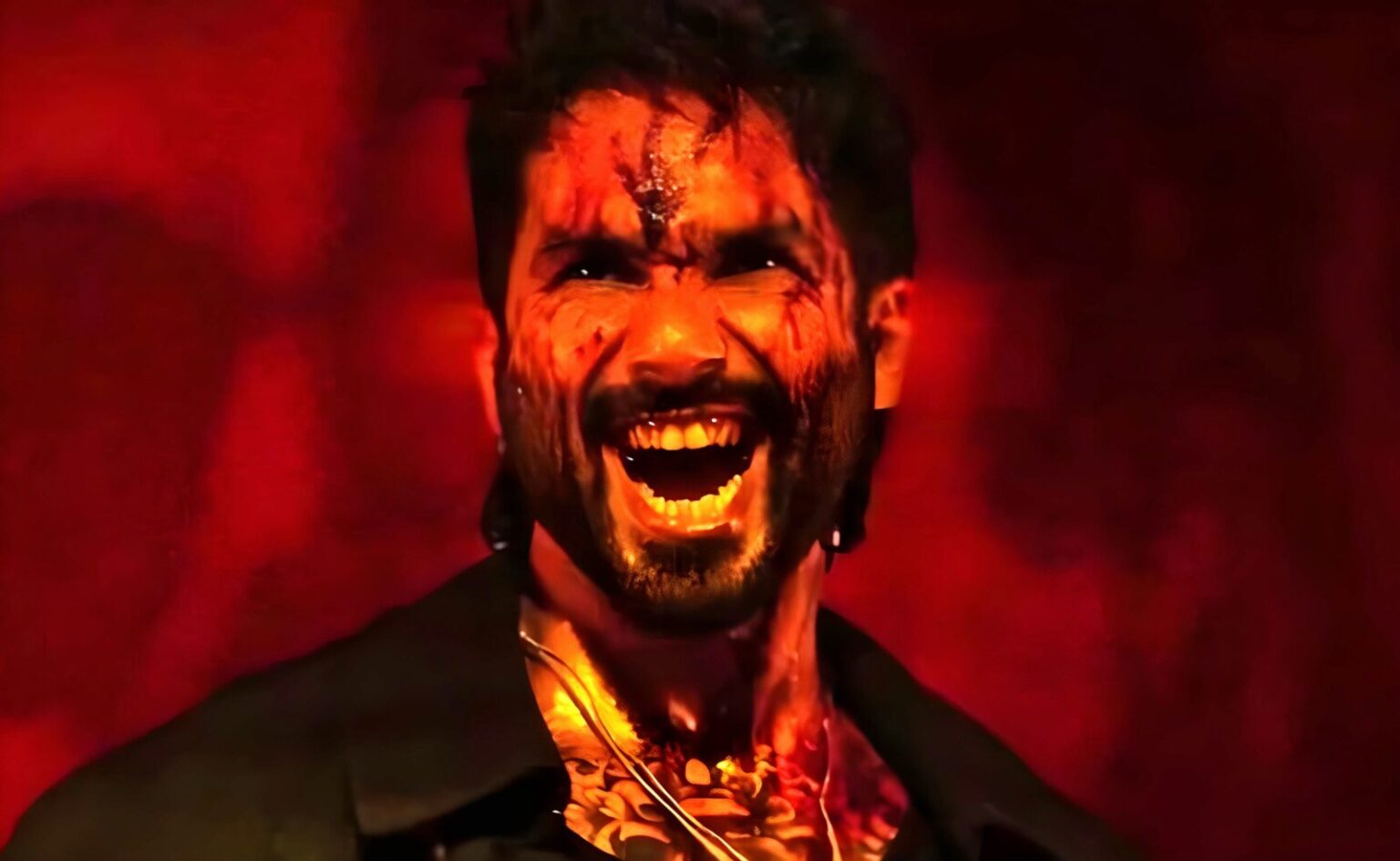
Set in the 1990s Mumbai underworld, O’Romeo reimagines Romeo as Hussein Ustara, played by Shahid Kapoor. He’s not a lovesick poet. He’s a heavily tattooed hitman who bellows more than he speaks and looks permanently like he’s two seconds away from putting someone through drywall. Juliet, played by Triptii Dimri, isn’t a sheltered daughter of a feuding house. She’s an aggrieved widow with a hitlist and the emotional temperature of dry ice.
These aren’t lovers separated by fate. They’re co-conspirators united by mutual damage.
And that’s the first major pivot: O’Romeo is less about forbidden love and more about shared rot.
Bollywood’s Lurid Turn
If you’ve been tracking recent mainstream Hindi cinema, you’ve probably noticed the tonal shift. The swagger. The hyper-masculinity. The violence as aesthetic. Films like Animal and Dhurandhar have leaned hard into toxic charisma and morally unmoored protagonists.
O’Romeo slides right into that lane.
There’s a scene early on where Romeo rescues Juliet during a botched assassination attempt. It should be electric, tragic, fated. Instead, it’s brutal and chaotic. Blood sprays. Guns bark. And somewhere in the chaos, two people lock eyes not in recognition of destiny but in recognition of shared nihilism.
Bhardwaj’s previous Shakespeare adaptations always felt like they were in conversation with the Bard. Here, the conversation feels drowned out by gunfire.
Technically Speaking: The Craft Is Still There
Let me geek out for a minute, because this is still Bhardwaj.
The production design is meticulous. The Mumbai underworld is rendered in layers of grime and gold: fish tanks glowing neon in dim rooms, cramped apartments humming with tension, smoky godfather dens that feel like they were storyboarded by someone who studied both Coppola and Mani Ratnam frame by frame.
The cinematography embraces murk. Faces are often half-lit, as if the film itself can’t decide whether to expose or conceal these characters. There’s an almost tactile sense of decay. Rusted gates. Peeling paint. Sweat glistening under tube lights. If you pause almost any scene, you can see the craft. The blocking. The color theory. The deliberate claustrophobia.
And then there’s Nana Patekar, playing Romeo’s handler with a weariness that feels earned. He doesn’t chew scenery. He lets it rot around him. It’s a sly, understated performance in a film that often veers toward operatic shouting.
Kapoor commits fully. He throws himself into Hussein’s volatility like a method actor who hasn’t seen daylight in months. Dimri, meanwhile, plays Juliet as a woman who has already emotionally died once and isn’t particularly afraid of doing it again. They don’t play romance. They play compulsion.
But here’s the problem: commitment doesn’t equal chemistry.
Dead-Eyed Lovers in a Moral Vacuum
Romeo and Juliet works because we believe in the madness of young love. Even in its darkest interpretations, there’s a pulse of yearning. In O’Romeo, the lovers feel less like teenagers intoxicated by destiny and more like two black holes orbiting mutual destruction.
Their relationship isn’t intoxicating. It’s exhausting.
There’s a sequence involving a bed, a pair of escorts, and a fish tank that feels like a grim parody of Baz Luhrmann’s visual poetry. Instead of yearning glances through water, we get voyeurism and emotional cruelty. It’s provocative, sure. But it’s also numb.
The film runs close to three hours, and by the final act, I felt less tragic catharsis and more emotional depletion. Scenes of violence escalate, betrayals stack up, and yet the emotional temperature barely shifts. It’s as if the film is so determined to reject romantic idealism that it forgets to replace it with something equally compelling.
With Maqbool, Omkara, and Haider, Bhardwaj found new political and social resonance in Shakespeare. Here, the resonance feels blunted. The story spirals toward gutter and grave, but the descent feels inevitable rather than devastating.
A Director Swallowing the Poison
What makes O’Romeo fascinating—and frustrating—is that it doesn’t feel lazy. It feels obsessed. Like Bhardwaj became so enamored with this true-crime material that he absorbed its toxins wholesale.
There’s a thin line between interrogating violence and indulging it. O’Romeo flirts dangerously with the latter. The film seems enamored with its own grime, its own brutality, its own antihero mythology. It wants to shock, to unsettle, to rip the romance out of Romeo and Juliet and replace it with gangland fatalism.
In theory, that’s a bold move. In execution, it leaves a void where emotional stakes should be.
As someone who has championed Bhardwaj for decades, it’s mildly heartbreaking to watch him trade literary introspection for leering tough-guy aesthetics. It’s like seeing a master chess player decide to flip the board and start arm-wrestling instead.
The Verdict on O’Romeo
Is O’Romeo a disaster? No. It’s too technically accomplished for that. The performances are committed. The craft is visible in every frame. The ambition is undeniable.
But as a Romeo and Juliet adaptation, it feels spiritually disconnected. As a Bollywood mafia drama, it’s competent but trapped in a post-Animal era that equates darkness with depth.
I walked in expecting a tragic love story reimagined through Bhardwaj’s poetic lens. I walked out feeling like I’d watched two beautifully shot hours of emotional corrosion.
Sometimes adaptation requires betrayal of the source. But the best betrayals reveal something new. O’Romeo mostly reveals how easily love stories can curdle when cynicism takes the wheel.