
TL;DR: Greenland 2: Migration sidesteps disaster-movie clichés by focusing on the messy, traumatic aftermath of global extinction rather than the spectacle of destruction itself. Anchored by strong performances and a surprisingly thoughtful exploration of survival, trauma, and human cruelty, it proves that this genre can have emotional depth without losing tension. Not flawless, but genuinely rare in its ambition.
Greenland 2: Migration
There’s a very specific moment in most disaster movies where my brain quietly clocks out. It’s usually right after the skyscrapers fall, the shockwave ripples across a CGI city, and a character stares into the middle distance as swelling music tells us humanity will rebuild. Cut to black. Roll credits. Congratulations, you blew stuff up.
Greenland: Migration is one of the very few disaster sequels that dares to ask the question the genre almost always avoids: okay, now what?
Not “what if a comet hits Earth?” but “what if it already did… and we survived?” Not the sexy part. Not the trailers. The uncomfortable aftermath. The trauma. The scarcity. The slow realization that surviving extinction might actually be harder than dying in it.
And somehow, against all genre expectations, it works.
Living After the Apocalypse Is the Real Disaster
The first Greenland ended with a note of cautious optimism. Humanity made it to bunkers. Families reunited. The implication was clear: give it time, and the world will heal. Migration opens several years later and immediately stomps on that comforting assumption.
The Garrity family is still alive, still together, but the world above ground is fundamentally broken. The air remains toxic. Storm systems are unstable to the point of being unpredictable murder machines. Comet fragments still fall from the sky like the universe forgot to turn off the apocalypse switch. The planet didn’t reset. It stalled.
What really surprised me is how Migration reframes danger. Yes, there are large-scale disasters. Tsunamis show up because disaster movies are legally obligated to include at least one. But the real threat isn’t nature anymore. It’s people. Scarcity has turned survivors into territorial, paranoid versions of themselves. Trust is a liability. Hope is expensive.
At times, the movie feels less like a traditional disaster sequel and more like a grim post-collapse survival drama. There’s a strong The Last of Us energy here, not in terms of aesthetics, but in philosophy. Survival isn’t heroic anymore. It’s transactional.
Gerard Butler, But Make It Sadder
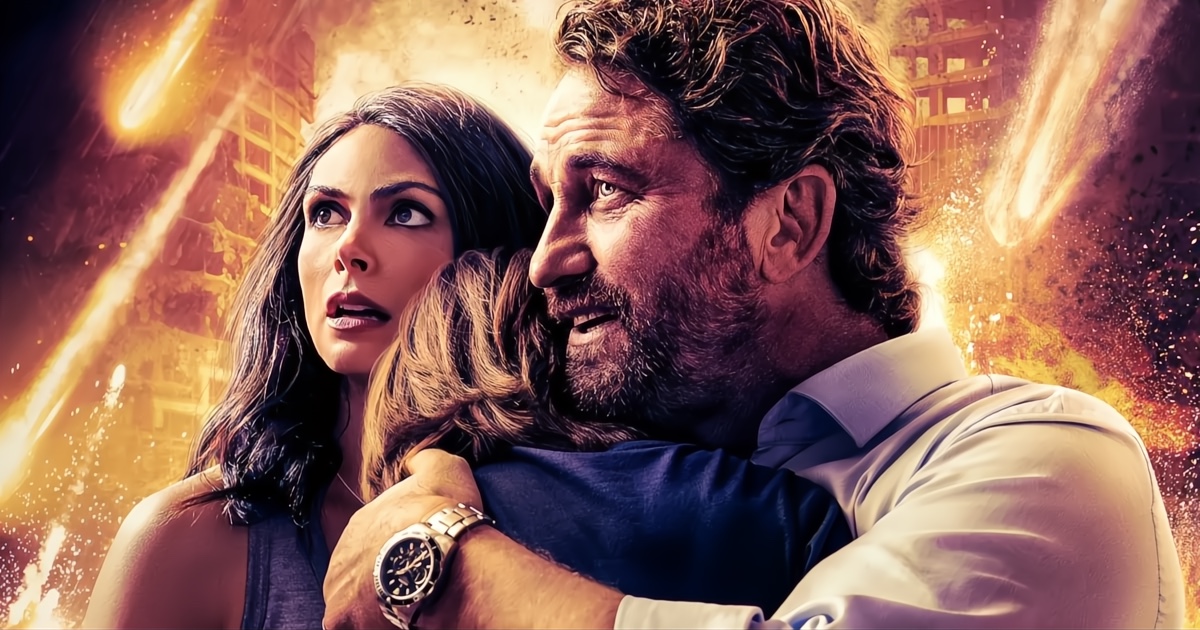
Gerard Butler returns as John Garrity, and I’ll say this without irony: this might be one of his most grounded performances. John isn’t the action-movie savior archetype anymore. He’s tired. He’s traumatized. He’s carrying the kind of long-term stress that no amount of punching or yelling can fix.
One of the smartest decisions Migration makes is refusing to turn John into a mythic survival god. He’s capable, yes, but he’s also clearly hanging by a thread. The movie even places him in therapy, which is not something I ever expected to see in a Gerard Butler disaster sequel, but it makes perfect sense. This world didn’t just break cities. It broke people.
Morena Baccarin’s Allison remains the emotional spine of the story. Her performance continues to ground the film in human stakes rather than spectacle. Roman Griffin Davis as Nathan is older now, more aware, and carrying a quiet weight that reflects a childhood shaped entirely by catastrophe.
The Garrity family dynamic remains the franchise’s secret weapon. Even when the science stretches credibility, the emotional logic holds. I believe these people love each other. I believe they’re scared. I believe they’d make bad decisions to keep each other alive. That counts for a lot.
A Disaster Movie That Cares About Mental Health
Here’s where Migration genuinely impressed me.
The film acknowledges trauma as a long-term condition, not a temporary plot beat. There’s an early revelation that bunker leadership prioritized therapists over surgeons, fully expecting that survival would come with psychological fallout on a massive scale. It’s a small detail, but it reframes everything. This wasn’t just about saving bodies. It was about trying to save minds.
That choice ripples throughout the film. Characters are jumpy. People make cruel decisions not because they’re evil, but because fear has calcified into instinct. Violence isn’t glorified. It’s messy, desperate, and often morally hollow.
This is where Migration separates itself from louder disaster franchises. It’s not interested in constant escalation. It’s interested in consequence.
Logic Gaps, Yes, But Forgivable Ones
Let’s be honest: this is still a disaster movie sequel. You’re going to have to meet it halfway.
There are moments where the Garrity family receives help a little too conveniently, especially in a world that’s repeatedly described as brutal and untrusting. The insulin subplot, so crucial in the first film, becomes oddly backgrounded here, raising questions the movie doesn’t fully answer.
But here’s the thing: Migration earns a surprising amount of goodwill. The film does enough emotional and thematic heavy lifting that these gaps feel like nitpicks rather than deal-breakers. The story isn’t about perfect realism. It’s about plausibility of feeling, and on that front, it delivers.
A Rare Disaster Sequel That Justifies Its Existence
Most disaster sequels exist because the first one made money. Migration exists because someone actually had something to say. It understands that the most compelling part of the apocalypse isn’t the impact event, but the long shadow it casts afterward.
It’s not louder than its predecessor. It’s heavier. More reflective. More uncomfortable. And frankly, more interesting.
By the time the credits roll, I wasn’t thinking about the comet. I was thinking about what kind of people we become when survival stops being temporary and starts being permanent.