

TL;DR: Episode 3 is the comeback swing Born Again desperately needed—blending courtroom tension, brutal action, and character-driven storytelling into one of the strongest hours of the season so far. If this is the new baseline, we’re in very good hands.
Daredevil: Born Again
There’s a very specific kind of frustration that only a weekly-release show can give you. It’s that feeling when Episode 1 hits like a truck, Episode 2 taps the brakes hard enough to give you whiplash, and then Episode 3 strolls in like, “Relax, I got this.” That’s exactly where Daredevil: Born Again Season 2 Episode 3 lands—and honestly, it feels like the show finally remembers what made it special in the first place.
After sitting through the slower, table-setting energy of Episode 2, I went into this one cautiously optimistic. What I got instead was a full-on course correction—part legal thriller, part prison break, part street-level Marvel chaos—that reminded me why Matt Murdock still owns this gritty corner of the MCU.
And yeah, I’m saying it early: this is the episode where Born Again starts acting like Daredevil again.
The courtroom drama finally earns its place
One of the things Born Again has been trying to balance—sometimes awkwardly—is its dual identity. On one hand, it wants to be a grounded legal drama. On the other, it’s still a superhero show where a blind lawyer beats people senseless in hallways. Episode 3 is the first time those two halves actually feel like they’re in sync instead of fighting each other.
The trial of Jack Duquesne (yes, the same charming chaos agent from Hawkeye) is where that balance clicks. Watching Kirsten McDuffie try to defend a client in a system that’s clearly rigged felt less like superhero TV and more like a cynical episode of Better Call Saul. The difference is, here the corruption isn’t just systemic—it’s being actively orchestrated by Wilson Fisk, who’s basically running New York like it’s his own personal modded save file.
And that’s what makes the legal stuff finally work. It’s not just filler. It’s not just “let’s give Matt something to do during the day.” It’s proof that the system is broken beyond repair.
When Duquesne gets railroaded despite obvious manipulation, it lands hard. Not because it’s shocking—we all saw it coming—but because the show takes its time showing just how stacked the deck is. The courtroom becomes just another battleground, except here Matt can’t punch his way out of it.
So naturally, he has to punch his way out somewhere else.
Matt Murdock, detective mode: unlocked
There’s a small but satisfying shift in how Matt operates in this episode, and it’s something I’ve been waiting for all season. He’s not just reacting anymore. He’s investigating.
The whole sequence where he pieces together the location of Fisk’s off-the-books detention center using fragmented sensory clues is peak Daredevil. It leans into his heightened senses in a way that feels clever rather than gimmicky. This is the version of Matt that feels like a human lie detector, a walking surveillance system, and a vigilante all rolled into one.
It also reinforces something the show has been quietly building: Matt doesn’t trust the system anymore. Not really. He’ll still show up in court, still wear the suit, still argue the law—but he knows the real work happens after hours.
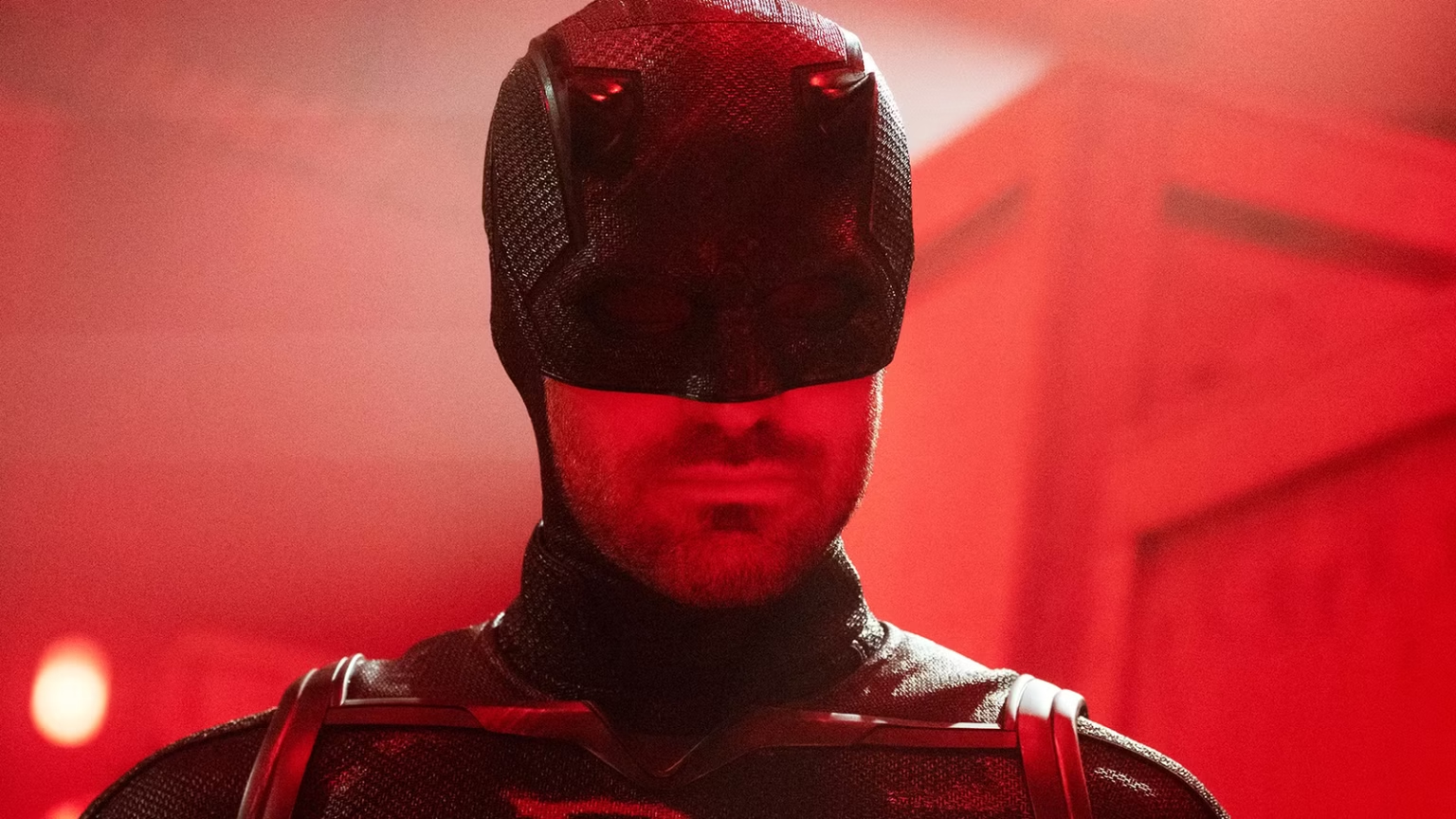
And when he puts the mask back on here, it doesn’t feel like a fallback. It feels inevitable.
The prison break: pure Daredevil DNA
Let’s talk about the moment. Because you already know the one.
The prison break sequence is the kind of thing that reminds you why Daredevil became a benchmark for superhero action in the first place. It’s messy, kinetic, and brutally physical. No over-reliance on CGI, no sky beams, no multiverse nonsense—just bodies colliding in tight spaces and a camera that refuses to blink.
And yes, the oner is back.
There’s something almost cocky about how the show executes it this time. The camera weaves through chaos like it’s showing off, tracking Matt as he dismantles entire squads while Jack Duquesne improvises his way through combat like a man who’s watched one too many fencing tutorials on YouTube. It’s controlled chaos, and it works because every hit feels earned.
The sound design deserves a shout too. Every baton strike, every grunt, every impact lands with weight. Paired with that swelling score, the whole sequence feels like a victory lap for the show’s action pedigree.
This is the kind of scene that makes you pause, rewind, and immediately watch it again—not because you missed something, but because you want to feel it twice.
Karen Page is no longer just support
One of the more subtle wins in this episode is how Karen is handled. She’s not just “the emotional core” or “the one who gets kidnapped” anymore. She’s actively driving the story, making decisions, taking risks, and—crucially—being right.
Her involvement in the hostage situation early on sets the tone. It’s messy, morally gray, and exactly the kind of move that forces Matt to confront uncomfortable truths. Not everything can be solved cleanly, and not every ally plays by the rules.
Then there’s her interaction with Angela Del Toro, who steps into the White Tiger mantle with a kind of urgency that feels earned. That entire subplot adds texture to the world—reminding us that Daredevil isn’t the only one trying to clean up Fisk’s mess.
Karen navigating that space, working alongside both vigilantes and civilians, reinforces her role as the connective tissue of the show. She’s not in the suit, but she’s just as essential to the fight.
Fisk remains five steps ahead, because of course he does
If there’s one constant in this series, it’s that Wilson Fisk does not lose control. Even when it looks like he’s taken a hit, he’s already setting up his next move.
The destruction of the evidence shipment is a perfect example. It’s ruthless, calculated, and devastatingly effective. In one move, he erases proof, shifts the narrative, and tightens his grip on the city.
What I love here is how the show leans into Fisk as a strategist rather than just a brute force villain. He’s not throwing punches—he’s moving pieces. And every time Matt thinks he’s made progress, Fisk reminds him that he’s still playing catch-up.
That dynamic is what keeps the tension alive. It’s not about whether Daredevil can win a fight. It’s about whether he can ever actually win the war.
Momentum, finally
The biggest takeaway from this episode isn’t just that it’s good—it’s that it fixes what was broken. The pacing issues from Episode 2? Gone. The lack of urgency? Replaced with forward momentum that actually feels meaningful.
Everything here pushes the story forward. The legal system is exposed as corrupt. The detention center is uncovered. New allies are introduced. Fisk escalates. Matt commits.
It’s the kind of episode that doesn’t just entertain—it recalibrates the entire season.
And after a slight stumble, that’s exactly what Born Again needed.
Verdict
Daredevil: Born Again Season 2 Episode 3 feels like the show snapping back into focus. It delivers on action, deepens its characters, and finally makes its legal drama feel essential instead of optional. More importantly, it reminds us that this series works best when it embraces its street-level roots and lets its characters operate in the gray.