

LG Electronics used its annual World Premiere event ahead of CES 2026 in Las Vegas to outline how it plans to move its artificial intelligence strategy from concept into everyday use. Framed as “AI in Action,” the approach reflects a shift away from AI as a novelty feature and toward systems that operate quietly in the background, handling routine tasks across homes, vehicles, and commercial infrastructure.
The company’s strategy rests on three broad ideas: maintaining competitiveness in core devices, linking those devices through a coordinated ecosystem, and extending AI-driven services beyond the home. Rather than positioning AI as an abstract layer, LG emphasized its integration into familiar product categories such as televisions, appliances, mobility platforms, and large-scale HVAC systems. The stated objective is to reduce the amount of time and attention required to manage daily environments, an idea the company refers to internally as the “Zero Labor Home.”
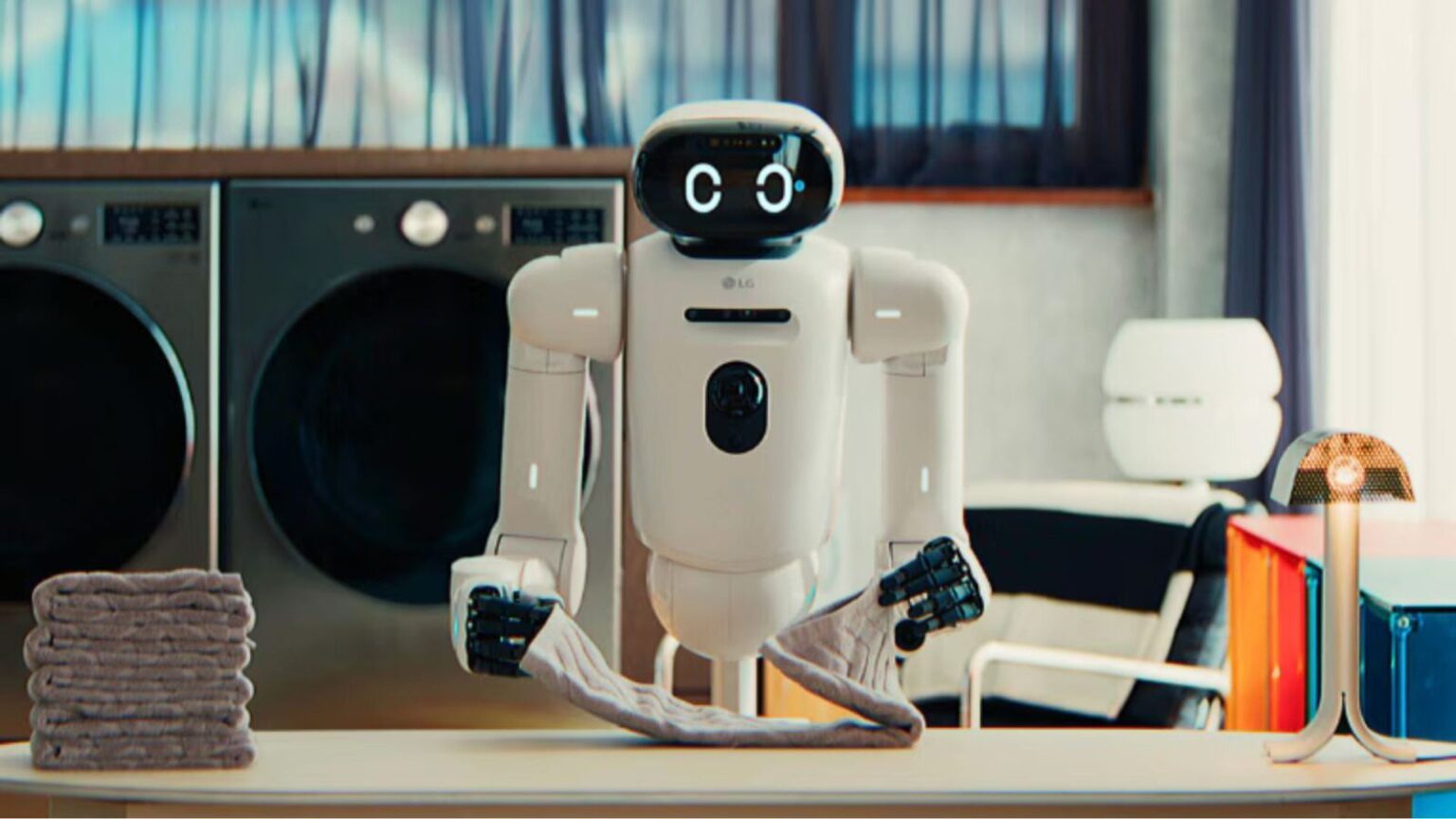
At the center of this vision is LG CLOiD™, a home-focused AI robot designed to function as an ambient assistant rather than a novelty gadget. Equipped with articulated arms and hands, the robot is intended to perform practical household tasks such as handling laundry, organizing items, and adjusting home systems based on contextual cues. LG presented CLOiD as capable of learning the layout and routines of a household, responding to spoken prompts, and making basic suggestions when routines or external conditions change, such as weather disrupting exercise plans. The emphasis was less on humanoid spectacle and more on reliability, safety, and adaptability in real homes, including environments with children and pets.
Alongside robotics, LG highlighted updates to its premium consumer electronics lineup. The OLED evo W6 Wallpaper TV focuses on extreme thinness enabled by wireless connectivity, paired with refinements in color accuracy, brightness, and glare reduction. In the kitchen, the latest SIGNATURE refrigerator and oven range were positioned as examples of conversational AI applied to specific use cases, such as recommending storage modes, identifying ingredients, or suggesting recipes based on what is already available. These features aim to reduce friction rather than redefine how people cook or manage food.
Beyond the home, LG outlined plans for applying the same AI frameworks to vehicles and commercial spaces. In automotive environments, the company is working on in-vehicle systems that adapt displays, entertainment, and interfaces based on driver and passenger behavior. In infrastructure, LG is expanding AI-assisted HVAC solutions, particularly for data centers that support AI workloads, with a focus on efficiency and large-scale deployments, including projects in the Middle East.
Taken together, LG’s presentation suggested a deliberate attempt to normalize AI by embedding it into existing products and routines instead of promoting it as a standalone breakthrough. Whether these systems deliver measurable reductions in effort over time will depend on execution, but the direction signals a maturing view of AI as operational support rather than spectacle.