
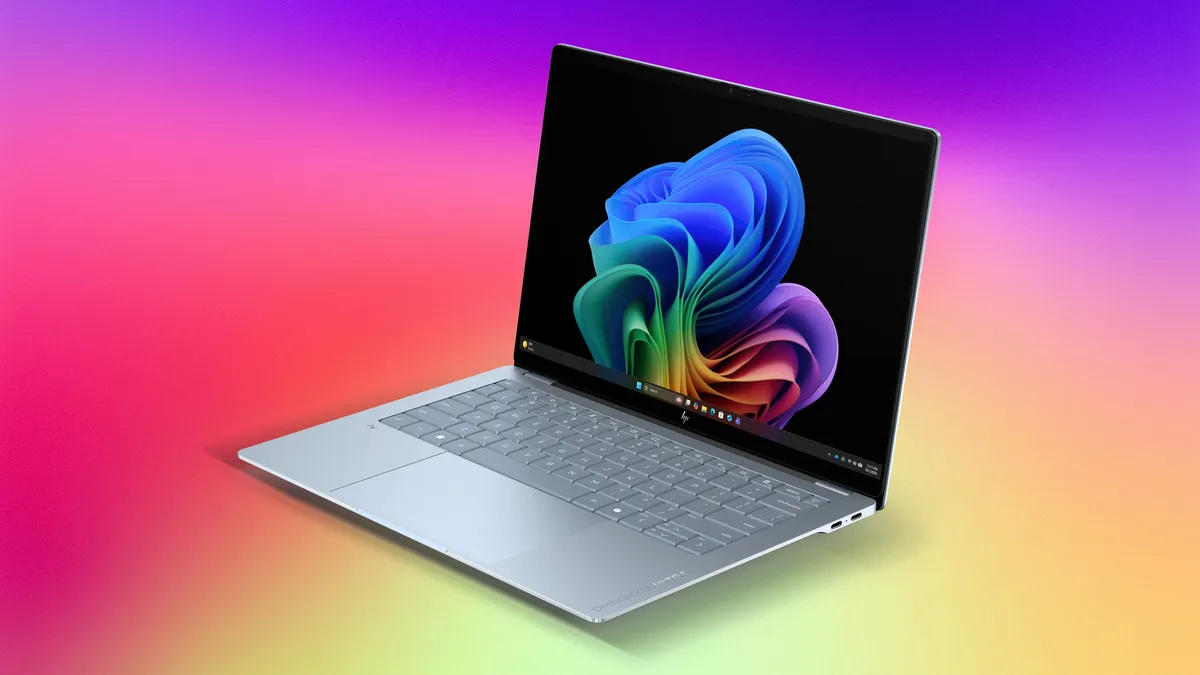
HP used CES 2026 to give its OmniBook lineup a more substantive reset than last year’s branding refresh. After initially reusing familiar Pavilion, Envy, and Spectre designs under new names, the company has now introduced a full visual overhaul across the OmniBook range, alongside broader adoption of OLED displays and newer processor options. The result is a lineup that finally differentiates itself from HP’s earlier consumer laptops in ways that go beyond naming conventions.
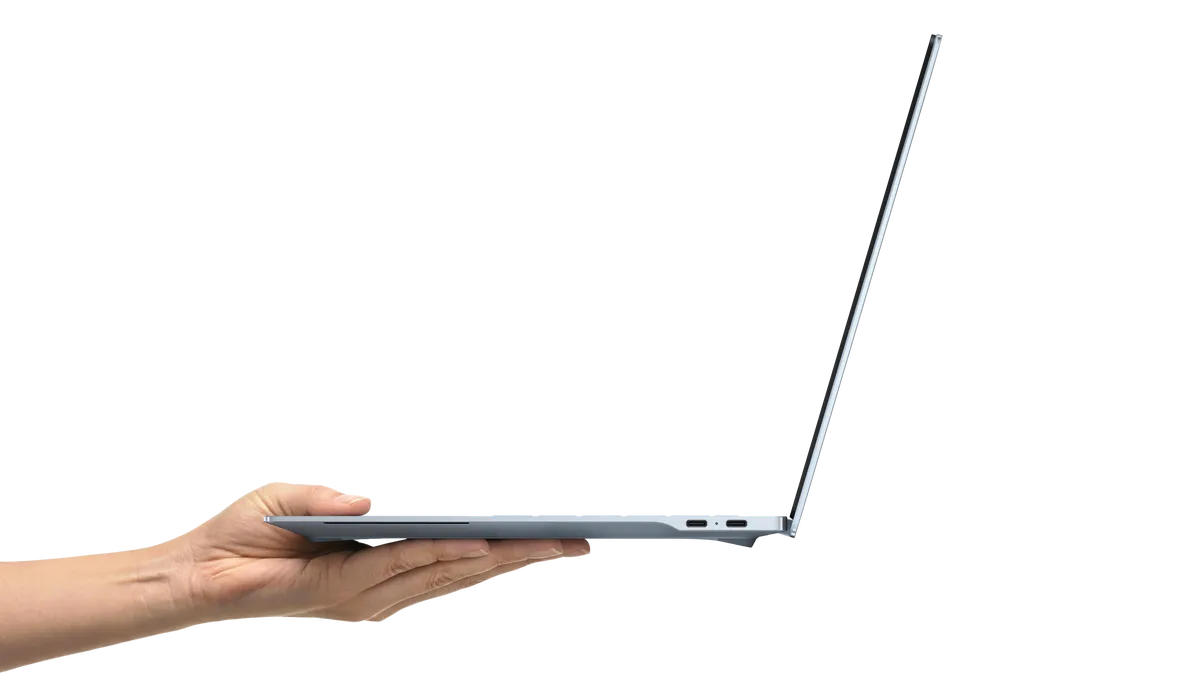
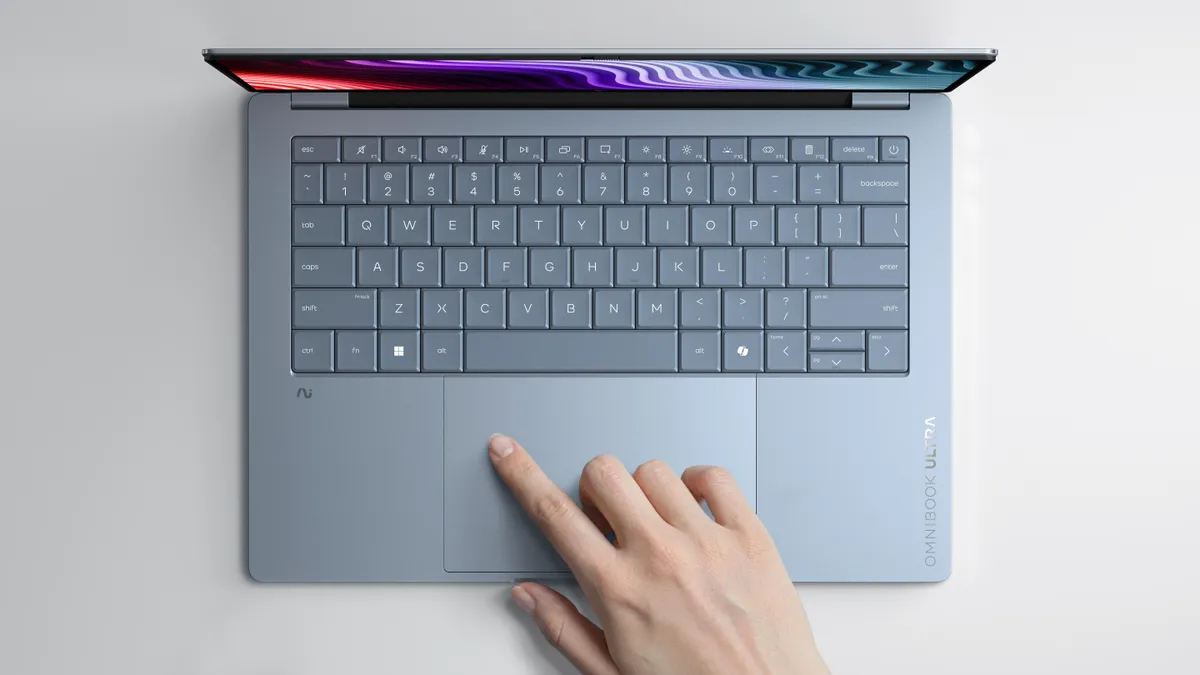
At the top of the range is the OmniBook Ultra 14, which replaces the Spectre as HP’s flagship consumer notebook. The design departs from its predecessor, using a forged anodized aluminum chassis with a notably slim profile. HP emphasizes thinness, citing measurements that taper from just under a third of an inch at the front to just over half an inch at its thickest point. While those figures are largely academic outside of marketing comparisons, the physical impression is of a very thin 14-inch laptop that still feels rigid in hand. At 2.81 pounds, it is not unusually light for its size, but HP says the system meets a set of MIL-STD durability tests, suggesting a focus on structural strength over chasing minimum weight.
Internally, the OmniBook Ultra 14 reflects HP’s effort to stay flexible as the PC market shifts. Configurations will be available with either Intel Core Ultra Series 3 processors or Qualcomm Snapdragon X2 chips. In Snapdragon X2 Elite form, HP points to an 85 TOPS neural processing unit intended for local AI workloads, a marked increase over earlier Snapdragon X systems. How much that matters day to day will depend on how Windows applications take advantage of on-device AI acceleration over the next year.
Other specifications are more conventional for a high-end consumer laptop in 2026. The OmniBook Ultra 14 includes a 3K OLED display and can be configured with up to 64GB of memory and 2TB of solid-state storage. Pricing starts at $1,550, with HP indicating availability later this month.
Lower-tier OmniBook models are also receiving updated designs, though they will roll out more gradually. The OmniBook X and OmniBook 7 are expected in the spring, while the OmniBook 5 and OmniBook 3 are slated for February, starting at $850 and $500 respectively. Snapdragon X2 processors will be offered across the entire OmniBook family, and notably, HP says 2K OLED displays will be available even on the entry-level OmniBook 3. That decision reflects how OLED panels, once reserved for premium systems, are steadily moving down the price ladder.
Beyond laptops, HP also refreshed its OmniStudio all-in-one desktop. The OmniStudio X 27 now uses a Neo:LED display, combining an IPS panel with a mini-LED backlight to improve contrast and brightness control compared to standard LED-backlit screens. The 27-inch panel offers a 1440p resolution, a 120Hz refresh rate, and wide color gamut coverage aimed at creative and media-focused users. HP has also added Thunderbolt Share for simpler file transfers between a laptop and the desktop, along with a tilting webcam designed to show documents or objects on the desk.
Taken together, HP’s CES 2026 announcements suggest a more deliberate effort to align design, display technology, and platform choices across its consumer lineup. While none of the individual changes are radical on their own, the combination marks a clearer break from the recycled designs that defined the first year of the OmniBook name.