


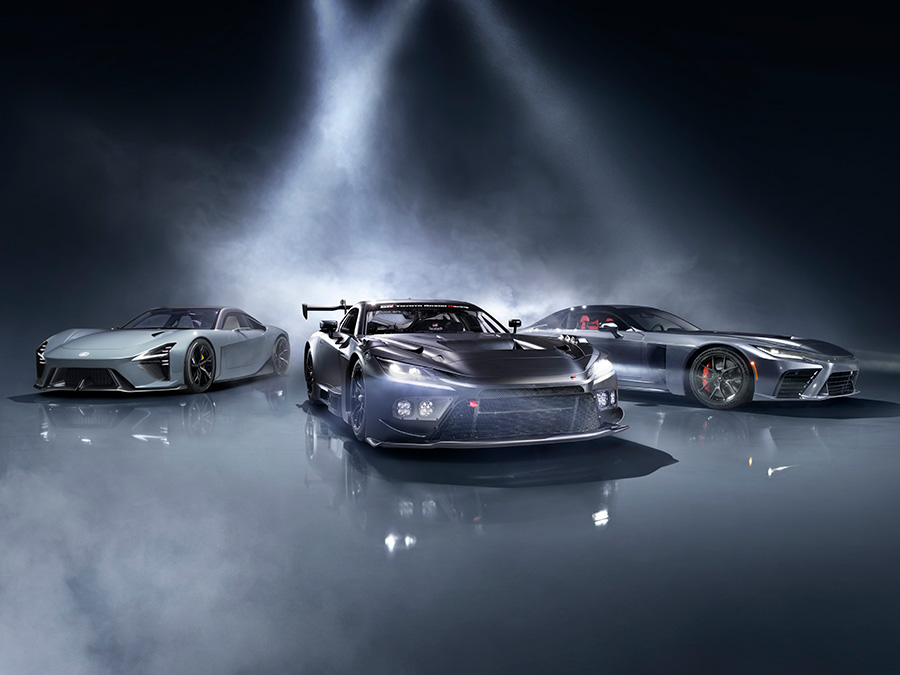
The world premiere of the GR GT, GR GT3, and Lexus LFA Concept signals an effort by Toyota’s performance divisions to reassert their place in the rapidly changing sports-car landscape without leaning on nostalgia or marketing spectacle. While the event draws deliberate parallels to the legacy of the Toyota 2000GT and the original Lexus LFA, the focus is less on heritage worship and more on maintaining core engineering practices as the industry shifts toward electrification and new production methods. Toyota frames this approach through the lens of Shikinen Sengu, a cyclical rebuilding tradition meant to ensure that craft knowledge is carried forward. Applied to cars, it becomes a metaphor for renewing technical competencies rather than preserving them untouched.

Each of the three models is built on a shared development philosophy: keep mass low, increase structural rigidity, and emphasize aerodynamic efficiency. This triad reflects long-standing sports-car fundamentals rather than any singular breakthrough, but Toyota’s insistence on engineering continuity is notable at a time when many manufacturers are rewriting their performance playbooks around EV platforms and software-defined vehicles.
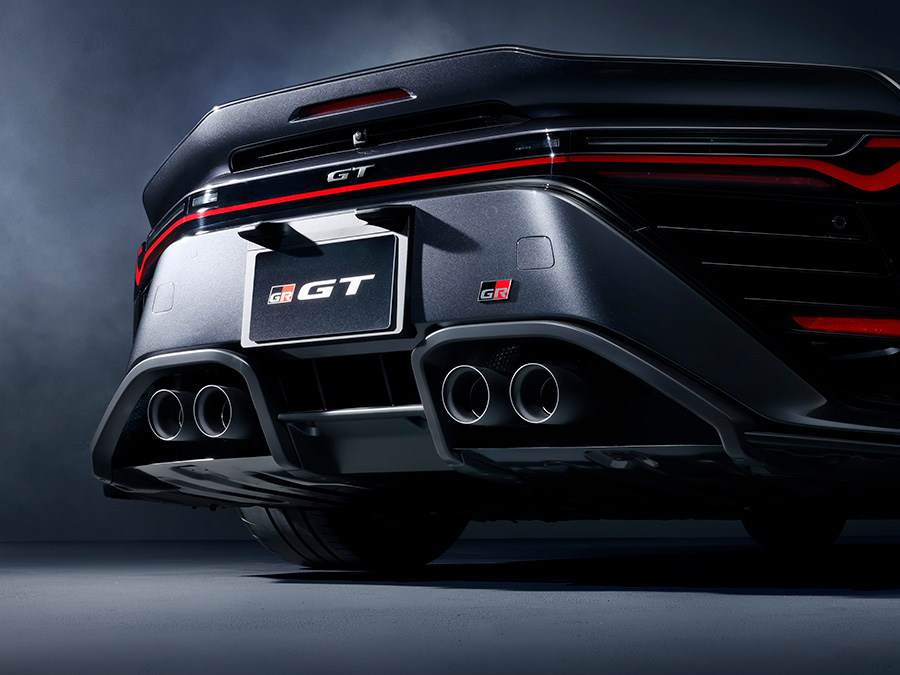
The GR GT serves as the flagship expression of Toyota’s motorsports-influenced road-car programs. Built on a front-engine, rear-drive layout, it adopts the company’s first all-aluminium body frame in an attempt to meaningfully reduce weight while maintaining stiffness. Its hybrid powertrain pairs a newly developed 4.0-liter V8 twin-turbo engine with a single electric motor, producing a system output that exceeds 650 PS and 850 Nm of torque. Rather than presenting the GR GT as a technological leap, Toyota positions it as a refinement of its driver-centric engineering, shaped by a wide range of professional and in-house evaluators. A rear transaxle with an 8-speed automatic transmission and carbon-fibre torque tube aims to distribute mass in a way that supports predictable handling for both experienced and casual drivers.
The GR GT3, derived from the GR GT platform, is Toyota’s entry into FIA GT3-spec customer racing. The move reflects a practical recognition that GT3 has become the global standard for production-based motorsport. The model uses an aluminium space frame, low-mounted double-wishbone suspension, and the same V8 twin-turbo architecture as its road-going counterpart. Rather than promising dominance, Toyota outlines an ambition to provide a competitive platform paired with broader customer support, acknowledging that racing success is determined as much by operational infrastructure as by hardware.
The Lexus LFA Concept, meanwhile, takes a different route by exploring what a battery-electric sports car could look like for the brand. Lexus frames the concept as an effort to bridge the emotional appeal of the original V10 LFA with a BEV architecture that still faces widespread skepticism among driving enthusiasts. The concept aims to address that perception through design and performance targets rather than relying solely on the LFA name to carry expectations. It represents Lexus’ attempt to show how traditional sports-car values might translate into an electric era, though the company has not yet detailed production plans or technical specifications.
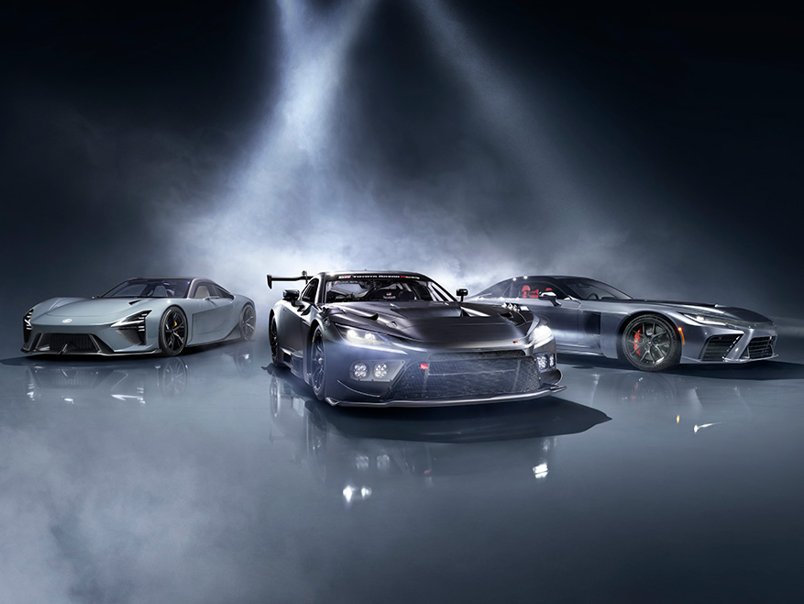
Together, these three models signal Toyota’s intent to stay active in the high-performance space, not by making grand claims but by emphasizing incremental engineering work and a long-term view of sports-car development. Whether this approach resonates with drivers will depend on how these vehicles perform beyond their debut and how convincingly Toyota can translate its craft-focused philosophy into the realities of modern performance engineering.