

The new all-electric Volvo EX60 marks another step in the company’s gradual shift toward software-led vehicle design, combining electrification with deeper integration of artificial intelligence. Scheduled for its global reveal on 21 January 2026, the mid-size electric SUV is positioned as a vehicle that evolves over time, relying as much on computing architecture and data as on traditional mechanical engineering.
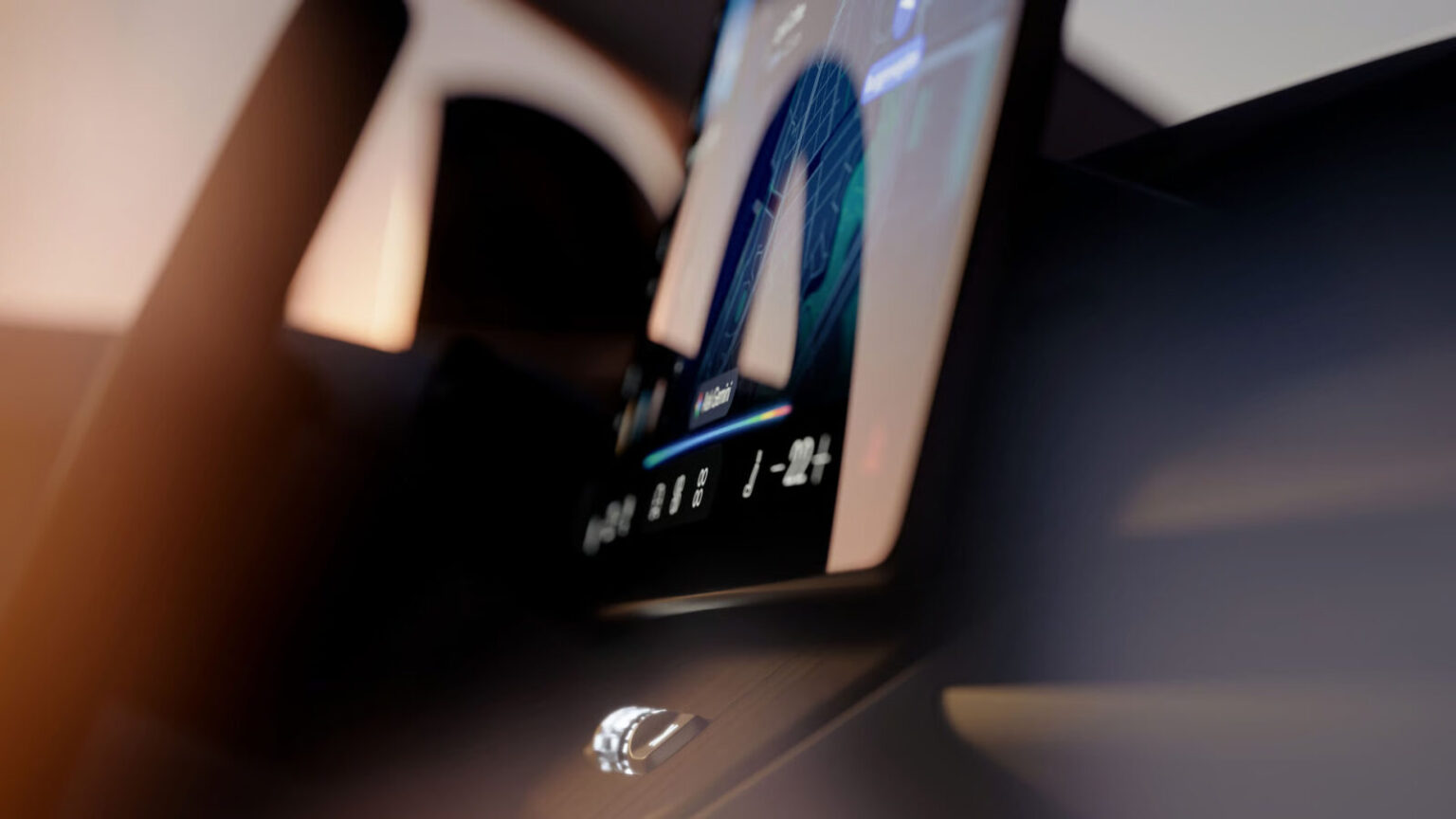
At launch, the EX60 becomes the first production model from Volvo Cars to ship with Gemini, Google’s conversational AI assistant, built directly into the vehicle. Rather than focusing on voice commands tied to rigid phrases, the system is designed to support more natural, multi-step dialogue. Drivers can ask follow-up questions, manage tasks such as navigation or information retrieval, and interact with vehicle systems without shifting attention to the central display. The intent is to reduce distraction rather than add another layer of digital novelty, building on nearly a decade of collaboration between Volvo and Google.
Central to the EX60’s design is a new internal computing framework called HuginCore. This software-defined architecture brings together electrical systems, core computers, zone controllers, and operating software under a unified platform. While the naming may be new, the approach reflects an industry-wide shift toward vehicles that are updated and refined through code rather than physical revisions. Over-the-air updates are expected to play a significant role in extending functionality and refining safety systems long after purchase.
Processing power is a major focus of the EX60. The infotainment system runs on the next-generation Snapdragon Cockpit Platform from Qualcomm Technologies, paired with its Auto Connectivity Platform to deliver high-speed data access and responsive in-car services. At a deeper level, the vehicle relies on the NVIDIA DRIVE platform, using the DRIVE AGX Orin system-on-a-chip and DriveOS from NVIDIA to support advanced driver assistance and real-time sensor processing. Together, these systems are intended to minimize latency across navigation, displays, and voice interaction.
Volvo says the EX60 can process more than 250 trillion operations per second, enabling it to interpret sensor data continuously and refine its responses based on real-world driving conditions. The system is designed to learn not only from the individual vehicle but also from aggregated data across Volvo’s global fleet, including near-miss scenarios and accident patterns. In practical terms, this means driver assistance features that are expected to improve incrementally rather than remain static.
Range and charging performance remain central to the EX60’s appeal. Volvo claims a driving range of up to 810 kilometers on a single charge in all-wheel-drive form, alongside the ability to add approximately 340 kilometers of range in ten minutes using a 400 kW fast charger. These figures place the EX60 competitively within the rapidly expanding electric SUV segment, though real-world performance will depend on conditions and usage.
The EX60 will be officially unveiled on 21 January 2026, with Volvo positioning it as a vehicle that emphasizes long-term adaptability over short-term spectacle. Rather than framing intelligence as a headline feature, the company appears focused on embedding software and AI in ways that remain largely unobtrusive, shaping how the car behaves quietly in the background as ownership progresses.