

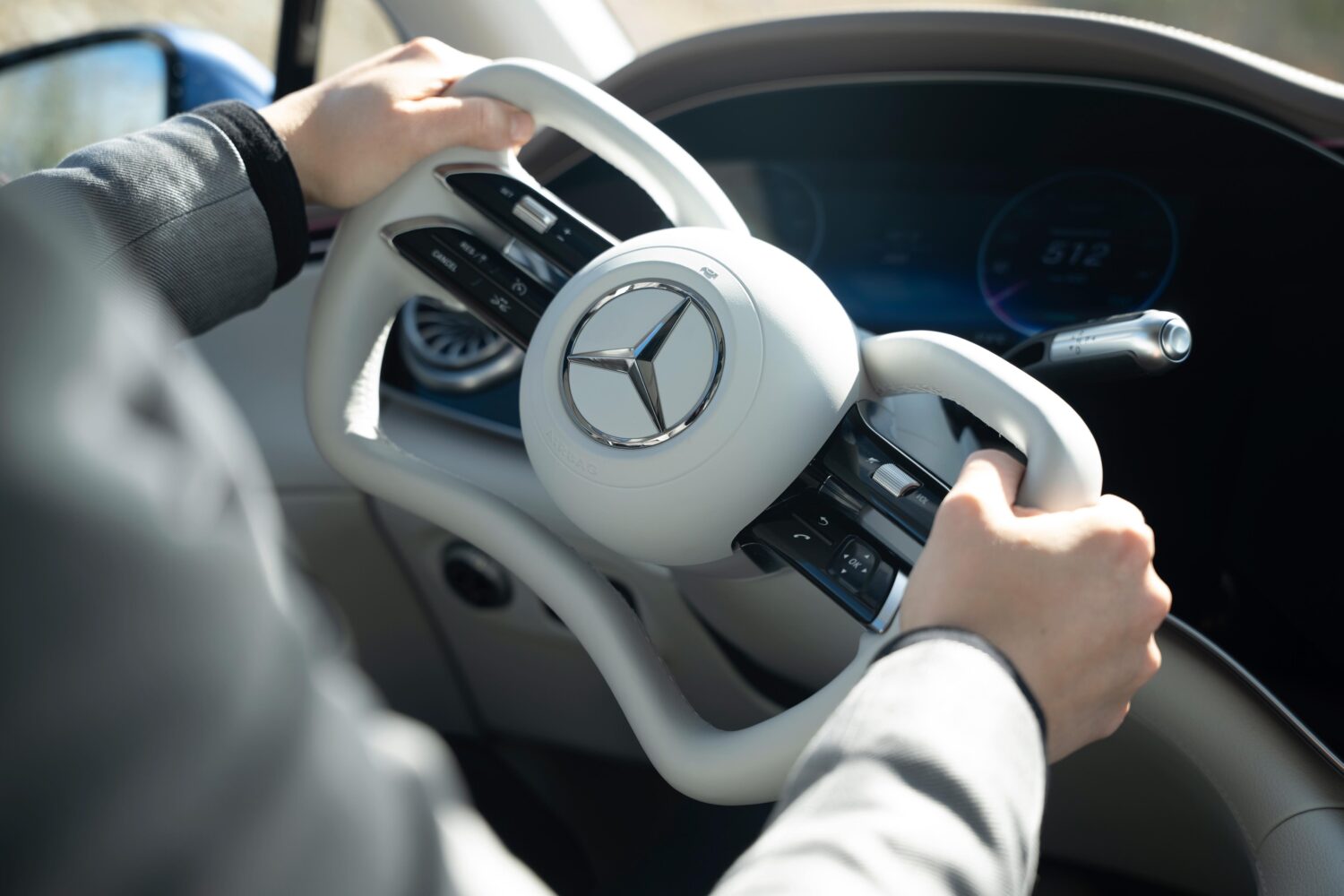
Mercedes-Benz is preparing to introduce steer-by-wire technology in the EQS, marking a notable shift in how drivers interact with steering systems in production vehicles. The setup replaces the traditional mechanical connection between the steering wheel and front wheels with an electronic system that interprets driver inputs and translates them into wheel movement. While the concept has existed in experimental and niche applications for years, its arrival in a mainstream luxury electric sedan signals a broader move toward software-defined driving dynamics.
In practical terms, the system changes the physical experience of steering. Because there is no direct mechanical linkage, the steering ratio can be adjusted dynamically depending on speed and driving conditions. At lower speeds, this can reduce the effort required for parking and tight manoeuvres, while at higher speeds it can prioritize stability. The absence of a physical connection also allows engineers to filter out road vibrations that would normally travel through the steering column, resulting in a more isolated driving feel.
The system works in coordination with rear-axle steering, which turns the rear wheels either in the opposite direction at low speeds or in the same direction at higher speeds. This contributes to tighter turning circles in urban settings and improved stability on highways. Mercedes-Benz claims the setup has undergone extensive testing, including over a million kilometres across simulations, test benches, and real-world driving conditions.
Safety remains a central concern with steer-by-wire systems, particularly given the lack of a mechanical fallback. To address this, the EQS uses a redundant architecture with multiple signal paths, sensors, and control units. If one system fails, another can maintain steering capability. In extreme cases, lateral control can also be supported through braking interventions and rear-wheel steering adjustments.
The introduction of this system has also influenced interior design. Without the constraints of a traditional steering column, the steering wheel can be reshaped into a flatter form, improving visibility of the driver display and making cabin entry and exit easier. However, this change requires a rethinking of safety components, particularly the airbag. The EQS incorporates a redesigned airbag structure that compensates for the altered steering wheel shape, using internal supports and a revised deployment pattern to maintain safety standards.
While steer-by-wire offers flexibility in design and tuning, it also raises questions about long-term reliability, driver feedback, and user adaptation. Some drivers may appreciate the reduced effort and customizable feel, while others may find the lack of direct mechanical feedback less engaging. As more manufacturers explore similar systems, the EQS will serve as an early indicator of how well this technology translates from concept to ყოველდღ driving.