
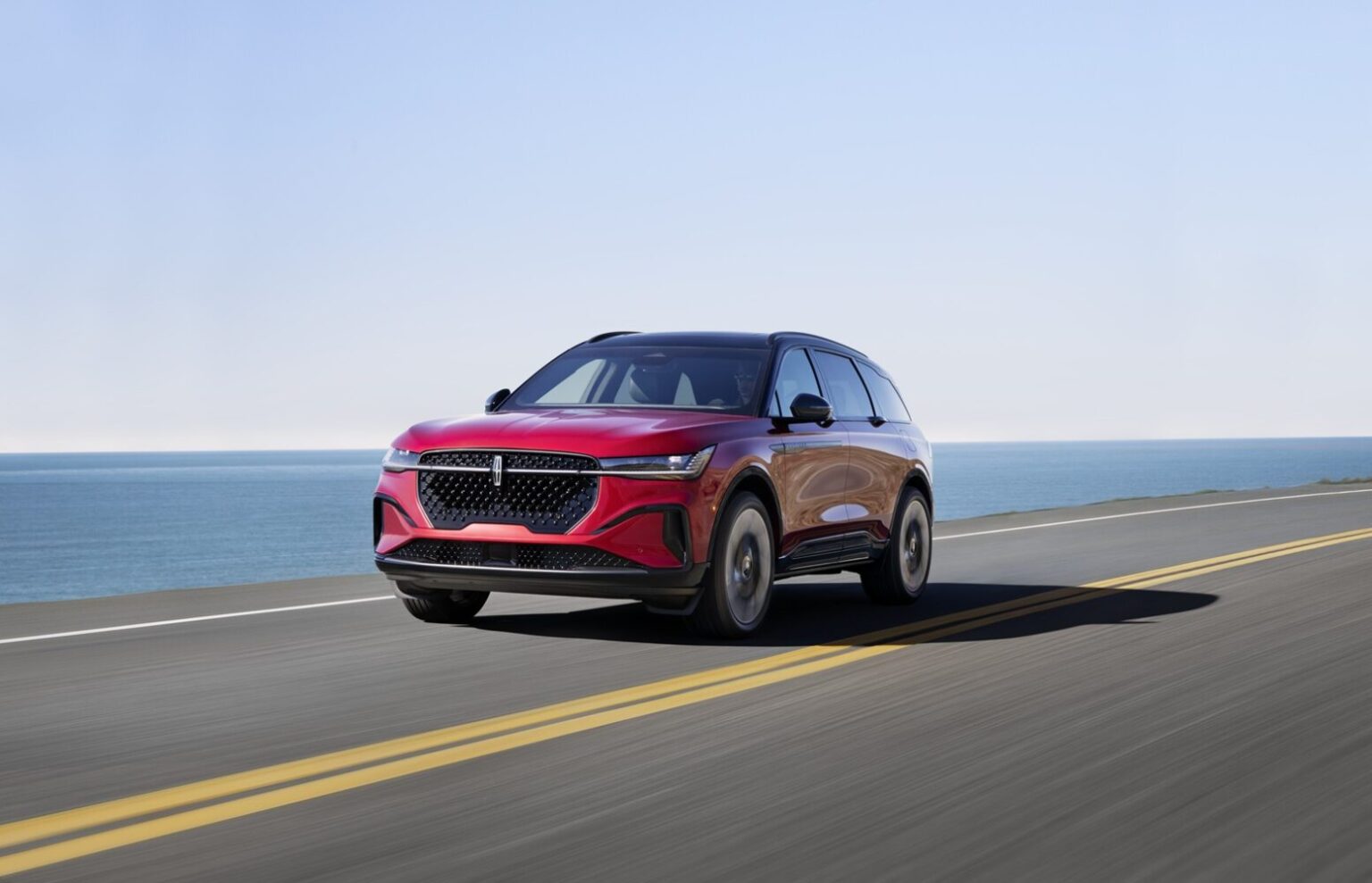
Scenic road routes across the Middle East continue to attract drivers looking for a balance between long-distance comfort and the ability to handle varied road conditions. From the calmer highways along the Arabian Gulf to more demanding stretches near mountainous and remote regions, these journeys tend to reward vehicles that prioritize stability, efficiency, and interior comfort over outright performance. Within this context, the Lincoln Nautilus is positioned as a midsize SUV aimed at relaxed, extended travel rather than aggressive driving.
The Nautilus offers a choice of powertrains centered on a 2.0-liter turbocharged four-cylinder engine. In standard form, it produces 257 horsepower, while the hybrid variant increases output to 287 horsepower by combining the petrol engine with electric assistance. The hybrid system uses regenerative braking to recharge its battery during normal driving, reducing fuel consumption and extending driving range. With claimed efficiency figures reaching up to 16.1 km per liter, the setup is clearly intended to minimize fuel stops on longer routes.
This extended range can be particularly useful when driving through less densely serviced regions, such as the winding roads of the Musandam Peninsula leading toward Khasab, where scenery is dramatic but infrastructure is sparse. Across all variants, Intelligent All-Wheel Drive is standard, helping maintain traction on mixed surfaces that may include sand, uneven pavement, or wet mountain roads. An adaptive suspension system continuously adjusts damping based on road conditions, contributing to ride stability during long stretches behind the wheel.
Inside, the Nautilus emphasizes space and noise reduction. The cabin accommodates five passengers with generous headroom and legroom, and active noise control works to limit road and wind intrusion. A panoramic roof is available, allowing more natural light into the cabin and reinforcing the sense of openness that suits scenic journeys, whether along open highways or through mountainous areas near Salalah during the Khareef season.
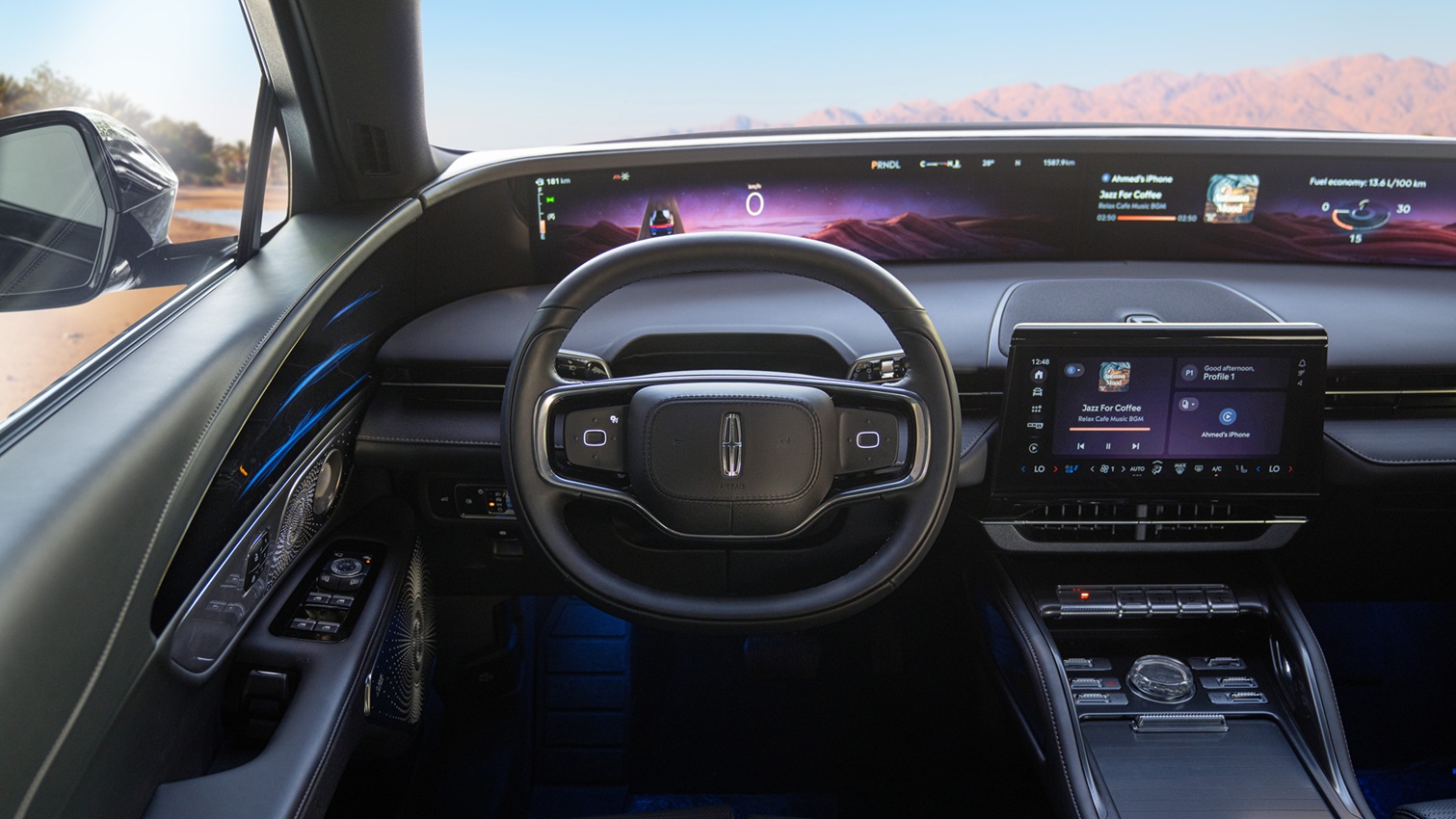
Technology plays a central role in the driving experience. A wide 48-inch panoramic display spans the dashboard, paired with an 11.1-inch central touchscreen for navigation, media, and vehicle controls. Multiple USB ports and wireless charging support device-heavy travel, while the cargo area expands from 997 liters to 1,948 liters with the second row folded, offering flexibility for longer trips and outdoor activities.
Driver assistance systems are also a focus. Lincoln’s Co-Pilot360 Drive 2.0 suite includes adaptive cruise control with lane centering and stop-and-go functionality, designed to reduce fatigue during extended highway travel. These features are particularly relevant on long links such as the King Fahd Causeway, where consistent speeds and open views define the drive. Additional systems like blind spot monitoring, pre-collision assist, and reverse brake assist provide support in busier or unfamiliar areas.
Rather than presenting itself as a performance-focused SUV, the Lincoln Nautilus leans into comfort, efficiency, and driver assistance. For drivers exploring the Middle East at an unhurried pace, it aims to make the journey feel as considered as the destination.