


For much of the past century, the Middle East has relied heavily on internal combustion engine (ICE) vehicles. While these engines deliver strong performance, they are also associated with high fuel consumption and significant emissions. Now, as governments and consumers in the region place greater emphasis on sustainability, terms like hybrid, plug-in hybrid, and battery electric vehicle (HEV, PHEV, and BEV) are becoming more familiar.
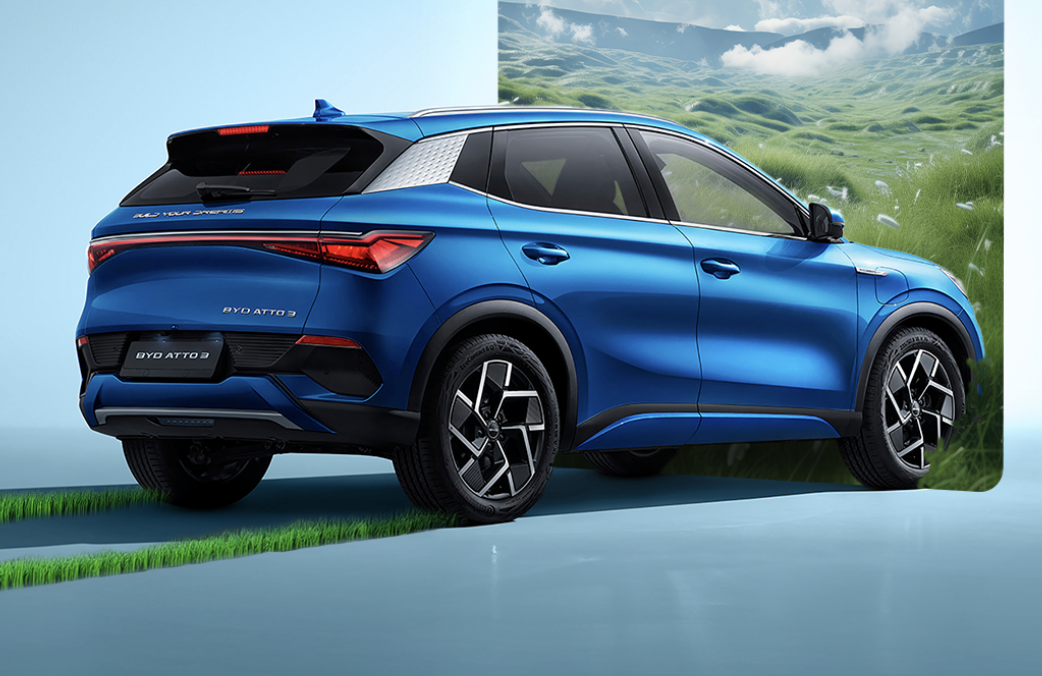
Chinese manufacturer BYD has positioned itself as a major player in this shift. The company has developed a broad lineup of new energy vehicles (NEVs), offering different pathways for drivers to reduce fuel dependency and emissions while adapting to the realities of a market where charging infrastructure is still taking shape.
Hybrid electric vehicles remain the most accessible entry point for many drivers. An HEV pairs a petrol engine with a small electric motor and battery, allowing the vehicle to operate more efficiently at lower speeds while capturing energy through regenerative braking. These systems are self-charging, requiring no plug-in connection, and can deliver noticeable improvements in fuel economy. For drivers who want lower emissions without altering their daily routine, HEVs serve as a practical transitional technology.
Plug-in hybrids, or PHEVs, expand on this formula with larger batteries and stronger electric motors, allowing them to operate in pure electric mode for short trips. Daily commuting can often be handled on battery power alone, producing no tailpipe emissions during those drives. When longer journeys require additional range, the petrol engine steps in. Because they can be recharged externally and also use regenerative braking, PHEVs provide flexibility in regions where charging stations are growing but not yet ubiquitous. BYD’s own DM-i Super Hybrid system prioritizes electric driving when possible, aiming to reduce fuel use even further.
Battery electric vehicles represent the full shift away from petrol. Powered entirely by rechargeable batteries and electric motors, BEVs produce zero tailpipe emissions and deliver quiet, instant acceleration. While they require consistent access to charging infrastructure, they also carry advantages such as lower operating costs, fewer mechanical maintenance needs, and reduced environmental impact at the point of use. BYD has invested in proprietary battery technology, most notably its Blade Battery, which emphasizes safety, durability, and extended driving range.
For the Middle East, where fuel prices remain relatively low but environmental pressures are growing, the adoption path will likely vary by consumer. PHEVs offer flexibility and reassurance to drivers concerned about charging availability, while BEVs are increasingly appealing as charging networks expand in urban centers. HEVs, meanwhile, provide an incremental step for those not yet ready to plug in at all.
The broader transition to sustainable mobility in the region is still in its early stages, but the momentum is clear. As infrastructure improves and government policies continue to encourage lower emissions, drivers will have more viable alternatives to the conventional ICE vehicle. BYD’s approach illustrates the spectrum of options available today, from hybrids that ease the transition to fully electric cars that signal the long-term direction of the global automotive market.