


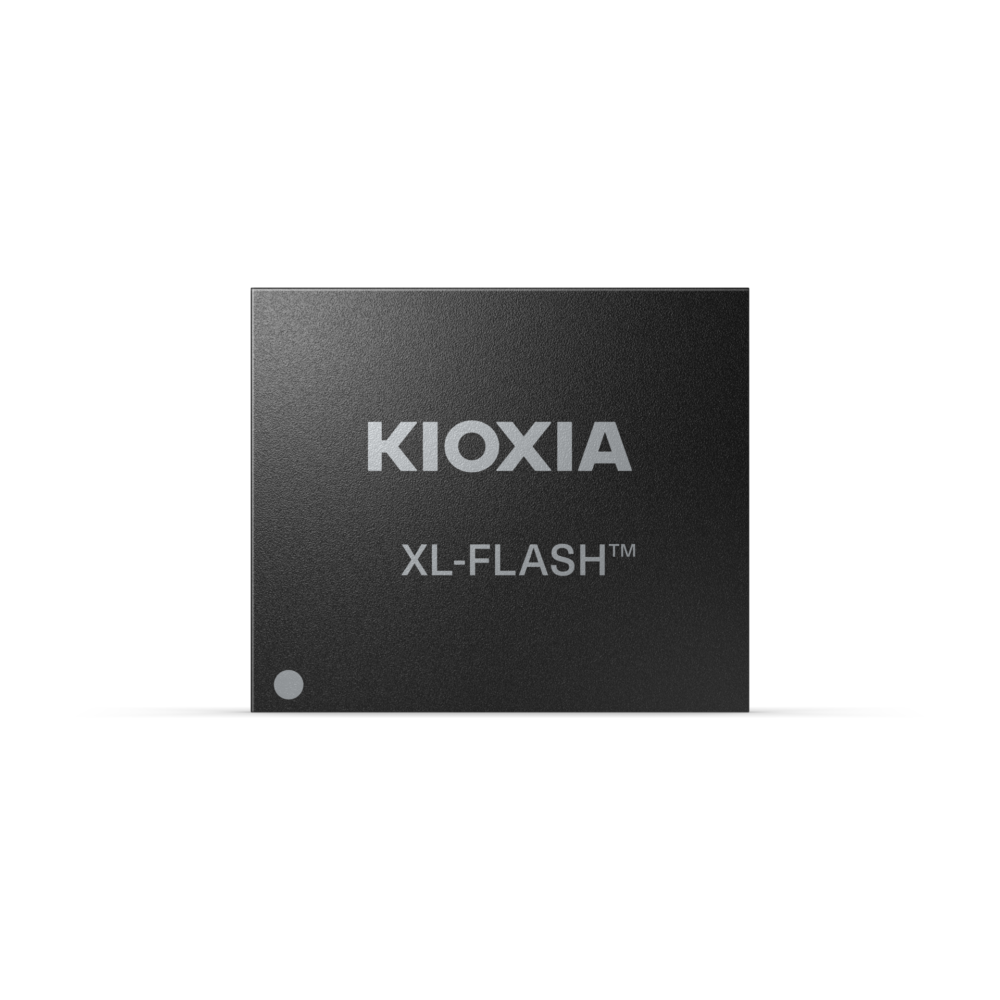

Kioxia is bringing a third generation of its XL-FLASH memory to its own KIOXIA Forum in Tokyo on 26 November. The pitch targets one of the most expensive problems in AI infrastructure: there is never enough DRAM, and what there is costs a lot to buy and to power.
XL-FLASH has always occupied an interesting middle ground. It is still NAND flash, but it is tuned for speed and endurance rather than raw capacity. The aim is to create an extra memory tier between conventional SSD storage and system DRAM. The idea is not new. Intel spent years pushing Optane into that same gap before winding the business down in 2022, and Samsung pursued a similar path with Z-NAND. With Optane gone, the space has been left to flash-based alternatives, and Kioxia clearly wants XL-FLASH to be the one data centre architects reach for.
The headline number for the prototype is an average read latency of 3 microseconds. Kioxia says that is less than a tenth of the latency of its BiCS FLASH generation 8 TLC parts, based on its own measurements of 1Tb chips. That is a big jump for flash, but it needs some perspective. DRAM still responds in nanoseconds, so XL-FLASH is positioned as a complement to memory, or a cheaper stand-in for part of it, rather than a direct replacement.
Density is the other half of the story. The new generation uses CBA, the technique Kioxia brought to its mainstream BiCS FLASH line. With CBA, the CMOS control logic is made separately and bonded directly to the memory array. The company claims this delivers around 70% more bit density than XL-FLASH generation 2 without giving up performance. It also says power efficiency for 512-byte reads has improved by roughly 135%. Those small, random reads are exactly what matters when flash stands in for memory.
Kioxia sees two main destinations for the technology. One is high-IOPS SSDs. The other is memory expansion modules built on Compute Express Link, the interconnect standard that lets servers attach memory beyond what their DIMM slots can hold. CXL hardware is still maturing, so the timing makes sense.
What is missing is just as telling. There are no capacity figures, endurance ratings, pricing or timelines for finished products, and every performance claim comes from internal testing on a prototype. Samples for functional evaluation are due to reach select customers in March 2027. That is when the more useful question starts to get answered: is the latency-to-cost trade-off convincing enough for system builders to rethink how AI servers balance DRAM against flash?