

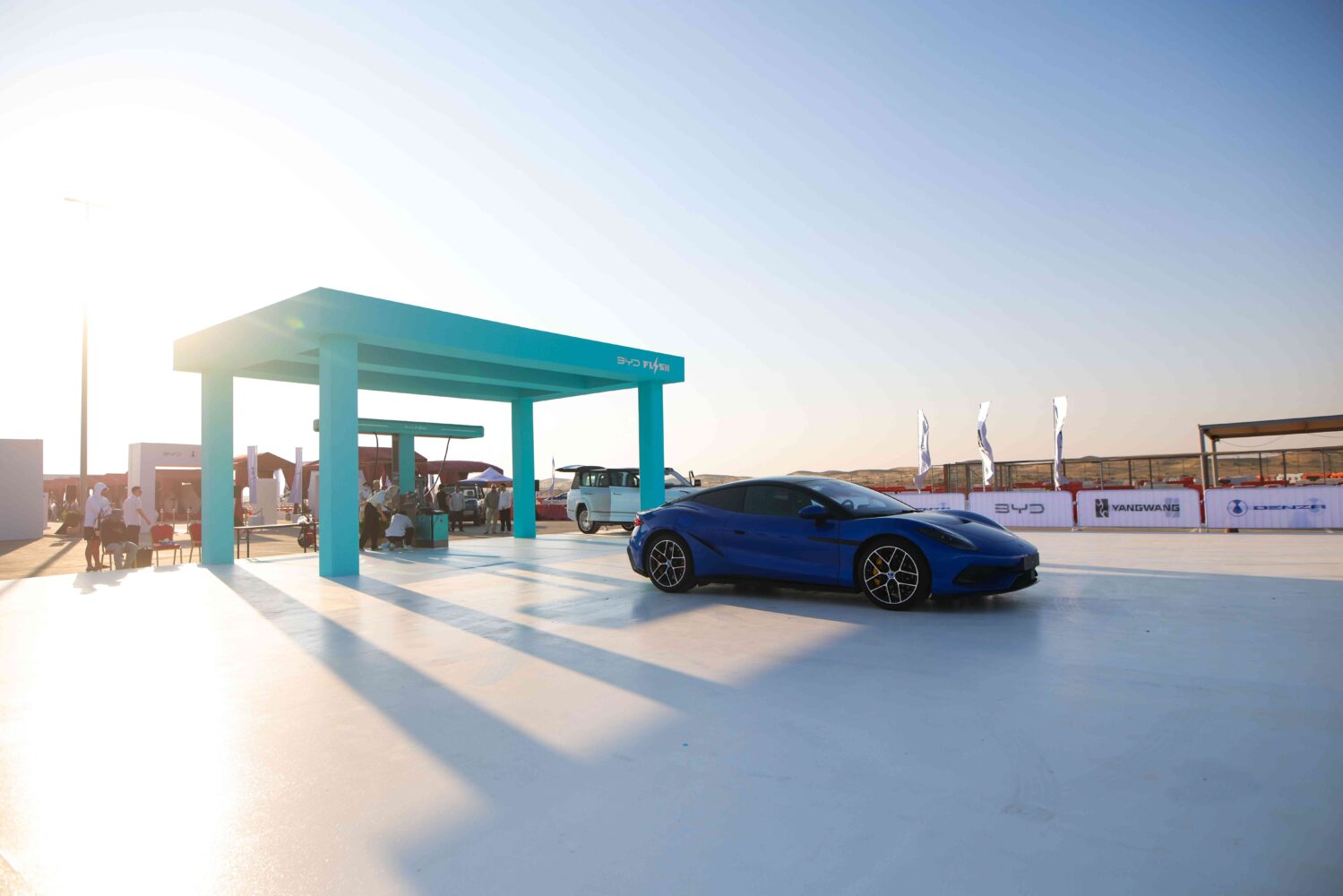
BYD has spent the past fortnight in the UAE making two cases at once: that Chinese engineering can now set the pace at the extreme end of performance, and that it can compete at the top end of luxury. Its Yangwang brand backed up the first with a world speed record on an Abu Dhabi highway. It made the second with the global debut of the Altior, an all-electric limousine aimed at Rolls-Royce and Maybach buyers.
The speed record came first. On 1 November, German racing driver Marc Basseng took the 3,019 PS U9 Xtreme to 503.17 km/h on a closed stretch of the E11 in Al Dhafra. That earned Guinness World Records titles for the fastest production car and the fastest electric production car, both in a single-direction run, and the FIA has also recognised the figure. The single-direction detail matters. Speed records have traditionally averaged runs in both directions, so this result belongs to a narrower category than the headline number suggests. The engineering is still impressive. After topping out at 490 km/h on the first day, engineers worked overnight on wing angle, suspension software, tyre pressures and battery temperatures before the 500 km/h barrier fell. BYD celebrated in Dubai with a light show on the Burj Khalifa.
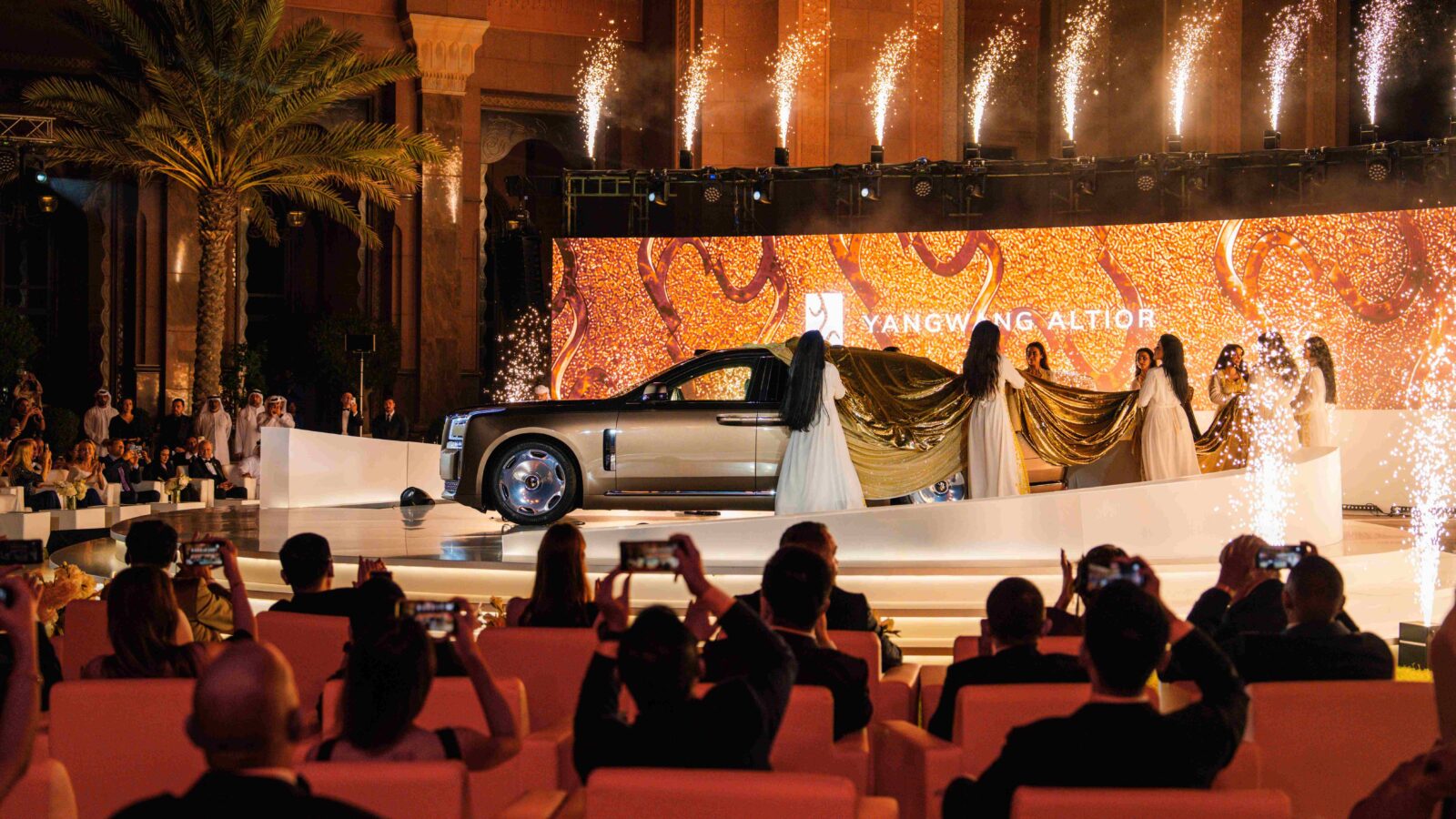
The Altior shows Yangwang’s quieter side. It is 5,600 mm long and rides on a 3,500 mm wheelbase. Its design draws on the ding, an ancient Chinese bronze ceremonial vessel, and it uses rear-hinged coach doors with umbrellas stored inside. Inside, Yangwang skips European luxury conventions in favour of Chinese crafts: Hetian jade around the air vents, Suzhou silk embroidery in the upholstery and real-metal switches. The four-seat cabin includes reclining rear seats with massage, a 39-speaker Dynaudio system and a fold-down 21.4-inch screen for video calls.
What links the two cars is the engineering underneath. Both draw on Yangwang’s four-motor e⁴ platform and DiSus active suspension. In the Altior, that hardware is tuned for stability and comfort rather than outright speed, and the car can also do tank turns and float briefly in water. The company quotes more than 1,000 km of range from its second-generation Blade Battery. That figure is on China’s generous CLTC cycle, so real-world range will be lower. Pricing, charging specifications and launch timing have not been announced.
Choosing the UAE for both moments was deliberate. Wealthy Gulf buyers are exactly who Yangwang needs to win over, and a record set on a local highway makes a strong introduction. The record proves the hardware works. The harder test is whether buyers who have always chosen Crewe or Stuttgart will now consider a car from Shenzhen.