

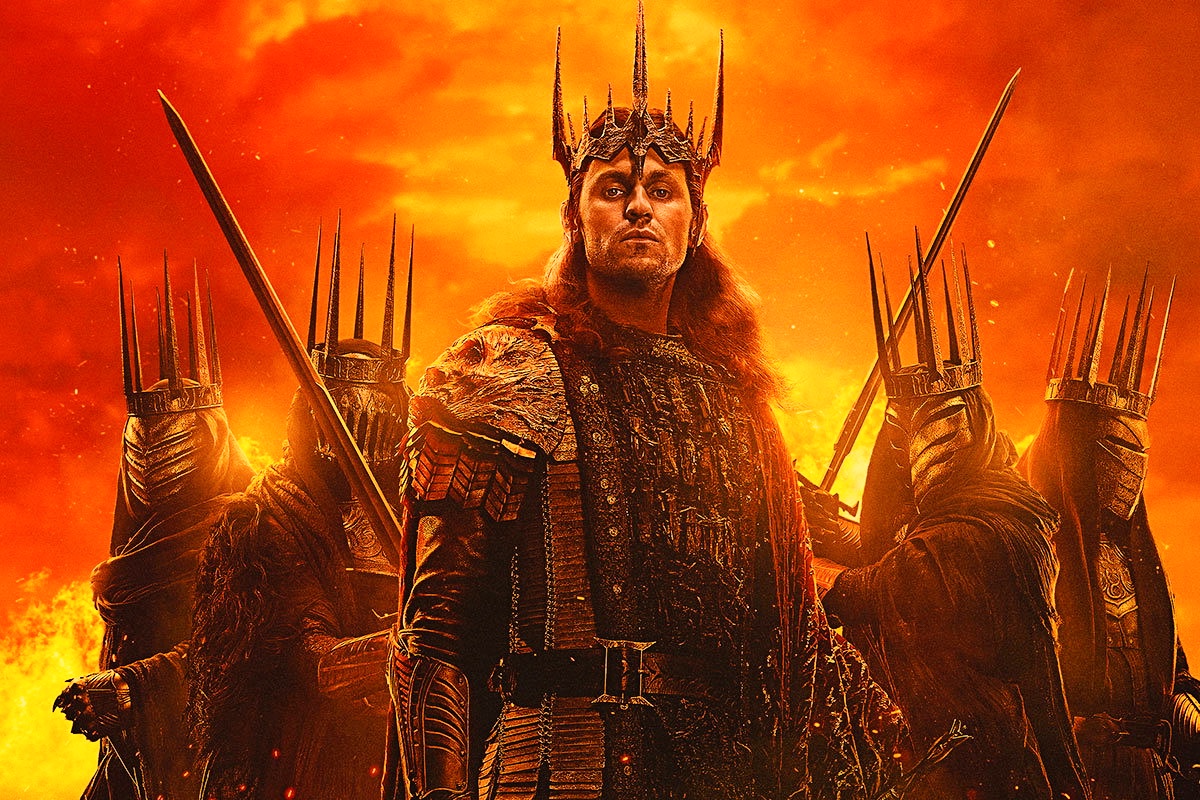
TL;DR: The Rings of Power Season 3 cuts the clutter, sharpens Sauron and gives Galadriel real emotional depth. Númenor still lags and the epic battles are being saved for later, but this is the series at its most focused.
Two seasons in, The Rings of Power had a scheduling problem more than a storytelling one. It kept a dozen plates spinning across Middle-earth, and many of them felt like they belonged to different shows. Season 3 opens five years after the Season 2 finale and simplifies everything to one question: is each character fighting Sauron or serving him? That one change makes the first four episodes, now streaming on Prime Video, the most purposeful stretch of the series so far. Episodes 5 and 6 arrive on November 18, and the season wraps with Episodes 7 and 8 on November 25. Prime Video has rarely released this show in batches like this, but here it works, because the opening four episodes play like one long first act.
The trade-off is that some subplots and faces from earlier seasons are gone, and I can’t say I miss many of them. It’s like a long-running RPG party finally dropping the side quests and heading for the final dungeon. Middle-earth has mostly fallen, and only the Elven strongholds of Lindon and Rivendell are still holding. That gives every storyline a clear sense of stakes and geography, which the first two seasons often lacked. For newcomers, this is the easiest jumping-on point the series has offered. For long-time fans, it feels like the show stopped hedging.
Charlie Vickers’ Sauron is more interesting when he’s failing
The smartest choice this season is making Sauron struggle. With Celebrimbor dead, Charlie Vickers’ Dark Lord cannot work out what secret ingredient went into the Elven rings, so the One Ring stays unfinished. His solution is grimly practical: he turns mortal men into Nazgûl, trading them eternal life for servitude, while hunting for the knowledge he lacks. Vickers plays this frustration well, letting cracks of insecurity show under the charm. A villain with a progress bar stuck at 90 percent is more tense to watch than one who is simply winning.
The season’s most morbid flourish has Sauron keep Celebrimbor’s skeleton around, with Charles Edwards returning in a ghostly cameo to poke at the Dark Lord’s self-doubt. It is a slightly theatrical device, but it gives Sauron someone to argue with besides his minions, and that turns his inner conflict into actual drama. It also helps a show whose antagonist is, by design, mostly scheming. I would happily watch an entire episode of the two of them bickering.
Morfydd Clark and Jamie Campbell Bower add warmth to Galadriel’s war
Morfydd Clark’s Galadriel remains the show’s anchor, now spending her days fighting Orcs and the men Sauron sends alongside Ismael Cruz Córdova’s Arondir. She can sense Sauron’s presence returning even after five years without contact, while Robert Aramayo’s Elrond suspects her old obsession is clouding her judgement. That friction gives Galadriel a Cassandra problem that suits her. The series has always done best when her certainty is uncomfortable rather than just heroic.
The real surprise is a First Age flashback in which Galadriel meets Celeborn, played by Jamie Campbell Bower in a refreshing break from his years as Stranger Things’ Vecna. Their courtship takes the form of a graceful, wire-assisted duel that feels more like a wuxia film than standard Tolkien adaptation, and I mean that as praise. It works because it reframes the hardened commander we know, showing how much of herself she has given up to a millennia-long war. Clark shifts from playful romantic to battle-worn veteran in just a few scenes. It’s a short sequence, but it adds more emotional depth to Galadriel than whole episodes of speeches in previous seasons.
The Dwarves, Gandalf and the new arrivals reward patience
Khazad-dûm still leans too hard on dwarven comic relief, but Eddie Marsan’s arrival as Thrain, Durin IV’s older brother, gives the storyline an edge it has needed. Marsan brings an unsettling presence through heavy prosthetics, and by Episode 4 the kingdom is heading toward a succession fight that feels almost Shakespearean. Owain Arthur and Sophia Nomvete also get one of their strongest scenes as Durin and Disa, when something from Disa’s past tests their marriage. Their relationship has always been the emotional core of the Dwarf plot, and the season wisely builds on it. Daniel Weyman’s Gandalf, meanwhile, finally feels more like the wizard we know, and his link to Ciarán Hinds’ Dark Wizard begins to come into focus.
Two other characters show how the season approaches moral ambiguity. Adam Young’s Marnûkh is an Orc who seems like another loyal soldier at first, but turns out to be far more complicated, testing how Galadriel and Arondir see the enemy and leading to real consequences. Tyroe Muhafidin’s Theo, now grown and enslaved by the Númenóreans, gets a darker character arc that echoes the long-planted hints from Season 1. Neither storyline is entirely subtle, but both bring tragic stakes to the show’s black-and-white central conflict, and Theo in particular now feels like he matters.
Númenor still drags, and the big battles are on hold
Númenor remains the weak link. Trystan Gravelle’s Pharazôn is a court schemer who would fit better in a palace-intrigue drama than in a story about rings of power, and every time the show stays in his halls too long, the momentum slows. Ema Horvath’s Eärien does get a meaningful episode that changes her relationship with Elendil, Isildur and Anárion, played by Lloyd Owen, Maxim Baldry and Andrew Richardson. However, the show hasn’t yet explained the reasons behind her change, which makes it feel more like a plot convenience than a genuine character turn. I hope later episodes fill in the gaps.
Anyone expecting Helm’s Deep-scale spectacle should temper expectations for now. These episodes deliver swordplay and arrows, but the large-scale battles are clearly being saved for later, with marketing already teasing a Balrog and Sauron wearing the finished Ring. That restraint helps the character work, but it also means the opening half feels more like a set-up than a payoff. The real test of this season is still three weeks away.
Verdict
The opening four episodes of The Rings of Power Season 3 are the most confident the series has been. The time jump, the clear good-versus-evil framework and the leaner cast fix the show’s long-running focus problems. Vickers’ struggling Sauron, Clark’s layered Galadriel and Marsan’s arrival are real highlights, and new characters like Marnûkh and an older Theo add welcome moral complexity. Númenor still drags, Eärien’s turn needs explaining, and the action fans have been waiting for is still to come. If earlier seasons lost you, this is the best moment to come back, and loyal fans get a show that finally knows what it is.