

TL;DR: Black Doves season 2 is stylish, witty and binge-friendly, powered by Ben Whishaw and strong newcomers, but its push toward big action and bigger lore sacrifices the emotional depth that made season 1 special.
Few streaming thrillers arrived as quietly confident as Black Doves did in late 2024, a Christmas-soaked espionage story that cared as much about grief and loneliness as it did about bullets. Netflix has now dropped all six episodes of season 2, and Keira Knightley and Ben Whishaw are back in the trenches of London’s shadow economy. The good news is that the show is still slick, funny and very easy to binge in a weekend. The less good news is that somewhere between seasons, it decided being a stylish British spy drama wasn’t enough and started auditioning for a summer blockbuster. The result is entertaining, often genuinely so, but noticeably thinner than the series that earned all that goodwill.
The Black Doves season 2 story moves Helen into Downing Street and the agency into the crosshairs
Roughly two years after the events of season 1, Helen Webb is living a life that sounds like a spy’s dream posting: her husband Wallace is now Prime Minister, which puts her in a perfect position to gather intelligence at the very top of British power. That setup should be a goldmine, the kind of slow-burn infiltration story that The Americans built entire seasons around. Instead, it quickly becomes background noise once the Black Doves themselves come under attack from a mysterious enemy linked to Reed’s past. Sam Young and the deadly crew the trailer gleefully branded a “psychotic girl gang” end up caught in the crossfire too. The whodunit element is the season’s strongest engine, and I found the question of who is dismantling the organisation genuinely compelling from one episode to the next.
Bigger lore, smaller Helen: where season 2 loses its emotional anchor
Much of this season is devoted to world-building, and the scale jump is real. We meet rival intelligence outfits from around the globe, learn more about how the Black Doves are structured, and get a history stretching back to the Cold War, complete with a lengthy flashback to Reed’s younger years. Turning the agency from a whispered rumour into a tangible institution has obvious franchise appeal, a bit like how Assassin’s Creed keeps expanding its Brotherhood mythology. The problem is that every hour spent on lore is an hour not spent on Helen. In season 1, she was juggling motherhood, a hollow marriage, raw grief and a hunger for revenge, and that emotional tightrope was the show’s beating heart. Here, her arc mostly boils down to tracking down Reed and wondering whether Wallace still loves her, which gives Knightley far less to dig into than she deserves.
The action-movie makeover doesn’t hit as hard as it wants to
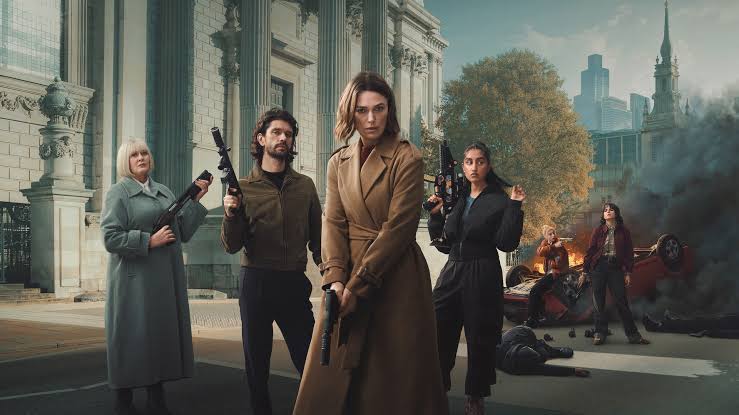
Season 2 clearly wants to play in the same sandbox as the big-screen assassin franchises, with more set pieces, a society crawling with professional killers and a cavalier attitude toward consequences. That’s a dangerous pivot for a show whose action was never its headline feature. The gunfights tend to look rigid rather than kinetic, with Helen and Sam cutting through waves of faceless henchmen like they’re clearing a Hitman level on easy mode, and dated-looking visual effects don’t help sell the chaos. The series even seems to know these sequences lack real danger, because characters routinely keep chatting mid-firefight as grenades and bullets fly. Worse, the mounting body count rarely carries any fallout, which undercuts the secrecy a spy story depends on. Problems that once would have been cracked through tense interrogations, undercover work or clever manipulation now mostly get solved by pulling a trigger, and the show loses a layer of intelligence in the process.
Ben Whishaw and a strong supporting cast keep Black Doves season 2 afloat
If Helen gets shortchanged, Sam gets some of the best material of the season, and Whishaw makes every ounce of it count. His version of a contract killer remains wonderfully mournful, a man who looks permanently exhausted by his own life, and the tragic beats in Sam’s storyline land with real weight. Eleanor and Williams are also given bigger, more emotional roles, and the series is better for it. The newcomers are a strong batch: Ambika Mod, Sam Riley and Babou Ceesay all bring interesting characters into the fold rather than functional plot pieces. Lauren Moakes, playing the younger Reed in that extended flashback, is the season’s quiet MVP, a convincing match for Sarah Lancashire who owns every scene she appears in. That flashback also pulls off something I didn’t expect, making Reed someone you actually want to see rescued despite her ruthless season 1 behaviour.
Witty writing, killer wardrobe and binge-ready pacing
Humour is where Black Doves season 2 arguably outdoes its predecessor. Eleanor and Williams remain reliable comic relief, the new arrivals add to the banter, and even Helen and Sam loosen up, trading digs at their colleagues with more ease than before. The jokes are sharp, well delivered and never puncture the tension at the wrong moment, which is a tricky balance that plenty of genre shows fumble. Credit is also due to the costume department, whose outfits tell you who these people are at a glance while looking effortlessly cool. Pacing is tight across the six episodes, with the central mystery generating enough momentum that “one more episode” becomes a dangerous phrase. Even when the action falters, the show’s personality keeps it watchable.
Verdict
Black Doves season 2 is a fun, stylish and frequently funny spy thriller that trades too much of its soul for spectacle. Whishaw is excellent, the new cast members and Reed’s flashback add real texture, the mystery drives the binge, and the humour is sharper than ever. On the other hand, Helen’s storyline has been hollowed out, the expanded mythology crowds out character work, and the bigger action sequences lack the choreography and polish to justify the shift. Fans who loved season 1 for its emotional, grounded edge may feel short-changed, while viewers who simply want a slick weekend watch with style and wit will have a good time. It’s still worth streaming on Netflix, just with tempered expectations.